#strategy增持1666枚btc持仓达847666枚
👉 加入社群领取策略
A US-listed company moved its Bitcoin vault up to 847,000 coins.
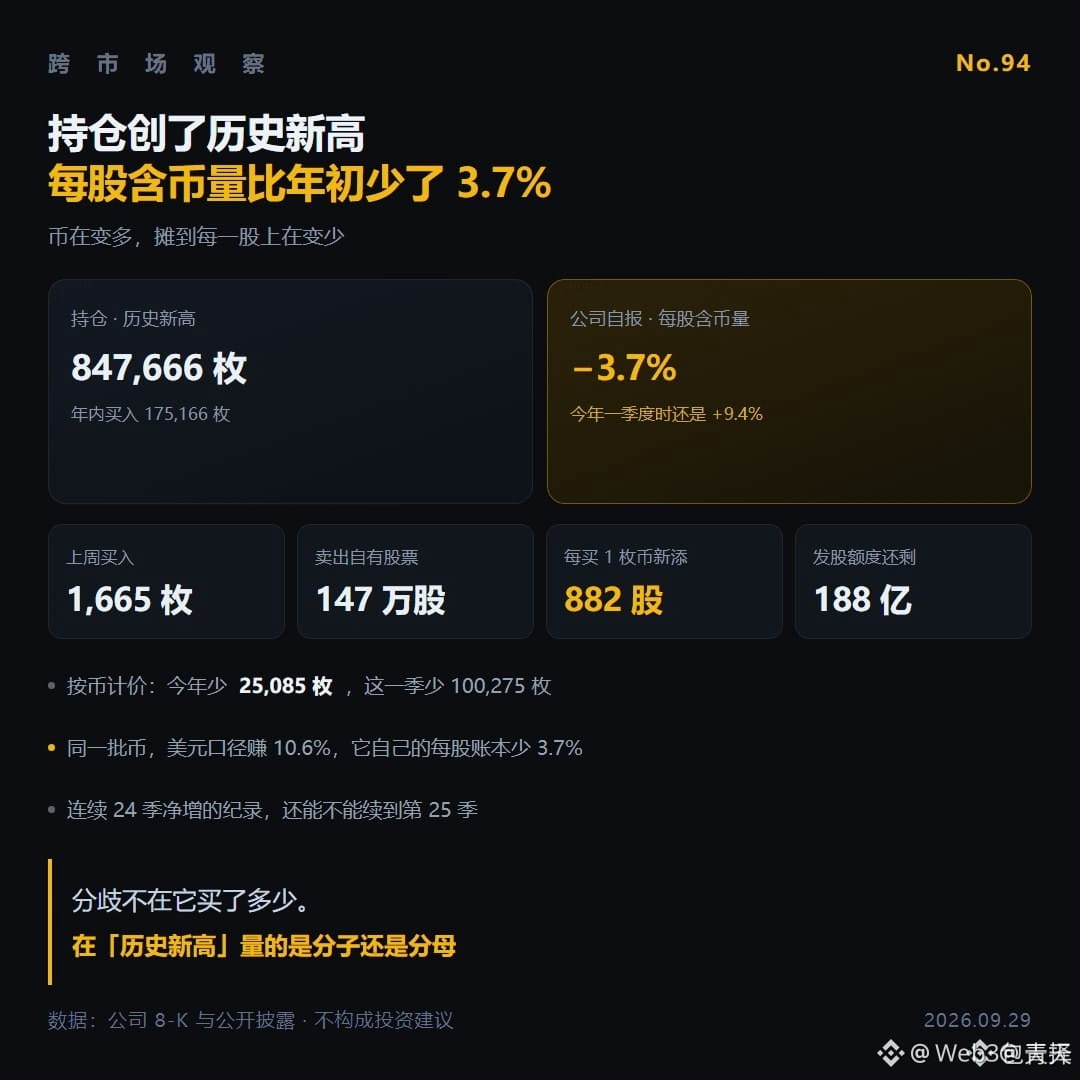
In disclosures on September 28, it also added another 1,665 coins last week.
At an average price of $85,681, it spent about $142.7 million.
The total vault holdings are 847,666 coins, exceeding the 21 million coin cap by 4%.
The money isn’t profit—it’s from issuing stock.
In the same week, it sold 1.47 million shares of its own stock and netted $246.2 million.
Of that, $103.5 million went to repurchase its own preferred shares.
The amount of Bitcoin per share is down 3.7% from the start of this year to today.
Equity is being diluted faster.
There’s also an on-chain anomaly.
Over the past 9 hours, the related wallets transferred out 3,568 bitcoins.
At current pricing, that’s about $297 million.
A transfer out doesn’t necessarily mean a sale—it could also be internal address reallocation.
For crypto, using the money from issuing stock to buy coins is like a borrowed pipe.
Coins are increasing, and the share count is increasing even faster.
Only the coins-per-share figure is the portion shareholders truly receive.
How long do you think this stock-issuance-and-adding-more model can keep going? Let’s discuss in the comments.
👉 加入社群领取策略
A US-listed company moved its Bitcoin vault up to 847,000 coins.
In disclosures on September 28, it also added another 1,665 coins last week.
At an average price of $85,681, it spent about $142.7 million.
The total vault holdings are 847,666 coins, exceeding the 21 million coin cap by 4%.
The money isn’t profit—it’s from issuing stock.
In the same week, it sold 1.47 million shares of its own stock and netted $246.2 million.
Of that, $103.5 million went to repurchase its own preferred shares.
The amount of Bitcoin per share is down 3.7% from the start of this year to today.
Equity is being diluted faster.
There’s also an on-chain anomaly.
Over the past 9 hours, the related wallets transferred out 3,568 bitcoins.
At current pricing, that’s about $297 million.
A transfer out doesn’t necessarily mean a sale—it could also be internal address reallocation.
For crypto, using the money from issuing stock to buy coins is like a borrowed pipe.
Coins are increasing, and the share count is increasing even faster.
Only the coins-per-share figure is the portion shareholders truly receive.
How long do you think this stock-issuance-and-adding-more model can keep going? Let’s discuss in the comments.