Chip distribution shorting pattern (if at least four of the ten entries fall on the right side, it is judged as a distribution suspicion; if between the two, then it is a wait-and-see)
1. Location. Requirements: at the end of an uptrend, already accelerated, heightened sentiment, and a huge price increase. Matches: $QNT — one-week increase exceeds 300 percentage points; $SOON — single-day increase of 40.2 percentage points.
2. Magnitude. Requirements: retrace breaks below the 61.8% pullback level and even falls back to the original breakout point of the rally. Matches: $US — down 44.37% in 24 hours and closing at the extremely lowest intraday level.
3. Speed. Requirements: slow—after several days of drifting lower, then accelerate the sell-off. Matches: $HBAR and $ALGO.
4. Volume/Trading activity. Requirements: on the rebound, volume shrinks; during the decline, volume expands—or volume increases but the price fails to rise (expansion without progress). Matches: $NMR and $PONS.
5. Moving averages. Requirements: after breaking below the 20-day and 50-day moving averages, price cannot reclaim them. Matches: $LINK and $XLM.
6. Key levels. Requirements: a valid breakdown followed by a failed retest—support turns into resistance. Matches: $HBAR and $MSTR-related underlying assets.
7. Candlestick pattern. Requirements: long upper wicks, shooting stars, high-volume long bearish candles, or weak rebounds (retests without strength). Matches: $NMR — highest intraday 15.366 USD to lowest 11.583 USD forms a long upper wick.
8. On-chain and holdings. Requirements: net inflow to exchanges from balances; whales transferring coins into exchanges. Matches: the address related to $BIT deposits another 1,000 Bitcoins to Binance, worth about $83.94 million.
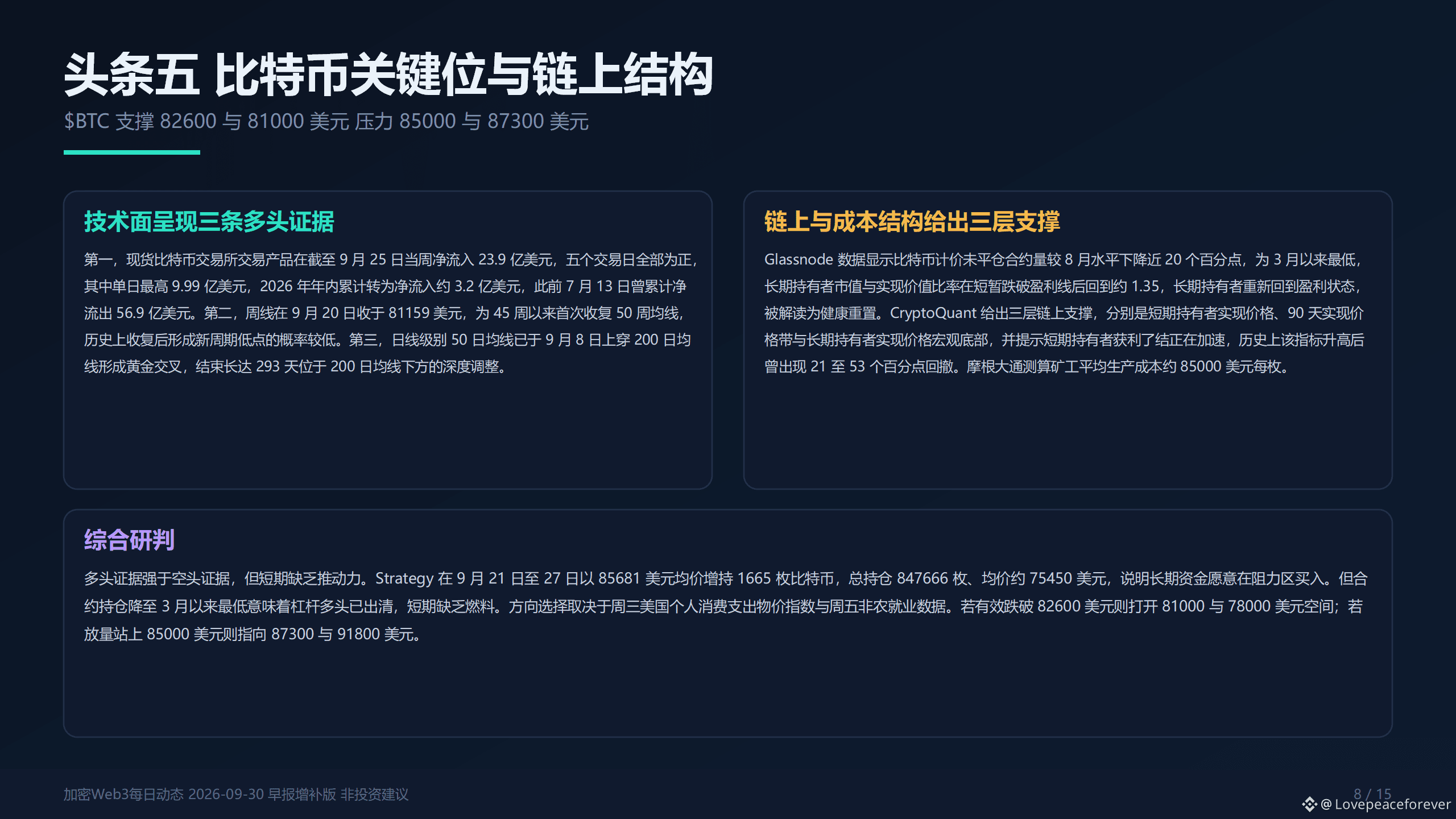
9. Derivatives/contract data. Requirements: open interest is high and the funding rate remains continuously positive, indicating crowded longs. The current total market open interest has fallen to the lowest level since March, so it does not meet this criterion.
10. Rebound performance. Requirements: rebound is weak, volume contracts, and it does not make new highs. Matches: $ARB and $OP.
Overall assessment: $NMR simultaneously satisfies the 4th, 7th, and 10th criteria, making it the most standard distribution-suspicion asset. $HBAR satisfies the 3rd, 6th, and 5th criteria, belonging to a breakdown distribution. QNT and SOON satisfy the 1st criterion—high-level acceleration peak—but lack evidence for the 4th and 9th criteria; currently they are only listed for observation. The most critical three are trading activity/volume, key levels, and rebound performance, with the highest weight given to rebound performance.
1. Location. Requirements: at the end of an uptrend, already accelerated, heightened sentiment, and a huge price increase. Matches: $QNT — one-week increase exceeds 300 percentage points; $SOON — single-day increase of 40.2 percentage points.
2. Magnitude. Requirements: retrace breaks below the 61.8% pullback level and even falls back to the original breakout point of the rally. Matches: $US — down 44.37% in 24 hours and closing at the extremely lowest intraday level.
3. Speed. Requirements: slow—after several days of drifting lower, then accelerate the sell-off. Matches: $HBAR and $ALGO.
4. Volume/Trading activity. Requirements: on the rebound, volume shrinks; during the decline, volume expands—or volume increases but the price fails to rise (expansion without progress). Matches: $NMR and $PONS.
5. Moving averages. Requirements: after breaking below the 20-day and 50-day moving averages, price cannot reclaim them. Matches: $LINK and $XLM.
6. Key levels. Requirements: a valid breakdown followed by a failed retest—support turns into resistance. Matches: $HBAR and $MSTR-related underlying assets.
7. Candlestick pattern. Requirements: long upper wicks, shooting stars, high-volume long bearish candles, or weak rebounds (retests without strength). Matches: $NMR — highest intraday 15.366 USD to lowest 11.583 USD forms a long upper wick.
8. On-chain and holdings. Requirements: net inflow to exchanges from balances; whales transferring coins into exchanges. Matches: the address related to $BIT deposits another 1,000 Bitcoins to Binance, worth about $83.94 million.
9. Derivatives/contract data. Requirements: open interest is high and the funding rate remains continuously positive, indicating crowded longs. The current total market open interest has fallen to the lowest level since March, so it does not meet this criterion.
10. Rebound performance. Requirements: rebound is weak, volume contracts, and it does not make new highs. Matches: $ARB and $OP.
Overall assessment: $NMR simultaneously satisfies the 4th, 7th, and 10th criteria, making it the most standard distribution-suspicion asset. $HBAR satisfies the 3rd, 6th, and 5th criteria, belonging to a breakdown distribution. QNT and SOON satisfy the 1st criterion—high-level acceleration peak—but lack evidence for the 4th and 9th criteria; currently they are only listed for observation. The most critical three are trading activity/volume, key levels, and rebound performance, with the highest weight given to rebound performance.