#日本fsa支持第四例稳定币贸易结算试点
Japan FSA restarts stablecoin initiatives, but only for cross-border trade
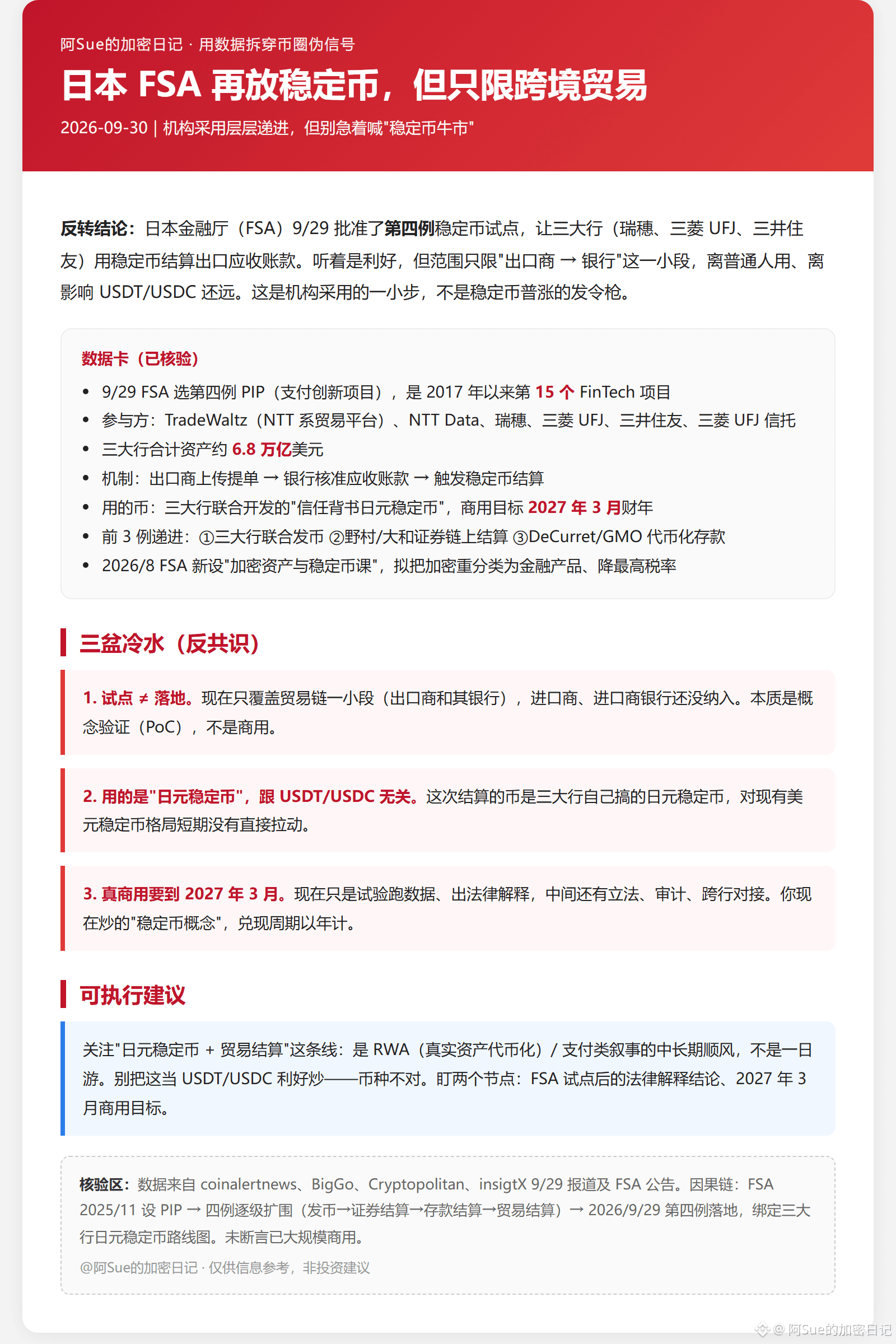
On 9/29, Japan’s Financial Services Agency (FSA) approved the fourth stablecoin pilot, allowing the three major banks (Mizuho, Mitsubishi UFJ, and Sumitomo Mitsui) to settle export receivables using stablecoins. It sounds positive, but the scope is limited to a narrow segment—"exporters to banks"—far from ordinary people using stablecoins, and still far from any meaningful impact on USDT/USDC. This is a small step by institutions, not a launch signal for stablecoins to surge broadly.
Data: On 9/29, the FSA selected the fourth PIP (Payment Innovation Project). It is the 15th project since the FinTech concept-proofs center in 2017. Participants include TradeWaltz (NTT trade document platform), NTT Data, Mizuho, Mitsubishi UFJ, Sumitomo Mitsui, and Mitsubishi UFJ Trust. The three banks combined have total assets of about $6.8 trillion. The mechanism is: exporters upload bills of lading, banks approve the receivables, and then trigger stablecoin settlement. The coin used is a "yen stablecoin with trust endorsement" jointly developed by the three banks, with a commercial target of March 2027 fiscal year. The first three cases progressed incrementally: the three banks jointly issued tokens; Nomura/Daiwa Securities’ on-chain settlement; and DeCurret/GMO’s tokenized deposit interbank settlement.
In 2026/8, the FSA newly established the "tax class for crypto assets and stablecoins" plan, proposing to reclassify crypto as financial products and reduce the maximum tax rate.
Three cold showers.
First, a pilot doesn’t mean full rollout. It currently covers only a small part of the trade chain. Importers and their banks are not included yet; in essence, this is still a concept proof.
Second, the "yen stablecoin" is unrelated to USDT/USDC, so it won’t directly move the existing USD stablecoin landscape in the near term.
Third, real commercial use won’t arrive until March 2027. For now, it’s only testing to generate data and legal interpretations. In between, there are also legislative, audit, and cross-bank integration steps—so the cycle for "stablecoin concepts" to translate into reality is measured in years.
Recommendation: Follow the line of "yen stablecoins plus trade settlement." It’s an RWA (real-world asset tokenization) / payments narrative tailwind over the medium to long term, not a one-day trend. Don’t treat this as a USDT/USDC positive and speculate based on the token—it’s the wrong coin. Watch two milestones: the legal interpretation conclusions after the FSA pilot, and the March 2027 commercial target.
Japan FSA restarts stablecoin initiatives, but only for cross-border trade
On 9/29, Japan’s Financial Services Agency (FSA) approved the fourth stablecoin pilot, allowing the three major banks (Mizuho, Mitsubishi UFJ, and Sumitomo Mitsui) to settle export receivables using stablecoins. It sounds positive, but the scope is limited to a narrow segment—"exporters to banks"—far from ordinary people using stablecoins, and still far from any meaningful impact on USDT/USDC. This is a small step by institutions, not a launch signal for stablecoins to surge broadly.
Data: On 9/29, the FSA selected the fourth PIP (Payment Innovation Project). It is the 15th project since the FinTech concept-proofs center in 2017. Participants include TradeWaltz (NTT trade document platform), NTT Data, Mizuho, Mitsubishi UFJ, Sumitomo Mitsui, and Mitsubishi UFJ Trust. The three banks combined have total assets of about $6.8 trillion. The mechanism is: exporters upload bills of lading, banks approve the receivables, and then trigger stablecoin settlement. The coin used is a "yen stablecoin with trust endorsement" jointly developed by the three banks, with a commercial target of March 2027 fiscal year. The first three cases progressed incrementally: the three banks jointly issued tokens; Nomura/Daiwa Securities’ on-chain settlement; and DeCurret/GMO’s tokenized deposit interbank settlement.
In 2026/8, the FSA newly established the "tax class for crypto assets and stablecoins" plan, proposing to reclassify crypto as financial products and reduce the maximum tax rate.
Three cold showers.
First, a pilot doesn’t mean full rollout. It currently covers only a small part of the trade chain. Importers and their banks are not included yet; in essence, this is still a concept proof.
Second, the "yen stablecoin" is unrelated to USDT/USDC, so it won’t directly move the existing USD stablecoin landscape in the near term.
Third, real commercial use won’t arrive until March 2027. For now, it’s only testing to generate data and legal interpretations. In between, there are also legislative, audit, and cross-bank integration steps—so the cycle for "stablecoin concepts" to translate into reality is measured in years.
Recommendation: Follow the line of "yen stablecoins plus trade settlement." It’s an RWA (real-world asset tokenization) / payments narrative tailwind over the medium to long term, not a one-day trend. Don’t treat this as a USDT/USDC positive and speculate based on the token—it’s the wrong coin. Watch two milestones: the legal interpretation conclusions after the FSA pilot, and the March 2027 commercial target.