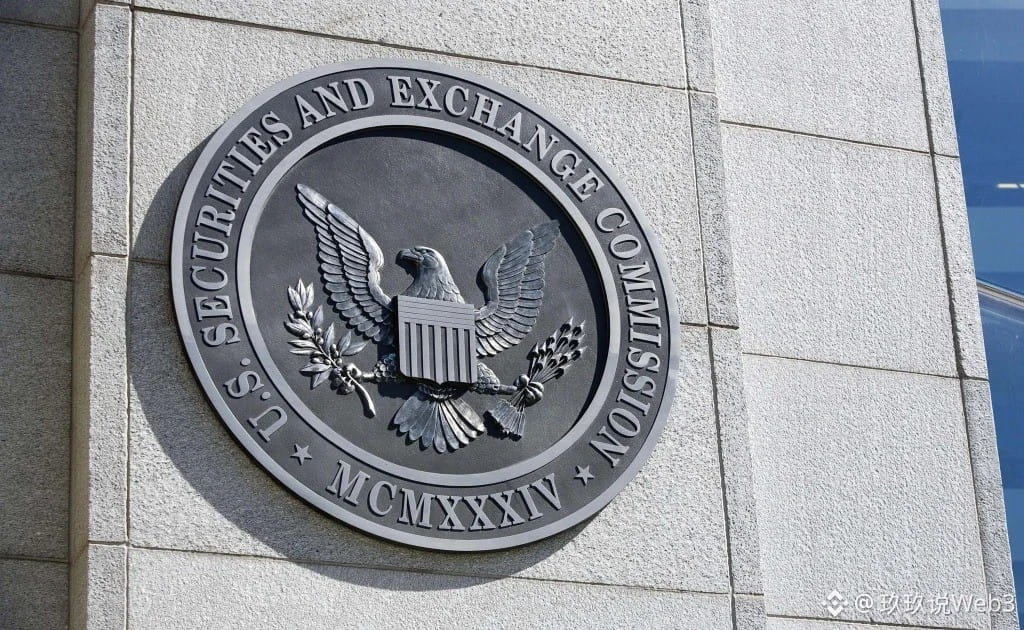
🚨 Say something that might offend people: The US regulator only added four words—the token buyback exam paper was directly changed
Group: 点击进入玖玖的粉丝群
📊 Last Friday, the SEC’s Division of Corporation Finance also said: As long as the crypto system “can function properly,” token buybacks don’t constitute evidence of the issuer’s “necessary managerial efforts.” By Monday, four more words were added after the same sentence—“and has no central party” (and there is no centralized entity).
🔥 Translation: Buybacks themselves are no longer the problem—what they’re investigating now is “who controls the protocol.” There can’t be a single entity, founding team, or affiliated foundation holding control that can sway the outcome; governance must be pushed on-chain, with no off-chain vetoes, and no admin private keys controlled by a centralized party. This is just a website FAQ with no legal force—but it also tells enforcement agencies who to look at.
📌 What’s more subtle: this is basically an endorsement of the status quo. As of August, token buyback volume reached a record $638 million; the same period in 2025 was $545 million. Of these, Hyperliquid has bought back about $370 million this year and has roughly $1.3 billion in total since listing; Pump.fun has bought back about $200 million this year and $462.5 million cumulatively, with 167.7 billion tokens burned. Together they make up nearly 90%, and both were “named and acknowledged” by this guidance.
💡 What’s really worth关注 isn’t “the SEC is soft on buybacks,” but that the threshold has shifted from “can you do buybacks” to “is your governance architecture clean enough.” Projects with foundations, off-chain voting, or the ability to urgently pause—this week they all got an extra question.
⚠️ Pour some cold water: The FAQ has no legal binding effect and could be changed anytime. Also, how to measure “decentralization”—the SEC hasn’t provided an answer key.
👀 One side says this clarifies the rules and benefits genuine decentralized protocols; the other side says it’s forcing projects to prove themselves, and the bar is actually higher. Which side are you on? Vote in the comments below 👇
Click the avatar to watch the livestream + join the Jiujiu chat group to get daily strategies 🚀
#SEC #Hyperliquid #crypto-regulation
Group: 点击进入玖玖的粉丝群
📊 Last Friday, the SEC’s Division of Corporation Finance also said: As long as the crypto system “can function properly,” token buybacks don’t constitute evidence of the issuer’s “necessary managerial efforts.” By Monday, four more words were added after the same sentence—“and has no central party” (and there is no centralized entity).
🔥 Translation: Buybacks themselves are no longer the problem—what they’re investigating now is “who controls the protocol.” There can’t be a single entity, founding team, or affiliated foundation holding control that can sway the outcome; governance must be pushed on-chain, with no off-chain vetoes, and no admin private keys controlled by a centralized party. This is just a website FAQ with no legal force—but it also tells enforcement agencies who to look at.
📌 What’s more subtle: this is basically an endorsement of the status quo. As of August, token buyback volume reached a record $638 million; the same period in 2025 was $545 million. Of these, Hyperliquid has bought back about $370 million this year and has roughly $1.3 billion in total since listing; Pump.fun has bought back about $200 million this year and $462.5 million cumulatively, with 167.7 billion tokens burned. Together they make up nearly 90%, and both were “named and acknowledged” by this guidance.
💡 What’s really worth关注 isn’t “the SEC is soft on buybacks,” but that the threshold has shifted from “can you do buybacks” to “is your governance architecture clean enough.” Projects with foundations, off-chain voting, or the ability to urgently pause—this week they all got an extra question.
⚠️ Pour some cold water: The FAQ has no legal binding effect and could be changed anytime. Also, how to measure “decentralization”—the SEC hasn’t provided an answer key.
👀 One side says this clarifies the rules and benefits genuine decentralized protocols; the other side says it’s forcing projects to prove themselves, and the bar is actually higher. Which side are you on? Vote in the comments below 👇
Click the avatar to watch the livestream + join the Jiujiu chat group to get daily strategies 🚀
#SEC #Hyperliquid #crypto-regulation