



When I look back, I still remember the first time I took a sponsored job—400 U.
At the time, I probably didn’t even have 30,000 followers yet—I was just a small KOL who often stayed active on the Binance Square and on Twitter.
Back then, the U price was 7+, and converting it, 400 U was close to 3,000 RMB.
For me back then, this wasn’t pocket change anymore.
More importantly— I just needed to write a post according to the project team’s requirements and publish it, and I could earn that money.
That time was when I first truly realized: followers and traffic themselves are a form of productive power.
And it was exactly from then on that I started taking content creation more seriously.
1. Don’t just be a blogger who “posts ads”
At the time, I didn’t think I’d go looking for the project team to take ads, and to this day I still haven’t asked the project team for ads~
Instead, I started thinking: what else can I provide to users?
Later, I started doing beginner training—taking people from 0 to 1 with free public courses.
Take what you understand, organize it from basics to advanced into a complete lesson plan, then continuously do a week of live-stream training.
The feedback from this process was very clear to me.
Users are willing to listen, willing to engage, and willing to stick around.
During that time, my follower growth rate could even be described as: like I was on a rocket.
This is also what finally made me understand completely: personal IP must leverage its own advantages.
If you’re good at writing lesson plans, take your lesson plans to the extreme.
If you’re good at live streaming, take your live teaching to the extreme.
If you’re good at making videos, take your videos to the extreme.
If you’re good at transaction analysis, take your transaction analysis to the extreme.
Here I’ll just show off a bit—turns out I’m a complete six-armed ‘hexagon’ with everything above 💪🏻
Find your strengths, then keep expanding around them.
Don’t do everything. First go deep into what you’re best at, then slowly extend outward.
2. What the project team truly wants to pay for isn’t just your follower count
Many people ask: “After how many followers can I start taking commercial orders?”
In reality, there’s no absolute answer. What the project team truly cares about is often not how many followers are written on your account.
It’s not that. It’s whether you can truly get things done well. Does your content have quality? Does your follower base have stickiness?
How good is your exposure? Will users want to listen to you? What projects have you done in the past?
How are the conversion results? Do you have real data to prove it?
So with my current size and traffic, the most I’ve ever accepted was a single deal of 5000U.
This number itself isn’t important.
What matters is: do you have the ability to make the project team feel that the money they spend on you is worth it.
3. Data is your best business card
If you want the project team to find you proactively, there’s one thing that’s especially important:
Data.
So I’ve always advised everyone to actively participate in Binance’s various events.
Not for the sake of pure excitement. It’s because: every event is an opportunity to showcase your commercial value.
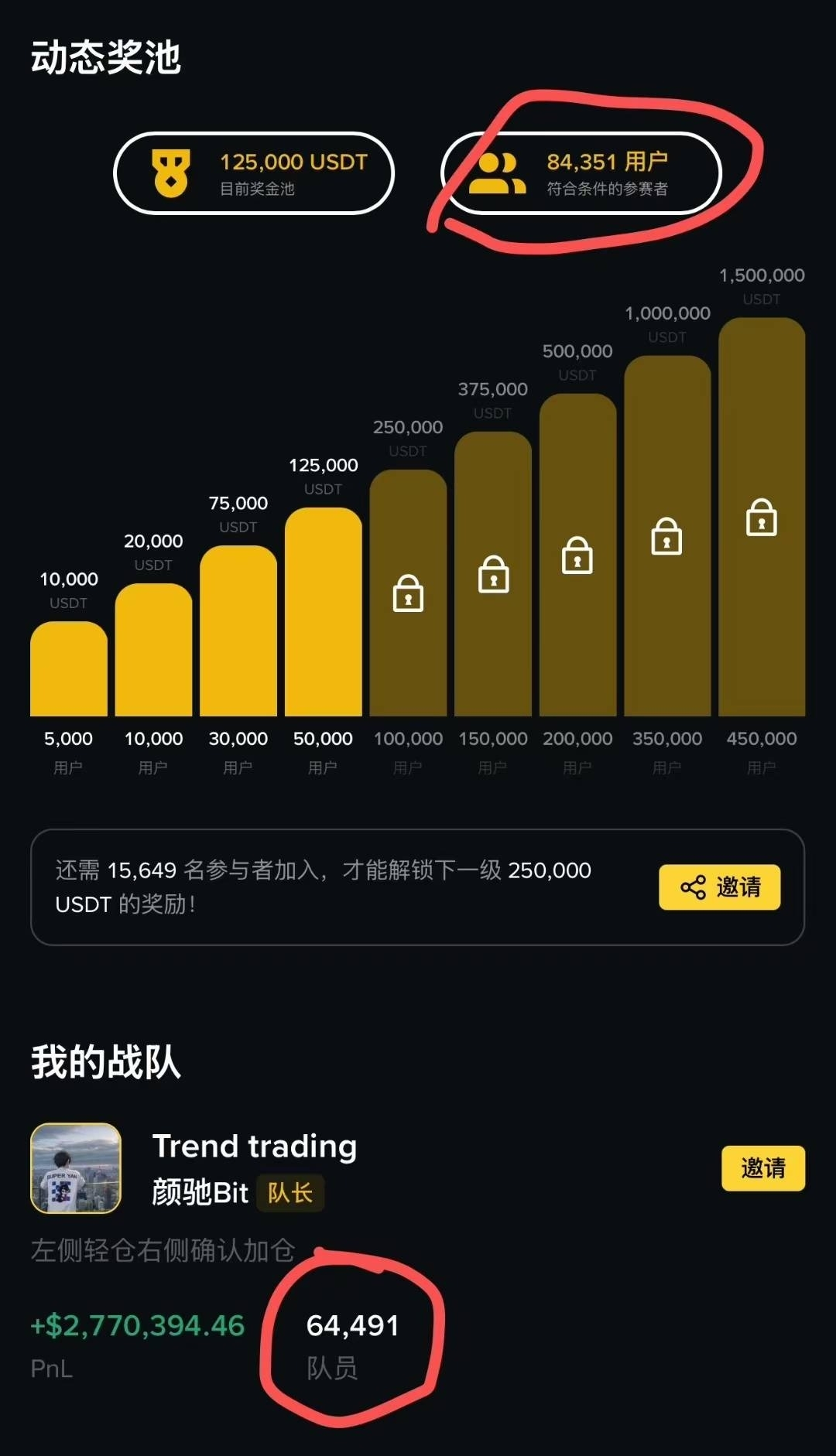
For example, last year Binance’s contract competition: 84,000 people competed—of which 64,000 were in my team.
When that kind of data is placed in front of the project team, they actually don’t need you to introduce yourself too much anymore.
What else do you need to tell the project team? 🤷🏻♂️
What do you need to do? Can I accept it? Can your quote be accepted by me?
If both sides agree, then get to work.
4. If you accept a commercial order, you must make sure everything is done well
I’ve always believed: taking commercial orders isn’t “finish the post and it’s over.”
A truly professional creator should be responsible for their commercial collaborations.
From content planning and promotion angles to posting time, and even user feedback, you should treat everything seriously.
Especially: protecting your followers.
Don’t, just because you accepted an ad, shove everything in front of your followers.
Your followers trust you, and the project team pays you.
What you truly need to do is: between the project team and the users, make sure your part is done well.
The project needs exposure—then make the content good.
If the project needs user participation, then explain the event clearly.
The project needs community spread—so you make sure the dissemination is done properly.
5. Commercial orders aren’t “post it and then ignore it”
This point is actually very easy to overlook.
The logic of many bloggers is: draft is finished → post it → take screenshots → hand it in → get paid.
I think this is only completing the most basic work.
The real approach should be: keep tracking the results after you publish.
You can proactively ask the project team: Has exposure met expectations? How is user participation?
Has the data reached the target? What other areas can be optimized?
If the results don’t meet expectations, and you can continue adding content, do your best to provide secondary after-sales support.
If something needs to be resent, resend it. If something needs to be optimized, optimize it. If something needs an explanation, explain it.
Because what the project team remembers is not just an ad you posted.
Rather, it’s: “This creator is reliable.” Those four words are the start of long-term cooperation.
6. If you have milk, you’re a parent—but ads must have a bottom line
Let’s be realistic: if you need commercial income, then the project team is one of your providers.
Making money itself isn’t something shameful.
Get income through your content skills, traffic skills, and professional skills—there’s nothing shameful about that at all.
But here’s a premise: not all money should be earned.
I won’t accept every project just because the other party is willing to pay.
Because what you earn is a single lump of money from the commercial order. But what you consume is: your followers’ trust in you.
Once trust is gone, no matter how many future commercial deals you take, you can’t save it back.
7. Word of mouth is the strongest BD
Once you consistently do a good job with commercial orders, something really interesting will happen:
Project teams will introduce each other.
For example, a project team partners with you, and in the end the results turn out great.
He might tell another project team: “You can look for Binance Square to place ads with Yan Ci—results are pretty good.”
Then the other party keeps coming back to find you. After a while, someone may tell you again:
“I heard the exposure from your previous project was really good.” That’s the best BD.
Real good business isn’t you going around every day telling others how great you are.
Instead, others actively tell other people: “This person’s ad delivery works well.”
So I’ve always believed: word of mouth is about others, not about you constantly putting it on your own tongue.
8. Don’t interpret all business collaborations as “robbing users”
I think this is also something we need to rethink.
When many people see KOLs taking ads, they immediately think: “Isn’t this harming followers?”
Actually, you can’t generalize it.
Many business collaborations, at their core, are the project team purchasing a KOL’s traffic and dissemination capabilities.
The project team needs exposure, and KOLs have traffic.
Users, on the other hand, can gain corresponding chances to participate by joining early project activities, testnets, community events, and so on.
In some projects, users may also earn points by participating early, and after the project TGE, receive corresponding rewards according to the project rules.
At its core, this is a kind of market promotion and user acquisition.
Of course, the premise is that the project itself is worth promoting, information is transparent, rules are clear, and you have not made irresponsible profit promises to users.
So: there’s nothing wrong with taking commercial orders. The problem is taking commercial orders without any bottom line.
9. What’s truly important is your ability to screen and filter
When you start to have traffic, the biggest change isn’t:
“Finally, someone is looking for me to take ads.”
It’s rather: “I’ve started to have the right to choose what ads I won’t take.”
This is very important. Be cautious with funnel/lead-generation type projects.
Be cautious about projects with unclear backgrounds.
Be cautious about projects that are seriously lacking in basic industry information, team info, and product info.
Be even more cautious with “shitcoin/dog projects” that rely purely on emotional hype and have no fundamentals to support them.
Especially for projects involving users’ funds:
Don’t lower your screening standards just because your quote is high.
Because what the project team pays is a one-time marketing expense, while what you pay is your long-term personal credibility.
10. Finally, I want to say something
Many people who do KOLs start by thinking:
“When will I finally start getting 500U ad deals?”
Actually, I think the order should be reversed.
Don’t keep thinking: “How can I get the project team to pay me?”
Instead, you should first think: “How do I make the project team feel that paying me is worth it?”
When you have stable content capabilities, consistent user growth, and real data.
Have your own advantages, mature delivery capabilities, and a solid business reputation.
Most important of all— you’re able to protect your own followers.
Then naturally, there will be more and more project teams coming to you.
From the very beginning: “I’ll go find the project team.”
Slowly it turns into: “The project team comes to me proactively.”
This is the first real stage of personal IP commercialization.
Traffic makes the project team notice you; your abilities make them choose you.
Results make the project team keep finding you. Word of mouth helps the project team introduce you to more projects.
And your bottom line also determines how long this business model can last.
🎈If you ask me how much I can earn from commercial orders in a year? 🤔
I don’t want to say it, but you can think boldly~