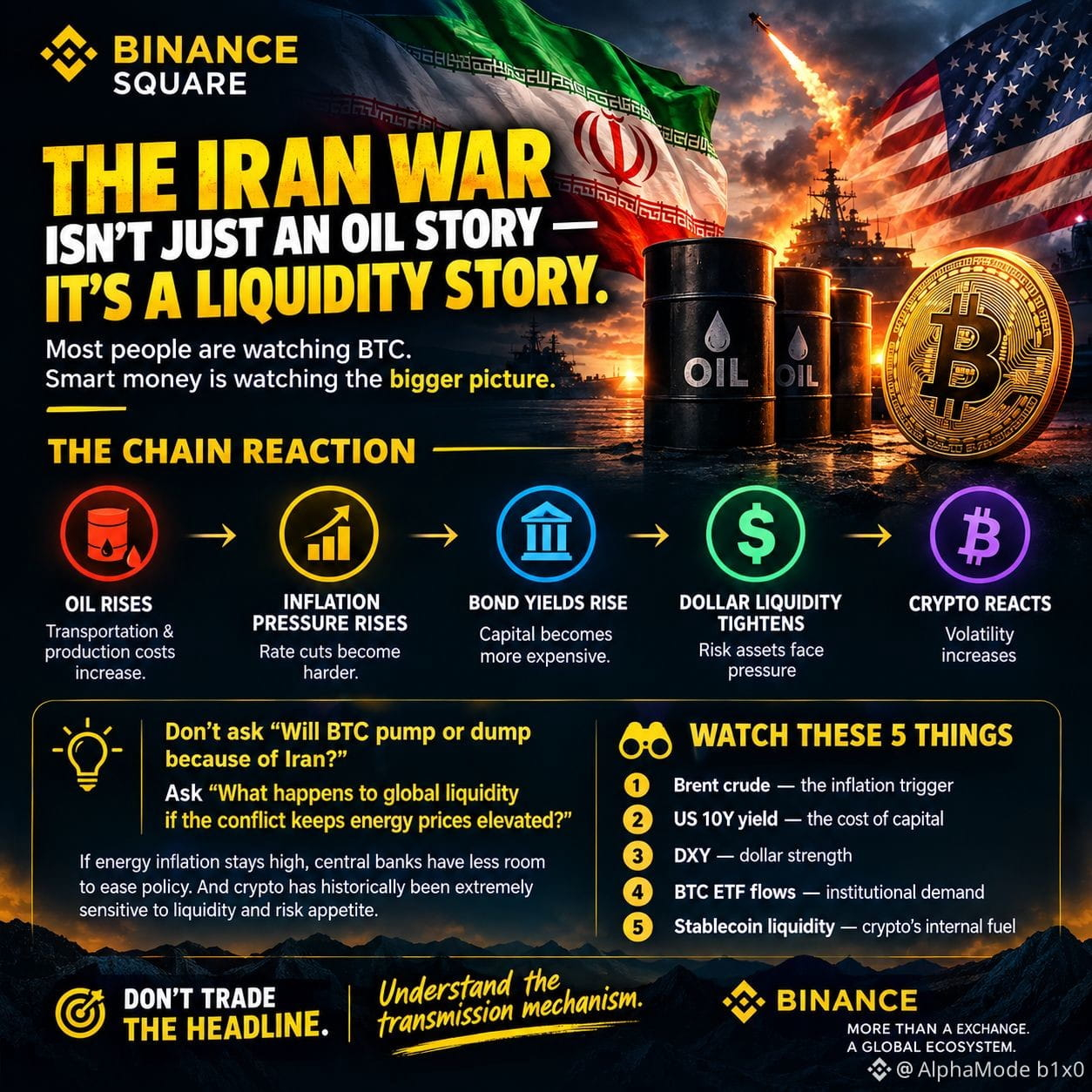
🚨 THE IRAN WAR ISN’T JUST AN OIL STORY — IT’S A LIQUIDITY STORY.
Most people are watching BTC.
Smart money is watching oil → inflation → yields → liquidity → risk assets.
The US–Iran conflict is creating a chain reaction:
🛢️ Oil rises → transportation & production costs increase
📈 Inflation pressure rises → rate cuts become harder
🏦 Bond yields rise → capital becomes more expensive
💵 Dollar liquidity tightens → risk assets face pressure
₿ Crypto reacts → volatility increases
That’s why Bitcoin can behave differently from the usual “digital gold” narrative during a geopolitical shock.
Today, BTC has been trading around the mid-$80K area while oil and US Treasury yields remain key market variables.
🧠 THE BIGGER CRYPTO SIGNAL
Don't ask:
“Will BTC pump or dump because of Iran?”
Ask:
“What happens to global liquidity if the conflict keeps energy prices elevated?”
That question matters more.
If energy inflation stays high, central banks have less room to ease policy.
And crypto has historically been extremely sensitive to liquidity and risk appetite.
🌍 WATCH THESE 5 THINGS
1️⃣ Brent crude — the inflation trigger
2️⃣ US 10Y yield — the cost of capital
3️⃣ DXY — dollar strength
4️⃣ BTC ETF flows — institutional demand
5️⃣ Stablecoin liquidity — crypto's internal fuel
The interesting part?
A geopolitical crisis can create short-term risk-off pressure while simultaneously increasing long-term interest in alternative financial infrastructure.
That tension is what makes this market fascinating.
Don't trade the headline.
Understand the transmission mechanism.
The real question isn't “Iran war = BTC up or down?”
It's:
“How long can global liquidity absorb an energy shock?”
That is the chart I’m watching. 👀
#bitcoin #CryptoMarketMoves #iranwar #Macro #BİNANCE $GOOGL.US
Most people are watching BTC.
Smart money is watching oil → inflation → yields → liquidity → risk assets.
The US–Iran conflict is creating a chain reaction:
🛢️ Oil rises → transportation & production costs increase
📈 Inflation pressure rises → rate cuts become harder
🏦 Bond yields rise → capital becomes more expensive
💵 Dollar liquidity tightens → risk assets face pressure
₿ Crypto reacts → volatility increases
That’s why Bitcoin can behave differently from the usual “digital gold” narrative during a geopolitical shock.
Today, BTC has been trading around the mid-$80K area while oil and US Treasury yields remain key market variables.
🧠 THE BIGGER CRYPTO SIGNAL
Don't ask:
“Will BTC pump or dump because of Iran?”
Ask:
“What happens to global liquidity if the conflict keeps energy prices elevated?”
That question matters more.
If energy inflation stays high, central banks have less room to ease policy.
And crypto has historically been extremely sensitive to liquidity and risk appetite.
🌍 WATCH THESE 5 THINGS
1️⃣ Brent crude — the inflation trigger
2️⃣ US 10Y yield — the cost of capital
3️⃣ DXY — dollar strength
4️⃣ BTC ETF flows — institutional demand
5️⃣ Stablecoin liquidity — crypto's internal fuel
The interesting part?
A geopolitical crisis can create short-term risk-off pressure while simultaneously increasing long-term interest in alternative financial infrastructure.
That tension is what makes this market fascinating.
Don't trade the headline.
Understand the transmission mechanism.
The real question isn't “Iran war = BTC up or down?”
It's:
“How long can global liquidity absorb an energy shock?”
That is the chart I’m watching. 👀
#bitcoin #CryptoMarketMoves #iranwar #Macro #BİNANCE $GOOGL.US