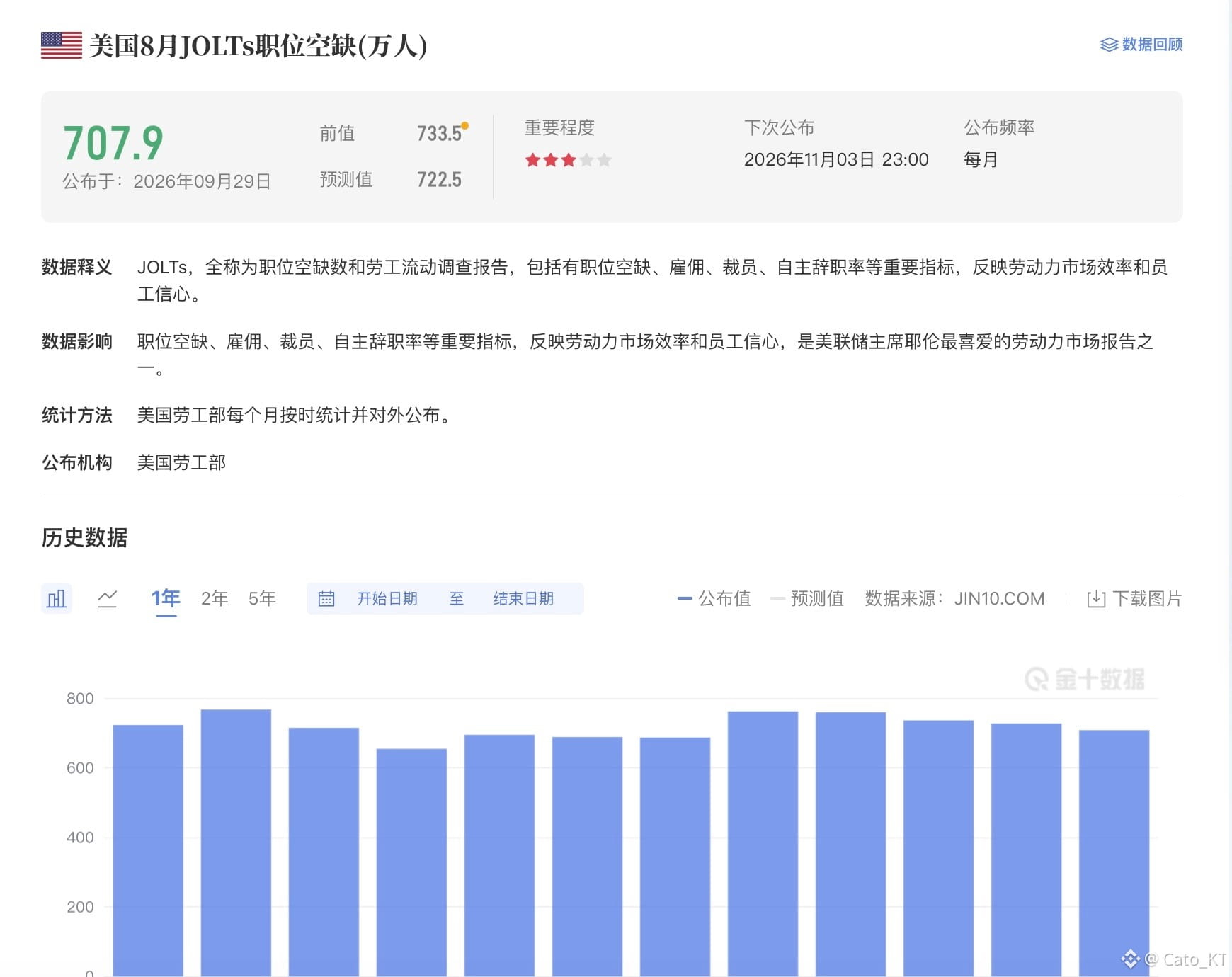
The significance of tonight’s August job vacancies is not that great. Nominal figures are below expectations, but it can’t be said that employment is worsening.
On the surface, demand from U.S. companies is cooling, but the detailed data shows that companies are not shifting to large-scale layoffs. At present, it is still the same situation as a few months ago: bottom hiring, low layoffs, and low mobility.
Only if we later see job openings falling, hiring falling, and the layoff data rising—that would be a signal of an employment downturn. Pay attention to the distinction here.
The data on the rate of quits remains very low. This means U.S. employees don’t dare to quit voluntarily. This reflects a decline in workers’ confidence in finding new jobs again. The decline is partly due to reduced confidence in the economy, and partly because the AI industry may have increased competition for positions.
However, a persistently low quit rate is beneficial for service-sector inflation. But for economic confidence, it is a long-term challenge. Even though it has a weakening effect on service-sector inflation, in the current environment it still cannot shake the reality that the probability of more than 10 rate hikes remains high. The key is still tomorrow’s PCE data! #美国8月职位空缺降至五个月低点
On the surface, demand from U.S. companies is cooling, but the detailed data shows that companies are not shifting to large-scale layoffs. At present, it is still the same situation as a few months ago: bottom hiring, low layoffs, and low mobility.
Only if we later see job openings falling, hiring falling, and the layoff data rising—that would be a signal of an employment downturn. Pay attention to the distinction here.
The data on the rate of quits remains very low. This means U.S. employees don’t dare to quit voluntarily. This reflects a decline in workers’ confidence in finding new jobs again. The decline is partly due to reduced confidence in the economy, and partly because the AI industry may have increased competition for positions.
However, a persistently low quit rate is beneficial for service-sector inflation. But for economic confidence, it is a long-term challenge. Even though it has a weakening effect on service-sector inflation, in the current environment it still cannot shake the reality that the probability of more than 10 rate hikes remains high. The key is still tomorrow’s PCE data! #美国8月职位空缺降至五个月低点