This AVAX rally isn’t just following BTC—it’s driven by an institutional narrative that combines network upgrades plus real-world asset (RWA) adoption, with the market pricing it in early.
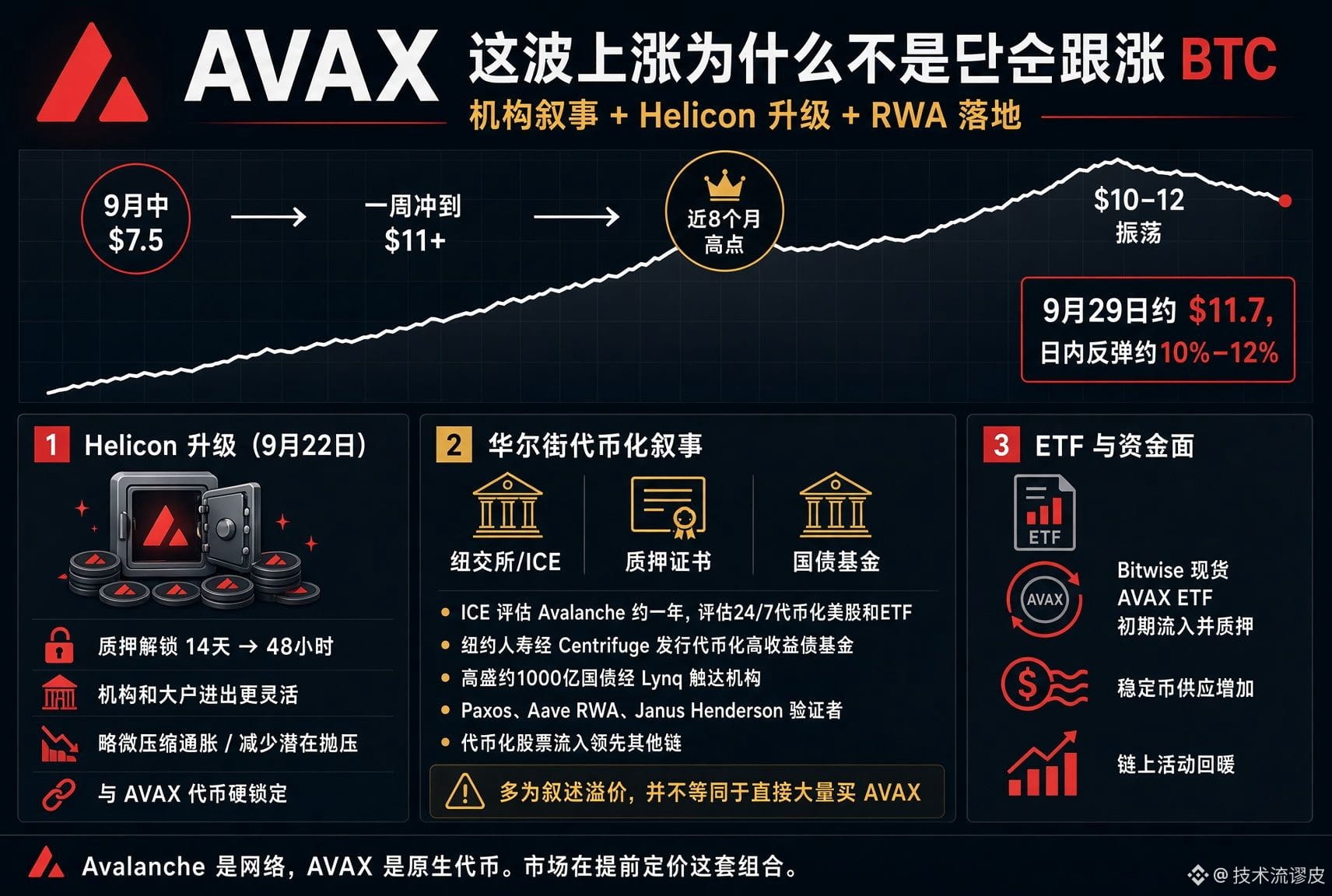
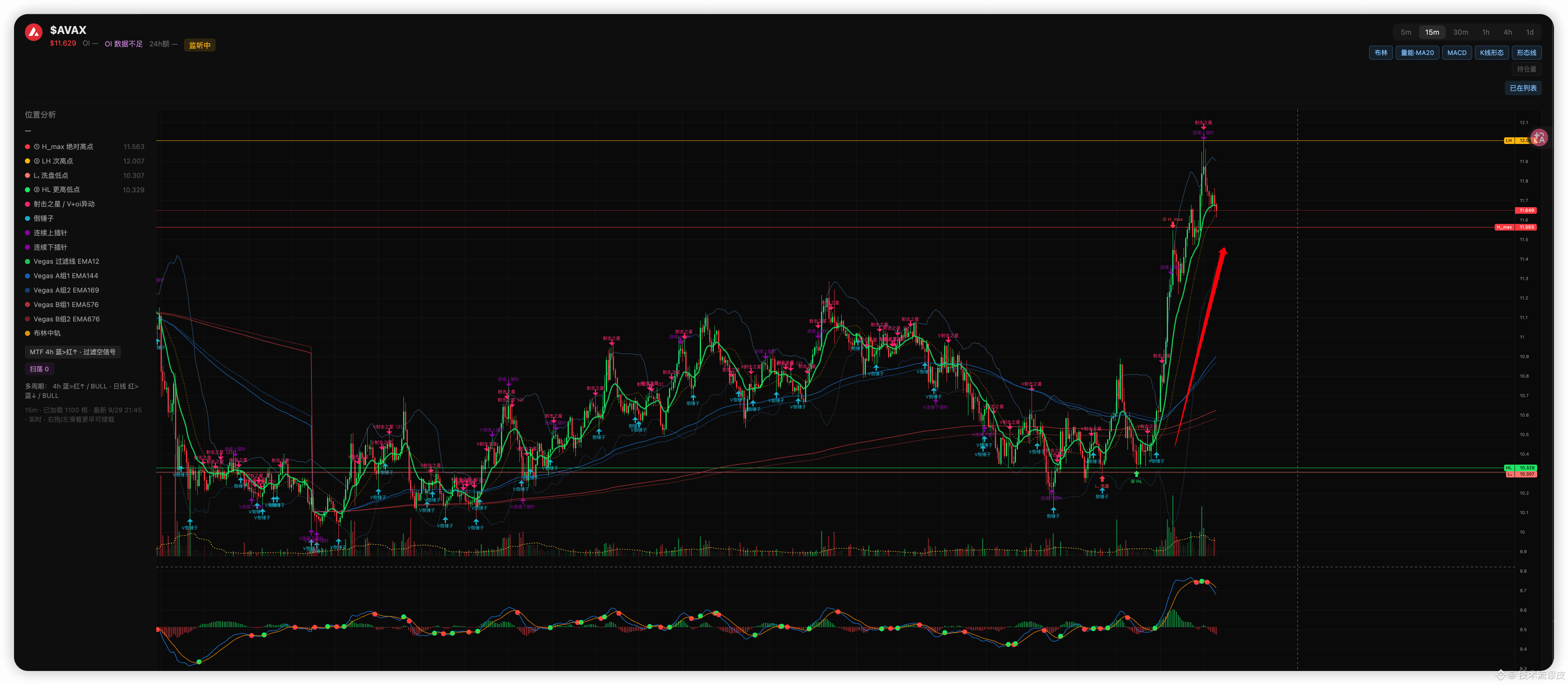
Starting in mid-September around the $7.5 area, it surged to above $11 within a week, briefly hitting an almost 8-month high. After that, it consolidated in a $10–$12 range. Today (Sept. 29) there’s another rebound of roughly 10%–12%, and the current price is around $11.7.
Key catalysts (Avalanche is the network; AVAX is the native token of this network)
1. Helicon upgrade (live as of Sept. 22, tightly hard-bound to AVAX)
The staking-unlock cycle was shortened from 14 days to 48 hours. For institutions and large holders, capital moves in and out more flexibly, while slightly compressing inflation and reducing potential sell pressure. The market is front-running the move—price elasticity around the upgrade has been明显.
2. The Wall Street tokenization narrative (the biggest imagination space)
ICE (the parent company of the NYSE) has been testing Avalanche for about a year, evaluating it for 24/7 tokenized US equity and ETF trading. While no final partnership has been officially announced, senior figures at Ava Labs confirmed both sides are still in close contact, and option premium has already been priced by the market.
New York Life (via Centrifuge) launched the first tokenized high-yield bond fund on Avalanche.
Goldman Sachs plans to provide roughly $100 billion in US Treasury fund exposure to institutional clients via Lynq (a licensed chain on Avalanche) (news reported Sept. 28).
Additional deployments include Paxos, RWA lending by Aave, Janus Henderson becoming a validator, and more.Bifu
Avalanche has also been strong in the inflow of tokenized stocks; in the past week alone, its inflows exceeded the total of other chains combined. Institutions treat Avalanche as a “compliant, customizable L1 with high throughput” settlement layer—this narrative is more substantial than mere DeFi hype.
3. ETFs and liquidity conditions
After the launch of Bitwise’s spot AVAX ETF (BAVA), there were initial inflows, and the fund also stakes most of its tokens to earn yield. Combined with increased stablecoin supply and a recovery in on-chain activity, this creates a positive feedback loop.
Starting in mid-September around the $7.5 area, it surged to above $11 within a week, briefly hitting an almost 8-month high. After that, it consolidated in a $10–$12 range. Today (Sept. 29) there’s another rebound of roughly 10%–12%, and the current price is around $11.7.
Key catalysts (Avalanche is the network; AVAX is the native token of this network)
1. Helicon upgrade (live as of Sept. 22, tightly hard-bound to AVAX)
The staking-unlock cycle was shortened from 14 days to 48 hours. For institutions and large holders, capital moves in and out more flexibly, while slightly compressing inflation and reducing potential sell pressure. The market is front-running the move—price elasticity around the upgrade has been明显.
2. The Wall Street tokenization narrative (the biggest imagination space)
ICE (the parent company of the NYSE) has been testing Avalanche for about a year, evaluating it for 24/7 tokenized US equity and ETF trading. While no final partnership has been officially announced, senior figures at Ava Labs confirmed both sides are still in close contact, and option premium has already been priced by the market.
New York Life (via Centrifuge) launched the first tokenized high-yield bond fund on Avalanche.
Goldman Sachs plans to provide roughly $100 billion in US Treasury fund exposure to institutional clients via Lynq (a licensed chain on Avalanche) (news reported Sept. 28).
Additional deployments include Paxos, RWA lending by Aave, Janus Henderson becoming a validator, and more.Bifu
Avalanche has also been strong in the inflow of tokenized stocks; in the past week alone, its inflows exceeded the total of other chains combined. Institutions treat Avalanche as a “compliant, customizable L1 with high throughput” settlement layer—this narrative is more substantial than mere DeFi hype.
3. ETFs and liquidity conditions
After the launch of Bitwise’s spot AVAX ETF (BAVA), there were initial inflows, and the fund also stakes most of its tokens to earn yield. Combined with increased stablecoin supply and a recovery in on-chain activity, this creates a positive feedback loop.