

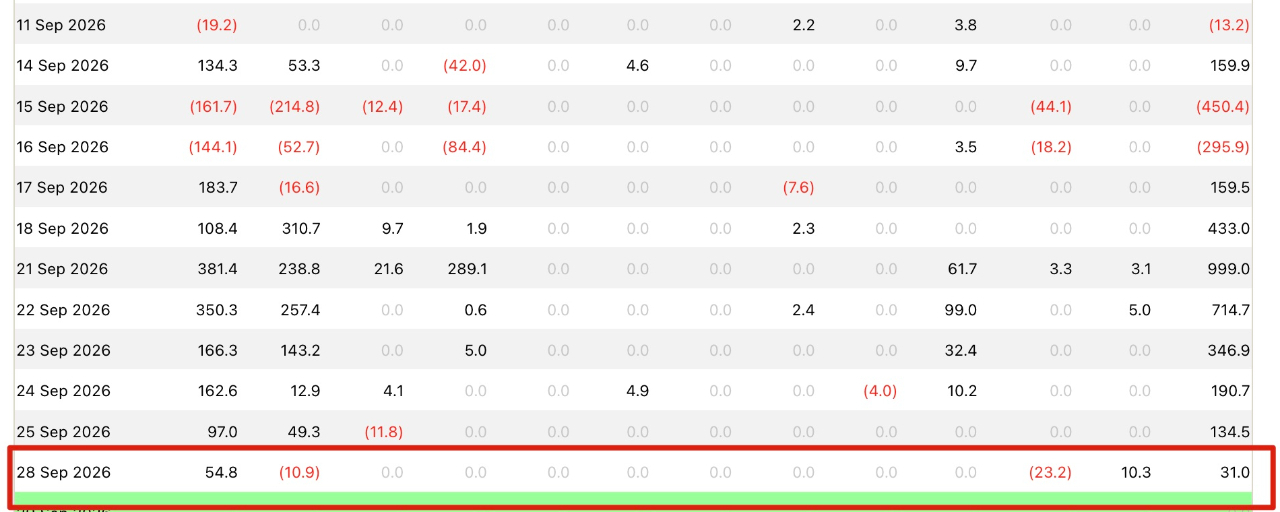

#Bitcoin ETF data: On Monday, ETFs continued to maintain net inflows, and for the current trend, this is a good sign.
Overall net inflow for the month is 0.31 billion. Among them, IBIT is the main net inflow channel, with net inflows of 0.548 billion. Meanwhile, FBTC has net outflows of 0.109 billion, GBTC has net outflows of 0.232 billion, and BTC Mini has net inflows of 0.103 billion.
This set of data shows that although on Monday many institutions’ ETFs started to have net outflows, IBIT as the main channel still kept a steady net inflow. Overall, it raised the proportion of capital flow.
And when combined with last week’s data, although Monday’s net inflow amount dropped significantly, even falling below 0.1 billion, despite the #BTC price pullback + a large net outflow of USDC from crypto capital, ETFs still remained in positive net inflow. This indicates that confidence in the ETF market is still there, but compared with last week, it’s more cautious and more consolidated #股票财报季
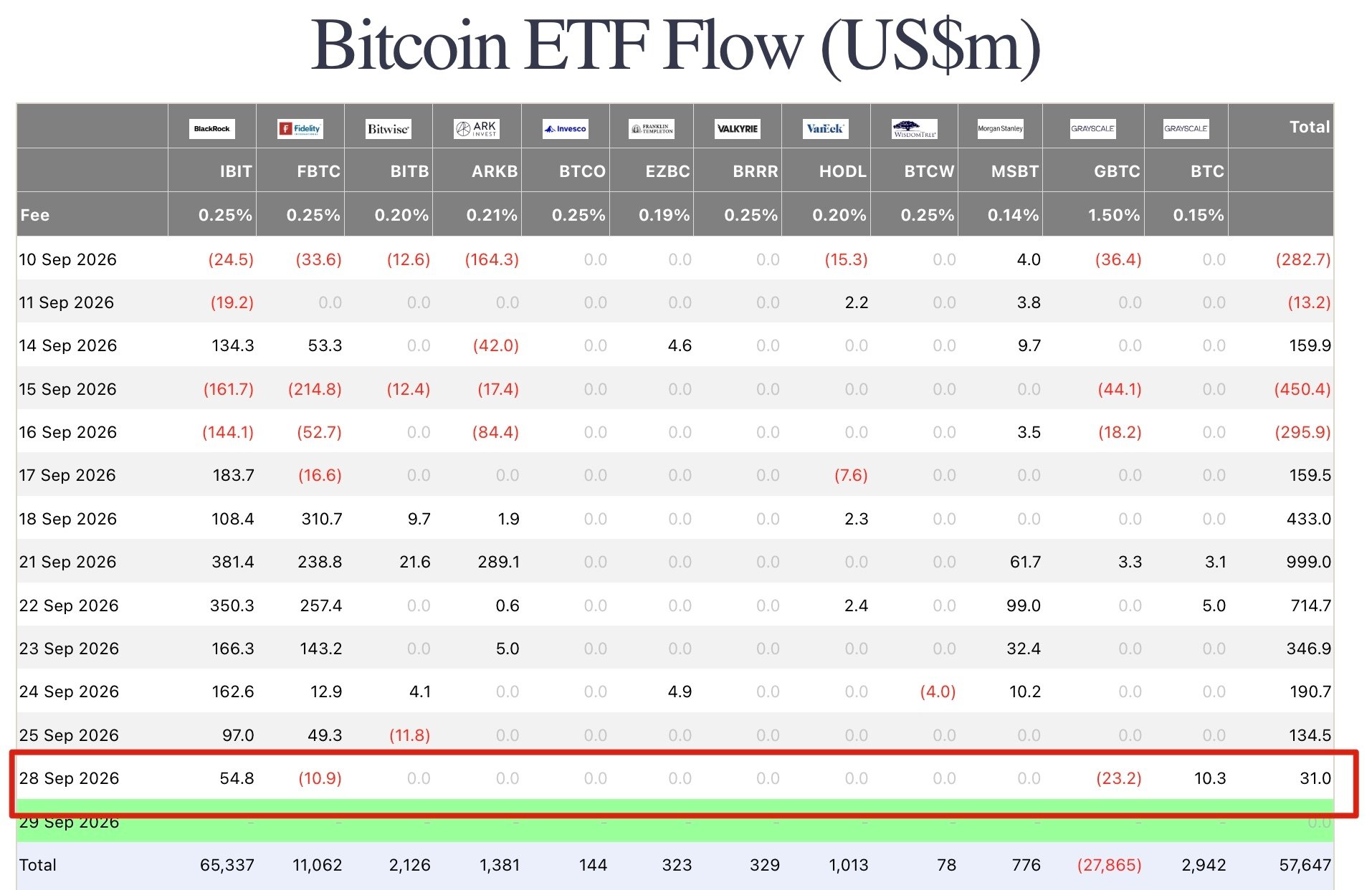
So, using yesterday’s BTC price action and ETF data as a reference: today BTC is rebounding, and compared with the ETF, it should still maintain net inflows, with the magnitude likely exceeding 100 million.
When comparing crypto market data with the data from September 27, there are a few things to note:
1. After today’s rebound, the crypto market cap has returned to the 3-trillion level, and the #ETH proportion has slightly increased. There is clear momentum—obviously, the market is not panicking right now.
2. Trading volume is lower compared to Monday. I took a look yesterday—it's around 160 billion. This set of data suggests that yesterday’s decline released some selling pressure. Today is a volume-contracted rebound, and the short-term selling pressure has been digested a bit.
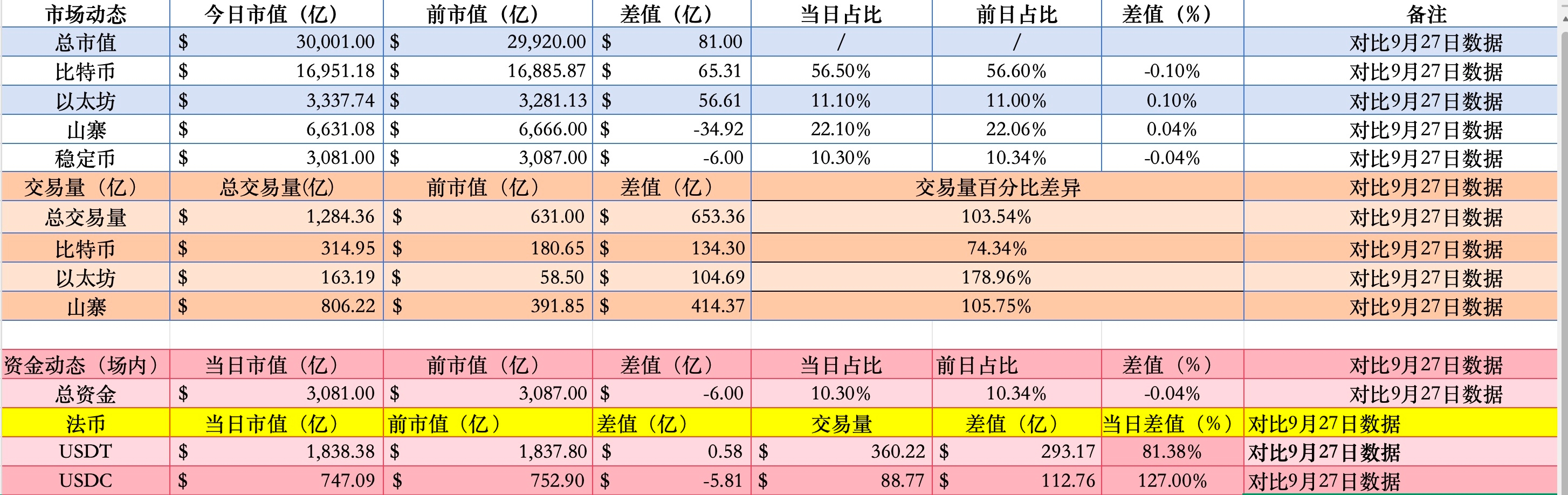
3. Compared with the 27th, the total amount of funds has decreased by about 600 million, most of which came from USDC. Net outflows were 581 million, and USDC’s trading volume has surged significantly, meaning that after USDC is exchanged, transactions are happening frequently.
Looking at the integration of ETF and crypto market data, the Asian market remains relatively stable. However, although U.S.-market funds still show net inflows into ETFs, there is still fairly frequent switching between long and short positions. ETF net inflows are relatively small, but crypto funds’ net outflow in USDC is quite large. Clearly, the two markets are diverging—keep an eye on this!
Going forward, continue to watch the ETF data. As long as it still maintains net inflows, even if the market pulls back in the short term, the trend may not necessarily be bad. Conversely, if crypto market funds and ETFs move together with net outflows, then be alert for a short-term trend reversal and watch for a pullback at the daily chart level!