

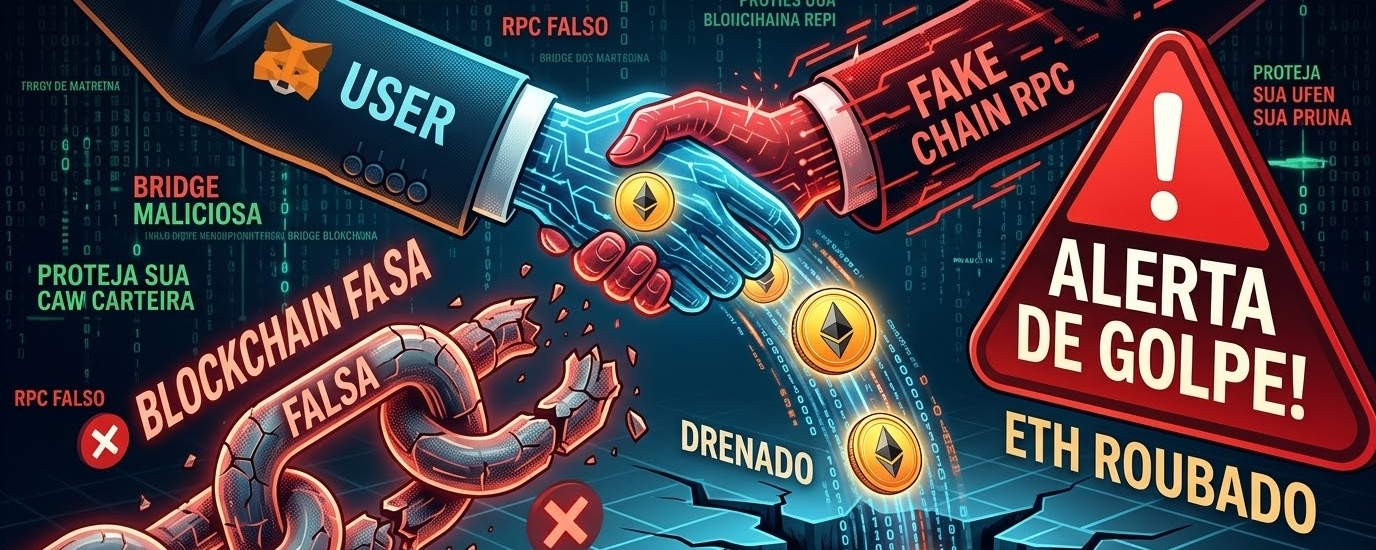

Have you ever imagined interacting with an entire blockchain network, paying fees, bridging tokens, and, in the end, finding out that the blockchain itself was a scam? 😱
Unfortunately, this happened recently. Scammers took social engineering and phishing in the Web3 ecosystem to a whole new level: they created a fake network node (RPC) and fraudulent bridges to drain over $2 million in Ethereum (ETH) from hundreds of investors!
If you work in Web3, interact with DeFi, Airdrops, or new L2 networks, you need to understand this scam so you don’t become the next victim.
🔍 How did the "Fake Blockchain" attack work?
Traditionally, hacks happen through vulnerabilities in smart contracts or theft of private keys. But in this case, the attackers set up a phantom infrastructure:
The RPC and Chain ID Trap: The scammers set up a custom network (simulating a real/expected project in the market). They configured an RPC server (the node that connects your wallet to the network) fully controlled by them.
False Balance and Gain Illusion: When adding the network in MetaMask or Rabby, the user saw balances and transactions in the dApp that looked 100% legitimate.
Bridge Attack: The victims sent real ETH, thinking they were bridging assets to a new network. The moment the funds hit the "bridge," the hackers changed the portal code and drained hundreds of ETH in a single transaction, sending the value to mixers like Tornado Cash.
🛡️ How to protect your wallet from Fake Networks (Fake RPCs)?
To browse safely in Web3, follow these 4 golden rules:
Never add RPCs from unknown links: Always use network aggregators verified by the community, like Chainlist (chainlist.org), instead of clicking "Add Network" buttons in suspicious dApps.
Beware of unofficial bridges: Before transferring real assets (like ETH, BNB, or USDT), confirm in the project’s official channels (Docs, official Discord, verified X/Twitter) what the bridge’s official contract is.
Use Test Wallets (Burner Wallets): Never use your main wallet — where you store your long-term savings — to test new networks, farm airdrops, or interact with recent protocols.
Verify what you’re signing: If your wallet pop-up shows warnings like "Unrecognized Network" or asks for weird spending permissions on the main network (Mainnet) while you think you’re on another network, CANCEL immediately.
💡 Web3 security starts with prevention. The ecosystem evolves fast, but scams do too!
If this helped you better understand this new type of attack, hit Like 👍, share it with your fellow investor friends, and comment below: do you usually check network data before adding it to your wallet? 👇