🚨 Strait of Hormuz oil flow is picking up!
But Brent crude is edging toward $107—has the energy crisis really eased?🔥
Group: 点击进入玖玖短线策略群
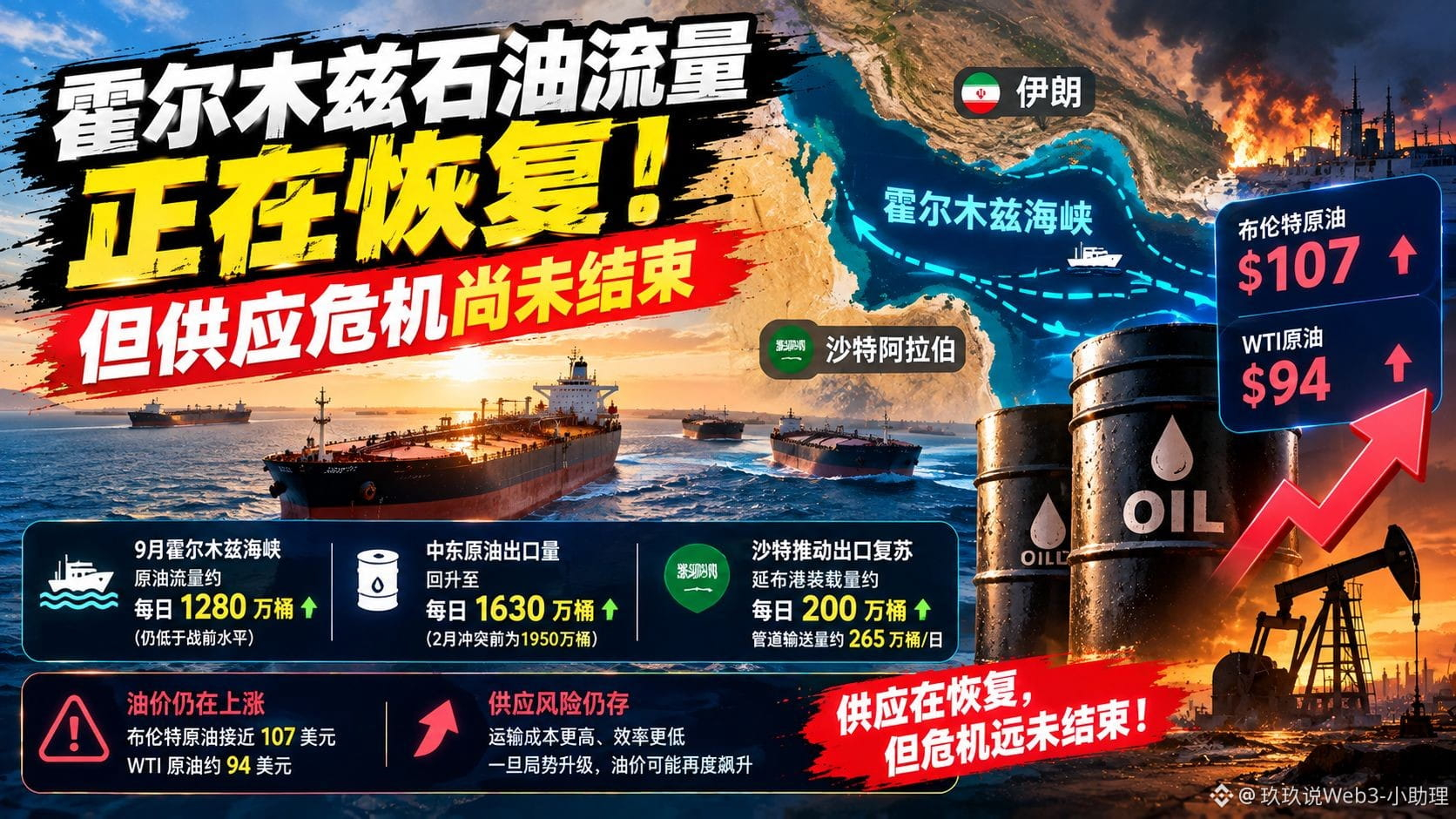
Oil transport through the Strait of Hormuz is gradually recovering, but oil prices haven’t cooled off noticeably. According to data from Kpler cited by Reuters on September 28, in September the export volumes of crude oil from the Middle East’s main producing countries rebounded to about 16.328 million barrels per day, the highest level since the conflict escalated in February. Exports passing through the Strait of Hormuz are expected at around 9.719 million barrels per day. However, the region’s overall export volume is still about 3.2 million barrels per day lower than the 19.513 million barrels per day recorded before the February conflict—recovery is still far from normal levels.
🔥 Saudi Arabia is an important driver behind this supply recovery.
Data shows Saudi crude oil exports in September are expected to reach about 5.4 million barrels per day, far higher than August’s 2.446 million barrels per day. Last week, 19 very large crude carriers transited the Strait of Hormuz, each with a carrying capacity of roughly 2 million barrels.
Meanwhile, after Saudi Arabia’s east-west oil pipelines resumed operations, the Yanbu port along the Red Sea also restarted loading crude oil. Reuters reported on September 29 that Yanbu’s current loading volume is about 2 million barrels per day, while pipeline throughput is around 2.65 million barrels per day, with further room for recovery ahead.
So, from the standpoint of “physical flow volumes,” the market does appear to be showing some easing signals.👀
But the problem is—oil prices haven’t come down meaningfully.
On Tuesday, Brent crude briefly neared $107, and WTI also moved to around $94. Oil prices rose for the second straight trading day. Reuters noted that while Middle Eastern crude exports are recovering, some transportation still relies on alternative methods such as ship-to-ship transshipment. These approaches cost more and are less efficient than normal transport, so the market still retains a relatively high supply-risk premium.
This is the most critical contradiction in the energy market right now:
📈 Oil is flowing back to international markets;
⚠️ But the Strait of Hormuz’s transport capacity hasn’t fully recovered;
🔥 If tensions escalate again, the risk of supply disruptions could quickly push oil prices higher.
Click the profile picture to follow me for daily market analysis and short-term strategies🚀
#原油 #霍尔木兹海峡 #BTC
But Brent crude is edging toward $107—has the energy crisis really eased?🔥
Group: 点击进入玖玖短线策略群
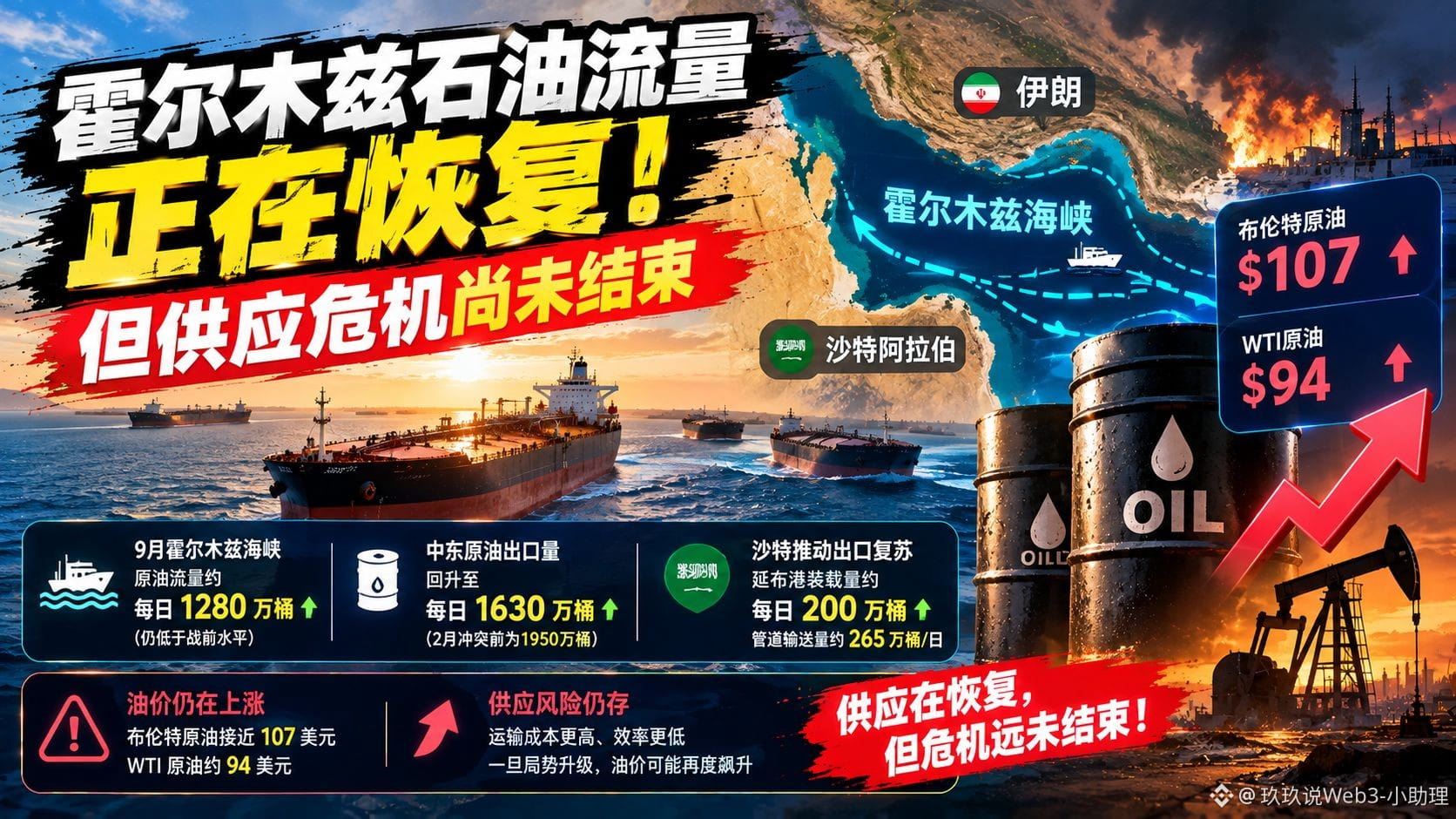
Oil transport through the Strait of Hormuz is gradually recovering, but oil prices haven’t cooled off noticeably. According to data from Kpler cited by Reuters on September 28, in September the export volumes of crude oil from the Middle East’s main producing countries rebounded to about 16.328 million barrels per day, the highest level since the conflict escalated in February. Exports passing through the Strait of Hormuz are expected at around 9.719 million barrels per day. However, the region’s overall export volume is still about 3.2 million barrels per day lower than the 19.513 million barrels per day recorded before the February conflict—recovery is still far from normal levels.
🔥 Saudi Arabia is an important driver behind this supply recovery.
Data shows Saudi crude oil exports in September are expected to reach about 5.4 million barrels per day, far higher than August’s 2.446 million barrels per day. Last week, 19 very large crude carriers transited the Strait of Hormuz, each with a carrying capacity of roughly 2 million barrels.
Meanwhile, after Saudi Arabia’s east-west oil pipelines resumed operations, the Yanbu port along the Red Sea also restarted loading crude oil. Reuters reported on September 29 that Yanbu’s current loading volume is about 2 million barrels per day, while pipeline throughput is around 2.65 million barrels per day, with further room for recovery ahead.
So, from the standpoint of “physical flow volumes,” the market does appear to be showing some easing signals.👀
But the problem is—oil prices haven’t come down meaningfully.
On Tuesday, Brent crude briefly neared $107, and WTI also moved to around $94. Oil prices rose for the second straight trading day. Reuters noted that while Middle Eastern crude exports are recovering, some transportation still relies on alternative methods such as ship-to-ship transshipment. These approaches cost more and are less efficient than normal transport, so the market still retains a relatively high supply-risk premium.
This is the most critical contradiction in the energy market right now:
📈 Oil is flowing back to international markets;
⚠️ But the Strait of Hormuz’s transport capacity hasn’t fully recovered;
🔥 If tensions escalate again, the risk of supply disruptions could quickly push oil prices higher.
Click the profile picture to follow me for daily market analysis and short-term strategies🚀
#原油 #霍尔木兹海峡 #BTC