Nobody cares about US stock companies repurchasing $1 trillion, but crypto only got its 638 million-dollar buyback after waiting for a mere “verbal permission”
S&P 500 companies repurchased $1.02 trillion worth of shares in the past 12 months, and nobody cared.
This year, crypto projects didn’t repurchase $638 million until August 31, yet they’ve been hanging under the sword of “does it count as a security?”
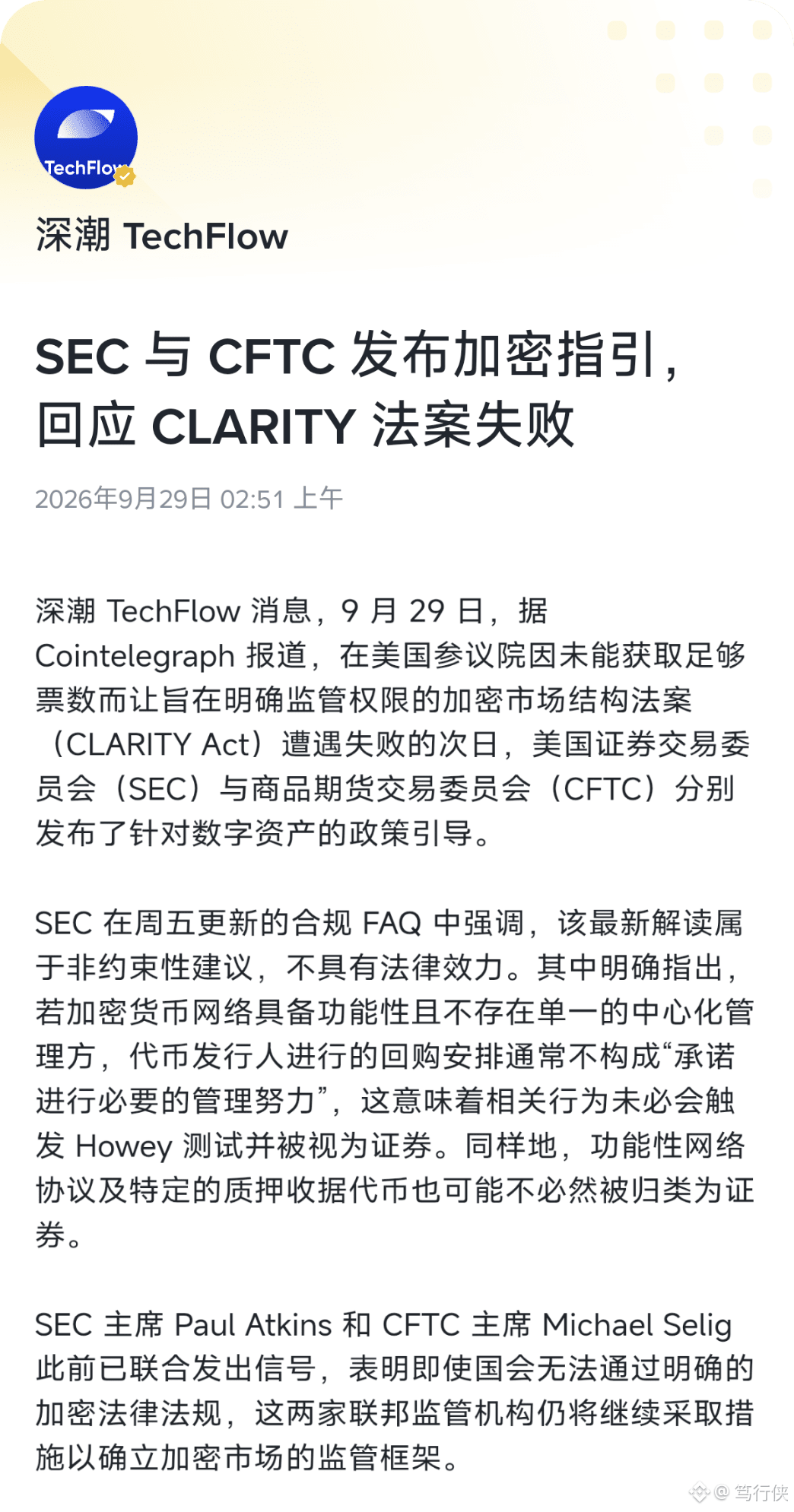
On September 25, a new SEC FAQ made it clear: for a network that is already up and running, when the issuer announces a repurchase of non-security tokens, it does not constitute a “key managerial efforts” under the Howey test. The repurchase announcement will not turn the token back into a security. Once the network is decentralized, even the original issuer’s statement of “continuing to maintain” does not create a new investment contract.
But the red line is clear: the SEC does not regulate the act of repurchasing itself—it regulates “how you advertise the repurchase.” If the network isn’t operational but the buyback is marketed as a “source of returns for holders,” it could be considered an investment contract. And don’t read the FAQ as “repurchase equals legal”—it has three limiting premises and approves no specific project.
The market has already voted with its feet: since Hyperliquid went live, buy/sell volume totaled $1.3 billion $HYPE , and Pump.fun burned 16.8% of its supply. This FAQ is essentially a green light for the “revenue buyback” model.
The buyback narrative will expand, but there are two pitfalls: “functional” is not precisely defined, and the gray zone is where lawsuits like to cluster; the FAQ has no legal force, and a new chair can overturn it at any time.
Looking at the wording of buyback announcements from held projects: they only mention “reduce supply and burn” as being safe, but saying “holders will receive returns” is dangerous. Also, look at the buyback amount against token issuance/emissions—only the net number actually burned is the real buyback.
Risk warning: the FAQ has no legally binding effect. The CLARITY Act didn’t pass in the Senate; during the legislative vacuum, staff viewpoints fill the gap. After buyback announcements, “sell facts” trading is also common.
#SEC称去中心化代币回购通常非投资合约
S&P 500 companies repurchased $1.02 trillion worth of shares in the past 12 months, and nobody cared.
This year, crypto projects didn’t repurchase $638 million until August 31, yet they’ve been hanging under the sword of “does it count as a security?”
On September 25, a new SEC FAQ made it clear: for a network that is already up and running, when the issuer announces a repurchase of non-security tokens, it does not constitute a “key managerial efforts” under the Howey test. The repurchase announcement will not turn the token back into a security. Once the network is decentralized, even the original issuer’s statement of “continuing to maintain” does not create a new investment contract.
But the red line is clear: the SEC does not regulate the act of repurchasing itself—it regulates “how you advertise the repurchase.” If the network isn’t operational but the buyback is marketed as a “source of returns for holders,” it could be considered an investment contract. And don’t read the FAQ as “repurchase equals legal”—it has three limiting premises and approves no specific project.
The market has already voted with its feet: since Hyperliquid went live, buy/sell volume totaled $1.3 billion $HYPE , and Pump.fun burned 16.8% of its supply. This FAQ is essentially a green light for the “revenue buyback” model.
The buyback narrative will expand, but there are two pitfalls: “functional” is not precisely defined, and the gray zone is where lawsuits like to cluster; the FAQ has no legal force, and a new chair can overturn it at any time.
Looking at the wording of buyback announcements from held projects: they only mention “reduce supply and burn” as being safe, but saying “holders will receive returns” is dangerous. Also, look at the buyback amount against token issuance/emissions—only the net number actually burned is the real buyback.
Risk warning: the FAQ has no legally binding effect. The CLARITY Act didn’t pass in the Senate; during the legislative vacuum, staff viewpoints fill the gap. After buyback announcements, “sell facts” trading is also common.
#SEC称去中心化代币回购通常非投资合约