


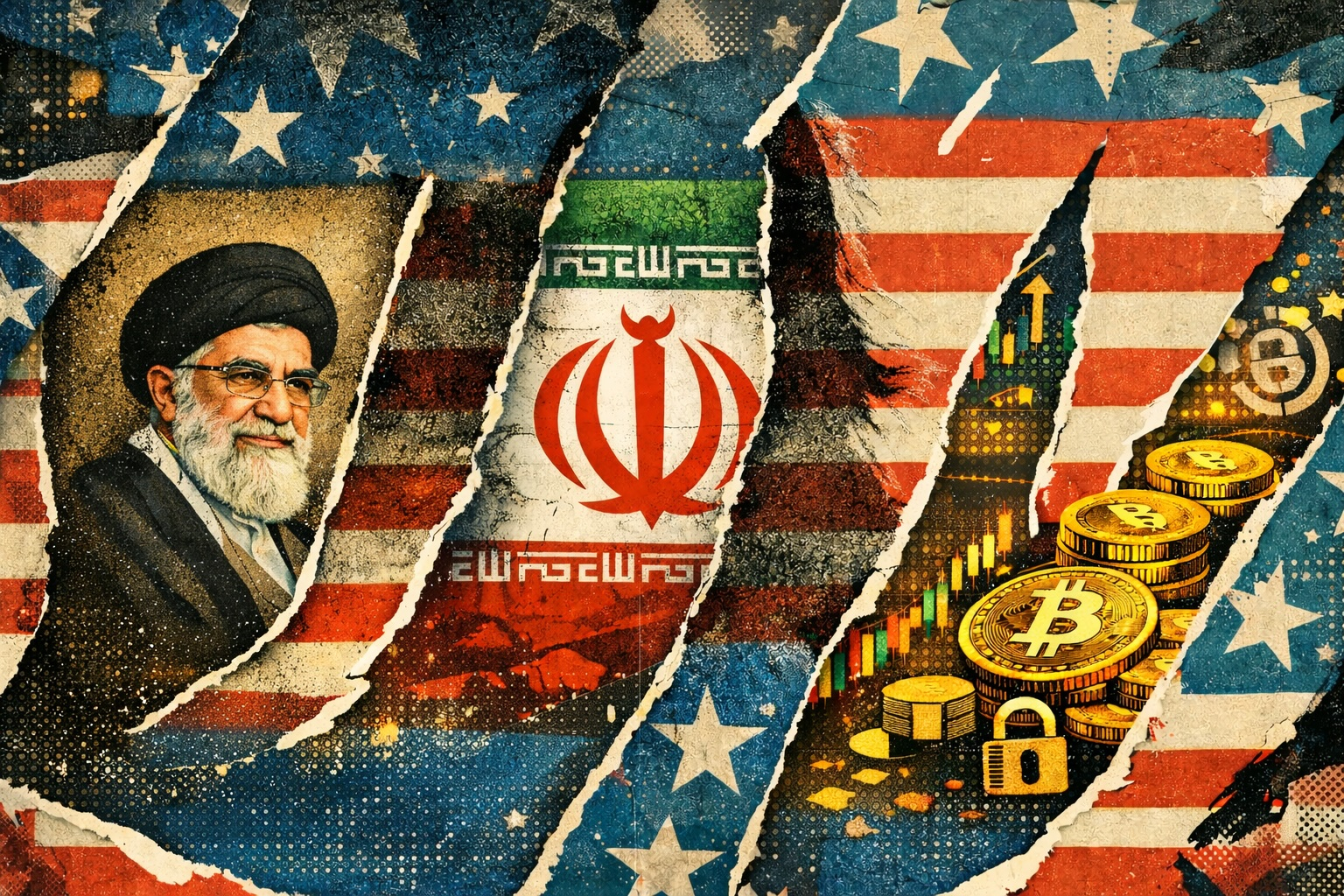
Global largest US dollar stablecoin USDT once again entangled in a controversy over US sanctions against Iran. In its latest analysis, Democratic investigators from the US Senate’s Permanent Subcommittee on Investigations (PSI) reviewed 846 cryptocurrency wallets tied to the US and Israel sanctions or asset freezes, and associated with Iran and its regional proxy organizations. They found that 84% of them had previously conducted transactions entirely or almost entirely using Tether-issued USDT. On the same day, Tether issued a statement to rebut the related criticisms, stressing that the company had already helped freeze about $550 million worth of USDT related to Iran as early as 2026.
Among 846 wallets, most use USDT almost exclusively
This investigative report, released by Connecticut Democratic Senator Richard Blumenthal and PSI’s chief Democratic lawmaker, conducted on-chain forensic analysis of 846 wallets related to Iran and its regional proxy organizations that have been sanctioned or targeted for asset seizure.
The most eye-catching finding is that 84% of the investigated wallets had traded "entirely or almost entirely" (exclusively, or nearly exclusively) using USDT.
Therefore, this "84%" figure cannot be interpreted as "84% of crypto trading volume related to Iran is USDT"; instead, it describes usage patterns at the wallet level. PSI Democratic Party investigators believe that USDT has become an important cross-border payment tool within Iran-related underground financial networks, including money flowing into and out of Iran and facilitating financial activity under international sanctions.
The report also notes that the relevant networks involve not only the Iranian government and central bank, but also sanctioned regional proxy organizations and financial activities related to drone and other military equipment procurement and sales. However, these are conclusions and allegations raised in the investigative report, and do not yet mean that a court has found that Tether violated U.S. sanctions law or anti-money laundering law. Blumenthal has asked the U.S. Treasury Department and the Department of Justice to investigate further.
The core of the controversy: Does Tether freeze quickly enough?
Another major criticism in the Democratic investigative panel’s report concerns Tether’s speed in freezing sanctioned wallets.
The report claims that before 2024, Tether did not fully and consistently freeze wallets designated by counterterrorism agencies, and believes the company still has not proactively blocked certain addresses that clearly involve illegal activity. The investigators therefore argue that USDT’s high liquidity, combined with the fact that some wallets in the past could continue operating, has gradually made it the preferred crypto-dollar tool for those related underground financial networks.
This is also the biggest difference between this whole incident and past reporting on "illegal use of cryptocurrencies": the controversy is not whether USDT can be frozen, but rather at what point in time and with what evidence centralized stablecoin issuers should proactively freeze addresses.
Tether counterattacks the same day: in 2026, it has frozen roughly US$550 million worth of Iran-related USDT
On September 28, Tether also announced another set of figures in response to external questions. The company said that since 2026 alone, actions taken in cooperation with the U.S. government have frozen about US$550 million in USDT involving Iran’s central bank and related sanctions-evasion networks, including:
April: about US$344 million USDT, distributed across two addresses;
July: over US$130 million USDT, distributed among four wallets;
Adding other related actions, the total for the year is approximately US$550 million.
Tether CEO Paolo Ardoino said the company has always worked with U.S. law enforcement and sanctions authorities, and argued that USDT is not a "safe haven" for sanctioned entities, terrorist organizations, or criminal networks. Reuters also confirmed that, in response to a Senate report, Tether provided data that the company has helped freeze nearly US$550 million in related assets this year.
In other words, there is actually no completely opposite data on whether both sides believe USDT is heavily used by Iran-related networks. The real clash is this: the Senate Democratic investigative side argues Tether’s past enforcement responses were insufficient, while Tether contends that what can be tracked and frozen is the area where centralized stablecoins are easier to enforce against than cash or parts of some decentralized assets.
USDT’s market cap is approaching US$184 billion, accounting for about sixty percent of the stablecoin market
This controversy is important partly because of USDT’s scale in the global stablecoin market.
As of September 29, the USDT price remains around US$0.9998, with a market capitalization of about US$183.77 billion, and a 24-hour trading volume of about US$74.3 billion.
As of September 28, USDT accounts for about 60.3% of the global stablecoin total market cap, while USDC is about 24.6%. Together they total nearly 84.9%. In other words, USDT’s dominant role in cross-border crypto payments, exchange settlement, and U.S. dollar liquidity markets far exceeds that of any other single stablecoin.
This also explains why USDT appears both in legitimate cross-border transactions and in sanctioned funding networks: it is one of the deepest and most widely accepted on-chain dollars for liquidity right now.
BTC is still fluctuating around US$83,000; the incident has not yet impacted the USDT peg.
In the market, as of the morning of September 29, the price of Bitcoin was around US$83,000. The latest quote briefly hovered around US$82,806 and has weakened for the fifth straight trading day. The market is currently mainly affected by rising U.S. Treasury yields and pressure on risk assets, rather than any direct sell-off triggered by the Tether/Iran incident.
USDT itself still remains stable at nearly US$1 and has not shown any obvious depegging so far; therefore, this incident is currently closer to a political and legal dispute over the boundaries of regulation, sanctions, and issuer responsibility, rather than a liquidity crisis for stablecoins.
Of note is that the U.S. Federal Reserve only proposed new stablecoin regulatory rules based on the GENIUS Act on September 24, meaning U.S. stablecoin policy is gradually extending from "asset reserves and payment oversight" to sanctions compliance, anti-money laundering, and the ability of issuers to proactively freeze accounts.
"Iranian crypto wallets trade 84% in USDT? Tether counters, saying it has frozen US$550 million this year" This article was first published on (BlockCast).