


 Peer-to-Peer (P2P) trading has been consolidated as the backbone of crypto adoption in the global digital economy. It enables the inflow and outflow of capital quickly and in a decentralized manner. However, operating in secondary markets exposes traders to a latent and stressful risk: the blocking or freezing of traditional bank accounts by financial institutions.
As a legal specialist and active trader, I analyze the defense mechanisms, prevention protocols, and the legal steps you must follow to safeguard your assets and effectively resolve this contingency.
⚖️ Legal analysis and professional judgment
In my day-to-day practice as a specialist attorney, and after evaluating multiple cases in the digital ecosystem, I state the following: the most common mistake of traditional banking institutions is to apply a generalized, indiscriminate freeze without respecting due process or analyzing the legality of the funds’ origin.
From a strictly legal perspective, I analyze that regulations for preventing money laundering provide authority to compliance officers, but these cannot be translated into operational confiscation or arbitrary retention of an individual’s assets without a duly motivated prior investigation. As legal professionals and digital merchants, we must demand respect for constitutional due-process guarantees, formally submitting the evidentiary records that demonstrate the commercial traceability of each P2P transaction. You are not defenseless: the law protects the citizen who acts in good faith with transparent supporting documents.
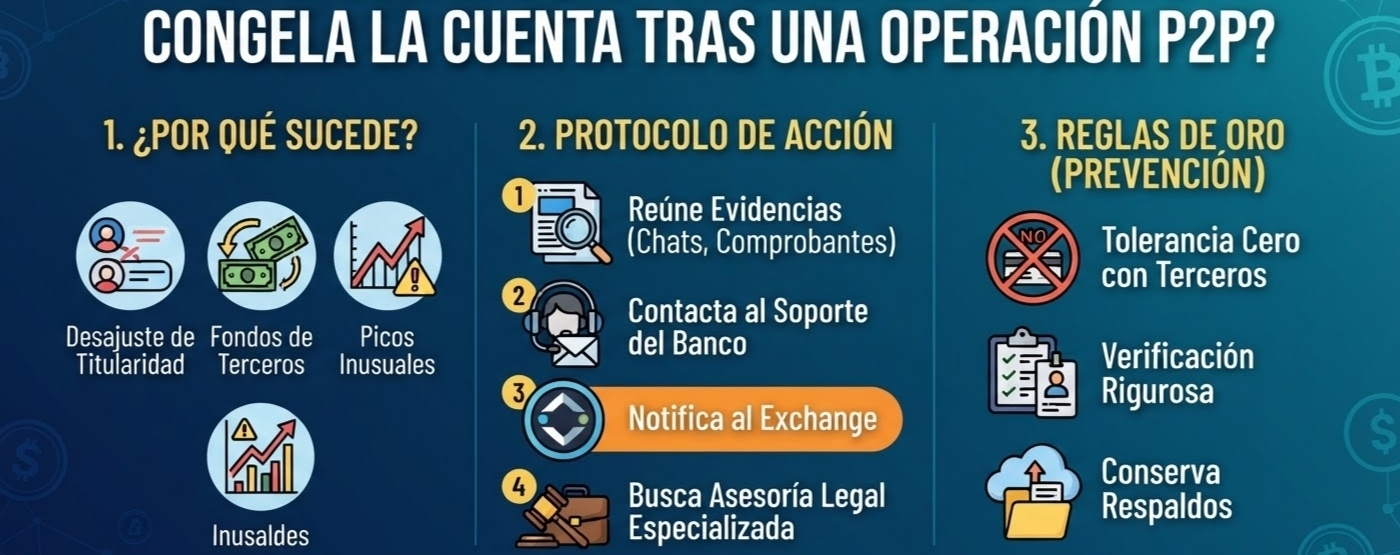
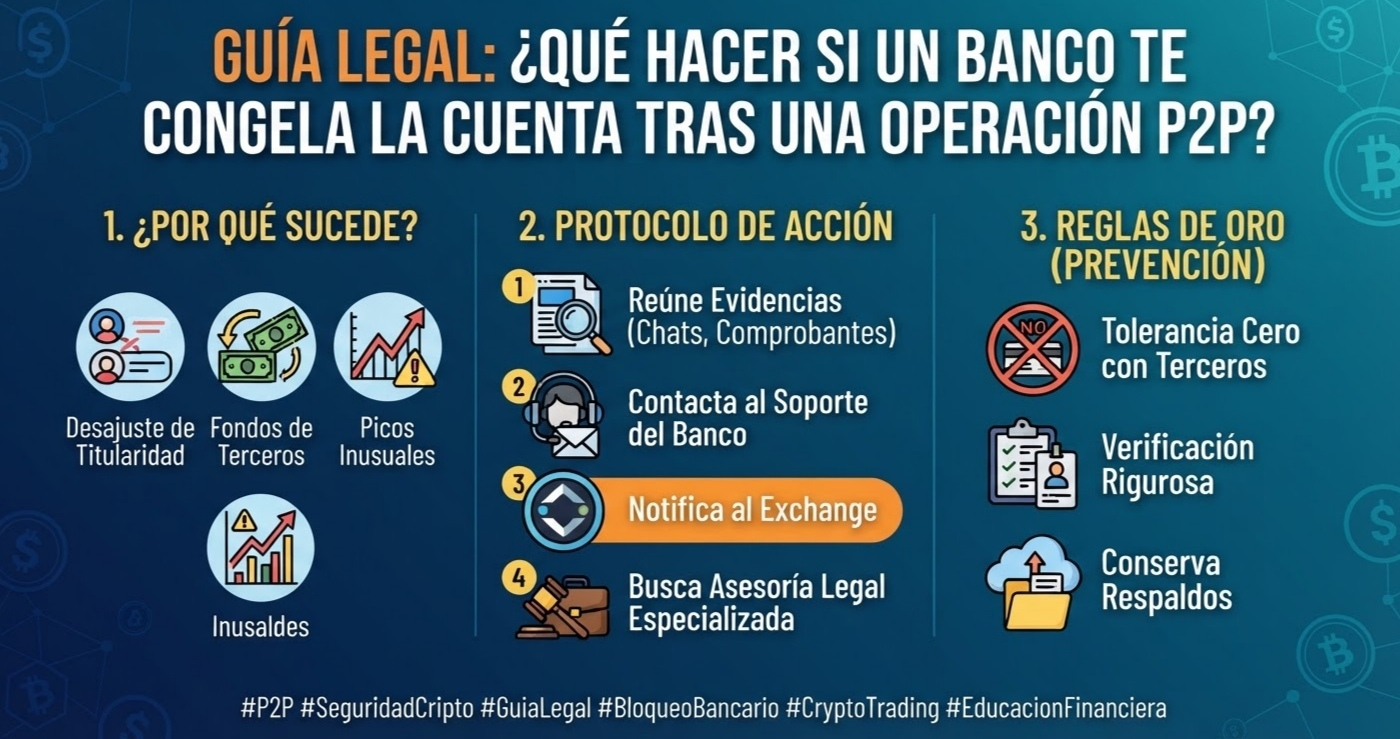
1. Why do banks freeze accounts after a P2P transaction?
The compliance and money-laundering-prevention (AML) departments of traditional banks operate using automated algorithms and “zero tolerance” policies for unusual activity. The main causes include:
Ownership mismatch: The name of the bank transfer sender does not match the verified buyer name on the exchange platform.
Third-party funds (Unscrupulous third parties): Receiving payments from accounts associated with prior reports, fraud, or scam schemes (such as the “triangle” fraud or “loaned payment”).
Unusual liquidity spikes: Personal accounts that receive multiple transfers in short periods without a trading or tax profile to justify it.
2. Immediate action protocol: What to do if your account has been blocked?
If you find yourself in this situation, time and legal strategy are your best allies. Don’t act impulsively; follow these steps:
Gather and secure all digital evidence:
Full screenshots of the P2P order chat on the exchange.
Payment receipts issued by the bank.
History of previous transactions with the same user (if applicable).
Formally contact the bank’s support: Request the legal justification and the department responsible for the freeze. Submit a digital folder with supporting documents proving that the funds come from a legitimate commercial transaction involving digital assets (complying with the regulations of your jurisdiction).
Notify the exchange (if necessary): Although exchanges operate outside the traditional banking system, keeping an internal appeal record gives you traceability regarding the commercial dispute.
Specialized legal advice: Seek legal professionals familiar with the crypto ecosystem and banking law to draft the remedies for protection (writs of amparo) or requests for de-indexing and release of the corresponding funds.
3. The 3 golden rules for operating in P2P without headaches
The best defense is prevention. Minimize the risk of account freezes by implementing these security filters:
Zero Tolerance with Third Parties: Never, under any circumstances, accept payments coming from third-party accounts. If the transfer name does not exactly match the identity document verified on the platform, cancel the order immediately.
Rigorous identity verification: Operate only with users who have verified merchant badges and an impeccable counterpart history.
Keep backups: Maintain a historical file of receipts and communications for a reasonable period (at least 90 days to one year).
Has a bank freeze ever happened to you while operating in P2P?
The ecosystem evolves fast, but financial education and legal compliance are our best tools for global defense.
👇 What do you think about the policies of traditional banks toward cryptocurrencies? Leave your thoughts in the comments.
👍 Support this content: If this guide was helpful, leave your like, share it with other traders to help them avoid financial traps, send it to your community groups, and follow me so you don’t miss the next security and P2P law analyses. Let’s make this information reach everyone! 🌍🚀
#P2P #BinanceP2P #CryptoSecurity #CryptoTrading #Bitcoin #BNB #FinancialEducation #CryptoLaw #TradingTips #Web3 #CryptoSecurity #Blockchain #P2PArbitration #GlobalFinance