

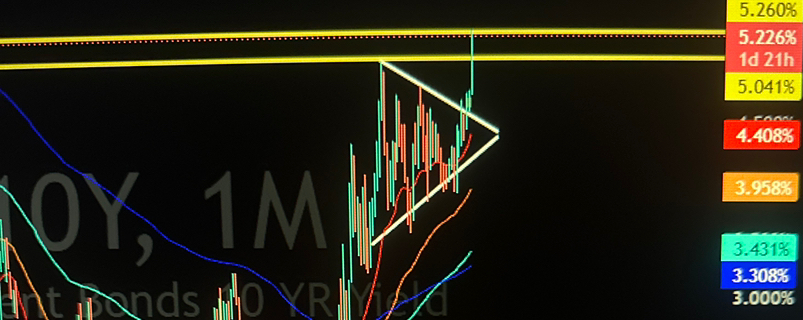

New development on 28/9: the 10-year Treasury yield reached approximately 5.24%, the highest level since 2007, while the 30-year yield climbed to about 5.56%, the highest since 2004. Brent settled at US$105.28, pressured by tensions between the U.S. and Iran. The implied probability of another Fed rate hike in October rose to near 70%.
Why it matters: this is no longer just about expensive oil or a negative day in BTC. The market is pricing in:
persistent energy inflation;
a new rate hike already priced in;
high real and nominal yields on government bonds;
higher cost of capital for equities, cryptoassets, and leveraged strategies.
Bitcoin remained near $83k, with only a moderate daily decline, but it has started to face an unusual competition from sovereign bonds yielding above 5%. This could reduce the willingness to take risk even without a specific deterioration in the Bitcoin network.
Inference for Zion Smart DCA: the environment reinforces the discipline of preserving cash and not turning a small dip into an automatic “opportunity buy.” There isn’t enough evidence to suspend the scheduled DCA, but there’s also no macro justification to front-load installments or increase multipliers just because BTC has pulled back about 1%–2%.
Risks and counterpoints: a negotiation between the US and Iran could quickly knock down oil and yields, reversing part of the financial tightening. In addition, BTC ETFs are still seeing strong weekly inflows, providing structural support. On the other hand, oil staying above $100 and 10-year Treasury yields above 5% would increase the risk of a broader correction.
What to watch now: US PCE, employment report, expectations for the Fed meeting in October, 10-year Treasury yields, and the evolution of negotiations in the Middle East.