📰 Why are miners suddenly moving to counteract? Why Crypto’s promises can change how securities are classified
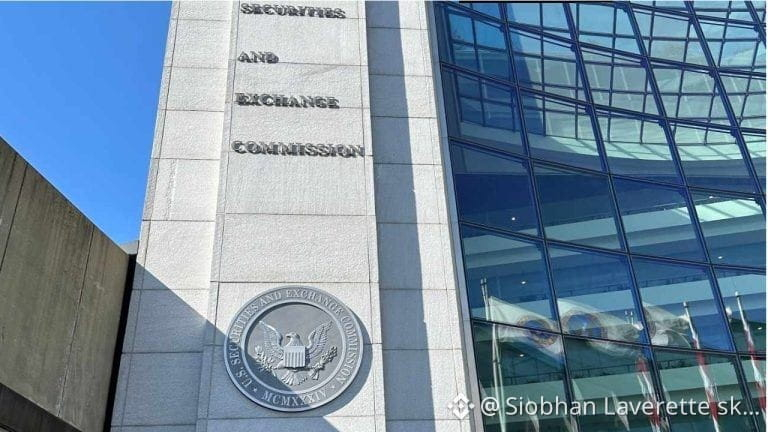
SEC (U.S. Securities and Exchange Commission) staff recently brought up something that may make many crypto projects shudder. Simply put, the promises made by cryptocurrency issuers to investors (such as return rates, buybacks, dividends, token use cases, etc.) directly affect whether a project will be classified as a security. For example, if you sell a token and promise a fixed interest rate or guaranteed price appreciation, that token is very likely to be considered a security. This involves many aspects, including marketing, network development, buybacks, staking instruments, trading platforms, and more—meaning that in the future, project teams can’t rely only on hype; they need to state the contract terms clearly, or they may get on regulators’ radar. This is a thunderbolt for all crypto projects.
Why is this news important?
The core reason is that regulators have finally started paying attention to the “hype-for-hope” culture in crypto. In the past, many projects avoided securities classification by making vague promises—such as saying the token has potential value, without specifying the actual use cases or how returns would be generated. Now SEC staff have clearly pointed out that these promises will directly determine the nature of a project. Behind this is the trend of regulators becoming stricter toward the crypto industry, especially areas like DeFi, NFTs, and “shitcoin” tokens. Recently, the U.S. passed a cryptocurrency accountability bill, and regulatory pressure has continued to ramp up; this statement is just part of the enforcement effort. In short: regulators may have turned a blind eye before, but now they intend to refine the rules down to the level of promises, which means compliance costs for projects will increase significantly.
Impact on the market
In the short term, this news will weigh on market sentiment. That’s because many projects previously didn’t include all their promises in the contract, and now they suddenly need to adjust them, creating uncertainty. Especially for projects that attract investors with promises of high returns, there may be risks of restructuring and even shutdown. For BTC and ETH: if compliance pressure causes many project teams to exit, it could reduce the circulating supply of tokens in the market, which might instead support prices. But in the long term, this will help the industry weed out the weak and keep what remains more regulated. Historically, similar events—such as Ethereum upgrades or the Solana controversy—eventually helped drive up token prices. However, this time the impact is more direct, because it involves securities classification, which could trigger a chain reaction.
💡 In the short term, if $BTC can hold steady around 84K, it suggests institutions are waiting to see what regulators do next. But once it breaks below 80K, that view becomes invalid. For ETH, $2.7K is a key support level: if it holds, it means the bulls are waiting for regulators to clearly specify the implementation details. If it breaks below 2.5K, that view becomes invalid. In other words, this news creates more short-term pressure on ETH.
This article has no project sponsorship. The author does not hold any of the assets mentioned
⚠️ This does not constitute investment advice; predictions are for reference only
#BTC $ETH
SEC (U.S. Securities and Exchange Commission) staff recently brought up something that may make many crypto projects shudder. Simply put, the promises made by cryptocurrency issuers to investors (such as return rates, buybacks, dividends, token use cases, etc.) directly affect whether a project will be classified as a security. For example, if you sell a token and promise a fixed interest rate or guaranteed price appreciation, that token is very likely to be considered a security. This involves many aspects, including marketing, network development, buybacks, staking instruments, trading platforms, and more—meaning that in the future, project teams can’t rely only on hype; they need to state the contract terms clearly, or they may get on regulators’ radar. This is a thunderbolt for all crypto projects.
Why is this news important?
The core reason is that regulators have finally started paying attention to the “hype-for-hope” culture in crypto. In the past, many projects avoided securities classification by making vague promises—such as saying the token has potential value, without specifying the actual use cases or how returns would be generated. Now SEC staff have clearly pointed out that these promises will directly determine the nature of a project. Behind this is the trend of regulators becoming stricter toward the crypto industry, especially areas like DeFi, NFTs, and “shitcoin” tokens. Recently, the U.S. passed a cryptocurrency accountability bill, and regulatory pressure has continued to ramp up; this statement is just part of the enforcement effort. In short: regulators may have turned a blind eye before, but now they intend to refine the rules down to the level of promises, which means compliance costs for projects will increase significantly.
Impact on the market
In the short term, this news will weigh on market sentiment. That’s because many projects previously didn’t include all their promises in the contract, and now they suddenly need to adjust them, creating uncertainty. Especially for projects that attract investors with promises of high returns, there may be risks of restructuring and even shutdown. For BTC and ETH: if compliance pressure causes many project teams to exit, it could reduce the circulating supply of tokens in the market, which might instead support prices. But in the long term, this will help the industry weed out the weak and keep what remains more regulated. Historically, similar events—such as Ethereum upgrades or the Solana controversy—eventually helped drive up token prices. However, this time the impact is more direct, because it involves securities classification, which could trigger a chain reaction.
💡 In the short term, if $BTC can hold steady around 84K, it suggests institutions are waiting to see what regulators do next. But once it breaks below 80K, that view becomes invalid. For ETH, $2.7K is a key support level: if it holds, it means the bulls are waiting for regulators to clearly specify the implementation details. If it breaks below 2.5K, that view becomes invalid. In other words, this news creates more short-term pressure on ETH.
This article has no project sponsorship. The author does not hold any of the assets mentioned
⚠️ This does not constitute investment advice; predictions are for reference only
#BTC $ETH