Two active conflicts. Oil above $100. Fed raising rates. Bitcoin at $82,000.
In February 2026, the US and Israel began military operations against Iran. The Strait of Hormuz — through which 20% of global oil passes — was effectively closed for weeks. Brent surged to $126 per barrel.
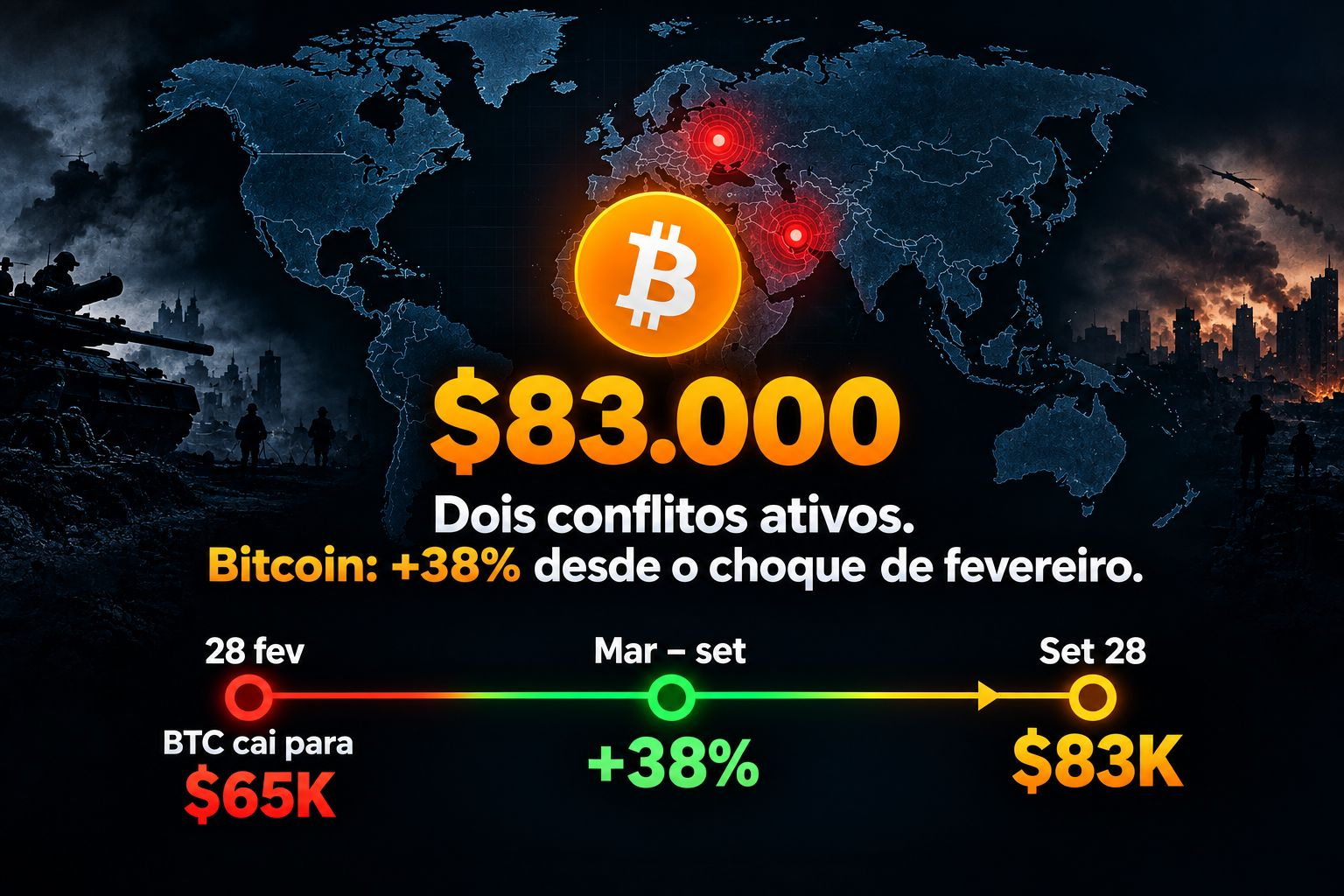
Bitcoin fell 23.8% in the first shock. It touched $65,000.
Then it rose +38% and is at $90,000 today.
In Ukraine, the war enters its fifth year. Trilateral talks between the US, Ukraine, and Russia are scheduled for October. A 3-day ceasefire was agreed in September. The world is on edge.
And Bitcoin is at $83,000.
This isn’t immunity to geopolitics. It’s something more interesting: structural resilience. When the shock passes, BTC recovers faster than any traditional asset. Because it has no borders, no government, and no central bank to freeze your account during a war.
Iranians used crypto during sanctions. Ukrainians received $127 million in crypto donations in the first months of the war — 6.5% of all initial international aid.
A world at war doesn’t kill Bitcoin. It validates it.
$BTC
In February 2026, the US and Israel began military operations against Iran. The Strait of Hormuz — through which 20% of global oil passes — was effectively closed for weeks. Brent surged to $126 per barrel.
Bitcoin fell 23.8% in the first shock. It touched $65,000.
Then it rose +38% and is at $90,000 today.
In Ukraine, the war enters its fifth year. Trilateral talks between the US, Ukraine, and Russia are scheduled for October. A 3-day ceasefire was agreed in September. The world is on edge.
And Bitcoin is at $83,000.
This isn’t immunity to geopolitics. It’s something more interesting: structural resilience. When the shock passes, BTC recovers faster than any traditional asset. Because it has no borders, no government, and no central bank to freeze your account during a war.
Iranians used crypto during sanctions. Ukrainians received $127 million in crypto donations in the first months of the war — 6.5% of all initial international aid.
A world at war doesn’t kill Bitcoin. It validates it.
$BTC