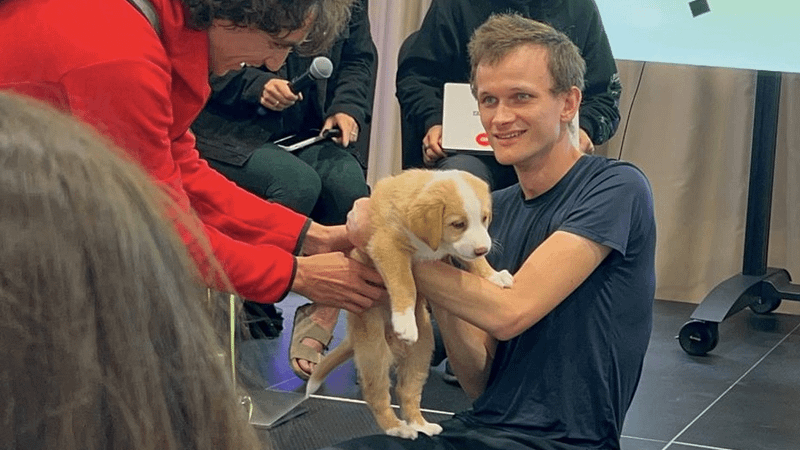
V God isn’t paying attention to short-term price action anymore—he’s already locked in how Ethereum will play out by 2030.
Everyone is still watching that single red-green candlestick, but V God is already planning Ethereum’s route to 2030. He posted a long piece on his 2030 vision. The key line is this: After Ethereum, it won’t be just a “blockchain”—it will become a “cryptography world computer.”
I genuinely admire this strategy. The arms race over chain speed is already over. New chains keep popping up one after another, all stepping on old narratives to grab eyeballs. If Ethereum still stays trapped in the box of “blockchain” and keeps competing over that, it’ll only get pinned down by faster chains. By switching to the “cryptography world computer,” V God is giving up the short-term arms race and directly betting on a spot in the infrastructure seats of 2030. Is that aggressive? Very. But the direction is right.
Capital is shifting locations elsewhere, too. SOL’s moving averages have just quietly turned bullish; the market is already calling for 15% to 20% upside room. The technical crowd has already been setting up positions in advance. Meanwhile, things are quieter on the stablecoin front: a $84 million USDT seizure case in the U.S. led to a bank involved in the matter. Tether responded, saying its exposure is limited. I read this statement carefully—the buffer looks sufficient, so it probably won’t cause a major wave.
The truth of this market is something veteran players have laid out long ago: what’s valuable is never one day’s candlestick—it’s who will still be at the table years from now. V God’s way of locking in a seat is to rewrite the rules first. This playbook is in the same lane as Ma’s little dog—what matters isn’t who barks louder, but who can stay lively for many years.
In the next few days, we’ll watch whether SOL initiates first. The moving averages are already set up—the rebound act needs market action to verify.
🐶 Come take a look at Ma’s little dog ✨🚀
Everyone is still watching that single red-green candlestick, but V God is already planning Ethereum’s route to 2030. He posted a long piece on his 2030 vision. The key line is this: After Ethereum, it won’t be just a “blockchain”—it will become a “cryptography world computer.”
I genuinely admire this strategy. The arms race over chain speed is already over. New chains keep popping up one after another, all stepping on old narratives to grab eyeballs. If Ethereum still stays trapped in the box of “blockchain” and keeps competing over that, it’ll only get pinned down by faster chains. By switching to the “cryptography world computer,” V God is giving up the short-term arms race and directly betting on a spot in the infrastructure seats of 2030. Is that aggressive? Very. But the direction is right.
Capital is shifting locations elsewhere, too. SOL’s moving averages have just quietly turned bullish; the market is already calling for 15% to 20% upside room. The technical crowd has already been setting up positions in advance. Meanwhile, things are quieter on the stablecoin front: a $84 million USDT seizure case in the U.S. led to a bank involved in the matter. Tether responded, saying its exposure is limited. I read this statement carefully—the buffer looks sufficient, so it probably won’t cause a major wave.
The truth of this market is something veteran players have laid out long ago: what’s valuable is never one day’s candlestick—it’s who will still be at the table years from now. V God’s way of locking in a seat is to rewrite the rules first. This playbook is in the same lane as Ma’s little dog—what matters isn’t who barks louder, but who can stay lively for many years.
In the next few days, we’ll watch whether SOL initiates first. The moving averages are already set up—the rebound act needs market action to verify.
🐶 Come take a look at Ma’s little dog ✨🚀