# This week features key non-farm payroll and PCE data
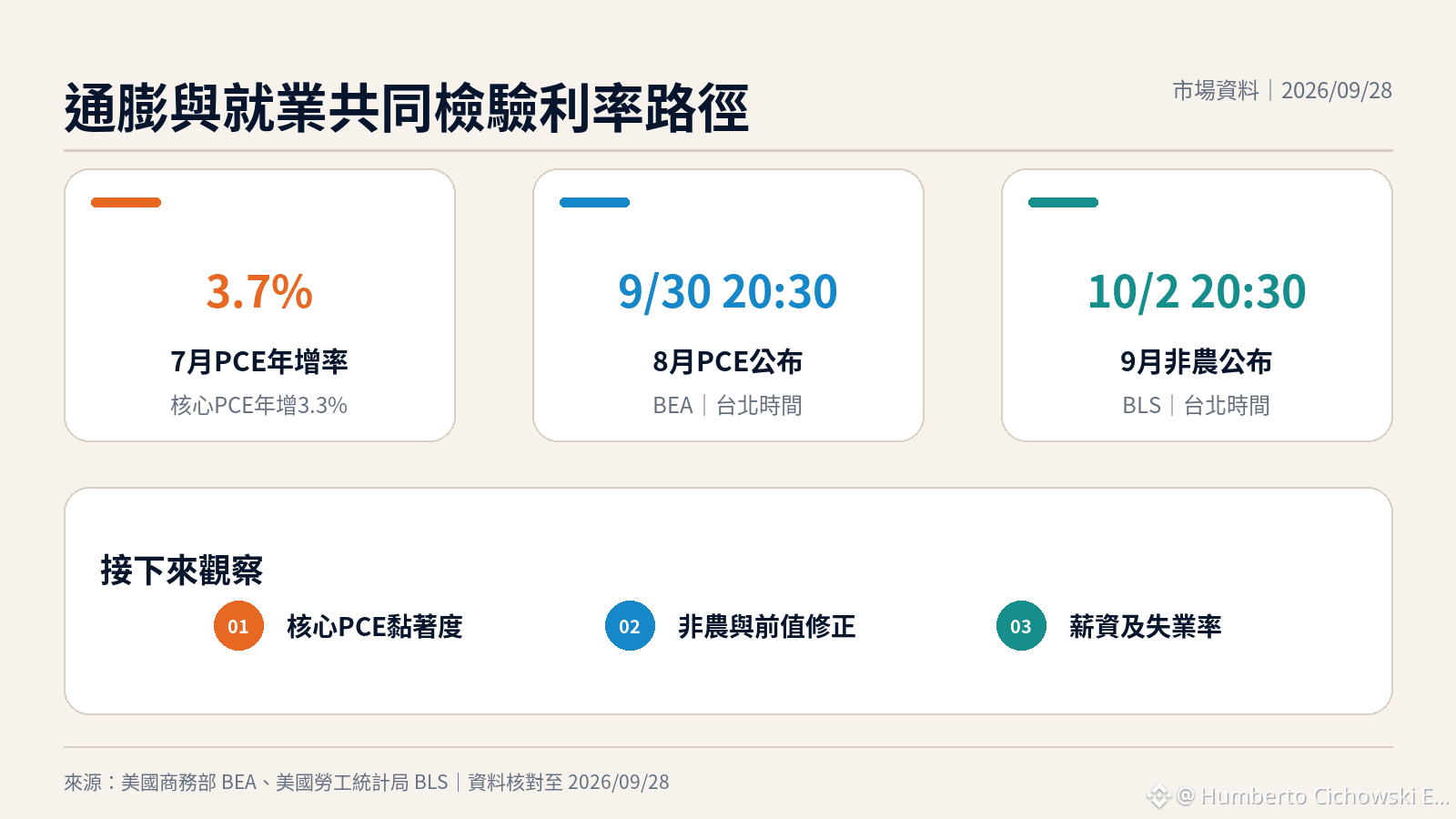
Conclusion: This week’s PCE and non-farm payrolls will jointly test the U.S. inflation outlook, employment conditions, and the interest-rate path. The BEA has scheduled the release of August personal income and outlays at 20:30 Taipei time on September 30; the BLS has scheduled the September jobs report for 20:30 Taipei time on October 2. The latest released data show that July PCE rose 3.7% year over year, and core PCE rose 3.3% year over year. In August, non-farm payrolls increased by 162,000, while average hourly earnings rose 3.1% year over year. If inflation remains sticky and employment stays resilient, the market may push back expectations for rate cuts, and U.S. Treasury yields and the U.S. dollar may remain elevated; if both cool off in tandem, valuation pressure on interest-rate-sensitive tech stocks may ease. Going forward, you should watch core PCE, revisions to the prior non-farm figure, the unemployment rate, and wages at the same time; it’s not advisable to rely on a single data point.
This article is for information only and does not constitute investment advice.
Conclusion: This week’s PCE and non-farm payrolls will jointly test the U.S. inflation outlook, employment conditions, and the interest-rate path. The BEA has scheduled the release of August personal income and outlays at 20:30 Taipei time on September 30; the BLS has scheduled the September jobs report for 20:30 Taipei time on October 2. The latest released data show that July PCE rose 3.7% year over year, and core PCE rose 3.3% year over year. In August, non-farm payrolls increased by 162,000, while average hourly earnings rose 3.1% year over year. If inflation remains sticky and employment stays resilient, the market may push back expectations for rate cuts, and U.S. Treasury yields and the U.S. dollar may remain elevated; if both cool off in tandem, valuation pressure on interest-rate-sensitive tech stocks may ease. Going forward, you should watch core PCE, revisions to the prior non-farm figure, the unemployment rate, and wages at the same time; it’s not advisable to rely on a single data point.
This article is for information only and does not constitute investment advice.