
If you think of the “Sarira” (Shard Relics) as just a token, you may only have seen its first layer.
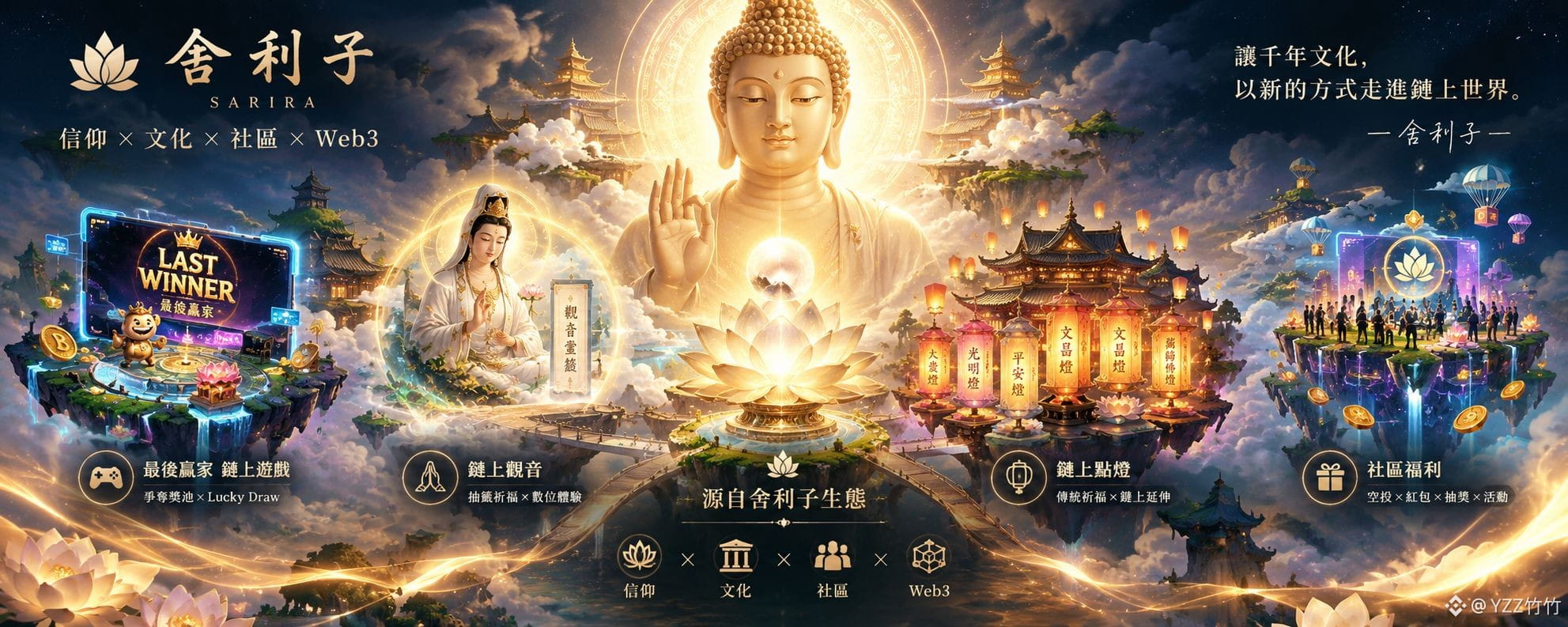
What’s truly interesting is that it’s trying to bring faith, traditional culture, community interaction, and Web3 into a single on-chain ecosystem. This isn’t a story about merely “trading coins”—it’s an exploration of how traditional culture can enter the digital world.
01|Staking × On-Chain Mining
By staking Sarira, you participate in a community-driven on-chain mining mechanism.
It’s not just about “holding a token”—it’s about becoming part of the ecosystem. By participating, you gain corresponding on-chain experiences and community benefits.
02|Last Winner: The Final Winner
Sarira also builds an on-chain community game called Last Winner.
By combining games, community, and on-chain mechanisms, Web3 becomes more than just “watching the market”—it can also be an interactive experience.
03|On-Chain Guanyin
This might be Sarira’s most culturally distinctive direction.
Transform traditional practices like fortune drawing, praying, and making wishes into a digital experience on the blockchain.
A thousand years ago, people went to temples to draw lots; today, people are starting to explore:
If faith could also be brought into Web3, what would it look like?
This isn’t meant to replace traditional culture—it’s an attempt to use new mediums so more young people can engage with it.
04|On-Chain Lamp Lighting, Coming Soon
In the future, on-chain lamp lighting will be introduced:
🏮 Tai Sui Lamp
✨ Brightness Lamp
🕊️ Peace Lamp
📚 Wenchang Lamp
💰 Wealth Lamp
🙏 Medicine Master Buddha Lamp
Extending the “lamp-lighting and blessing-praying” tradition from temples into the digital realm.
Starting with a single lamp, blessings take on another on-chain form.
05|Community—More Than Just Holders
Airdrops, red packets, raffles, and various community activities ensure that participants aren’t only token holders—they gradually come together as a community unified by shared cultural symbols.
This is also another thing Sarira wants to explore:
In Web3, can communities be built not only on price consensus, but on consensus around culture and faith?
What’s truly interesting is that it’s trying to bring faith, traditional culture, community interaction, and Web3 into a single on-chain ecosystem. This isn’t a story about merely “trading coins”—it’s an exploration of how traditional culture can enter the digital world.
01|Staking × On-Chain Mining
By staking Sarira, you participate in a community-driven on-chain mining mechanism.
It’s not just about “holding a token”—it’s about becoming part of the ecosystem. By participating, you gain corresponding on-chain experiences and community benefits.
02|Last Winner: The Final Winner
Sarira also builds an on-chain community game called Last Winner.
By combining games, community, and on-chain mechanisms, Web3 becomes more than just “watching the market”—it can also be an interactive experience.
03|On-Chain Guanyin
This might be Sarira’s most culturally distinctive direction.
Transform traditional practices like fortune drawing, praying, and making wishes into a digital experience on the blockchain.
A thousand years ago, people went to temples to draw lots; today, people are starting to explore:
If faith could also be brought into Web3, what would it look like?
This isn’t meant to replace traditional culture—it’s an attempt to use new mediums so more young people can engage with it.
04|On-Chain Lamp Lighting, Coming Soon
In the future, on-chain lamp lighting will be introduced:
🏮 Tai Sui Lamp
✨ Brightness Lamp
🕊️ Peace Lamp
📚 Wenchang Lamp
💰 Wealth Lamp
🙏 Medicine Master Buddha Lamp
Extending the “lamp-lighting and blessing-praying” tradition from temples into the digital realm.
Starting with a single lamp, blessings take on another on-chain form.
05|Community—More Than Just Holders
Airdrops, red packets, raffles, and various community activities ensure that participants aren’t only token holders—they gradually come together as a community unified by shared cultural symbols.
This is also another thing Sarira wants to explore:
In Web3, can communities be built not only on price consensus, but on consensus around culture and faith?