
📊 Capital management starts with how you enter the trade
One of the most important rules of successful trading is not to put your entire capital into a single trade. Instead, divide it in a way that gives you more flexibility and keeps part of the liquidity for upcoming opportunities.
For example, if your capital is $1,000, you can set the position size in a single trade between 10% and 20% of your capital—that is, roughly $100 to $200.
In this way, if you enter with 10% and then the price moves against your expectation, you will still have 90% of your capital outside the trade. And if you are more confident in the opportunity, you can enter with 20%, while always sticking to a stop-loss.
🔹 Practical example:
Capital: 1,000$
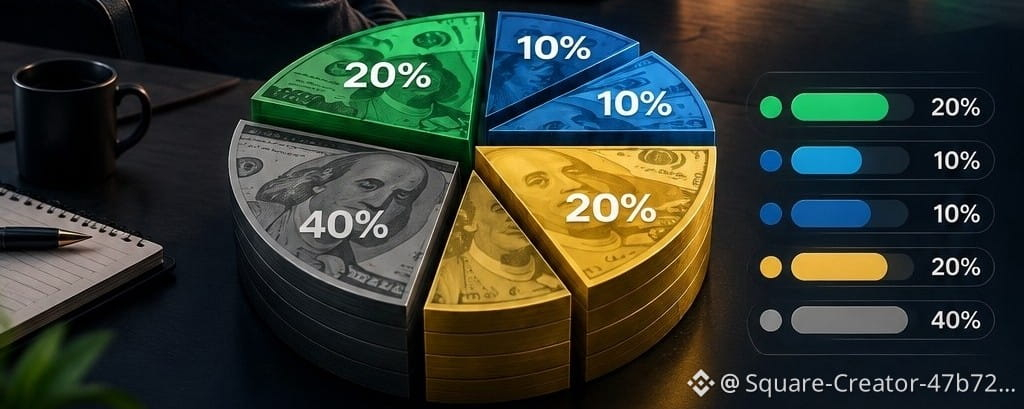
• First entry: 10% = 100$
• Second entry: 10% = 100$
• Third entry: 20% = 200$
• Fourth entry: 20% = 200$
• Remaining capital: 400$
With this approach, you don’t put your entire capital under the pressure of a single trade, and at the same time you keep liquidity that you can use when new opportunities arise or when you need to manage the trade.
🎯 The goal is to manage your capital in a way that allows you to stay in the market and benefit from upcoming opportunities


Article
Capital management starts with how you enter the trade
Disclaimer: Includes third-party opinions. No advice. Binance AI may be used without guarantee. See T&Cs.