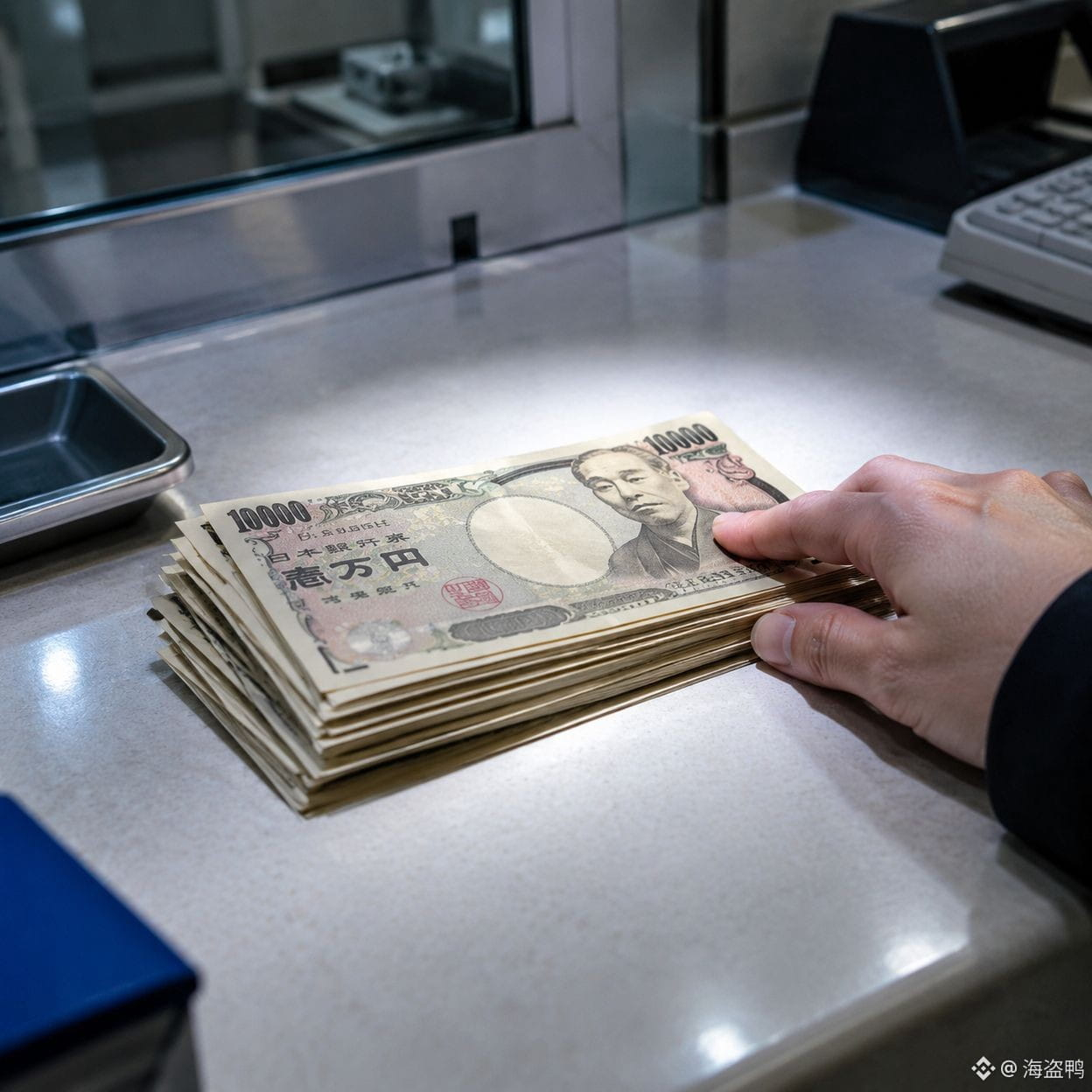
Japan’s Ministry of Finance took out a record $73.4 billion to buy yen last quarter—its biggest single-quarter intervention on record. But over the past couple of days, the yen has still weakened by 3.3% in a single day against the U.S. dollar, the largest move in more than two years. U.S. Treasury Secretary Bessent publicly said the yen is severely undervalued, and that excessive volatility is unhealthy.
Actual, in-the-money intervention combined with official verbal messaging all point to the yen strengthening. Yet the exchange rate’s answer keeps coming back to weakness, because it’s the interest-rate differential between the U.S. and Japan—not how much Japan is willing to spend—that drives the currency. As long as the differential remains, every dollar bought by intervention will return to the market again after a few months.
So I don’t quite believe the official claim that the direction has changed with their actions. What intervention can truly buy is time—slowing down the decline so it doesn’t spiral out of control on a particular trading day. How many rounds of ammo do you think Japan has left?
Actual, in-the-money intervention combined with official verbal messaging all point to the yen strengthening. Yet the exchange rate’s answer keeps coming back to weakness, because it’s the interest-rate differential between the U.S. and Japan—not how much Japan is willing to spend—that drives the currency. As long as the differential remains, every dollar bought by intervention will return to the market again after a few months.
So I don’t quite believe the official claim that the direction has changed with their actions. What intervention can truly buy is time—slowing down the decline so it doesn’t spiral out of control on a particular trading day. How many rounds of ammo do you think Japan has left?