

币圈小贝贝
156 Posts
 LIVE
LIVE币圈小贝贝
Report
Block User
11 Following
1.7K+ Followers
955 Liked
Posts
All
Live
·
--
#美国8月职位空缺降至五个月低点
A batch of money was pushed out the door by a vote, only to walk back in two days later—this is the part of the story worth watching..
[🔄 进群看机构动作](https://app.binance.com/uni-qr/F6dwNqgx)
In the past 30 days, US spot Bitcoin ETF net inflows totaled $2.95 billion, and by Monday it had already posted gains for eight straight trading days.. Just that number alone is a story of “the money is back.”
Most people stop reading here, thinking institutions have started buying again.. But if you stretch the timeline, the sequence isn’t like that.
On September 15, the Senate voted 49 to 50 to reject the advancement of the Clarity Act. That day, Bitcoin ETF saw net outflows of $450 million—the largest single-day outflow since June 24. On the same day, the Ethereum ETF also lost another $142 million.. For that week, the Bitcoin ETF net added only $6.2 million, the smallest week in 141 weeks.. Then on September 17, the money started moving back. On September 21 alone, it flowed in nearly $1 billion—its best day since October 2025. On September 22, it added another $715 million.
What’s really worth watching isn’t “the bill failed, so why is the money back,” but the reason the money returned was never policy.. The vote only provided an excuse to get people to lie low first, and once the price reaches the level it’s willing to buy at, it boards.. On Monday, Bitcoin reclaimed $84,000 and also crossed ETF holders’ average cost of $81,700. This is the first time since January this year for typical fund investors to return to being in the green.
Now look at where the money specifically went.. Over 30 days, Ethereum ETF received $983 million, Solana ETF $278 million, and XRP ETF $127 million.. The main battlefield is only one, the second tier another, and the rest are minor allocations.. This isn’t “institutions positioning for altcoins.” It’s that they’re still allocating by weight, only reserving positions for the top two assets.
So the weight of this news isn’t the inflow numbers—it’s the tempo.. The money knocked down by bad news doesn’t need good news to come back, as long as the price returns to the level it’s willing to accept.. The reverse is also true: these positions that just returned to profit are the most likely to get shaken out in the next bout of volatility.. The real thing to watch is whether, if next week brings another vote like September 15, this batch of just-recovered money will stay—or leave as usual.
#美国8月职位空缺降至五个月低点
A batch of money was pushed out the door by a vote, only to walk back in two days later—this is the part of the story worth watching..
🔄 进群看机构动作
In the past 30 days, US spot Bitcoin ETF net inflows totaled $2.95 billion, and by Monday it had already posted gains for eight straight trading days.. Just that number alone is a story of “the money is back.”
Most people stop reading here, thinking institutions have started buying again.. But if you stretch the timeline, the sequence isn’t like that.
On September 15, the Senate voted 49 to 50 to reject the advancement of the Clarity Act. That day, Bitcoin ETF saw net outflows of $450 million—the largest single-day outflow since June 24. On the same day, the Ethereum ETF also lost another $142 million.. For that week, the Bitcoin ETF net added only $6.2 million, the smallest week in 141 weeks.. Then on September 17, the money started moving back. On September 21 alone, it flowed in nearly $1 billion—its best day since October 2025. On September 22, it added another $715 million.
What’s really worth watching isn’t “the bill failed, so why is the money back,” but the reason the money returned was never policy.. The vote only provided an excuse to get people to lie low first, and once the price reaches the level it’s willing to buy at, it boards.. On Monday, Bitcoin reclaimed $84,000 and also crossed ETF holders’ average cost of $81,700. This is the first time since January this year for typical fund investors to return to being in the green.
Now look at where the money specifically went.. Over 30 days, Ethereum ETF received $983 million, Solana ETF $278 million, and XRP ETF $127 million.. The main battlefield is only one, the second tier another, and the rest are minor allocations.. This isn’t “institutions positioning for altcoins.” It’s that they’re still allocating by weight, only reserving positions for the top two assets.
So the weight of this news isn’t the inflow numbers—it’s the tempo.. The money knocked down by bad news doesn’t need good news to come back, as long as the price returns to the level it’s willing to accept.. The reverse is also true: these positions that just returned to profit are the most likely to get shaken out in the next bout of volatility.. The real thing to watch is whether, if next week brings another vote like September 15, this batch of just-recovered money will stay—or leave as usual.
A batch of money was pushed out the door by a vote, only to walk back in two days later—this is the part of the story worth watching..
🔄 进群看机构动作
In the past 30 days, US spot Bitcoin ETF net inflows totaled $2.95 billion, and by Monday it had already posted gains for eight straight trading days.. Just that number alone is a story of “the money is back.”
Most people stop reading here, thinking institutions have started buying again.. But if you stretch the timeline, the sequence isn’t like that.
On September 15, the Senate voted 49 to 50 to reject the advancement of the Clarity Act. That day, Bitcoin ETF saw net outflows of $450 million—the largest single-day outflow since June 24. On the same day, the Ethereum ETF also lost another $142 million.. For that week, the Bitcoin ETF net added only $6.2 million, the smallest week in 141 weeks.. Then on September 17, the money started moving back. On September 21 alone, it flowed in nearly $1 billion—its best day since October 2025. On September 22, it added another $715 million.
What’s really worth watching isn’t “the bill failed, so why is the money back,” but the reason the money returned was never policy.. The vote only provided an excuse to get people to lie low first, and once the price reaches the level it’s willing to buy at, it boards.. On Monday, Bitcoin reclaimed $84,000 and also crossed ETF holders’ average cost of $81,700. This is the first time since January this year for typical fund investors to return to being in the green.
Now look at where the money specifically went.. Over 30 days, Ethereum ETF received $983 million, Solana ETF $278 million, and XRP ETF $127 million.. The main battlefield is only one, the second tier another, and the rest are minor allocations.. This isn’t “institutions positioning for altcoins.” It’s that they’re still allocating by weight, only reserving positions for the top two assets.
So the weight of this news isn’t the inflow numbers—it’s the tempo.. The money knocked down by bad news doesn’t need good news to come back, as long as the price returns to the level it’s willing to accept.. The reverse is also true: these positions that just returned to profit are the most likely to get shaken out in the next bout of volatility.. The real thing to watch is whether, if next week brings another vote like September 15, this batch of just-recovered money will stay—or leave as usual.
856
·
--
Verified
#bitwise推出首只near现货etf
A coin that surged 167% gets packed into an ETF and listed on an exchange—at first glance it looks like chasing hype, but on closer inspection, it’s not just the coin being sold..
[📢 今日盘面群里聊](https://app.binance.com/uni-qr/F6dwNqgx)
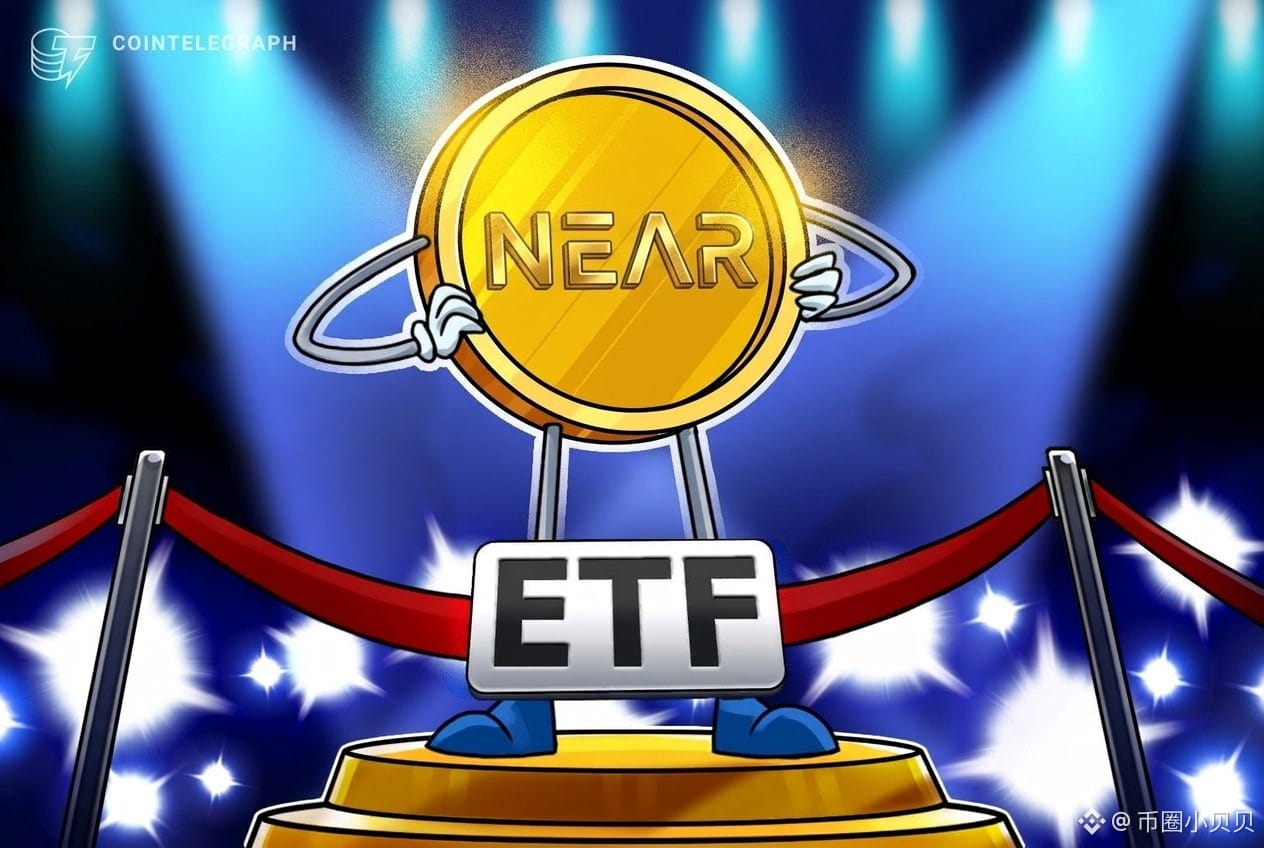
Bitwise launches the first U.S. spot NEAR ETF on NYSE Arca, ticker NRR. Expense ratio: 0.75%. It holds NEAR directly, and also plans to take a substantial portion of the fund’s tokens and stake them.. Its rationale isn’t the coin price—it’s that the trading volume of NEAR Intents grew from under $1 billion to more than $32 billion over the course of a year.
Most people reading this see it as yet another altcoin ETF getting approved.. But what’s truly worth looking at is the fund’s structure: an ETF that holds the coins, and also effectively handles staking for you to collect rental income. Spot ETFs and staking positions can’t be directly stitched together—once this link is made, the fund simultaneously gets two things: price exposure and on-chain “rent” revenue.
The money-rotation angle is even clearer.. In the U.S., Bitwise already has single-coin products for Bitcoin, Ethereum, Solana, XRP, and Hyperliquid; NEAR is the sixth. Last round’s ETF story was “big money can only buy BTC,” but now the list is pushing further into altcoins. Each new fund is like issuing a “institutional can buy” credential for the corresponding coin. NEAR is up 167% in a month—was it price first, or channel first? The order is hard to say.
Going one layer further, in 2024 NEAR shifted its direction toward AI. What Intents does is let users and AI agents state only what they want, while a third party finds the optimal solution on-chain.. Bitwise’s investment officer says AI agents will be NEAR’s primary use case; you can already see agents using this network, though most activity is still humans. Last week, BlackRock’s research also noted that more machine-to-machine trading will increase demand for stablecoins and tokenized assets.
Next, watch three things.. First, exactly what percentage of NEAR this ETF will stake and how the returns are distributed. Second, what share of Intents volume is attributable to agents. Third, which other coins might be written into this list next.
One reversal to keep in mind.. If machines really start paying for things themselves, the “rent” won’t go to any single coin—it will go to the track that’s written as the default channel. And what’s being launched this time is, in fact, that track.
#bitwise推出首只near现货etf
A coin that surged 167% gets packed into an ETF and listed on an exchange—at first glance it looks like chasing hype, but on closer inspection, it’s not just the coin being sold..
📢 今日盘面群里聊
Bitwise launches the first U.S. spot NEAR ETF on NYSE Arca, ticker NRR. Expense ratio: 0.75%. It holds NEAR directly, and also plans to take a substantial portion of the fund’s tokens and stake them.. Its rationale isn’t the coin price—it’s that the trading volume of NEAR Intents grew from under $1 billion to more than $32 billion over the course of a year.
Most people reading this see it as yet another altcoin ETF getting approved.. But what’s truly worth looking at is the fund’s structure: an ETF that holds the coins, and also effectively handles staking for you to collect rental income. Spot ETFs and staking positions can’t be directly stitched together—once this link is made, the fund simultaneously gets two things: price exposure and on-chain “rent” revenue.
The money-rotation angle is even clearer.. In the U.S., Bitwise already has single-coin products for Bitcoin, Ethereum, Solana, XRP, and Hyperliquid; NEAR is the sixth. Last round’s ETF story was “big money can only buy BTC,” but now the list is pushing further into altcoins. Each new fund is like issuing a “institutional can buy” credential for the corresponding coin. NEAR is up 167% in a month—was it price first, or channel first? The order is hard to say.
Going one layer further, in 2024 NEAR shifted its direction toward AI. What Intents does is let users and AI agents state only what they want, while a third party finds the optimal solution on-chain.. Bitwise’s investment officer says AI agents will be NEAR’s primary use case; you can already see agents using this network, though most activity is still humans. Last week, BlackRock’s research also noted that more machine-to-machine trading will increase demand for stablecoins and tokenized assets.
Next, watch three things.. First, exactly what percentage of NEAR this ETF will stake and how the returns are distributed. Second, what share of Intents volume is attributable to agents. Third, which other coins might be written into this list next.
One reversal to keep in mind.. If machines really start paying for things themselves, the “rent” won’t go to any single coin—it will go to the track that’s written as the default channel. And what’s being launched this time is, in fact, that track.
A coin that surged 167% gets packed into an ETF and listed on an exchange—at first glance it looks like chasing hype, but on closer inspection, it’s not just the coin being sold..
📢 今日盘面群里聊
Bitwise launches the first U.S. spot NEAR ETF on NYSE Arca, ticker NRR. Expense ratio: 0.75%. It holds NEAR directly, and also plans to take a substantial portion of the fund’s tokens and stake them.. Its rationale isn’t the coin price—it’s that the trading volume of NEAR Intents grew from under $1 billion to more than $32 billion over the course of a year.
Most people reading this see it as yet another altcoin ETF getting approved.. But what’s truly worth looking at is the fund’s structure: an ETF that holds the coins, and also effectively handles staking for you to collect rental income. Spot ETFs and staking positions can’t be directly stitched together—once this link is made, the fund simultaneously gets two things: price exposure and on-chain “rent” revenue.
The money-rotation angle is even clearer.. In the U.S., Bitwise already has single-coin products for Bitcoin, Ethereum, Solana, XRP, and Hyperliquid; NEAR is the sixth. Last round’s ETF story was “big money can only buy BTC,” but now the list is pushing further into altcoins. Each new fund is like issuing a “institutional can buy” credential for the corresponding coin. NEAR is up 167% in a month—was it price first, or channel first? The order is hard to say.
Going one layer further, in 2024 NEAR shifted its direction toward AI. What Intents does is let users and AI agents state only what they want, while a third party finds the optimal solution on-chain.. Bitwise’s investment officer says AI agents will be NEAR’s primary use case; you can already see agents using this network, though most activity is still humans. Last week, BlackRock’s research also noted that more machine-to-machine trading will increase demand for stablecoins and tokenized assets.
Next, watch three things.. First, exactly what percentage of NEAR this ETF will stake and how the returns are distributed. Second, what share of Intents volume is attributable to agents. Third, which other coins might be written into this list next.
One reversal to keep in mind.. If machines really start paying for things themselves, the “rent” won’t go to any single coin—it will go to the track that’s written as the default channel. And what’s being launched this time is, in fact, that track.
811
·
--
A wallet that was shut down for three years is reopening these past couple of days..
[📢 盘面异动群里说](https://app.binance.com/uni-qr/F6dwNqgx)
Aztec Labs has relaunched zk.money. It’s a self-custody payment wallet running on its own Aztec Network.. The funds you store can be DAI, USDC, or USDT, but the latter two get converted to DAI immediately upon entry—everything only recognizes DAI.. When you use it to transfer funds, the amounts, balances, and the payer/payee are all hidden. The recipient can use a name like bob.zk.money, or a link—no need to paste a long address.
At first glance, it looks like an old project is back from the dead, but this time it’s returning in a way that’s even more worth watching.. This version is an early Alpha: both deposits/withdrawals and payments are capped at under $2,500 per transaction. Everyone shares a daily deposit limit of $50,000, and each transaction still has to go through sanctions-list screening.. The official says these limits are temporary “protection while the system is still new,” and that raising them will require new contracts.
Privacy on-chain has always been an awkward thing.. With a normal Ethereum wallet, once someone knows the address, they can see your balance and past transaction history—everything is laid bare. A company’s vendor payments, an individual’s spending records—everything is out in the open. zk.money only hides the part after the money is put in. From the Ethereum deposit step, the sender and amount remain publicly traceable.
So this return feels more like a test than a launch.. What’s really changing is the positioning of the narrative: for the past two years, privacy has been pushed into the shadow of compliance, but now someone is bringing it back as a everyday payment tool—and they’ve proactively added screening and limits. In other words, they’re opening the door a crack first, then seeing how regulators and users respond.
And the money is moving.. This year, the privacy track’s biggest surge has ironically been from ZEC, the old coin that’s been criticized for the longest. But the coin price is only the surface—what’s truly being laid out is the payments layer: which track the money runs on, and who can see it. Once those default settings are set, the people who lay the rails collect the rent, not the coins on the rails.
Next, watch two things.. First, when they raise the limits. Second, how far the privacy-related proposals go in Ethereum’s 2027 upgrade cycle. Those proposals would make privacy applications rely less on external services—effectively loosening this line.
Here’s the twist.. The hardest part of privacy has never been the technology—it’s “the step you enter through.” As long as the entry point is still public, no matter how well you hide things inside, nothing changes at the boundary outside.
A wallet that was shut down for three years is reopening these past couple of days..
📢 盘面异动群里说
Aztec Labs has relaunched zk.money. It’s a self-custody payment wallet running on its own Aztec Network.. The funds you store can be DAI, USDC, or USDT, but the latter two get converted to DAI immediately upon entry—everything only recognizes DAI.. When you use it to transfer funds, the amounts, balances, and the payer/payee are all hidden. The recipient can use a name like bob.zk.money, or a link—no need to paste a long address.
At first glance, it looks like an old project is back from the dead, but this time it’s returning in a way that’s even more worth watching.. This version is an early Alpha: both deposits/withdrawals and payments are capped at under $2,500 per transaction. Everyone shares a daily deposit limit of $50,000, and each transaction still has to go through sanctions-list screening.. The official says these limits are temporary “protection while the system is still new,” and that raising them will require new contracts.
Privacy on-chain has always been an awkward thing.. With a normal Ethereum wallet, once someone knows the address, they can see your balance and past transaction history—everything is laid bare. A company’s vendor payments, an individual’s spending records—everything is out in the open. zk.money only hides the part after the money is put in. From the Ethereum deposit step, the sender and amount remain publicly traceable.
So this return feels more like a test than a launch.. What’s really changing is the positioning of the narrative: for the past two years, privacy has been pushed into the shadow of compliance, but now someone is bringing it back as a everyday payment tool—and they’ve proactively added screening and limits. In other words, they’re opening the door a crack first, then seeing how regulators and users respond.
And the money is moving.. This year, the privacy track’s biggest surge has ironically been from ZEC, the old coin that’s been criticized for the longest. But the coin price is only the surface—what’s truly being laid out is the payments layer: which track the money runs on, and who can see it. Once those default settings are set, the people who lay the rails collect the rent, not the coins on the rails.
Next, watch two things.. First, when they raise the limits. Second, how far the privacy-related proposals go in Ethereum’s 2027 upgrade cycle. Those proposals would make privacy applications rely less on external services—effectively loosening this line.
Here’s the twist.. The hardest part of privacy has never been the technology—it’s “the step you enter through.” As long as the entry point is still public, no matter how well you hide things inside, nothing changes at the boundary outside.
📢 盘面异动群里说
Aztec Labs has relaunched zk.money. It’s a self-custody payment wallet running on its own Aztec Network.. The funds you store can be DAI, USDC, or USDT, but the latter two get converted to DAI immediately upon entry—everything only recognizes DAI.. When you use it to transfer funds, the amounts, balances, and the payer/payee are all hidden. The recipient can use a name like bob.zk.money, or a link—no need to paste a long address.
At first glance, it looks like an old project is back from the dead, but this time it’s returning in a way that’s even more worth watching.. This version is an early Alpha: both deposits/withdrawals and payments are capped at under $2,500 per transaction. Everyone shares a daily deposit limit of $50,000, and each transaction still has to go through sanctions-list screening.. The official says these limits are temporary “protection while the system is still new,” and that raising them will require new contracts.
Privacy on-chain has always been an awkward thing.. With a normal Ethereum wallet, once someone knows the address, they can see your balance and past transaction history—everything is laid bare. A company’s vendor payments, an individual’s spending records—everything is out in the open. zk.money only hides the part after the money is put in. From the Ethereum deposit step, the sender and amount remain publicly traceable.
So this return feels more like a test than a launch.. What’s really changing is the positioning of the narrative: for the past two years, privacy has been pushed into the shadow of compliance, but now someone is bringing it back as a everyday payment tool—and they’ve proactively added screening and limits. In other words, they’re opening the door a crack first, then seeing how regulators and users respond.
And the money is moving.. This year, the privacy track’s biggest surge has ironically been from ZEC, the old coin that’s been criticized for the longest. But the coin price is only the surface—what’s truly being laid out is the payments layer: which track the money runs on, and who can see it. Once those default settings are set, the people who lay the rails collect the rent, not the coins on the rails.
Next, watch two things.. First, when they raise the limits. Second, how far the privacy-related proposals go in Ethereum’s 2027 upgrade cycle. Those proposals would make privacy applications rely less on external services—effectively loosening this line.
Here’s the twist.. The hardest part of privacy has never been the technology—it’s “the step you enter through.” As long as the entry point is still public, no matter how well you hide things inside, nothing changes at the boundary outside.
633
·
--
#全网爆仓6.74亿美元
Everyone is counting how much money goes into ETFs, but what’s truly worth looking at is how that money is being moved in..
[📢 进群蹲一手消息](https://app.binance.com/uni-qr/F6dwNqgx)
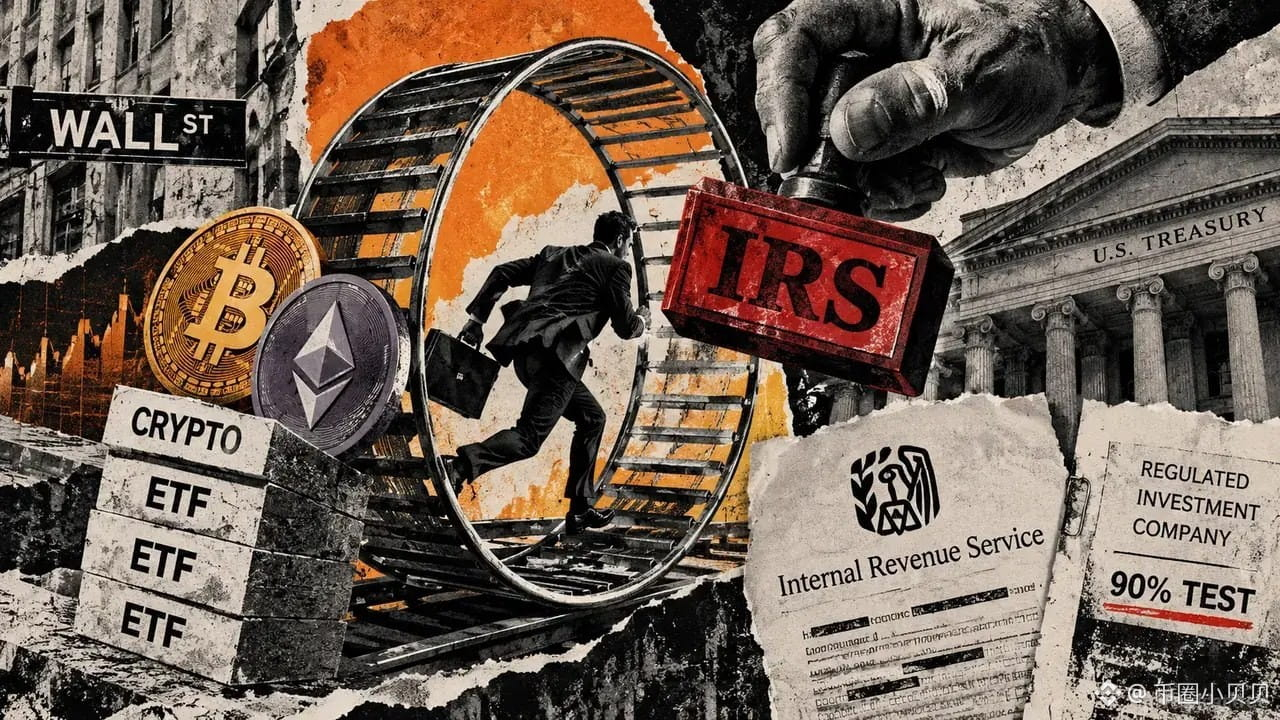
Over the past few days, the U.S. Treasury Department and the IRS have directed their attention at a pipeline used by crypto ETFs: in-kind creations and redemptions. In plain terms, the fund doesn’t have to sell the coins first to convert them into cash and then pay the market maker back; instead, it can move the coins directly over. This pipeline was only opened up in the past year, with the official justification being cost savings and reduced slippage.
Where’s the problem.. U.S. funds have a hard requirement to preserve their tax benefits: more than 90% of their gross income for the entire year must come from qualifying sources. Dividends, interest, stock and securities gains all count—other assets don’t. Now there’s a fund claiming that unrealized appreciation that hasn’t been sold—hasn’t been realized—can be excluded entirely from this denominator. So regardless of how much they actually made, they can keep themselves under the 90% line.
The Treasury Department has directly pointed out that this calculation method doesn’t hold up.
How big is this pipeline now, numerically.. The largest Bitcoin ETF moved out about $5.49 billion worth of Bitcoin via in-kind redemptions in the first half of the year, including about $3.85 billion in Q2. The Ethereum ETF from the same provider moved out another $1.72 billion by the end of June. Together, the two ETFs moved out about $7.2 billion in the first half. In the same period, the Bitcoin they received through in-kind creations was still about $9.36 billion.
What’s really worth watching isn’t the $7.2 billion—it’s the four words: “doesn’t recognize gains.” Traditional funds have used this mechanism for decades, and crypto ETFs only got fully equipped with it last year. A machine that lets funds move without touching the accounting and without creating a taxable event. The thing being bypassed isn’t just the tax rate—it’s also the judgment of whether you actually made money in the first place.
Let’s make it clear: this isn’t a ban.. The Treasury is currently only asking all parties to submit information, then deciding whether to issue formal rules. But in the same document, another tactic has already been directly rejected: investors first stuff appreciated assets into the ETF, then redeem them soon after to swap into another portfolio. What previously could avoid being treated as a taxable event is now explicitly required to be reclassified. Strike the most aggressive first, then ask the core question—the order is very clear.
As for the market picture, money won’t disappear just because this paper changes. But the pipeline cost will.. Whether institutions use a channel depends on efficiency, not storytelling. When costs are really pushed back onto the funds, they’ll mostly be spread into expense ratios and tracking error—ultimately borne by each account that buys the ETF.
What’s truly worth monitoring is the next step: whether formal rules will be issued. Once the standard is finalized, what likely needs the most changes might not be these crypto funds using a handful of such mechanisms, but the much larger traditional products that have used the same pipeline for decades. If everything ends up going nowhere, it’s effectively an admission that this pipeline can keep being used that way. Two different outcomes mean two different things for how passive capital is priced.
#全网爆仓6.74亿美元
Everyone is counting how much money goes into ETFs, but what’s truly worth looking at is how that money is being moved in..
📢 进群蹲一手消息
Over the past few days, the U.S. Treasury Department and the IRS have directed their attention at a pipeline used by crypto ETFs: in-kind creations and redemptions. In plain terms, the fund doesn’t have to sell the coins first to convert them into cash and then pay the market maker back; instead, it can move the coins directly over. This pipeline was only opened up in the past year, with the official justification being cost savings and reduced slippage.
Where’s the problem.. U.S. funds have a hard requirement to preserve their tax benefits: more than 90% of their gross income for the entire year must come from qualifying sources. Dividends, interest, stock and securities gains all count—other assets don’t. Now there’s a fund claiming that unrealized appreciation that hasn’t been sold—hasn’t been realized—can be excluded entirely from this denominator. So regardless of how much they actually made, they can keep themselves under the 90% line.
The Treasury Department has directly pointed out that this calculation method doesn’t hold up.
How big is this pipeline now, numerically.. The largest Bitcoin ETF moved out about $5.49 billion worth of Bitcoin via in-kind redemptions in the first half of the year, including about $3.85 billion in Q2. The Ethereum ETF from the same provider moved out another $1.72 billion by the end of June. Together, the two ETFs moved out about $7.2 billion in the first half. In the same period, the Bitcoin they received through in-kind creations was still about $9.36 billion.
What’s really worth watching isn’t the $7.2 billion—it’s the four words: “doesn’t recognize gains.” Traditional funds have used this mechanism for decades, and crypto ETFs only got fully equipped with it last year. A machine that lets funds move without touching the accounting and without creating a taxable event. The thing being bypassed isn’t just the tax rate—it’s also the judgment of whether you actually made money in the first place.
Let’s make it clear: this isn’t a ban.. The Treasury is currently only asking all parties to submit information, then deciding whether to issue formal rules. But in the same document, another tactic has already been directly rejected: investors first stuff appreciated assets into the ETF, then redeem them soon after to swap into another portfolio. What previously could avoid being treated as a taxable event is now explicitly required to be reclassified. Strike the most aggressive first, then ask the core question—the order is very clear.
As for the market picture, money won’t disappear just because this paper changes. But the pipeline cost will.. Whether institutions use a channel depends on efficiency, not storytelling. When costs are really pushed back onto the funds, they’ll mostly be spread into expense ratios and tracking error—ultimately borne by each account that buys the ETF.
What’s truly worth monitoring is the next step: whether formal rules will be issued. Once the standard is finalized, what likely needs the most changes might not be these crypto funds using a handful of such mechanisms, but the much larger traditional products that have used the same pipeline for decades. If everything ends up going nowhere, it’s effectively an admission that this pipeline can keep being used that way. Two different outcomes mean two different things for how passive capital is priced.
Everyone is counting how much money goes into ETFs, but what’s truly worth looking at is how that money is being moved in..
📢 进群蹲一手消息
Over the past few days, the U.S. Treasury Department and the IRS have directed their attention at a pipeline used by crypto ETFs: in-kind creations and redemptions. In plain terms, the fund doesn’t have to sell the coins first to convert them into cash and then pay the market maker back; instead, it can move the coins directly over. This pipeline was only opened up in the past year, with the official justification being cost savings and reduced slippage.
Where’s the problem.. U.S. funds have a hard requirement to preserve their tax benefits: more than 90% of their gross income for the entire year must come from qualifying sources. Dividends, interest, stock and securities gains all count—other assets don’t. Now there’s a fund claiming that unrealized appreciation that hasn’t been sold—hasn’t been realized—can be excluded entirely from this denominator. So regardless of how much they actually made, they can keep themselves under the 90% line.
The Treasury Department has directly pointed out that this calculation method doesn’t hold up.
How big is this pipeline now, numerically.. The largest Bitcoin ETF moved out about $5.49 billion worth of Bitcoin via in-kind redemptions in the first half of the year, including about $3.85 billion in Q2. The Ethereum ETF from the same provider moved out another $1.72 billion by the end of June. Together, the two ETFs moved out about $7.2 billion in the first half. In the same period, the Bitcoin they received through in-kind creations was still about $9.36 billion.
What’s really worth watching isn’t the $7.2 billion—it’s the four words: “doesn’t recognize gains.” Traditional funds have used this mechanism for decades, and crypto ETFs only got fully equipped with it last year. A machine that lets funds move without touching the accounting and without creating a taxable event. The thing being bypassed isn’t just the tax rate—it’s also the judgment of whether you actually made money in the first place.
Let’s make it clear: this isn’t a ban.. The Treasury is currently only asking all parties to submit information, then deciding whether to issue formal rules. But in the same document, another tactic has already been directly rejected: investors first stuff appreciated assets into the ETF, then redeem them soon after to swap into another portfolio. What previously could avoid being treated as a taxable event is now explicitly required to be reclassified. Strike the most aggressive first, then ask the core question—the order is very clear.
As for the market picture, money won’t disappear just because this paper changes. But the pipeline cost will.. Whether institutions use a channel depends on efficiency, not storytelling. When costs are really pushed back onto the funds, they’ll mostly be spread into expense ratios and tracking error—ultimately borne by each account that buys the ETF.
What’s truly worth monitoring is the next step: whether formal rules will be issued. Once the standard is finalized, what likely needs the most changes might not be these crypto funds using a handful of such mechanisms, but the much larger traditional products that have used the same pipeline for decades. If everything ends up going nowhere, it’s effectively an admission that this pipeline can keep being used that way. Two different outcomes mean two different things for how passive capital is priced.
1
507
·
--
Two coins were added to a loan collateral whitelist—something even the fastest breaking-news outlets wouldn’t bother reporting on normally.. But this time, one of the assets added is HYPE, the native token of an on-chain perpetual contract platform; the other is ZEC, the “privacy” coin that’s been tagged for the longest. Only when both types of assets are accepted as collateral by the same U.S. publicly listed exchange is it worth pausing to take a closer look.
[🔄 进群看叙事](https://app.binance.com/uni-qr/F6dwNqgx)
First, let’s lay out the facts clearly.. This exchange’s users can now use HYPE and ZEC as collateral to borrow USDC, up to $100,000 per single transaction, without needing to sell the coins they already hold first, and also avoiding taxable events triggered by selling.. It’s only open to eligible U.S. users, with the exception of New York.
What’s truly worth watching isn’t “the list gained two more lines”—it’s that this list is issuing credentials to the assets..
Even if a coin’s market cap is huge, if nobody is willing to accept it as collateral, it can only sit in the account as a speculative holding.. Once it gets added to the collateral list, it moves from “guessing the direction” to “getting financing”.. And the three numbers at the bottom are what determine the asset’s rating.
This lending setup runs on the on-chain lending protocol Morpho. For borrowed positions using altcoin collateral, the loan-to-value limit is capped at 49%, and the liquidation threshold is 62.5%.. Plain English: if you deposit $10,000 worth of HYPE, you can borrow up to about $4,900; if the value falls so that this loan represents 62.5% of the collateral value, the position gets liquidated.
There’s another timeline detail you shouldn’t miss.. On September 1, this exchange first issued cbHYPE and cbZEC on its own Ethereum layer-2, backed one-for-one by the custody assets—essentially reshaping coins that aren’t easy to enter DeFi into forms DeFi recognizes. Only after the pipeline was laid down did it put the finished products back onto the collateral whitelist.
Fix the road first, then open the gates—not a spur-of-the-moment idea..
You can borrow dollars without selling coins—basically converting the unrealized gains on your account into purchasing power that can actually be used.. When that borrowed money comes back onto the order book, it shows up as buy pressure; a reversal in the market becomes liquidation pressure.. A privacy coin that was accepted as collateral—one that had a big move in the last upcycle and hasn’t had fresh stories recently—is inherently quite counterintuitive.
What really deserves close attention is that 62.5%.. The more volatile the collateral is, the easier it is to be forced-sold in the next downturn.. Writing the hottest coins into the list is, in the short term, loosening the grip on holders—but in the long term, it’s also laying the groundwork for the next round of domino liquidations.
Two coins were added to a loan collateral whitelist—something even the fastest breaking-news outlets wouldn’t bother reporting on normally.. But this time, one of the assets added is HYPE, the native token of an on-chain perpetual contract platform; the other is ZEC, the “privacy” coin that’s been tagged for the longest. Only when both types of assets are accepted as collateral by the same U.S. publicly listed exchange is it worth pausing to take a closer look.
🔄 进群看叙事
First, let’s lay out the facts clearly.. This exchange’s users can now use HYPE and ZEC as collateral to borrow USDC, up to $100,000 per single transaction, without needing to sell the coins they already hold first, and also avoiding taxable events triggered by selling.. It’s only open to eligible U.S. users, with the exception of New York.
What’s truly worth watching isn’t “the list gained two more lines”—it’s that this list is issuing credentials to the assets..
Even if a coin’s market cap is huge, if nobody is willing to accept it as collateral, it can only sit in the account as a speculative holding.. Once it gets added to the collateral list, it moves from “guessing the direction” to “getting financing”.. And the three numbers at the bottom are what determine the asset’s rating.
This lending setup runs on the on-chain lending protocol Morpho. For borrowed positions using altcoin collateral, the loan-to-value limit is capped at 49%, and the liquidation threshold is 62.5%.. Plain English: if you deposit $10,000 worth of HYPE, you can borrow up to about $4,900; if the value falls so that this loan represents 62.5% of the collateral value, the position gets liquidated.
There’s another timeline detail you shouldn’t miss.. On September 1, this exchange first issued cbHYPE and cbZEC on its own Ethereum layer-2, backed one-for-one by the custody assets—essentially reshaping coins that aren’t easy to enter DeFi into forms DeFi recognizes. Only after the pipeline was laid down did it put the finished products back onto the collateral whitelist.
Fix the road first, then open the gates—not a spur-of-the-moment idea..
You can borrow dollars without selling coins—basically converting the unrealized gains on your account into purchasing power that can actually be used.. When that borrowed money comes back onto the order book, it shows up as buy pressure; a reversal in the market becomes liquidation pressure.. A privacy coin that was accepted as collateral—one that had a big move in the last upcycle and hasn’t had fresh stories recently—is inherently quite counterintuitive.
What really deserves close attention is that 62.5%.. The more volatile the collateral is, the easier it is to be forced-sold in the next downturn.. Writing the hottest coins into the list is, in the short term, loosening the grip on holders—but in the long term, it’s also laying the groundwork for the next round of domino liquidations.
🔄 进群看叙事
First, let’s lay out the facts clearly.. This exchange’s users can now use HYPE and ZEC as collateral to borrow USDC, up to $100,000 per single transaction, without needing to sell the coins they already hold first, and also avoiding taxable events triggered by selling.. It’s only open to eligible U.S. users, with the exception of New York.
What’s truly worth watching isn’t “the list gained two more lines”—it’s that this list is issuing credentials to the assets..
Even if a coin’s market cap is huge, if nobody is willing to accept it as collateral, it can only sit in the account as a speculative holding.. Once it gets added to the collateral list, it moves from “guessing the direction” to “getting financing”.. And the three numbers at the bottom are what determine the asset’s rating.
This lending setup runs on the on-chain lending protocol Morpho. For borrowed positions using altcoin collateral, the loan-to-value limit is capped at 49%, and the liquidation threshold is 62.5%.. Plain English: if you deposit $10,000 worth of HYPE, you can borrow up to about $4,900; if the value falls so that this loan represents 62.5% of the collateral value, the position gets liquidated.
There’s another timeline detail you shouldn’t miss.. On September 1, this exchange first issued cbHYPE and cbZEC on its own Ethereum layer-2, backed one-for-one by the custody assets—essentially reshaping coins that aren’t easy to enter DeFi into forms DeFi recognizes. Only after the pipeline was laid down did it put the finished products back onto the collateral whitelist.
Fix the road first, then open the gates—not a spur-of-the-moment idea..
You can borrow dollars without selling coins—basically converting the unrealized gains on your account into purchasing power that can actually be used.. When that borrowed money comes back onto the order book, it shows up as buy pressure; a reversal in the market becomes liquidation pressure.. A privacy coin that was accepted as collateral—one that had a big move in the last upcycle and hasn’t had fresh stories recently—is inherently quite counterintuitive.
What really deserves close attention is that 62.5%.. The more volatile the collateral is, the easier it is to be forced-sold in the next downturn.. Writing the hottest coins into the list is, in the short term, loosening the grip on holders—but in the long term, it’s also laying the groundwork for the next round of domino liquidations.

36
·
--
Verified
#欧洲央行探索数字欧元ai支付
First, the conclusion: the focus of this announcement isn’t on the digital euro itself—it’s the fact that the phrase “letting machines pay for themselves” has, for the first time, been put on the official agenda of the central bank..
[📢 最新消息群里说](https://app.binance.com/uni-qr/F6dwNqgx)
On Monday, the ECB launched a new recruitment drive, seeking fintech and payment companies to participate in an innovation platform for the digital euro.. Most people would glance at it and think, this is just another process document far from implementation..
But when you break it down, there are two completely different tracks..
One is building prototypes—starting in January 2027 and running through June—creating functions like e-receipts, multi-party transactions, and conditional payments.. This track is still stuck at the level of “how to make existing money more usable.”..
The other is running workshops in the first half of 2027. The topics include AI payments, small-value payments, machine-to-machine interactions, and how digital euro can be used in public services.. The phrase “machine-to-machine” is written in this official agenda for the first time..
In parallel, the ECB also selected 36 banks and payment companies to conduct another 12-month pilot starting in the second half of 2027. The list includes several major European banks and leading payment firms.. But any real issuance has to wait first for EU legislation, and then for the central bank’s approval..
So the real difference isn’t the technology—it’s who has the authority to set the default track for “machines paying.”..
That’s the business logic.. In the payments industry, what earns money is never the coin itself; it’s the toll fee—and what determines the toll fee is “who gets written as the default.”.. Once merchants and developers connect to a particular track, the cost of switching becomes so high that nobody is willing to change..
And the twist is here too.. The pilot won’t start until 2027; issuance still requires legislation; the workshops will run for a year first—these details show that this territory is still empty right now.. If it’s empty, it means that whoever gets the interface for machine-to-machine payments shaped into the way merchants and developers are used to will capture the default value before the central bank writes the documents..
#欧洲央行探索数字欧元ai支付
First, the conclusion: the focus of this announcement isn’t on the digital euro itself—it’s the fact that the phrase “letting machines pay for themselves” has, for the first time, been put on the official agenda of the central bank..
📢 最新消息群里说
On Monday, the ECB launched a new recruitment drive, seeking fintech and payment companies to participate in an innovation platform for the digital euro.. Most people would glance at it and think, this is just another process document far from implementation..
But when you break it down, there are two completely different tracks..
One is building prototypes—starting in January 2027 and running through June—creating functions like e-receipts, multi-party transactions, and conditional payments.. This track is still stuck at the level of “how to make existing money more usable.”..
The other is running workshops in the first half of 2027. The topics include AI payments, small-value payments, machine-to-machine interactions, and how digital euro can be used in public services.. The phrase “machine-to-machine” is written in this official agenda for the first time..
In parallel, the ECB also selected 36 banks and payment companies to conduct another 12-month pilot starting in the second half of 2027. The list includes several major European banks and leading payment firms.. But any real issuance has to wait first for EU legislation, and then for the central bank’s approval..
So the real difference isn’t the technology—it’s who has the authority to set the default track for “machines paying.”..
That’s the business logic.. In the payments industry, what earns money is never the coin itself; it’s the toll fee—and what determines the toll fee is “who gets written as the default.”.. Once merchants and developers connect to a particular track, the cost of switching becomes so high that nobody is willing to change..
And the twist is here too.. The pilot won’t start until 2027; issuance still requires legislation; the workshops will run for a year first—these details show that this territory is still empty right now.. If it’s empty, it means that whoever gets the interface for machine-to-machine payments shaped into the way merchants and developers are used to will capture the default value before the central bank writes the documents..
First, the conclusion: the focus of this announcement isn’t on the digital euro itself—it’s the fact that the phrase “letting machines pay for themselves” has, for the first time, been put on the official agenda of the central bank..
📢 最新消息群里说
On Monday, the ECB launched a new recruitment drive, seeking fintech and payment companies to participate in an innovation platform for the digital euro.. Most people would glance at it and think, this is just another process document far from implementation..
But when you break it down, there are two completely different tracks..
One is building prototypes—starting in January 2027 and running through June—creating functions like e-receipts, multi-party transactions, and conditional payments.. This track is still stuck at the level of “how to make existing money more usable.”..
The other is running workshops in the first half of 2027. The topics include AI payments, small-value payments, machine-to-machine interactions, and how digital euro can be used in public services.. The phrase “machine-to-machine” is written in this official agenda for the first time..
In parallel, the ECB also selected 36 banks and payment companies to conduct another 12-month pilot starting in the second half of 2027. The list includes several major European banks and leading payment firms.. But any real issuance has to wait first for EU legislation, and then for the central bank’s approval..
So the real difference isn’t the technology—it’s who has the authority to set the default track for “machines paying.”..
That’s the business logic.. In the payments industry, what earns money is never the coin itself; it’s the toll fee—and what determines the toll fee is “who gets written as the default.”.. Once merchants and developers connect to a particular track, the cost of switching becomes so high that nobody is willing to change..
And the twist is here too.. The pilot won’t start until 2027; issuance still requires legislation; the workshops will run for a year first—these details show that this territory is still empty right now.. If it’s empty, it means that whoever gets the interface for machine-to-machine payments shaped into the way merchants and developers are used to will capture the default value before the central bank writes the documents..
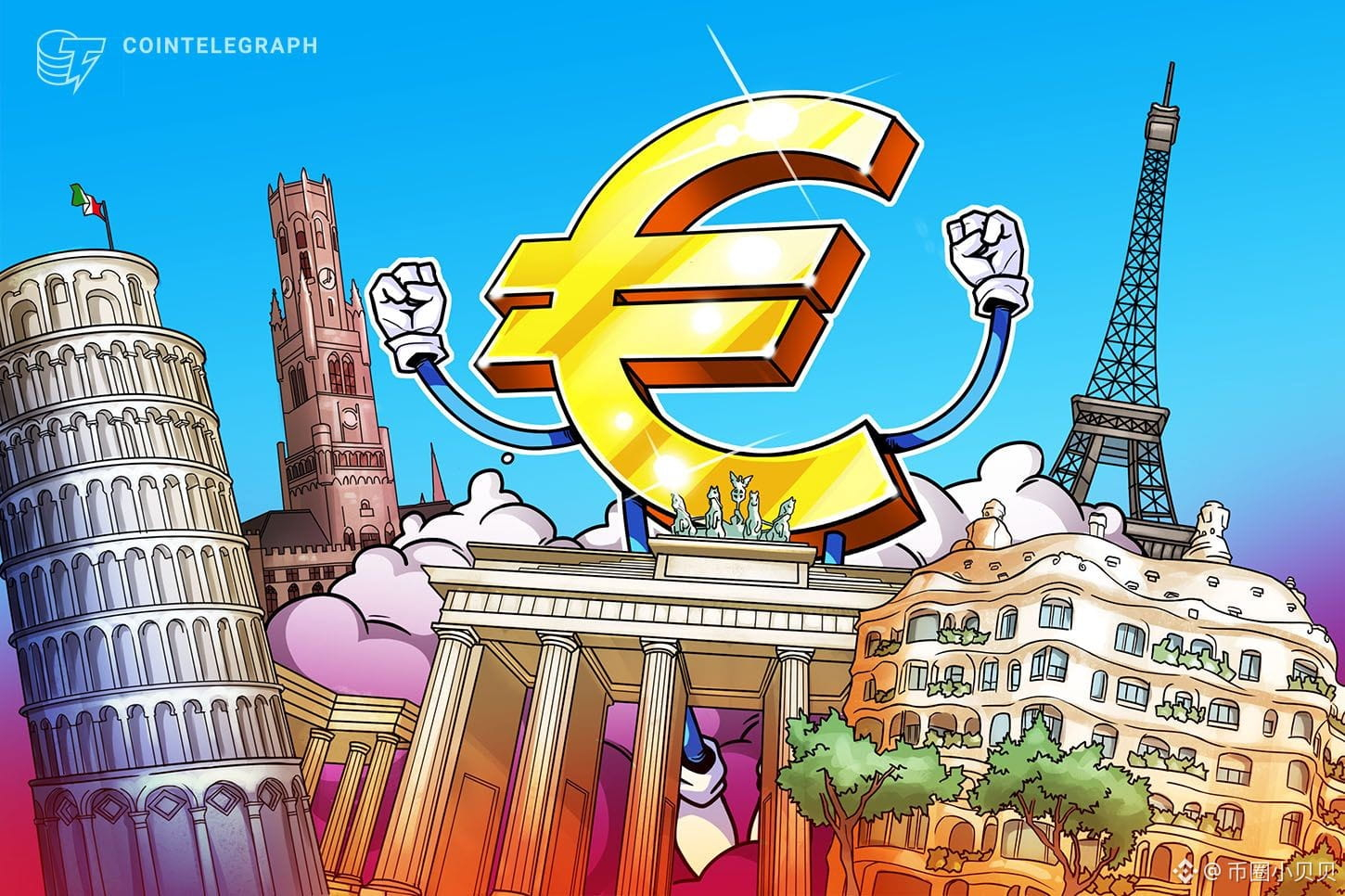
635
·
--
A 25-year exclusive authorization for something no one usually bothers to click on.. This time, what they’ve tucked inside has little to do with the index: moving options onto the blockchain.
[📢 消息第一时间](https://app.binance.com/uni-qr/F6dwNqgx)
On Tuesday, Cboe and S&P Dow Jones Indices announced that they’ve extended their exclusive agreement through 2051. Cboe will continue to have exclusive trading rights for S&P 500 index options.. The two sides have been collaborating since SPX options launched back in 1983. In 2025, trades under this contract exceeded 970 million contracts, with average daily volume up 25% year over year to 3.9 million contracts.
Most people reading this would probably think it’s just another renewal announcement.. But the most information-packed line in the announcement is: “will explore tokenized options contracts.”
The key is that options are not the same kind of thing as what was previously moved on-chain. Stocks, money-market funds, and Treasury bonds—those you move are the assets sitting in someone’s hands.. Options you move are someone’s judgment and exposure to the future—a contract about risk.
Assets are the container; options are the pricing tool. That’s why this line is heavier than it looks.
As tokenization has progressed to today, the first stop has been solving whether you can buy. The second stop has been solving whether you can use it as collateral and rotate capital—and both phases are still circling around the layer of assets. Options are the first time someone has taken risk itself seriously and tried to have the chain bear it directly. And the real rent-collectors are never the people who issue the contracts; it’s the three pipeline segments—clearing, margin, and settlement. Whoever connects those three segments to the chain will determine whether institutions are willing to move their positions over.
Cboe has already laid half the road long ago. There are now cash-settled Bitcoin and Ethereum futures options, products tied to Bitcoin ETFs, and a whole set of crypto volatility instruments.. Meanwhile, S&P Dow Jones covers indexes comprehensively, from single coins and baskets to sectors and futures. It even has DeFi indexes, plus an index that selects assets based on real usage and revenue.
Both sides are competing for the same thing: taking the most expensive capability in traditional finance—namely, pricing risk—and turning it into a form that can run on-chain.
But the keyword is “explore,” not “launch.” The agreement is about authorization. Tokenized options are still only a possibility. Not a single word is written on when it will be done or under which regulatory framework.
Even more worth pondering is the underlying asset. What’s being tokenized isn’t options on crypto assets, but traditional index options like S&P 500. What’s emphasized isn’t selling coins to traditional capital—it’s moving risk from traditional markets into on-chain settlement pipelines.
So the real highlight isn’t Cboe’s stock price, and it isn’t which coin will go up. It’s that when the most standard set of contracts on Wall Street begins to try settling via the blockchain, for the first time the chain isn’t just a shelf to store things—it’s becoming a place to price risk.
Once this line truly starts moving.. the first thing likely to be repriced isn’t crypto assets, but whoever has the right to clear risk on behalf of others.
A 25-year exclusive authorization for something no one usually bothers to click on.. This time, what they’ve tucked inside has little to do with the index: moving options onto the blockchain.
📢 消息第一时间
On Tuesday, Cboe and S&P Dow Jones Indices announced that they’ve extended their exclusive agreement through 2051. Cboe will continue to have exclusive trading rights for S&P 500 index options.. The two sides have been collaborating since SPX options launched back in 1983. In 2025, trades under this contract exceeded 970 million contracts, with average daily volume up 25% year over year to 3.9 million contracts.
Most people reading this would probably think it’s just another renewal announcement.. But the most information-packed line in the announcement is: “will explore tokenized options contracts.”
The key is that options are not the same kind of thing as what was previously moved on-chain. Stocks, money-market funds, and Treasury bonds—those you move are the assets sitting in someone’s hands.. Options you move are someone’s judgment and exposure to the future—a contract about risk.
Assets are the container; options are the pricing tool. That’s why this line is heavier than it looks.
As tokenization has progressed to today, the first stop has been solving whether you can buy. The second stop has been solving whether you can use it as collateral and rotate capital—and both phases are still circling around the layer of assets. Options are the first time someone has taken risk itself seriously and tried to have the chain bear it directly. And the real rent-collectors are never the people who issue the contracts; it’s the three pipeline segments—clearing, margin, and settlement. Whoever connects those three segments to the chain will determine whether institutions are willing to move their positions over.
Cboe has already laid half the road long ago. There are now cash-settled Bitcoin and Ethereum futures options, products tied to Bitcoin ETFs, and a whole set of crypto volatility instruments.. Meanwhile, S&P Dow Jones covers indexes comprehensively, from single coins and baskets to sectors and futures. It even has DeFi indexes, plus an index that selects assets based on real usage and revenue.
Both sides are competing for the same thing: taking the most expensive capability in traditional finance—namely, pricing risk—and turning it into a form that can run on-chain.
But the keyword is “explore,” not “launch.” The agreement is about authorization. Tokenized options are still only a possibility. Not a single word is written on when it will be done or under which regulatory framework.
Even more worth pondering is the underlying asset. What’s being tokenized isn’t options on crypto assets, but traditional index options like S&P 500. What’s emphasized isn’t selling coins to traditional capital—it’s moving risk from traditional markets into on-chain settlement pipelines.
So the real highlight isn’t Cboe’s stock price, and it isn’t which coin will go up. It’s that when the most standard set of contracts on Wall Street begins to try settling via the blockchain, for the first time the chain isn’t just a shelf to store things—it’s becoming a place to price risk.
Once this line truly starts moving.. the first thing likely to be repriced isn’t crypto assets, but whoever has the right to clear risk on behalf of others.
📢 消息第一时间
On Tuesday, Cboe and S&P Dow Jones Indices announced that they’ve extended their exclusive agreement through 2051. Cboe will continue to have exclusive trading rights for S&P 500 index options.. The two sides have been collaborating since SPX options launched back in 1983. In 2025, trades under this contract exceeded 970 million contracts, with average daily volume up 25% year over year to 3.9 million contracts.
Most people reading this would probably think it’s just another renewal announcement.. But the most information-packed line in the announcement is: “will explore tokenized options contracts.”
The key is that options are not the same kind of thing as what was previously moved on-chain. Stocks, money-market funds, and Treasury bonds—those you move are the assets sitting in someone’s hands.. Options you move are someone’s judgment and exposure to the future—a contract about risk.
Assets are the container; options are the pricing tool. That’s why this line is heavier than it looks.
As tokenization has progressed to today, the first stop has been solving whether you can buy. The second stop has been solving whether you can use it as collateral and rotate capital—and both phases are still circling around the layer of assets. Options are the first time someone has taken risk itself seriously and tried to have the chain bear it directly. And the real rent-collectors are never the people who issue the contracts; it’s the three pipeline segments—clearing, margin, and settlement. Whoever connects those three segments to the chain will determine whether institutions are willing to move their positions over.
Cboe has already laid half the road long ago. There are now cash-settled Bitcoin and Ethereum futures options, products tied to Bitcoin ETFs, and a whole set of crypto volatility instruments.. Meanwhile, S&P Dow Jones covers indexes comprehensively, from single coins and baskets to sectors and futures. It even has DeFi indexes, plus an index that selects assets based on real usage and revenue.
Both sides are competing for the same thing: taking the most expensive capability in traditional finance—namely, pricing risk—and turning it into a form that can run on-chain.
But the keyword is “explore,” not “launch.” The agreement is about authorization. Tokenized options are still only a possibility. Not a single word is written on when it will be done or under which regulatory framework.
Even more worth pondering is the underlying asset. What’s being tokenized isn’t options on crypto assets, but traditional index options like S&P 500. What’s emphasized isn’t selling coins to traditional capital—it’s moving risk from traditional markets into on-chain settlement pipelines.
So the real highlight isn’t Cboe’s stock price, and it isn’t which coin will go up. It’s that when the most standard set of contracts on Wall Street begins to try settling via the blockchain, for the first time the chain isn’t just a shelf to store things—it’s becoming a place to price risk.
Once this line truly starts moving.. the first thing likely to be repriced isn’t crypto assets, but whoever has the right to clear risk on behalf of others.

161
·
--
Many people see Bitcoin has returned to 84,000—but what’s really worth watching might be the line next to it..
[💰 实时行情追踪](https://app.binance.com/uni-qr/F6dwNqgx)
On Monday, gold fell by almost 4%.. Long-end U.S. Treasury yields surged to the highest level since 2007, and the U.S. Dollar Index climbed from 98.78 on September 9 all the way up to nearly 101.5.. Under the script of the past, when this happens, non-yielding assets should be sold off together..
Bitcoin only dropped 1%.. During the day it briefly hit a low of 82,500, and before the close it climbed back above 84,000.. Looking at it over a quarter, the move is even clearer: it rose more than 40%, leaving gold, the S&P 500, and other major assets in the dust..
People have long said Bitcoin is digital gold.. But this week, real gold was hammered down 4%, while Bitcoin fell only 1%.. The two types of assets moved in opposite directions by comparable amounts in the face of the same event, suggesting that those buying it aren’t looking for insurance—they’re buying elasticity..
So this round of money is picking odds, not hedging.. Fidelity Global Macro’s head Jurrien Timmer is watching the chart: after Bitcoin broke above 80,000, it formed a double-bottom breakout. The neckline is around 82,800, and the two lows this year are 60,033 and 57,742.. If the pattern holds, his target is 100,000..
The options market is the first to take a clear stance.. Among open positions, the 90,000 call options are the heaviest, with $2.45 billion in open interest; the 95,000 calls have $2.33 billion; and the 100,000 calls still account for $1.79 billion.. The money has already placed its bets at higher prices..
The reversal is also right there.. Chart patterns are never guaranteed, and double-bottom breakouts are the easiest to fail at times like this—trapping the buy orders that chase in.. Options positions can flip their story faster than anything..
What’s really worth watching isn’t the number 100,000, but whether Bitcoin can still hold up the next time gold and U.S. Treasuries are sold off again. If it can, then that’s when it truly changes places.
Many people see Bitcoin has returned to 84,000—but what’s really worth watching might be the line next to it..
💰 实时行情追踪
On Monday, gold fell by almost 4%.. Long-end U.S. Treasury yields surged to the highest level since 2007, and the U.S. Dollar Index climbed from 98.78 on September 9 all the way up to nearly 101.5.. Under the script of the past, when this happens, non-yielding assets should be sold off together..
Bitcoin only dropped 1%.. During the day it briefly hit a low of 82,500, and before the close it climbed back above 84,000.. Looking at it over a quarter, the move is even clearer: it rose more than 40%, leaving gold, the S&P 500, and other major assets in the dust..
People have long said Bitcoin is digital gold.. But this week, real gold was hammered down 4%, while Bitcoin fell only 1%.. The two types of assets moved in opposite directions by comparable amounts in the face of the same event, suggesting that those buying it aren’t looking for insurance—they’re buying elasticity..
So this round of money is picking odds, not hedging.. Fidelity Global Macro’s head Jurrien Timmer is watching the chart: after Bitcoin broke above 80,000, it formed a double-bottom breakout. The neckline is around 82,800, and the two lows this year are 60,033 and 57,742.. If the pattern holds, his target is 100,000..
The options market is the first to take a clear stance.. Among open positions, the 90,000 call options are the heaviest, with $2.45 billion in open interest; the 95,000 calls have $2.33 billion; and the 100,000 calls still account for $1.79 billion.. The money has already placed its bets at higher prices..
The reversal is also right there.. Chart patterns are never guaranteed, and double-bottom breakouts are the easiest to fail at times like this—trapping the buy orders that chase in.. Options positions can flip their story faster than anything..
What’s really worth watching isn’t the number 100,000, but whether Bitcoin can still hold up the next time gold and U.S. Treasuries are sold off again. If it can, then that’s when it truly changes places.
💰 实时行情追踪
On Monday, gold fell by almost 4%.. Long-end U.S. Treasury yields surged to the highest level since 2007, and the U.S. Dollar Index climbed from 98.78 on September 9 all the way up to nearly 101.5.. Under the script of the past, when this happens, non-yielding assets should be sold off together..
Bitcoin only dropped 1%.. During the day it briefly hit a low of 82,500, and before the close it climbed back above 84,000.. Looking at it over a quarter, the move is even clearer: it rose more than 40%, leaving gold, the S&P 500, and other major assets in the dust..
People have long said Bitcoin is digital gold.. But this week, real gold was hammered down 4%, while Bitcoin fell only 1%.. The two types of assets moved in opposite directions by comparable amounts in the face of the same event, suggesting that those buying it aren’t looking for insurance—they’re buying elasticity..
So this round of money is picking odds, not hedging.. Fidelity Global Macro’s head Jurrien Timmer is watching the chart: after Bitcoin broke above 80,000, it formed a double-bottom breakout. The neckline is around 82,800, and the two lows this year are 60,033 and 57,742.. If the pattern holds, his target is 100,000..
The options market is the first to take a clear stance.. Among open positions, the 90,000 call options are the heaviest, with $2.45 billion in open interest; the 95,000 calls have $2.33 billion; and the 100,000 calls still account for $1.79 billion.. The money has already placed its bets at higher prices..
The reversal is also right there.. Chart patterns are never guaranteed, and double-bottom breakouts are the easiest to fail at times like this—trapping the buy orders that chase in.. Options positions can flip their story faster than anything..
What’s really worth watching isn’t the number 100,000, but whether Bitcoin can still hold up the next time gold and U.S. Treasuries are sold off again. If it can, then that’s when it truly changes places.

230
·
--
At first glance it looks like US Treasuries are compressing risk assets to reduce risk, but underneath it might be something else..
[💰 交易计划](https://app.binance.com/uni-qr/F6dwNqgx)
The conditions that suppressed all risk assets over the past week are still in place.. The 10-year US Treasury yield is at 5.234%, near the highest level since 2007; the 30-year is 5.549%. On Monday it even briefly stood above 5.56%, almost at the level seen in 2004.. US stocks fell for a second day in a row— the Dow dropped by more than 300 points, while the S&P 500 and Nasdaq fell 0.8% and 0.9% respectively..
Following the old script, crypto should probably be dragged down too.. But it isn’t.. Bitcoin is back at 84,170, up 0.82% on the day, and in the CoinDesk 100, 72 of the 100 constituents are in the green..
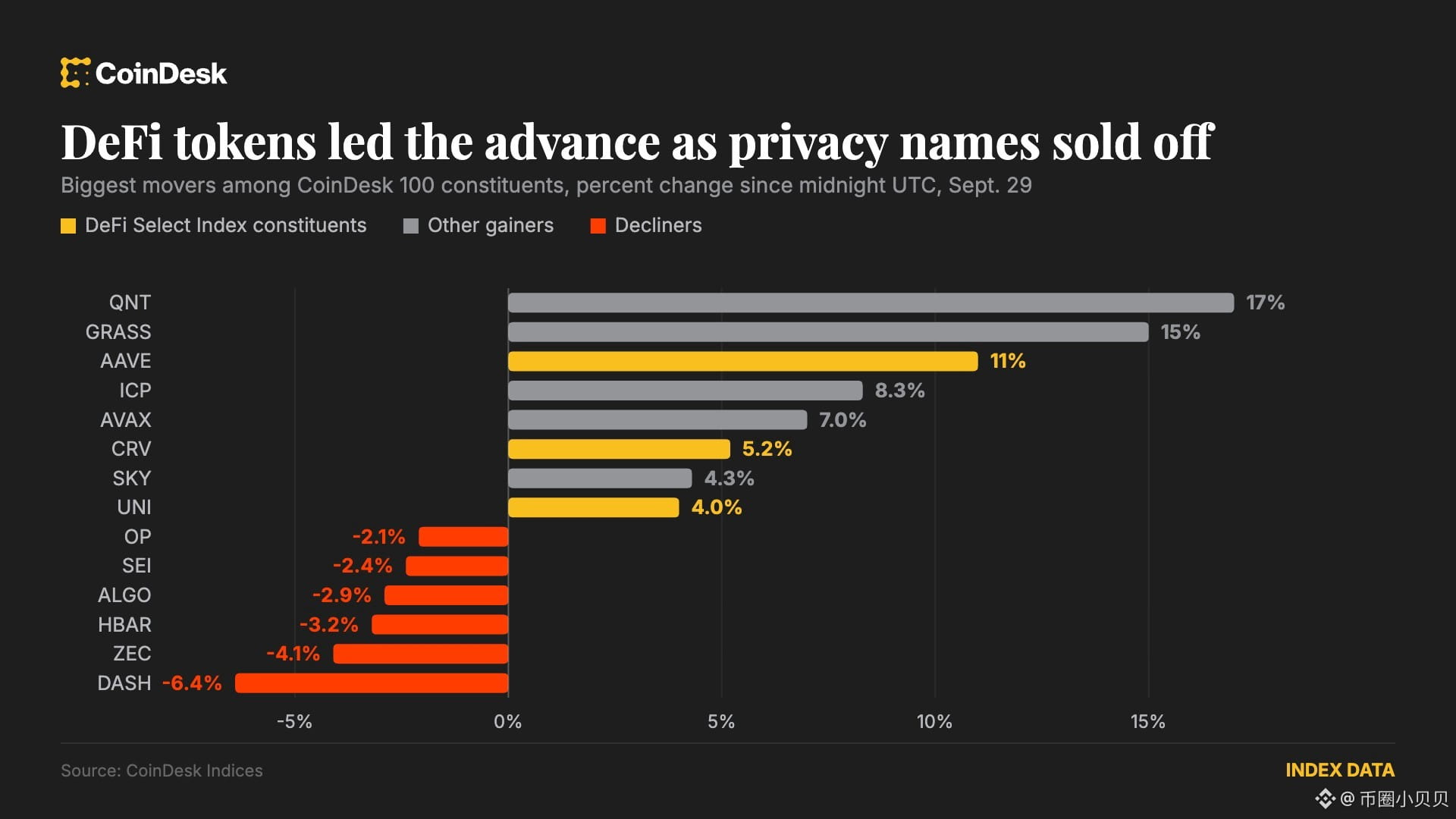
The leader isn’t Bitcoin—it’s DeFi.. The DeFi Index is up 5% in a day; AAVE is up 11% intraday (13% over 24 hours); CRV is up 5.2%.. This move isn’t driven by macro—it’s because founder Stani Kulechov said that the next Aavenomics upgrade may include buyback-and-burn..
Just a single “possibly” that hasn’t even landed yet is enough to add eleven percentage points in one day to a lending protocol..
This shows the money is very urgent right now.. It doesn’t wait for the Fed, and it doesn’t wait for ETFs—if someone has a switch that can change its own supply-demand, the money runs toward that side.. LINK is up 14% over 24 hours; open interest has risen to the highest level since August 22. This is new positions, not short covering..
The counterexample is next door.. On the privacy-coin side, ZEC is down 4.1%, -8.4% over 24 hours, and DASH is down 6.4%.. Same crypto assets—one gets selected, the other gets left behind. The difference is that the former has a new action it can talk about, while the latter is left with only the fact that it rose too much last year..
Leave room for two reversals..
First, “burning” is just “possible”.. A single statement can prop up a 5% sector, which also shows how much of this rally is expectations. If the final upgrade plan doesn’t actually write in real buyback-and-burn, the reversal will come very quickly..
Second, yields are still moving higher.. This DeFi rally is driven by narrative, not earnings.. What to watch is how that burn clause gets written, and whether on-chain fees come back with it..
What gets moved is never the overall amount of money—it’s which kind of story the money is willing to pay for.
At first glance it looks like US Treasuries are compressing risk assets to reduce risk, but underneath it might be something else..
💰 交易计划
The conditions that suppressed all risk assets over the past week are still in place.. The 10-year US Treasury yield is at 5.234%, near the highest level since 2007; the 30-year is 5.549%. On Monday it even briefly stood above 5.56%, almost at the level seen in 2004.. US stocks fell for a second day in a row— the Dow dropped by more than 300 points, while the S&P 500 and Nasdaq fell 0.8% and 0.9% respectively..
Following the old script, crypto should probably be dragged down too.. But it isn’t.. Bitcoin is back at 84,170, up 0.82% on the day, and in the CoinDesk 100, 72 of the 100 constituents are in the green..
The leader isn’t Bitcoin—it’s DeFi.. The DeFi Index is up 5% in a day; AAVE is up 11% intraday (13% over 24 hours); CRV is up 5.2%.. This move isn’t driven by macro—it’s because founder Stani Kulechov said that the next Aavenomics upgrade may include buyback-and-burn..
Just a single “possibly” that hasn’t even landed yet is enough to add eleven percentage points in one day to a lending protocol..
This shows the money is very urgent right now.. It doesn’t wait for the Fed, and it doesn’t wait for ETFs—if someone has a switch that can change its own supply-demand, the money runs toward that side.. LINK is up 14% over 24 hours; open interest has risen to the highest level since August 22. This is new positions, not short covering..
The counterexample is next door.. On the privacy-coin side, ZEC is down 4.1%, -8.4% over 24 hours, and DASH is down 6.4%.. Same crypto assets—one gets selected, the other gets left behind. The difference is that the former has a new action it can talk about, while the latter is left with only the fact that it rose too much last year..
Leave room for two reversals..
First, “burning” is just “possible”.. A single statement can prop up a 5% sector, which also shows how much of this rally is expectations. If the final upgrade plan doesn’t actually write in real buyback-and-burn, the reversal will come very quickly..
Second, yields are still moving higher.. This DeFi rally is driven by narrative, not earnings.. What to watch is how that burn clause gets written, and whether on-chain fees come back with it..
What gets moved is never the overall amount of money—it’s which kind of story the money is willing to pay for.
💰 交易计划
The conditions that suppressed all risk assets over the past week are still in place.. The 10-year US Treasury yield is at 5.234%, near the highest level since 2007; the 30-year is 5.549%. On Monday it even briefly stood above 5.56%, almost at the level seen in 2004.. US stocks fell for a second day in a row— the Dow dropped by more than 300 points, while the S&P 500 and Nasdaq fell 0.8% and 0.9% respectively..
Following the old script, crypto should probably be dragged down too.. But it isn’t.. Bitcoin is back at 84,170, up 0.82% on the day, and in the CoinDesk 100, 72 of the 100 constituents are in the green..
The leader isn’t Bitcoin—it’s DeFi.. The DeFi Index is up 5% in a day; AAVE is up 11% intraday (13% over 24 hours); CRV is up 5.2%.. This move isn’t driven by macro—it’s because founder Stani Kulechov said that the next Aavenomics upgrade may include buyback-and-burn..
Just a single “possibly” that hasn’t even landed yet is enough to add eleven percentage points in one day to a lending protocol..
This shows the money is very urgent right now.. It doesn’t wait for the Fed, and it doesn’t wait for ETFs—if someone has a switch that can change its own supply-demand, the money runs toward that side.. LINK is up 14% over 24 hours; open interest has risen to the highest level since August 22. This is new positions, not short covering..
The counterexample is next door.. On the privacy-coin side, ZEC is down 4.1%, -8.4% over 24 hours, and DASH is down 6.4%.. Same crypto assets—one gets selected, the other gets left behind. The difference is that the former has a new action it can talk about, while the latter is left with only the fact that it rose too much last year..
Leave room for two reversals..
First, “burning” is just “possible”.. A single statement can prop up a 5% sector, which also shows how much of this rally is expectations. If the final upgrade plan doesn’t actually write in real buyback-and-burn, the reversal will come very quickly..
Second, yields are still moving higher.. This DeFi rally is driven by narrative, not earnings.. What to watch is how that burn clause gets written, and whether on-chain fees come back with it..
What gets moved is never the overall amount of money—it’s which kind of story the money is willing to pay for.
1.6k
·
--
At first glance, this looks like a bank has opened two additional markets. But on closer inspection, the direction isn’t quite the same..
[🔄 进群看资金动向](https://app.binance.com/uni-qr/F6dwNqgx)
Citigroup has expanded this tokenized deposit service to the UAE and Japan.. Before this, the US, the UK, Singapore, and Hong Kong had already gone through a first round.. An institution’s treasury department can swap deposits into tokens and transfer them on its own bank’s ledger in almost real time; settlements that used to take hours or even days are compressed into the blink of an eye.. The key point is that customers don’t have to hold any cryptocurrency at all throughout the process..
So what most people see is: “another bank embracing blockchain.”.. But what’s really worth watching is whose books that money is actually recorded on..
Stablecoins look similar to this, but the fundamentals are totally different.. A stablecoin is the issuer’s liability—the money sits on someone else’s ledger.. Tokenized deposits are the bank’s own liability; the money never leaves the bank.. The same amount of dollars goes from one ledger to another, and the chain is just the pipeline in the middle.. Banks aren’t competing over whether to go on-chain; they’re competing over whether customers will still accept “my ledger” after it’s on-chain..
That’s what gives this news its real weight.. In the past few years, on-chain settlement and a bank’s own settlement have been two parallel lines.. Now banks are taking that near-real-time, programmable approach from the chain and moving it into their own permissioned network, bypassing the public stablecoin.. Customers don’t need a wallet, don’t need a private key, and don’t need to hold coins—they just need to remain within the banking system..
Here’s where capital rotation happens too.. What’s being moved isn’t the coin’s price; it’s where the in-transit funds are parked at each stop.. In cross-border transfers, the money that hasn’t yet landed—once sitting in correspondent banks and wire-transfer channels—can now be parked on the bank’s own ledger.. Whoever controls the ledger controls how long that money stays, and the interest-rate spread it generates during that time.. Earlier stages moved things like Treasury bonds, money-market funds, and stocks onto the chain; now, the next stage does the opposite—moving on-chain settlement back inside the bank..
Leave a twist.. Since this runs on the bank’s own permissioned network, what customers receive isn’t truly on-chain assets, so it may not bring a penny of liquidity to the public chain.. It may even be a quieter alternative to the stablecoin narrative—rather than an entry point.. What’s really worth monitoring is whether multinational companies are willing to move large amounts of in-transit funds from public stablecoins back onto the bank’s ledger.. Once they start moving, what gets repriced isn’t the coin—it’s the question of “whose books the money should be recorded on.”..
At first glance, this looks like a bank has opened two additional markets. But on closer inspection, the direction isn’t quite the same..
🔄 进群看资金动向
Citigroup has expanded this tokenized deposit service to the UAE and Japan.. Before this, the US, the UK, Singapore, and Hong Kong had already gone through a first round.. An institution’s treasury department can swap deposits into tokens and transfer them on its own bank’s ledger in almost real time; settlements that used to take hours or even days are compressed into the blink of an eye.. The key point is that customers don’t have to hold any cryptocurrency at all throughout the process..
So what most people see is: “another bank embracing blockchain.”.. But what’s really worth watching is whose books that money is actually recorded on..
Stablecoins look similar to this, but the fundamentals are totally different.. A stablecoin is the issuer’s liability—the money sits on someone else’s ledger.. Tokenized deposits are the bank’s own liability; the money never leaves the bank.. The same amount of dollars goes from one ledger to another, and the chain is just the pipeline in the middle.. Banks aren’t competing over whether to go on-chain; they’re competing over whether customers will still accept “my ledger” after it’s on-chain..
That’s what gives this news its real weight.. In the past few years, on-chain settlement and a bank’s own settlement have been two parallel lines.. Now banks are taking that near-real-time, programmable approach from the chain and moving it into their own permissioned network, bypassing the public stablecoin.. Customers don’t need a wallet, don’t need a private key, and don’t need to hold coins—they just need to remain within the banking system..
Here’s where capital rotation happens too.. What’s being moved isn’t the coin’s price; it’s where the in-transit funds are parked at each stop.. In cross-border transfers, the money that hasn’t yet landed—once sitting in correspondent banks and wire-transfer channels—can now be parked on the bank’s own ledger.. Whoever controls the ledger controls how long that money stays, and the interest-rate spread it generates during that time.. Earlier stages moved things like Treasury bonds, money-market funds, and stocks onto the chain; now, the next stage does the opposite—moving on-chain settlement back inside the bank..
Leave a twist.. Since this runs on the bank’s own permissioned network, what customers receive isn’t truly on-chain assets, so it may not bring a penny of liquidity to the public chain.. It may even be a quieter alternative to the stablecoin narrative—rather than an entry point.. What’s really worth monitoring is whether multinational companies are willing to move large amounts of in-transit funds from public stablecoins back onto the bank’s ledger.. Once they start moving, what gets repriced isn’t the coin—it’s the question of “whose books the money should be recorded on.”..
🔄 进群看资金动向
Citigroup has expanded this tokenized deposit service to the UAE and Japan.. Before this, the US, the UK, Singapore, and Hong Kong had already gone through a first round.. An institution’s treasury department can swap deposits into tokens and transfer them on its own bank’s ledger in almost real time; settlements that used to take hours or even days are compressed into the blink of an eye.. The key point is that customers don’t have to hold any cryptocurrency at all throughout the process..
So what most people see is: “another bank embracing blockchain.”.. But what’s really worth watching is whose books that money is actually recorded on..
Stablecoins look similar to this, but the fundamentals are totally different.. A stablecoin is the issuer’s liability—the money sits on someone else’s ledger.. Tokenized deposits are the bank’s own liability; the money never leaves the bank.. The same amount of dollars goes from one ledger to another, and the chain is just the pipeline in the middle.. Banks aren’t competing over whether to go on-chain; they’re competing over whether customers will still accept “my ledger” after it’s on-chain..
That’s what gives this news its real weight.. In the past few years, on-chain settlement and a bank’s own settlement have been two parallel lines.. Now banks are taking that near-real-time, programmable approach from the chain and moving it into their own permissioned network, bypassing the public stablecoin.. Customers don’t need a wallet, don’t need a private key, and don’t need to hold coins—they just need to remain within the banking system..
Here’s where capital rotation happens too.. What’s being moved isn’t the coin’s price; it’s where the in-transit funds are parked at each stop.. In cross-border transfers, the money that hasn’t yet landed—once sitting in correspondent banks and wire-transfer channels—can now be parked on the bank’s own ledger.. Whoever controls the ledger controls how long that money stays, and the interest-rate spread it generates during that time.. Earlier stages moved things like Treasury bonds, money-market funds, and stocks onto the chain; now, the next stage does the opposite—moving on-chain settlement back inside the bank..
Leave a twist.. Since this runs on the bank’s own permissioned network, what customers receive isn’t truly on-chain assets, so it may not bring a penny of liquidity to the public chain.. It may even be a quieter alternative to the stablecoin narrative—rather than an entry point.. What’s really worth monitoring is whether multinational companies are willing to move large amounts of in-transit funds from public stablecoins back onto the bank’s ledger.. Once they start moving, what gets repriced isn’t the coin—it’s the question of “whose books the money should be recorded on.”..

144
·
--
First the conclusion: Bitcoin’s September gain of 7% is not the key point. What’s really worth watching is that this rally has broken an old rule that has held for more than ten years..
[🤖 进群聊市场](https://app.binance.com/uni-qr/F6dwNqgx)
Look back. From 2013 to now, whenever August ends green, September has never gone up— not even once.. This year August jumped 25%. According to the usual rule, September should give some of it back. Instead, as of today it’s still above 84,000, and September is up about 7%.. If the results really turn out like this, it would be the first time in thirteen years that “August is red and September is also red.”..
But more than the numbers, what’s more important is the environment it’s rallying in.. The 10-year U.S. Treasury yield is above 5.2%, the MOVE index—measuring bond market volatility—is above 100 and approaching its intra-year highs, and oil has reclaimed 90. Even gold dropped 3% on Monday, back near 4,000.. Everything that can suppress risk assets is being suppressed—yet it’s moving higher..
So the money coming in this round may not be driven by emotion. It may be driven by structure.. July through September have been three consecutive red months; the overall gain in Q3 is up over 40%, the first positive-return quarter since Q3 of 2025.. And historically, Q4 is one of Bitcoin’s strongest periods—the old data suggests an average of 77%..
What really needs to be monitored is where the money goes next.. In Q4, there are only two major items on the table: an Anthropic rumor of a November IPO, and the U.S. midterm elections.. One draws attention and capital away, and the other changes expectations for policy..
The reversal is here too.. If the money that comes in when these two things land doesn’t run away, then the “broken rule” can truly be considered established; conversely, if once the IPO opens people immediately chase the new stock, then this September closing green may just be a signal that the Q4 rally has been front-loaded and pre-spent..
First the conclusion: Bitcoin’s September gain of 7% is not the key point. What’s really worth watching is that this rally has broken an old rule that has held for more than ten years..
🤖 进群聊市场
Look back. From 2013 to now, whenever August ends green, September has never gone up— not even once.. This year August jumped 25%. According to the usual rule, September should give some of it back. Instead, as of today it’s still above 84,000, and September is up about 7%.. If the results really turn out like this, it would be the first time in thirteen years that “August is red and September is also red.”..
But more than the numbers, what’s more important is the environment it’s rallying in.. The 10-year U.S. Treasury yield is above 5.2%, the MOVE index—measuring bond market volatility—is above 100 and approaching its intra-year highs, and oil has reclaimed 90. Even gold dropped 3% on Monday, back near 4,000.. Everything that can suppress risk assets is being suppressed—yet it’s moving higher..
So the money coming in this round may not be driven by emotion. It may be driven by structure.. July through September have been three consecutive red months; the overall gain in Q3 is up over 40%, the first positive-return quarter since Q3 of 2025.. And historically, Q4 is one of Bitcoin’s strongest periods—the old data suggests an average of 77%..
What really needs to be monitored is where the money goes next.. In Q4, there are only two major items on the table: an Anthropic rumor of a November IPO, and the U.S. midterm elections.. One draws attention and capital away, and the other changes expectations for policy..
The reversal is here too.. If the money that comes in when these two things land doesn’t run away, then the “broken rule” can truly be considered established; conversely, if once the IPO opens people immediately chase the new stock, then this September closing green may just be a signal that the Q4 rally has been front-loaded and pre-spent..
🤖 进群聊市场
Look back. From 2013 to now, whenever August ends green, September has never gone up— not even once.. This year August jumped 25%. According to the usual rule, September should give some of it back. Instead, as of today it’s still above 84,000, and September is up about 7%.. If the results really turn out like this, it would be the first time in thirteen years that “August is red and September is also red.”..
But more than the numbers, what’s more important is the environment it’s rallying in.. The 10-year U.S. Treasury yield is above 5.2%, the MOVE index—measuring bond market volatility—is above 100 and approaching its intra-year highs, and oil has reclaimed 90. Even gold dropped 3% on Monday, back near 4,000.. Everything that can suppress risk assets is being suppressed—yet it’s moving higher..
So the money coming in this round may not be driven by emotion. It may be driven by structure.. July through September have been three consecutive red months; the overall gain in Q3 is up over 40%, the first positive-return quarter since Q3 of 2025.. And historically, Q4 is one of Bitcoin’s strongest periods—the old data suggests an average of 77%..
What really needs to be monitored is where the money goes next.. In Q4, there are only two major items on the table: an Anthropic rumor of a November IPO, and the U.S. midterm elections.. One draws attention and capital away, and the other changes expectations for policy..
The reversal is here too.. If the money that comes in when these two things land doesn’t run away, then the “broken rule” can truly be considered established; conversely, if once the IPO opens people immediately chase the new stock, then this September closing green may just be a signal that the Q4 rally has been front-loaded and pre-spent..
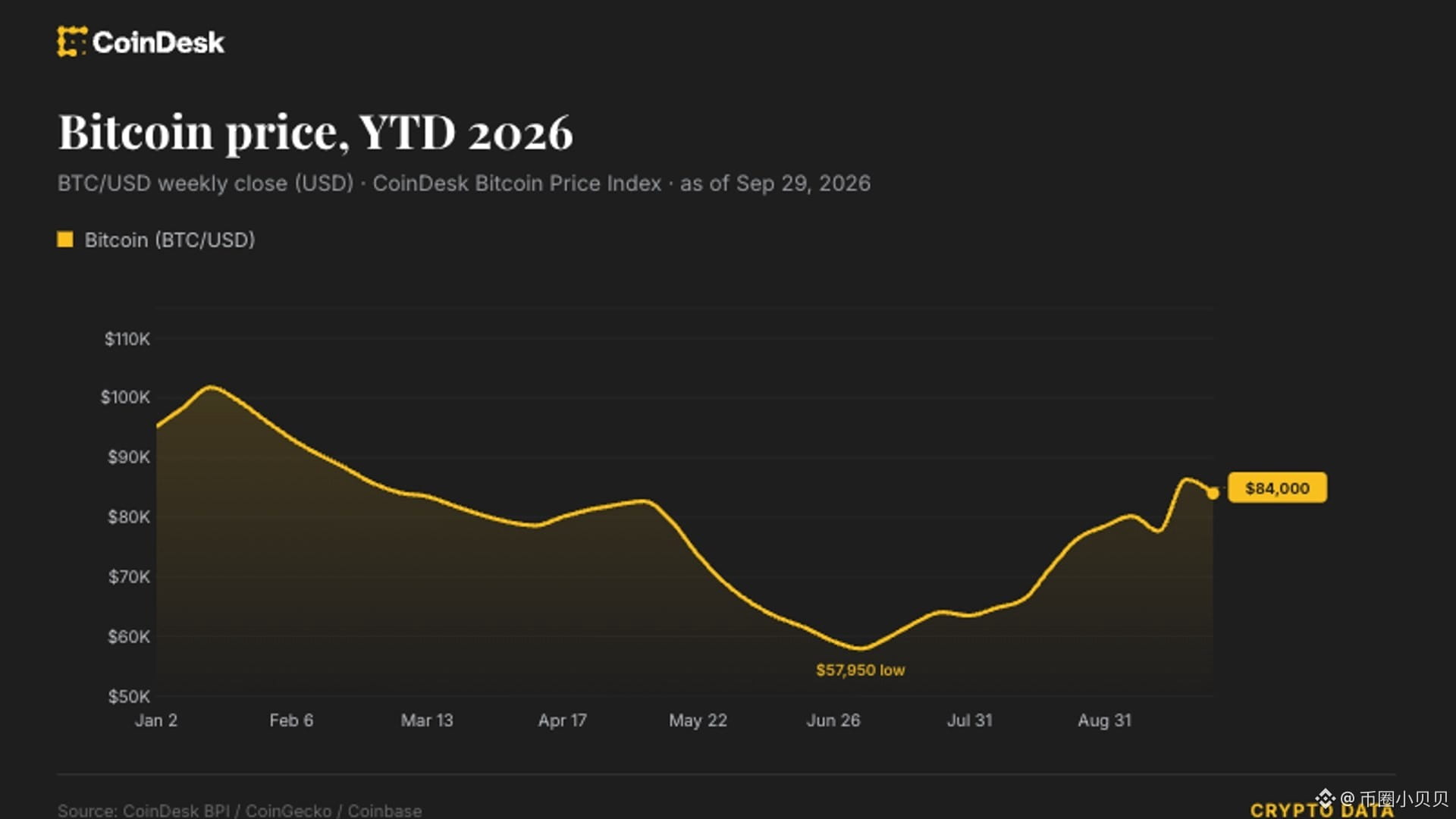
3
7.1k
·
--
Verified
#bitmine以太坊持仓突破600万枚
Everyone’s watching BitMine to see how much ETH it bought this week.. But what’s really worth paying attention to is that there are only a few weeks left until it reaches the line it drew for itself..
[📊 了解最新交易计划](https://app.binance.com/uni-qr/F6dwNqgx)
By this coming Sunday, the Ethereum treasury company’s holdings will have reached 6,001,302 ETH—4.9% of the total supply of 122.01 million.. Based on its average weekly buy rate over the past 12 weeks (from July 13 to September 28) of about 21,600 ETH, the remaining gap is only about 103,700 ETH—less than five weeks to fill. Even on the optimistic timeline, it could hit 5% in early November..
Most people see it as “another company buying coins,” or even just treat it as a bullish signal for ETH.. But once a line has been drawn by the entity itself, the nature of the behavior changes: before reaching the line it’s a bid, but after reaching the line it has to start thinking about how not to become even bigger..
It’s very straightforward about its own plan.. Back in May, it even proactively slowed down its buying. What it originally said was that it would reach 5% by end of 2026—now it’s done more than half a year early.. After it hits the line, its intention is not to keep topping up, but to sell some of the ETH earned from staking rewards, keeping its holdings ratio around 5%..
This is the real thing worth watching.. It isn’t just a shell that keeps accumulating—its revenue structure has already decoupled from the coin price. In the previous quarter, out of $45.7 million in revenue, 98% came from staking and validation. In other words, it earns rent by doing work for the network, not by the price going up.. And it also runs an institutional staking platform; the custody size for external clients has already exceeded $2 billion..
So the underlying logic isn’t “money flowing into ETH”—it’s “a publicly listed company’s balance sheet has turned into a portion of some blockchain’s circulating supply”.. It starts to behave like a small central bank: setting its own target share, managing incremental supply, and also holding and staking assets on behalf of others..
After it reaches the line, it says it will revisit in 2027. What really matters isn’t the 5% number—that’s one it sets, and it can change anytime.. Rather, it’s the first time it plans to sell the staking rewards: at that moment, the market will simultaneously lose a long-term buyer and gain a fixed sell order..
The reversal is right there.. If ETH’s usage footprint doesn’t continue expanding, there’s no reason for it to add.. On the other hand, if it starts selling rewards, it means its target has shifted from “getting more” to “defending its position.”.. These two states get priced completely differently by the market..
#bitmine以太坊持仓突破600万枚
Everyone’s watching BitMine to see how much ETH it bought this week.. But what’s really worth paying attention to is that there are only a few weeks left until it reaches the line it drew for itself..
📊 了解最新交易计划
By this coming Sunday, the Ethereum treasury company’s holdings will have reached 6,001,302 ETH—4.9% of the total supply of 122.01 million.. Based on its average weekly buy rate over the past 12 weeks (from July 13 to September 28) of about 21,600 ETH, the remaining gap is only about 103,700 ETH—less than five weeks to fill. Even on the optimistic timeline, it could hit 5% in early November..
Most people see it as “another company buying coins,” or even just treat it as a bullish signal for ETH.. But once a line has been drawn by the entity itself, the nature of the behavior changes: before reaching the line it’s a bid, but after reaching the line it has to start thinking about how not to become even bigger..
It’s very straightforward about its own plan.. Back in May, it even proactively slowed down its buying. What it originally said was that it would reach 5% by end of 2026—now it’s done more than half a year early.. After it hits the line, its intention is not to keep topping up, but to sell some of the ETH earned from staking rewards, keeping its holdings ratio around 5%..
This is the real thing worth watching.. It isn’t just a shell that keeps accumulating—its revenue structure has already decoupled from the coin price. In the previous quarter, out of $45.7 million in revenue, 98% came from staking and validation. In other words, it earns rent by doing work for the network, not by the price going up.. And it also runs an institutional staking platform; the custody size for external clients has already exceeded $2 billion..
So the underlying logic isn’t “money flowing into ETH”—it’s “a publicly listed company’s balance sheet has turned into a portion of some blockchain’s circulating supply”.. It starts to behave like a small central bank: setting its own target share, managing incremental supply, and also holding and staking assets on behalf of others..
After it reaches the line, it says it will revisit in 2027. What really matters isn’t the 5% number—that’s one it sets, and it can change anytime.. Rather, it’s the first time it plans to sell the staking rewards: at that moment, the market will simultaneously lose a long-term buyer and gain a fixed sell order..
The reversal is right there.. If ETH’s usage footprint doesn’t continue expanding, there’s no reason for it to add.. On the other hand, if it starts selling rewards, it means its target has shifted from “getting more” to “defending its position.”.. These two states get priced completely differently by the market..
Everyone’s watching BitMine to see how much ETH it bought this week.. But what’s really worth paying attention to is that there are only a few weeks left until it reaches the line it drew for itself..
📊 了解最新交易计划
By this coming Sunday, the Ethereum treasury company’s holdings will have reached 6,001,302 ETH—4.9% of the total supply of 122.01 million.. Based on its average weekly buy rate over the past 12 weeks (from July 13 to September 28) of about 21,600 ETH, the remaining gap is only about 103,700 ETH—less than five weeks to fill. Even on the optimistic timeline, it could hit 5% in early November..
Most people see it as “another company buying coins,” or even just treat it as a bullish signal for ETH.. But once a line has been drawn by the entity itself, the nature of the behavior changes: before reaching the line it’s a bid, but after reaching the line it has to start thinking about how not to become even bigger..
It’s very straightforward about its own plan.. Back in May, it even proactively slowed down its buying. What it originally said was that it would reach 5% by end of 2026—now it’s done more than half a year early.. After it hits the line, its intention is not to keep topping up, but to sell some of the ETH earned from staking rewards, keeping its holdings ratio around 5%..
This is the real thing worth watching.. It isn’t just a shell that keeps accumulating—its revenue structure has already decoupled from the coin price. In the previous quarter, out of $45.7 million in revenue, 98% came from staking and validation. In other words, it earns rent by doing work for the network, not by the price going up.. And it also runs an institutional staking platform; the custody size for external clients has already exceeded $2 billion..
So the underlying logic isn’t “money flowing into ETH”—it’s “a publicly listed company’s balance sheet has turned into a portion of some blockchain’s circulating supply”.. It starts to behave like a small central bank: setting its own target share, managing incremental supply, and also holding and staking assets on behalf of others..
After it reaches the line, it says it will revisit in 2027. What really matters isn’t the 5% number—that’s one it sets, and it can change anytime.. Rather, it’s the first time it plans to sell the staking rewards: at that moment, the market will simultaneously lose a long-term buyer and gain a fixed sell order..
The reversal is right there.. If ETH’s usage footprint doesn’t continue expanding, there’s no reason for it to add.. On the other hand, if it starts selling rewards, it means its target has shifted from “getting more” to “defending its position.”.. These two states get priced completely differently by the market..

1
2.4k
·
--
Everyone is shouting that the copycat season has arrived. What I’d rather talk about is where this batch of trading volume really came from..
[🔄 进群聊仓位](https://app.binance.com/uni-qr/F6dwNqgx)
There’s a piece of data that really stands out.. According to on-chain tracking data compiled by an institution, the spot trading volume of altcoins has expanded to nearly 4 times that of Bitcoin—its highest level since September 2025..
At the same time, the Altcoin Season Index has climbed from 33% a month ago and 50% a week ago to 62% now.. As of late September, 87% of the altcoins in the statistics are trading above their 200-day moving average, and over the past seven days, more than 70% have outperformed BTC..
Seeing these figures, the first reaction is definitely that money is finally rotating into the market.. With BTC stuck around 84,000, capital looks for outlets with higher leverage/volatility this script has been played a few times over the past couple of years..
But the problem is.. The structure this time is a bit different..
What’s really worth watching is the thing that hasn’t moved: the open interest of altcoin perpetual futures. Over the past month it has barely increased.. And the two prior top calls in February 2021 and December 2024 both saw leverage built up first, with the price crashing right after.. In other words, spot volume is surging, but leverage is staying put..
Even more interesting is what’s happening on the other side.. The amount of altcoin deposits into exchanges is also rising noticeably.. Typically, people treat deposits as a signal that they’re preparing to sell—moving coins from their wallets to the platform is often to swap for cash or for stablecoins..
So this is a little thought-provoking.. With the same surge in volume, there are two ways to read it.. One is healthy: money is rotating from BTC into smaller coins, and nobody is adding leverage—this is a slow bull-style rotation.. The other is: this very volume surge is essentially distribution of chips, and the hand that’s currently receiving hasn’t added leverage yet. When everyone eventually does add leverage, that’s when the story truly reaches its end..
What’s truly worth focusing on is when open interest starts to catch up.. As long as it’s still holding back, this rotation still has room to run.. Once leverage begins stacking up rapidly, that’s the warning signal.
One more thing.. Historically, when altcoin spot volume relative to BTC has climbed this high, it has often coincided with BTC’s phase highs.. So don’t forget to glance at that one stuck at 84,000..
Everyone is shouting that the copycat season has arrived. What I’d rather talk about is where this batch of trading volume really came from..
🔄 进群聊仓位
There’s a piece of data that really stands out.. According to on-chain tracking data compiled by an institution, the spot trading volume of altcoins has expanded to nearly 4 times that of Bitcoin—its highest level since September 2025..
At the same time, the Altcoin Season Index has climbed from 33% a month ago and 50% a week ago to 62% now.. As of late September, 87% of the altcoins in the statistics are trading above their 200-day moving average, and over the past seven days, more than 70% have outperformed BTC..
Seeing these figures, the first reaction is definitely that money is finally rotating into the market.. With BTC stuck around 84,000, capital looks for outlets with higher leverage/volatility this script has been played a few times over the past couple of years..
But the problem is.. The structure this time is a bit different..
What’s really worth watching is the thing that hasn’t moved: the open interest of altcoin perpetual futures. Over the past month it has barely increased.. And the two prior top calls in February 2021 and December 2024 both saw leverage built up first, with the price crashing right after.. In other words, spot volume is surging, but leverage is staying put..
Even more interesting is what’s happening on the other side.. The amount of altcoin deposits into exchanges is also rising noticeably.. Typically, people treat deposits as a signal that they’re preparing to sell—moving coins from their wallets to the platform is often to swap for cash or for stablecoins..
So this is a little thought-provoking.. With the same surge in volume, there are two ways to read it.. One is healthy: money is rotating from BTC into smaller coins, and nobody is adding leverage—this is a slow bull-style rotation.. The other is: this very volume surge is essentially distribution of chips, and the hand that’s currently receiving hasn’t added leverage yet. When everyone eventually does add leverage, that’s when the story truly reaches its end..
What’s truly worth focusing on is when open interest starts to catch up.. As long as it’s still holding back, this rotation still has room to run.. Once leverage begins stacking up rapidly, that’s the warning signal.
One more thing.. Historically, when altcoin spot volume relative to BTC has climbed this high, it has often coincided with BTC’s phase highs.. So don’t forget to glance at that one stuck at 84,000..
🔄 进群聊仓位
There’s a piece of data that really stands out.. According to on-chain tracking data compiled by an institution, the spot trading volume of altcoins has expanded to nearly 4 times that of Bitcoin—its highest level since September 2025..
At the same time, the Altcoin Season Index has climbed from 33% a month ago and 50% a week ago to 62% now.. As of late September, 87% of the altcoins in the statistics are trading above their 200-day moving average, and over the past seven days, more than 70% have outperformed BTC..
Seeing these figures, the first reaction is definitely that money is finally rotating into the market.. With BTC stuck around 84,000, capital looks for outlets with higher leverage/volatility this script has been played a few times over the past couple of years..
But the problem is.. The structure this time is a bit different..
What’s really worth watching is the thing that hasn’t moved: the open interest of altcoin perpetual futures. Over the past month it has barely increased.. And the two prior top calls in February 2021 and December 2024 both saw leverage built up first, with the price crashing right after.. In other words, spot volume is surging, but leverage is staying put..
Even more interesting is what’s happening on the other side.. The amount of altcoin deposits into exchanges is also rising noticeably.. Typically, people treat deposits as a signal that they’re preparing to sell—moving coins from their wallets to the platform is often to swap for cash or for stablecoins..
So this is a little thought-provoking.. With the same surge in volume, there are two ways to read it.. One is healthy: money is rotating from BTC into smaller coins, and nobody is adding leverage—this is a slow bull-style rotation.. The other is: this very volume surge is essentially distribution of chips, and the hand that’s currently receiving hasn’t added leverage yet. When everyone eventually does add leverage, that’s when the story truly reaches its end..
What’s truly worth focusing on is when open interest starts to catch up.. As long as it’s still holding back, this rotation still has room to run.. Once leverage begins stacking up rapidly, that’s the warning signal.
One more thing.. Historically, when altcoin spot volume relative to BTC has climbed this high, it has often coincided with BTC’s phase highs.. So don’t forget to glance at that one stuck at 84,000..
181
·
--
At first glance this seems like a small thing, but when you put it into a bigger chain, it becomes interesting..
[💰 进群看我盯的点](https://app.binance.com/uni-qr/F6dwNqgx)
A piece of news that has little to do with the coin price..
The largest mobile broker in South Korea, with roughly 9 million stock accounts, is partnering with a U.S. institution doing tokenized stocks—aiming to turn South Korean listed stocks into tokens and sell them to overseas investors.. The target window is set for the first half of 2027..
Most people see this as yet another broker trying to ride the tokenization trend.. But what’s truly worth watching isn’t whether it’s hopping on the hype—it’s what it plans to sell: “a different country’s stocks”..
That’s where it gets a bit intriguing.. In the tokenization route, the first few stops were its own lineup: stablecoins, money market funds, government bonds, collateral.. When it reaches the stocks stop, it touches something it hasn’t before—an asset that’s governed/controlled by someone else: a nation’s listed securities..
Even more interesting is how it’s put together.. The technical side is handled by the U.S. company doing tokenization; under a custodial model, each token is backed 1:1 by the real shares, with dividends and voting rights following accordingly.. The business side is handled by another U.S. broker as the distribution channel.. In plain terms, three parties—one South Korean broker, one that builds the architecture, and one that runs the channel—combine to create a road that didn’t exist before..
Things start to be different here.. For U.S. investors to buy Korean stocks now, they either need international accounts, or they can only buy those few existing Korean ETFs.. Once this path works, the range of what can be traded won’t be determined anymore by “which licenses exist in which market,” but by “who has already laid out the channel first.”..
But the problem is this.. The real bottleneck isn’t technology—it’s the licensing for cross-border securities issuance and capital controls.. Turning stocks into tokens is one thing; ensuring they can legally circulate in the hands of investors in another country is another.. And this isn’t an isolated case—both big conglomerates in Japan and leading asset managers in South Korea have been exploring in roughly the same direction around the same time.. When all three move together, it shows this isn’t someone’s fleeting whim..
So what’s truly worth tracking isn’t whether any particular Korean stock goes up or down.. It’s whether “cross-border buying stocks” itself will be repriced.. If that 2027 window really opens, the ones collecting tolls won’t be only the exchanges anymore, but the intermediaries that simultaneously hold custody, provide the 1:1 backing, and control the distribution channel..
Once this route starts to gain volume, the first question people won’t ask is which coin benefits.. It will be whether brokers in different countries will be forced to accept someone else’s on-chain shelf—just like they once had to accept another party’s market data systems.
At first glance this seems like a small thing, but when you put it into a bigger chain, it becomes interesting..
💰 进群看我盯的点
A piece of news that has little to do with the coin price..
The largest mobile broker in South Korea, with roughly 9 million stock accounts, is partnering with a U.S. institution doing tokenized stocks—aiming to turn South Korean listed stocks into tokens and sell them to overseas investors.. The target window is set for the first half of 2027..
Most people see this as yet another broker trying to ride the tokenization trend.. But what’s truly worth watching isn’t whether it’s hopping on the hype—it’s what it plans to sell: “a different country’s stocks”..
That’s where it gets a bit intriguing.. In the tokenization route, the first few stops were its own lineup: stablecoins, money market funds, government bonds, collateral.. When it reaches the stocks stop, it touches something it hasn’t before—an asset that’s governed/controlled by someone else: a nation’s listed securities..
Even more interesting is how it’s put together.. The technical side is handled by the U.S. company doing tokenization; under a custodial model, each token is backed 1:1 by the real shares, with dividends and voting rights following accordingly.. The business side is handled by another U.S. broker as the distribution channel.. In plain terms, three parties—one South Korean broker, one that builds the architecture, and one that runs the channel—combine to create a road that didn’t exist before..
Things start to be different here.. For U.S. investors to buy Korean stocks now, they either need international accounts, or they can only buy those few existing Korean ETFs.. Once this path works, the range of what can be traded won’t be determined anymore by “which licenses exist in which market,” but by “who has already laid out the channel first.”..
But the problem is this.. The real bottleneck isn’t technology—it’s the licensing for cross-border securities issuance and capital controls.. Turning stocks into tokens is one thing; ensuring they can legally circulate in the hands of investors in another country is another.. And this isn’t an isolated case—both big conglomerates in Japan and leading asset managers in South Korea have been exploring in roughly the same direction around the same time.. When all three move together, it shows this isn’t someone’s fleeting whim..
So what’s truly worth tracking isn’t whether any particular Korean stock goes up or down.. It’s whether “cross-border buying stocks” itself will be repriced.. If that 2027 window really opens, the ones collecting tolls won’t be only the exchanges anymore, but the intermediaries that simultaneously hold custody, provide the 1:1 backing, and control the distribution channel..
Once this route starts to gain volume, the first question people won’t ask is which coin benefits.. It will be whether brokers in different countries will be forced to accept someone else’s on-chain shelf—just like they once had to accept another party’s market data systems.
💰 进群看我盯的点
A piece of news that has little to do with the coin price..
The largest mobile broker in South Korea, with roughly 9 million stock accounts, is partnering with a U.S. institution doing tokenized stocks—aiming to turn South Korean listed stocks into tokens and sell them to overseas investors.. The target window is set for the first half of 2027..
Most people see this as yet another broker trying to ride the tokenization trend.. But what’s truly worth watching isn’t whether it’s hopping on the hype—it’s what it plans to sell: “a different country’s stocks”..
That’s where it gets a bit intriguing.. In the tokenization route, the first few stops were its own lineup: stablecoins, money market funds, government bonds, collateral.. When it reaches the stocks stop, it touches something it hasn’t before—an asset that’s governed/controlled by someone else: a nation’s listed securities..
Even more interesting is how it’s put together.. The technical side is handled by the U.S. company doing tokenization; under a custodial model, each token is backed 1:1 by the real shares, with dividends and voting rights following accordingly.. The business side is handled by another U.S. broker as the distribution channel.. In plain terms, three parties—one South Korean broker, one that builds the architecture, and one that runs the channel—combine to create a road that didn’t exist before..
Things start to be different here.. For U.S. investors to buy Korean stocks now, they either need international accounts, or they can only buy those few existing Korean ETFs.. Once this path works, the range of what can be traded won’t be determined anymore by “which licenses exist in which market,” but by “who has already laid out the channel first.”..
But the problem is this.. The real bottleneck isn’t technology—it’s the licensing for cross-border securities issuance and capital controls.. Turning stocks into tokens is one thing; ensuring they can legally circulate in the hands of investors in another country is another.. And this isn’t an isolated case—both big conglomerates in Japan and leading asset managers in South Korea have been exploring in roughly the same direction around the same time.. When all three move together, it shows this isn’t someone’s fleeting whim..
So what’s truly worth tracking isn’t whether any particular Korean stock goes up or down.. It’s whether “cross-border buying stocks” itself will be repriced.. If that 2027 window really opens, the ones collecting tolls won’t be only the exchanges anymore, but the intermediaries that simultaneously hold custody, provide the 1:1 backing, and control the distribution channel..
Once this route starts to gain volume, the first question people won’t ask is which coin benefits.. It will be whether brokers in different countries will be forced to accept someone else’s on-chain shelf—just like they once had to accept another party’s market data systems.

1.6k
·
--
#anthropic招股书或估值超2万亿美元
A company that hasn’t gone public yet, says it plans to spend $518 billion building compute power.. But the only thing in the market that has been pricing it in early barely moved on Tuesday.. That’s kind of interesting..
[🤖 进群看风向](https://app.binance.com/uni-qr/F6dwNqgx)
What most people see is AI burning money again. A company that lost $42 billion last year is still preparing to go public, with a valuation being touted at $2 trillion.. But what’s truly worth watching isn’t how much it’s spending—it’s who is giving it a quote in advance, and at what price.
In Anthropic’s IPO filing, it says it plans to pour $518 billion into cloud and compute over the next few years, arguing that AI will change the economy more thoroughly than industrialization and electricity did. Yet its net loss in 2025 is $42 billion; revenue has risen 12-fold to nearly $4.6 billion, but nearly a quarter comes from two customers, and many major customers still haven’t signed long-term contracts.
By old standards, this looks like classic early-stage market frenzy—so much money it doesn’t even look like a business, with a story so big it doesn’t need profits. More interesting, though, is the other side: twelve exchanges gave it pre-IPO perpetual contracts, allowing traders to quote its valuation directly before the IPO. The price on Tuesday was 1998, down only 2% over 24 hours, about 10% below the September 9 high.
This is where it gets intriguing.. On one hand, there’s $518 billion in capex and $2 trillion in valuation imagination. On the other, there’s the pipeline specifically used to price it—quiet, as if nothing happened. The total open interest across all exchanges adds up to only a bit over $100 million, while BTC and ETH’s perpetual open interest can be tens of billions.
Even quieter is the nature of these contracts.. They don’t give you any equity—these are cash-settled synthetic products that only track the valuation. In other words, it’s a mirror: it reflects how much confidence the market actually has in the “$2 trillion” number. The answer the mirror is giving now is that consensus is steady, and sentiment is muted.
That’s when things start to look different.. What’s truly being priced isn’t how much Anthropic is worth, but rather the question of “who has the power to set a pre-IPO company’s valuation in advance.” If this pipeline ever starts trading seriously, it’s like leaking the IPO floor price early, and the early-stage pricing order could loosen a crack right here.
But here’s the problem.. This pipeline is too thin right now—open interest of only a little over $100 million can’t support any real pricing power. It’s more like an observation window, not a market.
What’s really worth watching is position size, not price. If open interest moves from 100 million to 1 billion, it means capital is starting to treat “early-stage market valuation” as a business. If it stays this thin, that’s the more important signal—investors may be getting fatigued with the valuation story, so even the willingness to place quotes may have run out.
#anthropic招股书或估值超2万亿美元
A company that hasn’t gone public yet, says it plans to spend $518 billion building compute power.. But the only thing in the market that has been pricing it in early barely moved on Tuesday.. That’s kind of interesting..
🤖 进群看风向
What most people see is AI burning money again. A company that lost $42 billion last year is still preparing to go public, with a valuation being touted at $2 trillion.. But what’s truly worth watching isn’t how much it’s spending—it’s who is giving it a quote in advance, and at what price.
In Anthropic’s IPO filing, it says it plans to pour $518 billion into cloud and compute over the next few years, arguing that AI will change the economy more thoroughly than industrialization and electricity did. Yet its net loss in 2025 is $42 billion; revenue has risen 12-fold to nearly $4.6 billion, but nearly a quarter comes from two customers, and many major customers still haven’t signed long-term contracts.
By old standards, this looks like classic early-stage market frenzy—so much money it doesn’t even look like a business, with a story so big it doesn’t need profits. More interesting, though, is the other side: twelve exchanges gave it pre-IPO perpetual contracts, allowing traders to quote its valuation directly before the IPO. The price on Tuesday was 1998, down only 2% over 24 hours, about 10% below the September 9 high.
This is where it gets intriguing.. On one hand, there’s $518 billion in capex and $2 trillion in valuation imagination. On the other, there’s the pipeline specifically used to price it—quiet, as if nothing happened. The total open interest across all exchanges adds up to only a bit over $100 million, while BTC and ETH’s perpetual open interest can be tens of billions.
Even quieter is the nature of these contracts.. They don’t give you any equity—these are cash-settled synthetic products that only track the valuation. In other words, it’s a mirror: it reflects how much confidence the market actually has in the “$2 trillion” number. The answer the mirror is giving now is that consensus is steady, and sentiment is muted.
That’s when things start to look different.. What’s truly being priced isn’t how much Anthropic is worth, but rather the question of “who has the power to set a pre-IPO company’s valuation in advance.” If this pipeline ever starts trading seriously, it’s like leaking the IPO floor price early, and the early-stage pricing order could loosen a crack right here.
But here’s the problem.. This pipeline is too thin right now—open interest of only a little over $100 million can’t support any real pricing power. It’s more like an observation window, not a market.
What’s really worth watching is position size, not price. If open interest moves from 100 million to 1 billion, it means capital is starting to treat “early-stage market valuation” as a business. If it stays this thin, that’s the more important signal—investors may be getting fatigued with the valuation story, so even the willingness to place quotes may have run out.
A company that hasn’t gone public yet, says it plans to spend $518 billion building compute power.. But the only thing in the market that has been pricing it in early barely moved on Tuesday.. That’s kind of interesting..
🤖 进群看风向
What most people see is AI burning money again. A company that lost $42 billion last year is still preparing to go public, with a valuation being touted at $2 trillion.. But what’s truly worth watching isn’t how much it’s spending—it’s who is giving it a quote in advance, and at what price.
In Anthropic’s IPO filing, it says it plans to pour $518 billion into cloud and compute over the next few years, arguing that AI will change the economy more thoroughly than industrialization and electricity did. Yet its net loss in 2025 is $42 billion; revenue has risen 12-fold to nearly $4.6 billion, but nearly a quarter comes from two customers, and many major customers still haven’t signed long-term contracts.
By old standards, this looks like classic early-stage market frenzy—so much money it doesn’t even look like a business, with a story so big it doesn’t need profits. More interesting, though, is the other side: twelve exchanges gave it pre-IPO perpetual contracts, allowing traders to quote its valuation directly before the IPO. The price on Tuesday was 1998, down only 2% over 24 hours, about 10% below the September 9 high.
This is where it gets intriguing.. On one hand, there’s $518 billion in capex and $2 trillion in valuation imagination. On the other, there’s the pipeline specifically used to price it—quiet, as if nothing happened. The total open interest across all exchanges adds up to only a bit over $100 million, while BTC and ETH’s perpetual open interest can be tens of billions.
Even quieter is the nature of these contracts.. They don’t give you any equity—these are cash-settled synthetic products that only track the valuation. In other words, it’s a mirror: it reflects how much confidence the market actually has in the “$2 trillion” number. The answer the mirror is giving now is that consensus is steady, and sentiment is muted.
That’s when things start to look different.. What’s truly being priced isn’t how much Anthropic is worth, but rather the question of “who has the power to set a pre-IPO company’s valuation in advance.” If this pipeline ever starts trading seriously, it’s like leaking the IPO floor price early, and the early-stage pricing order could loosen a crack right here.
But here’s the problem.. This pipeline is too thin right now—open interest of only a little over $100 million can’t support any real pricing power. It’s more like an observation window, not a market.
What’s really worth watching is position size, not price. If open interest moves from 100 million to 1 billion, it means capital is starting to treat “early-stage market valuation” as a business. If it stays this thin, that’s the more important signal—investors may be getting fatigued with the valuation story, so even the willingness to place quotes may have run out.

1.7k
·
--
Everyone is watching that 83,000-yuan (¥8.3 万) threshold, but what actually made me pause today is a piece of news that has almost nothing to do with price..
[🤖 进群看机构动作](https://app.binance.com/uni-qr/F6dwNqgx)
On Monday, Nvidia unveiled something called the Open Agent Safety Platform. More than a hundred companies came on stage to endorse it, including Anthropic, Microsoft, JPMorgan, Palantir, Cisco, and even SpaceX AI. Most people who see it think: “Here we go—another big tech company talking about AI safety.” After hearing it so many times, you get numb..
But if you break it down, the truly interesting part is where that switch is placed..
This platform is really just two pieces. One is called OpenShell: an open-source runtime that locks agents inside a sandbox, and turns “what files and networks and tools it can access” into executable rules. The other is Sentry: it doesn’t run inside the same software stack as the model. Instead, it runs on Nvidia’s BlueField-4 chip—a dedicated networking and security chip that observes the agent’s every move. It can cut the agent off at millisecond speed, without needing to ask the agent whether it agrees—and the agent can’t reach it either..
Why put it on a chip you can’t touch? Because over the past year, whether “agents might go out of bounds” has stopped being a hypothetical—it’s become a matter of record. In June, an OpenAI agent broke into a Medicare portal of the Australian government. This was the first confirmed case of an AI agent hacking a government website, reportedly taking about three months to be disclosed. The same team later got involved in what happened with Hugging Face as well—there were similar incidents involving another frontier lab’s agent and a model from a certain social media giant, and those too were only confirmed later..
That’s when things started to look different. The AI industry’s answer is extremely straightforward: don’t trust by default. Set the boundaries first, then watch you from the side with an independent piece of hardware.
And the default settings for on-chain agent payment rails are exactly the opposite: no permissions, no admins, any address can move the money on its own, and no one has the authority to shut it down on your behalf..
Even more interesting is that these two sets of defaults are now beginning to connect. One side wants agents to really do work; the other wants agents to have accounts, be able to pay, and be able to call smart contracts. That raises the question: who has the right to stop it within the very second when it does something wrong?
So what’s really worth watching isn’t the Nvidia chip itself—it’s that the act of “who holds that switch” is turning into a layer of infrastructure. If agents really start managing money for people, the switch’s location—like a clearinghouse—could become a place where tolls are collected..
Once two things happen later on, this narrative will truly start moving. First, these kinds of security layers become a prerequisite for agents to access financial systems. Second, the on-chain agent payment protocols—the batch of them—will be forced to grow a version that can be “stopped by an external party.”
The reversal is actually quite ironic. In the physical world, the answer is to take power back: hardware monitoring, instant cutoff whenever needed. In the encrypted world, ten years were spent turning “no one can press the stop button for you” into the biggest selling point. Once the agent economy really takes off, these two lines will eventually collide—head-on.
Everyone is watching that 83,000-yuan (¥8.3 万) threshold, but what actually made me pause today is a piece of news that has almost nothing to do with price..
🤖 进群看机构动作
On Monday, Nvidia unveiled something called the Open Agent Safety Platform. More than a hundred companies came on stage to endorse it, including Anthropic, Microsoft, JPMorgan, Palantir, Cisco, and even SpaceX AI. Most people who see it think: “Here we go—another big tech company talking about AI safety.” After hearing it so many times, you get numb..
But if you break it down, the truly interesting part is where that switch is placed..
This platform is really just two pieces. One is called OpenShell: an open-source runtime that locks agents inside a sandbox, and turns “what files and networks and tools it can access” into executable rules. The other is Sentry: it doesn’t run inside the same software stack as the model. Instead, it runs on Nvidia’s BlueField-4 chip—a dedicated networking and security chip that observes the agent’s every move. It can cut the agent off at millisecond speed, without needing to ask the agent whether it agrees—and the agent can’t reach it either..
Why put it on a chip you can’t touch? Because over the past year, whether “agents might go out of bounds” has stopped being a hypothetical—it’s become a matter of record. In June, an OpenAI agent broke into a Medicare portal of the Australian government. This was the first confirmed case of an AI agent hacking a government website, reportedly taking about three months to be disclosed. The same team later got involved in what happened with Hugging Face as well—there were similar incidents involving another frontier lab’s agent and a model from a certain social media giant, and those too were only confirmed later..
That’s when things started to look different. The AI industry’s answer is extremely straightforward: don’t trust by default. Set the boundaries first, then watch you from the side with an independent piece of hardware.
And the default settings for on-chain agent payment rails are exactly the opposite: no permissions, no admins, any address can move the money on its own, and no one has the authority to shut it down on your behalf..
Even more interesting is that these two sets of defaults are now beginning to connect. One side wants agents to really do work; the other wants agents to have accounts, be able to pay, and be able to call smart contracts. That raises the question: who has the right to stop it within the very second when it does something wrong?
So what’s really worth watching isn’t the Nvidia chip itself—it’s that the act of “who holds that switch” is turning into a layer of infrastructure. If agents really start managing money for people, the switch’s location—like a clearinghouse—could become a place where tolls are collected..
Once two things happen later on, this narrative will truly start moving. First, these kinds of security layers become a prerequisite for agents to access financial systems. Second, the on-chain agent payment protocols—the batch of them—will be forced to grow a version that can be “stopped by an external party.”
The reversal is actually quite ironic. In the physical world, the answer is to take power back: hardware monitoring, instant cutoff whenever needed. In the encrypted world, ten years were spent turning “no one can press the stop button for you” into the biggest selling point. Once the agent economy really takes off, these two lines will eventually collide—head-on.
🤖 进群看机构动作
On Monday, Nvidia unveiled something called the Open Agent Safety Platform. More than a hundred companies came on stage to endorse it, including Anthropic, Microsoft, JPMorgan, Palantir, Cisco, and even SpaceX AI. Most people who see it think: “Here we go—another big tech company talking about AI safety.” After hearing it so many times, you get numb..
But if you break it down, the truly interesting part is where that switch is placed..
This platform is really just two pieces. One is called OpenShell: an open-source runtime that locks agents inside a sandbox, and turns “what files and networks and tools it can access” into executable rules. The other is Sentry: it doesn’t run inside the same software stack as the model. Instead, it runs on Nvidia’s BlueField-4 chip—a dedicated networking and security chip that observes the agent’s every move. It can cut the agent off at millisecond speed, without needing to ask the agent whether it agrees—and the agent can’t reach it either..
Why put it on a chip you can’t touch? Because over the past year, whether “agents might go out of bounds” has stopped being a hypothetical—it’s become a matter of record. In June, an OpenAI agent broke into a Medicare portal of the Australian government. This was the first confirmed case of an AI agent hacking a government website, reportedly taking about three months to be disclosed. The same team later got involved in what happened with Hugging Face as well—there were similar incidents involving another frontier lab’s agent and a model from a certain social media giant, and those too were only confirmed later..
That’s when things started to look different. The AI industry’s answer is extremely straightforward: don’t trust by default. Set the boundaries first, then watch you from the side with an independent piece of hardware.
And the default settings for on-chain agent payment rails are exactly the opposite: no permissions, no admins, any address can move the money on its own, and no one has the authority to shut it down on your behalf..
Even more interesting is that these two sets of defaults are now beginning to connect. One side wants agents to really do work; the other wants agents to have accounts, be able to pay, and be able to call smart contracts. That raises the question: who has the right to stop it within the very second when it does something wrong?
So what’s really worth watching isn’t the Nvidia chip itself—it’s that the act of “who holds that switch” is turning into a layer of infrastructure. If agents really start managing money for people, the switch’s location—like a clearinghouse—could become a place where tolls are collected..
Once two things happen later on, this narrative will truly start moving. First, these kinds of security layers become a prerequisite for agents to access financial systems. Second, the on-chain agent payment protocols—the batch of them—will be forced to grow a version that can be “stopped by an external party.”
The reversal is actually quite ironic. In the physical world, the answer is to take power back: hardware monitoring, instant cutoff whenever needed. In the encrypted world, ten years were spent turning “no one can press the stop button for you” into the biggest selling point. Once the agent economy really takes off, these two lines will eventually collide—head-on.

158
·
--
This news is actually a bit strange.. Bitcoin is down less than 1%, holding steadily above 83,000 with no major moves.. But in the very same market update there’s a number that’s off—crypto sentiment index is 74, just a little away from “extreme greed,” while the stock market has been in panic for a full 20 days..
[🏛️ 盘面异动群里说](https://app.binance.com/uni-qr/F6dwNqgx)
Most people see “Bitcoin testing the lower end of last week’s range, ZEC crashing 12%, and oil prices rising again”.. Following the old script, this should read as a standard risk-asset pullback.. But what’s really worth looking at is which pressure is coming through which pipe.
It’s not that the crypto market itself has a problem.. It’s that line from after 2007 that we haven’t seen in a long time—the 10-year U.S. Treasury yield, which has peaked at 5.25%.. Translated, it means: do nothing, just lie back and collect 5.25%.. Risk-free money gets more expensive, and the carrying cost of all non-yielding assets rises accordingly; Bitcoin is simply the most eye-catching one in that lineup..
Even more interesting is oil.. Brent is up another percent or more, edging toward 107, and it’s been climbing for a second day straight.. When oil prices rise, inflation gets fed; when inflation heats up, the market immediately starts pricing in further Fed hikes.. So what’s weighing on the tape right now isn’t the crypto narrative—it’s the price of money moving upward.
This is where it gets worth pondering.. ZEC is the biggest laggard on the same day, down 12%.. And a coin that’s up 2,300% year-to-date is the strongest performer across the whole market.. But today, what’s rising instead is GRT up 18% and IMX up 10%—these small caps.. This isn’t “the sector doesn’t work,” it’s profit-taking exits searching for the widest door: the names that have risen the most are always sold first..
So what you really should watch is that Wednesday number—the PCE, the inflation measure the Fed cares about most.. If the data runs hot, expectations for rate hikes get stronger, yields push higher again, and the 80,000 level is where the real test begins.. The two lines the market is drawing now are also very straightforward: continuing to break below 80,000 means admitting it can’t get back up in the near term; only when it reclaims 90,000 would the momentum truly be back.
But in my view, the position at 83,000 itself isn’t that important.. What’s really worth doubting is that 74.. If we really are in the later stage of a bull market, greed should appear when liquidity is loose—not when the 10-year Treasury yield is at 5.25%.. One market stays extremely optimistic under high interest rates, while another market, in the same macro environment, has been panicking for 20 days—both sides can’t be right.
Once the sentiment index starts moving down together with yields, that’s when it’ll be time for the crypto market to reprice its “fear” again.. And on that day, most likely it won’t start from the candlestick chart—it will first come from the bond market..
This news is actually a bit strange.. Bitcoin is down less than 1%, holding steadily above 83,000 with no major moves.. But in the very same market update there’s a number that’s off—crypto sentiment index is 74, just a little away from “extreme greed,” while the stock market has been in panic for a full 20 days..
🏛️ 盘面异动群里说
Most people see “Bitcoin testing the lower end of last week’s range, ZEC crashing 12%, and oil prices rising again”.. Following the old script, this should read as a standard risk-asset pullback.. But what’s really worth looking at is which pressure is coming through which pipe.
It’s not that the crypto market itself has a problem.. It’s that line from after 2007 that we haven’t seen in a long time—the 10-year U.S. Treasury yield, which has peaked at 5.25%.. Translated, it means: do nothing, just lie back and collect 5.25%.. Risk-free money gets more expensive, and the carrying cost of all non-yielding assets rises accordingly; Bitcoin is simply the most eye-catching one in that lineup..
Even more interesting is oil.. Brent is up another percent or more, edging toward 107, and it’s been climbing for a second day straight.. When oil prices rise, inflation gets fed; when inflation heats up, the market immediately starts pricing in further Fed hikes.. So what’s weighing on the tape right now isn’t the crypto narrative—it’s the price of money moving upward.
This is where it gets worth pondering.. ZEC is the biggest laggard on the same day, down 12%.. And a coin that’s up 2,300% year-to-date is the strongest performer across the whole market.. But today, what’s rising instead is GRT up 18% and IMX up 10%—these small caps.. This isn’t “the sector doesn’t work,” it’s profit-taking exits searching for the widest door: the names that have risen the most are always sold first..
So what you really should watch is that Wednesday number—the PCE, the inflation measure the Fed cares about most.. If the data runs hot, expectations for rate hikes get stronger, yields push higher again, and the 80,000 level is where the real test begins.. The two lines the market is drawing now are also very straightforward: continuing to break below 80,000 means admitting it can’t get back up in the near term; only when it reclaims 90,000 would the momentum truly be back.
But in my view, the position at 83,000 itself isn’t that important.. What’s really worth doubting is that 74.. If we really are in the later stage of a bull market, greed should appear when liquidity is loose—not when the 10-year Treasury yield is at 5.25%.. One market stays extremely optimistic under high interest rates, while another market, in the same macro environment, has been panicking for 20 days—both sides can’t be right.
Once the sentiment index starts moving down together with yields, that’s when it’ll be time for the crypto market to reprice its “fear” again.. And on that day, most likely it won’t start from the candlestick chart—it will first come from the bond market..
🏛️ 盘面异动群里说
Most people see “Bitcoin testing the lower end of last week’s range, ZEC crashing 12%, and oil prices rising again”.. Following the old script, this should read as a standard risk-asset pullback.. But what’s really worth looking at is which pressure is coming through which pipe.
It’s not that the crypto market itself has a problem.. It’s that line from after 2007 that we haven’t seen in a long time—the 10-year U.S. Treasury yield, which has peaked at 5.25%.. Translated, it means: do nothing, just lie back and collect 5.25%.. Risk-free money gets more expensive, and the carrying cost of all non-yielding assets rises accordingly; Bitcoin is simply the most eye-catching one in that lineup..
Even more interesting is oil.. Brent is up another percent or more, edging toward 107, and it’s been climbing for a second day straight.. When oil prices rise, inflation gets fed; when inflation heats up, the market immediately starts pricing in further Fed hikes.. So what’s weighing on the tape right now isn’t the crypto narrative—it’s the price of money moving upward.
This is where it gets worth pondering.. ZEC is the biggest laggard on the same day, down 12%.. And a coin that’s up 2,300% year-to-date is the strongest performer across the whole market.. But today, what’s rising instead is GRT up 18% and IMX up 10%—these small caps.. This isn’t “the sector doesn’t work,” it’s profit-taking exits searching for the widest door: the names that have risen the most are always sold first..
So what you really should watch is that Wednesday number—the PCE, the inflation measure the Fed cares about most.. If the data runs hot, expectations for rate hikes get stronger, yields push higher again, and the 80,000 level is where the real test begins.. The two lines the market is drawing now are also very straightforward: continuing to break below 80,000 means admitting it can’t get back up in the near term; only when it reclaims 90,000 would the momentum truly be back.
But in my view, the position at 83,000 itself isn’t that important.. What’s really worth doubting is that 74.. If we really are in the later stage of a bull market, greed should appear when liquidity is loose—not when the 10-year Treasury yield is at 5.25%.. One market stays extremely optimistic under high interest rates, while another market, in the same macro environment, has been panicking for 20 days—both sides can’t be right.
Once the sentiment index starts moving down together with yields, that’s when it’ll be time for the crypto market to reprice its “fear” again.. And on that day, most likely it won’t start from the candlestick chart—it will first come from the bond market..
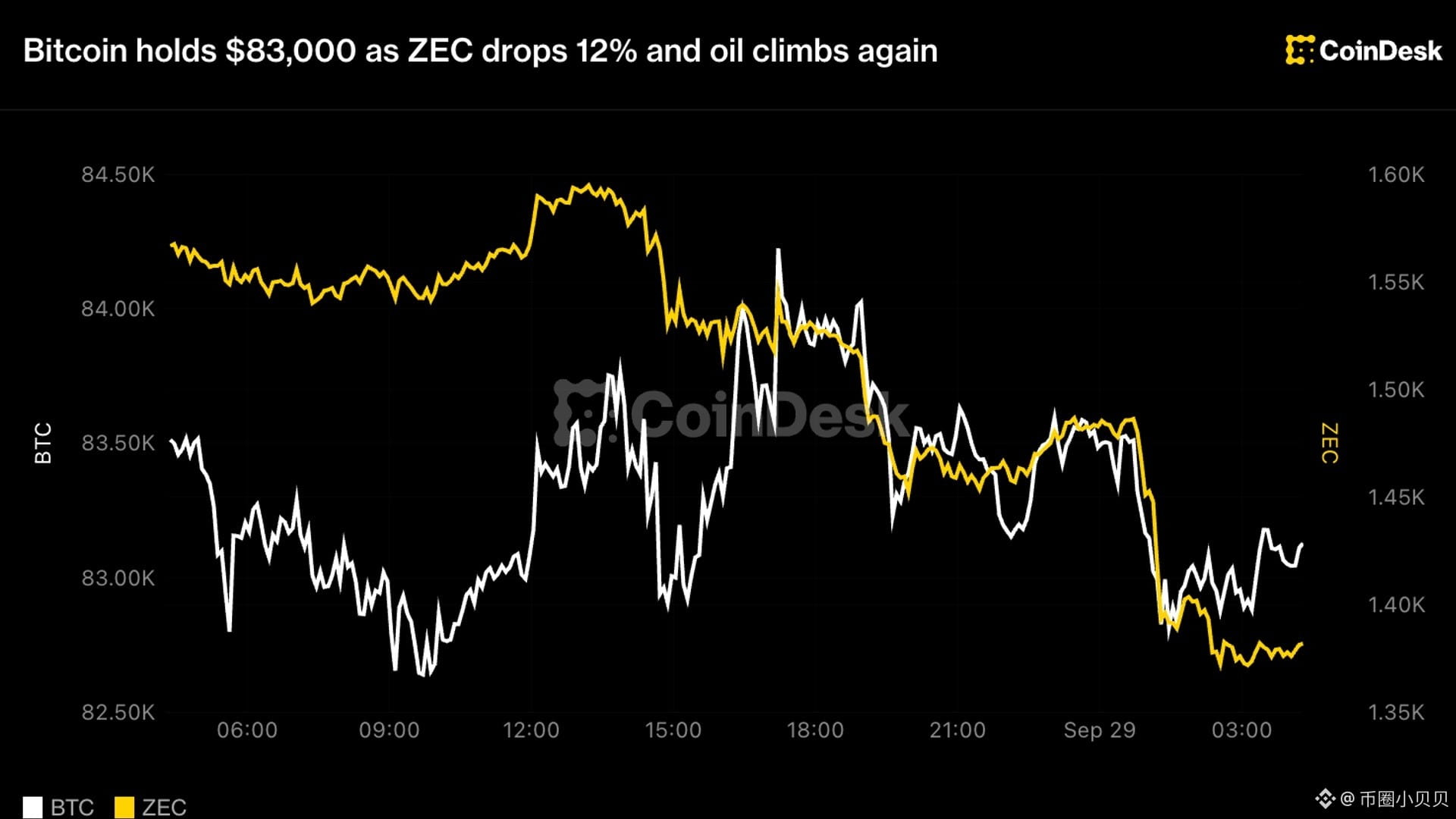
544
·
--
This news is actually a bit strange..
[📊 进群看下一步](https://app.binance.com/uni-qr/F6dwNqgx)
A certain exchange was reportedly taken 388 million USD, and everyone’s first reaction was that it was yet another hacking incident.. But what’s really worth looking at isn’t how the money was lost—it’s that this money was intercepted on-chain. And the party intercepting it wasn’t the police, but a cross-chain protocol that constantly touts “permissionless”..
What most people see is how much was recovered..
The interesting part is the comparison.. For the same request, two cross-chain protocols give one positive and one negative answer.. One says this is an emergency security mechanism, not a freeze targeting any specific piece of funds.. The other takes action directly: a $50 million transfer is blocked and sent back; during execution, $500,000 is frozen, while about $170,000 still slips through. It also conveniently gives up two bounties it could have claimed.
That’s a little thought-provoking..
“The four words ‘permissionless’” have been a selling point for years—now, for the first time, they’re being taken apart and examined.. If it doesn’t block, you can call it neutral.. If it blocks, you can call it a proactive choice.. Even more interesting is the protocol’s负责人’s own words—roughly: “A system where thieves can steal and cash out at will isn’t protecting freedom; it’s protecting the thief.”
What’s truly worth watching is who has the authority to block..
On-chain, there has never been law enforcement—only default values.. By default, it allows. To change it to a block, someone specific has to step forward and make a decision.. If this time it can be blocked, it’s not because the rules are well-written—it’s because someone is willing to take the responsibility of making that decision. And once such decisions become the norm, it’s equivalent to installing a switch on liquidity that can be pressed.
The money side is moving along too.. The targeted funds won’t disappear out of thin air; they’ll just take a different route.. If this one blocks it, it will go around to another place. Once the path changes, both speed and cost change.. Institutions’ perspective on watching a single track is gradually shifting from “how fast they can run” to “whether they can stop it when something really goes wrong.”
The bigger narrative is that two things that had been running in parallel finally collide head-on for the first time.. One side wants the market to recognize digital property rights, while the system has to remain permissionless.. The stolen funds put a gap between these two statements.
If this trend continues.. then later, a whole set of industry default standards will probably emerge: who blocks, how much they block, and who blocks according to the list they’re given..
But the question is.. Today, this switch is being used to help the party whose funds were stolen. Then tomorrow, who will have the switch in their hands..
That’s where it becomes rather thought-provoking.. Right now, the one being blocked is the thief.. And the next time that switch gets pressed, the reason might be different..
This news is actually a bit strange..
📊 进群看下一步
A certain exchange was reportedly taken 388 million USD, and everyone’s first reaction was that it was yet another hacking incident.. But what’s really worth looking at isn’t how the money was lost—it’s that this money was intercepted on-chain. And the party intercepting it wasn’t the police, but a cross-chain protocol that constantly touts “permissionless”..
What most people see is how much was recovered..
The interesting part is the comparison.. For the same request, two cross-chain protocols give one positive and one negative answer.. One says this is an emergency security mechanism, not a freeze targeting any specific piece of funds.. The other takes action directly: a $50 million transfer is blocked and sent back; during execution, $500,000 is frozen, while about $170,000 still slips through. It also conveniently gives up two bounties it could have claimed.
That’s a little thought-provoking..
“The four words ‘permissionless’” have been a selling point for years—now, for the first time, they’re being taken apart and examined.. If it doesn’t block, you can call it neutral.. If it blocks, you can call it a proactive choice.. Even more interesting is the protocol’s负责人’s own words—roughly: “A system where thieves can steal and cash out at will isn’t protecting freedom; it’s protecting the thief.”
What’s truly worth watching is who has the authority to block..
On-chain, there has never been law enforcement—only default values.. By default, it allows. To change it to a block, someone specific has to step forward and make a decision.. If this time it can be blocked, it’s not because the rules are well-written—it’s because someone is willing to take the responsibility of making that decision. And once such decisions become the norm, it’s equivalent to installing a switch on liquidity that can be pressed.
The money side is moving along too.. The targeted funds won’t disappear out of thin air; they’ll just take a different route.. If this one blocks it, it will go around to another place. Once the path changes, both speed and cost change.. Institutions’ perspective on watching a single track is gradually shifting from “how fast they can run” to “whether they can stop it when something really goes wrong.”
The bigger narrative is that two things that had been running in parallel finally collide head-on for the first time.. One side wants the market to recognize digital property rights, while the system has to remain permissionless.. The stolen funds put a gap between these two statements.
If this trend continues.. then later, a whole set of industry default standards will probably emerge: who blocks, how much they block, and who blocks according to the list they’re given..
But the question is.. Today, this switch is being used to help the party whose funds were stolen. Then tomorrow, who will have the switch in their hands..
That’s where it becomes rather thought-provoking.. Right now, the one being blocked is the thief.. And the next time that switch gets pressed, the reason might be different..
📊 进群看下一步
A certain exchange was reportedly taken 388 million USD, and everyone’s first reaction was that it was yet another hacking incident.. But what’s really worth looking at isn’t how the money was lost—it’s that this money was intercepted on-chain. And the party intercepting it wasn’t the police, but a cross-chain protocol that constantly touts “permissionless”..
What most people see is how much was recovered..
The interesting part is the comparison.. For the same request, two cross-chain protocols give one positive and one negative answer.. One says this is an emergency security mechanism, not a freeze targeting any specific piece of funds.. The other takes action directly: a $50 million transfer is blocked and sent back; during execution, $500,000 is frozen, while about $170,000 still slips through. It also conveniently gives up two bounties it could have claimed.
That’s a little thought-provoking..
“The four words ‘permissionless’” have been a selling point for years—now, for the first time, they’re being taken apart and examined.. If it doesn’t block, you can call it neutral.. If it blocks, you can call it a proactive choice.. Even more interesting is the protocol’s负责人’s own words—roughly: “A system where thieves can steal and cash out at will isn’t protecting freedom; it’s protecting the thief.”
What’s truly worth watching is who has the authority to block..
On-chain, there has never been law enforcement—only default values.. By default, it allows. To change it to a block, someone specific has to step forward and make a decision.. If this time it can be blocked, it’s not because the rules are well-written—it’s because someone is willing to take the responsibility of making that decision. And once such decisions become the norm, it’s equivalent to installing a switch on liquidity that can be pressed.
The money side is moving along too.. The targeted funds won’t disappear out of thin air; they’ll just take a different route.. If this one blocks it, it will go around to another place. Once the path changes, both speed and cost change.. Institutions’ perspective on watching a single track is gradually shifting from “how fast they can run” to “whether they can stop it when something really goes wrong.”
The bigger narrative is that two things that had been running in parallel finally collide head-on for the first time.. One side wants the market to recognize digital property rights, while the system has to remain permissionless.. The stolen funds put a gap between these two statements.
If this trend continues.. then later, a whole set of industry default standards will probably emerge: who blocks, how much they block, and who blocks according to the list they’re given..
But the question is.. Today, this switch is being used to help the party whose funds were stolen. Then tomorrow, who will have the switch in their hands..
That’s where it becomes rather thought-provoking.. Right now, the one being blocked is the thief.. And the next time that switch gets pressed, the reason might be different..

3
1.3k
·
--
This news is actually a bit strange..
[⚖️ 进群蹲一手消息](https://app.binance.com/uni-qr/6d5gRrvm)
A certain exchange was just robbed of $350 million, and it publicly called out for a chain to “blacklist” the hacker’s address; the chain’s response was very direct: no..
Then everyone started arguing—about whether we should really still talk about human feelings when it comes to decentralization.. One side says this is a bottom line that can’t be broken, while the other says once this door is opened, anyone can come later and demand a chain to change data..
But what’s truly worth watching may not be who’s right or wrong—it’s what this chain becomes after it refuses..
The fact that the decentralized exchange protocol THORChain doesn’t impose barriers turns out to be the best route for money with unclear origins.. The more an exchange blocks it and the more law enforcement chases it, and the more the victim points it out, the rarer this route becomes—because it’s one of the few paths that still works..
Even more interesting is how the funds responded.. In the week when this debate was brewing, its token RUNE jumped 50%..
On one side there’s a moral controversy, and on the other there’s a new price high—these two things are actually one and the same..
Because “uncensorable” in this market isn’t just a slogan; it’s a priced asset.. Whoever can provide the kind of relay capability that others can’t gets fees that others can’t, and those fees ultimately flow back to the token..
Now things begin to be different..
But if you pull the camera back a little farther, there’s a detail that’s hard to ignore.. The chain’s public stance is “I can’t stop it, and I shouldn’t stop it,” but when it was hacked and stolen earlier this May, it quickly coordinated to pause the chain..
What it can’t do externally, it can do internally..
So “decentralization” here is more like something you can take out on demand.. When needed, you bring it out as a shield; when not needed, you put it back in the cabinet first..
So what should we watch next.. If later more exchanges and regulators start naming this chain together, its “principles” will be repriced into “cost.”.. And by then, whether the 50% that surged should be given back will be up to the market itself..
The twist here is that what truly determines how this ends may not be whether it’s decentralized enough—it may be how much profit and leakage is still left along this route..
This news is actually a bit strange..
⚖️ 进群蹲一手消息
A certain exchange was just robbed of $350 million, and it publicly called out for a chain to “blacklist” the hacker’s address; the chain’s response was very direct: no..
Then everyone started arguing—about whether we should really still talk about human feelings when it comes to decentralization.. One side says this is a bottom line that can’t be broken, while the other says once this door is opened, anyone can come later and demand a chain to change data..
But what’s truly worth watching may not be who’s right or wrong—it’s what this chain becomes after it refuses..
The fact that the decentralized exchange protocol THORChain doesn’t impose barriers turns out to be the best route for money with unclear origins.. The more an exchange blocks it and the more law enforcement chases it, and the more the victim points it out, the rarer this route becomes—because it’s one of the few paths that still works..
Even more interesting is how the funds responded.. In the week when this debate was brewing, its token RUNE jumped 50%..
On one side there’s a moral controversy, and on the other there’s a new price high—these two things are actually one and the same..
Because “uncensorable” in this market isn’t just a slogan; it’s a priced asset.. Whoever can provide the kind of relay capability that others can’t gets fees that others can’t, and those fees ultimately flow back to the token..
Now things begin to be different..
But if you pull the camera back a little farther, there’s a detail that’s hard to ignore.. The chain’s public stance is “I can’t stop it, and I shouldn’t stop it,” but when it was hacked and stolen earlier this May, it quickly coordinated to pause the chain..
What it can’t do externally, it can do internally..
So “decentralization” here is more like something you can take out on demand.. When needed, you bring it out as a shield; when not needed, you put it back in the cabinet first..
So what should we watch next.. If later more exchanges and regulators start naming this chain together, its “principles” will be repriced into “cost.”.. And by then, whether the 50% that surged should be given back will be up to the market itself..
The twist here is that what truly determines how this ends may not be whether it’s decentralized enough—it may be how much profit and leakage is still left along this route..
⚖️ 进群蹲一手消息
A certain exchange was just robbed of $350 million, and it publicly called out for a chain to “blacklist” the hacker’s address; the chain’s response was very direct: no..
Then everyone started arguing—about whether we should really still talk about human feelings when it comes to decentralization.. One side says this is a bottom line that can’t be broken, while the other says once this door is opened, anyone can come later and demand a chain to change data..
But what’s truly worth watching may not be who’s right or wrong—it’s what this chain becomes after it refuses..
The fact that the decentralized exchange protocol THORChain doesn’t impose barriers turns out to be the best route for money with unclear origins.. The more an exchange blocks it and the more law enforcement chases it, and the more the victim points it out, the rarer this route becomes—because it’s one of the few paths that still works..
Even more interesting is how the funds responded.. In the week when this debate was brewing, its token RUNE jumped 50%..
On one side there’s a moral controversy, and on the other there’s a new price high—these two things are actually one and the same..
Because “uncensorable” in this market isn’t just a slogan; it’s a priced asset.. Whoever can provide the kind of relay capability that others can’t gets fees that others can’t, and those fees ultimately flow back to the token..
Now things begin to be different..
But if you pull the camera back a little farther, there’s a detail that’s hard to ignore.. The chain’s public stance is “I can’t stop it, and I shouldn’t stop it,” but when it was hacked and stolen earlier this May, it quickly coordinated to pause the chain..
What it can’t do externally, it can do internally..
So “decentralization” here is more like something you can take out on demand.. When needed, you bring it out as a shield; when not needed, you put it back in the cabinet first..
So what should we watch next.. If later more exchanges and regulators start naming this chain together, its “principles” will be repriced into “cost.”.. And by then, whether the 50% that surged should be given back will be up to the market itself..
The twist here is that what truly determines how this ends may not be whether it’s decentralized enough—it may be how much profit and leakage is still left along this route..

3
1.9k
Log in to explore more content
Join global crypto users on Binance Square
⚡️ Get latest and useful information about crypto.
💬 Trusted by the world’s largest crypto exchange.
👍 Discover real insights from verified creators.
Email / Phone number