Slow Mist questions THORChain’s security response
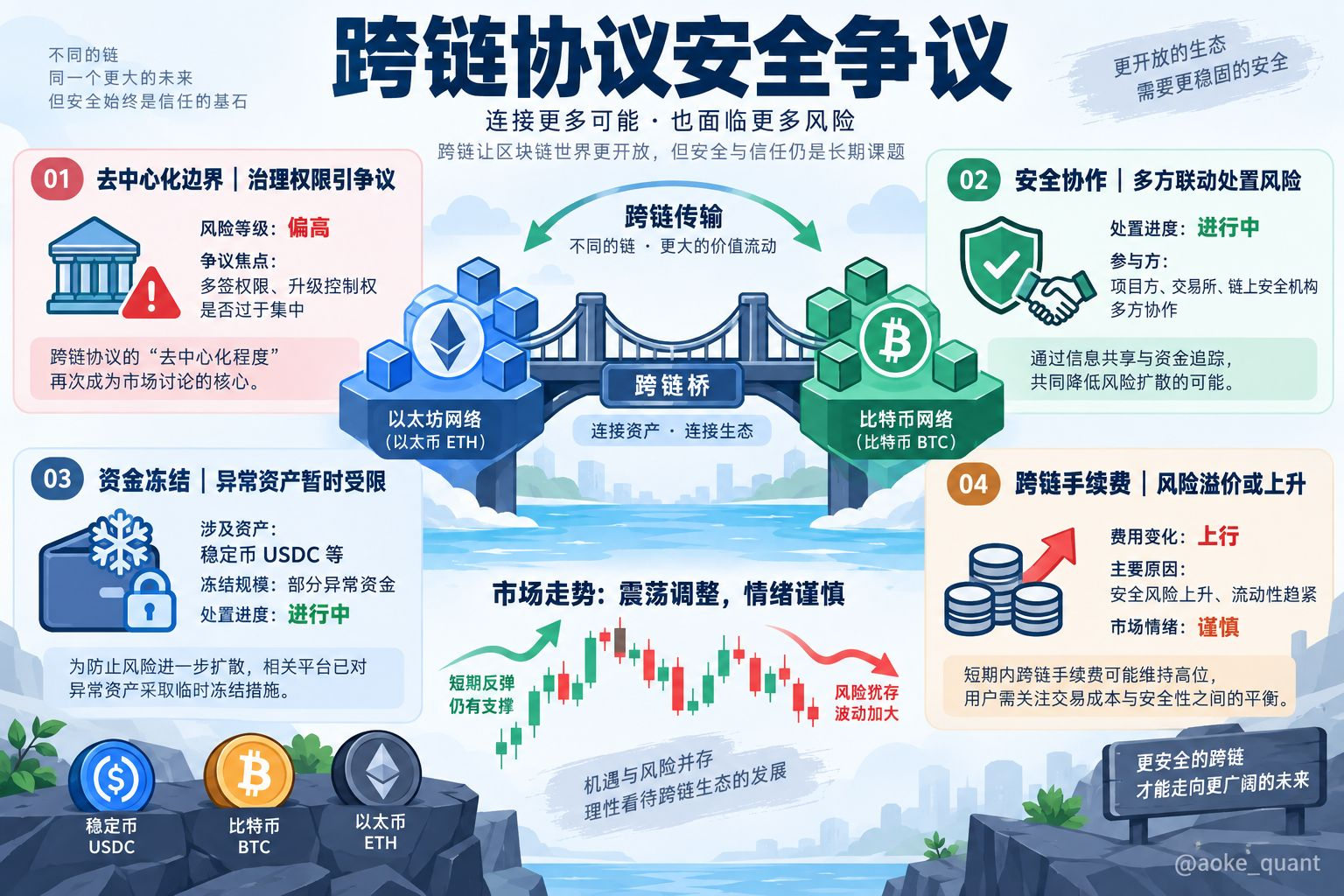
According to Odaily Planet Daily, Slow Mist Cosine posted on the X platform, raising doubts about the industry’s handling following the Bitget hack incident and THORChain’s response. The message claims that Cosine said the hack had wide impact and involved a huge amount of funds, which were quickly traced to North Korean hackers. Circle, Tether, and other institutions reportedly provided timely assistance to freeze the related funds, with Circle freezing the USDC held by the hackers. It should be noted that the above is Odaily’s summary of his post; the current materials do not provide any announcements from the relevant institutions or on-chain data for further independent verification.
The core dispute centers on THORChain’s role and boundaries. As Odaily reports, Cosine pointed out that when THORChain itself encountered a hack, it previously intervened swiftly in its so-called “decentralized” platform. However, when facing a major industry security incident, it responded with “decentralized, no authority to interfere,” likening itself to Bitcoin and Ethereum, while continuing to earn fees from the hackers’ large cross-chain transactions. Cosine argues that decentralization should not be just a slogan; after a major security incident occurs, what matters is to clearly distinguish which issues the industry needs to resolve together.
Logically, this debate is not simply about negating decentralization, but rather questioning whether different systems have consistent governance capabilities, responsibility boundaries, and risk response mechanisms. Networks like Bitcoin and Ethereum, as foundational layers, may differ from specific cross-chain liquidity protocols in aspects such as validation structure, operational dependencies, and coordination between front-end and nodes. If a protocol can take rapid action within its own risks but emphasizes having absolutely no authority to intervene in external major security incidents, the market will naturally scrutinize whether its rules are internally consistent.
The main impact on the crypto market is reflected in trust and compliance expectations. At the factual level, the materials only show Cosine’s questions and mention that stablecoin issuers assisted with freezing the related funds. At the speculative level, if similar incidents continue to generate controversy, cross-chain protocols may face higher requirements for transparency, and users may place greater emphasis on publicly stated rules regarding how a protocol handles hacker fund flows, fee collection, and emergency responses. Editor’s observation is that decentralization is not a single label; it requires a verifiable explanation across technical constraints, governance procedures, and security coordination. For the industry, the standards for handling major security incidents after the fact may influence long-term trust more than the terminology itself.
#加密新闻 #BTC #ETH #BNB
According to Odaily Planet Daily, Slow Mist Cosine posted on the X platform, raising doubts about the industry’s handling following the Bitget hack incident and THORChain’s response. The message claims that Cosine said the hack had wide impact and involved a huge amount of funds, which were quickly traced to North Korean hackers. Circle, Tether, and other institutions reportedly provided timely assistance to freeze the related funds, with Circle freezing the USDC held by the hackers. It should be noted that the above is Odaily’s summary of his post; the current materials do not provide any announcements from the relevant institutions or on-chain data for further independent verification.
The core dispute centers on THORChain’s role and boundaries. As Odaily reports, Cosine pointed out that when THORChain itself encountered a hack, it previously intervened swiftly in its so-called “decentralized” platform. However, when facing a major industry security incident, it responded with “decentralized, no authority to interfere,” likening itself to Bitcoin and Ethereum, while continuing to earn fees from the hackers’ large cross-chain transactions. Cosine argues that decentralization should not be just a slogan; after a major security incident occurs, what matters is to clearly distinguish which issues the industry needs to resolve together.
Logically, this debate is not simply about negating decentralization, but rather questioning whether different systems have consistent governance capabilities, responsibility boundaries, and risk response mechanisms. Networks like Bitcoin and Ethereum, as foundational layers, may differ from specific cross-chain liquidity protocols in aspects such as validation structure, operational dependencies, and coordination between front-end and nodes. If a protocol can take rapid action within its own risks but emphasizes having absolutely no authority to intervene in external major security incidents, the market will naturally scrutinize whether its rules are internally consistent.
The main impact on the crypto market is reflected in trust and compliance expectations. At the factual level, the materials only show Cosine’s questions and mention that stablecoin issuers assisted with freezing the related funds. At the speculative level, if similar incidents continue to generate controversy, cross-chain protocols may face higher requirements for transparency, and users may place greater emphasis on publicly stated rules regarding how a protocol handles hacker fund flows, fee collection, and emergency responses. Editor’s observation is that decentralization is not a single label; it requires a verifiable explanation across technical constraints, governance procedures, and security coordination. For the industry, the standards for handling major security incidents after the fact may influence long-term trust more than the terminology itself.
#加密新闻 #BTC #ETH #BNB