

Is it worth taking risks for quick 10x profits, or should you buy reliable assets instead?
Imagine two situations. In the first, you invest money in the shares of a large technology company that builds global infrastructure, внедряет AI, and reports on earnings every year. In the second, you buy a batch of lottery tickets because a funny dog or cat joke went viral on social media.
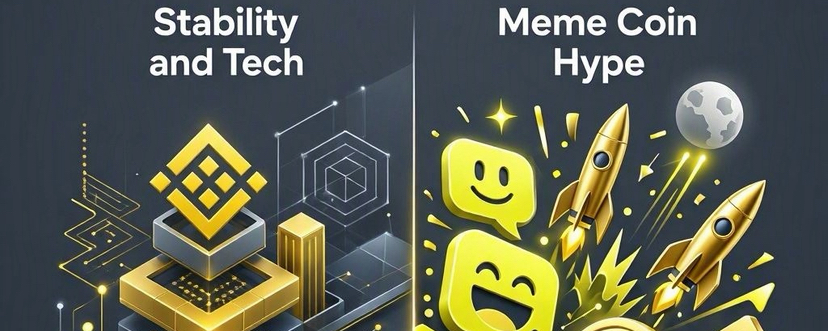
This is roughly what the main confrontation in crypto looks like: Fundamental projects versus Meme coins (which skeptics often call “shield coins”). As of 2026, this split has become even deeper.
Let’s break it down without sugarcoating: where the real money is made, what risks each camp hides, and how to build a portfolio that won’t get wiped out overnight! 🧠
🧱 Fundamental coins: Solid-classic
Fundamental assets (also called first-tier altcoins) are projects backed by real technology, a strong team of developers, and usefulness (utility) for the whole world.
Bright examples: $BTC (digital gold), ETH (the world’s main supercomputer), $BNB (fuel for Binance’s massive ecosystem), as well as fast blockchains like Solana ($SOL ) or L2 networks.
🟩 Pros: High liquidity, support from major global funds (institutionals), and minimal risk that the project will suddenly disappear. These coins form the foundation of any healthy portfolio.
🟥 Cons: Don’t expect 1000% growth in three days from them. These are assets for long-term, systematic capital growth.
🚀 Meme coins: A lottery that conquered the crypto market
Meme coins are coins created on the wave of internet jokes, hype, and pop culture. Most of the time they don’t have any technological value, and their price is held exclusively by the community’s belief and viral marketing on social networks.
Bright examples: from classic Dogecoin (DOGE) and Shiba Inu (SHIB) to an endless stream of new tokens on Solana (like PEPE, WIF, and hundreds of daily launches on pump.fun).
🟩 Pros: Crazy, phenomenal returns. A meme coin can do 50x or 100x in a matter of days just because a well-known influencer posted a meme on Twitter.
🟥 Cons: The risk of total capital loss is close to 99%. Trends change instantly: today the coin is at its peak, and tomorrow the creators pull liquidity (scam/rug pull), and the asset falls to zero.
⚖️ What to choose: The “Smart Investor” strategy
The biggest mistake beginners make is going to extremes. Investing everything in meme coins is pure gambling (a casino). Buying only Bitcoin is reliable, but boring if you have a small starting capital.
Professionals use the barbell strategy (risk diversification):
Base (70–80% of the portfolio): Fundamental coins (BTC, ETH, BNB). This is your financial shield. They protect your capital from collapse and steadily grow over the long run.
High risk (10–20% of the portfolio): Promising mid-cap technology altcoins (AI tokens, the RWA sector).
Venture capital / Speculation (No more than 5%): That same budget for meme coins. Be mentally prepared to burn this money the moment you buy. If they take off, you’ll make great profit; if they drop to zero, your overall portfolio won’t even notice the loss.
⚠️ Disclaimer: Not financial advice (DYOR). Meme coins have extreme volatility. Never invest money borrowed or critically important to your life into risky assets! #Memecoins🤑🤑 #altcoins #tradingtips #cryptoland_88 #dyor