

ETH_Tamim
764 Posts

ETH_Tamim
Binance Enthusiast🔶Crypto Trader📈Deciphering charts, one trade at a time📊Passionate about Blockchain & Web3🌐Hustle•Trade•Repeat
Open Trade

SHADOW Holder
Occasional Trader
1.7 Years
804 Following
22.8K+ Followers
2.8K+ Liked
Posts
Portfolio
All
Quotes
Live
PINNED

Jamal 656
·
--
$BTC
Claim reward 🎁
Claim reward 🎁


MD_BNB
·
--
🎁 BTTC Red Packet is Live!
Claim your free BTTC tokens now. Limited rewards available — don't miss out! 🚀
Claim your free BTTC tokens now. Limited rewards available — don't miss out! 🚀




Earn With_Biplob
·
--
follow🎁🎁🎁🎁🎁🎁🎁🎁🎁 me everyone
MD_BNB
·
--
🎁 BTTC Red Packet is Live!
Claim your free BTTC tokens now. Limited rewards available — don't miss out! 🚀
Claim your free BTTC tokens now. Limited rewards available — don't miss out! 🚀


NVDAUS+0.02%

Bilawal Ashiq
·
--
🧧🧧Clam Repost Like Gift Sol pls 🧧🧧🎉🎉
$SOL
$SOL


Sara_ k
·
--
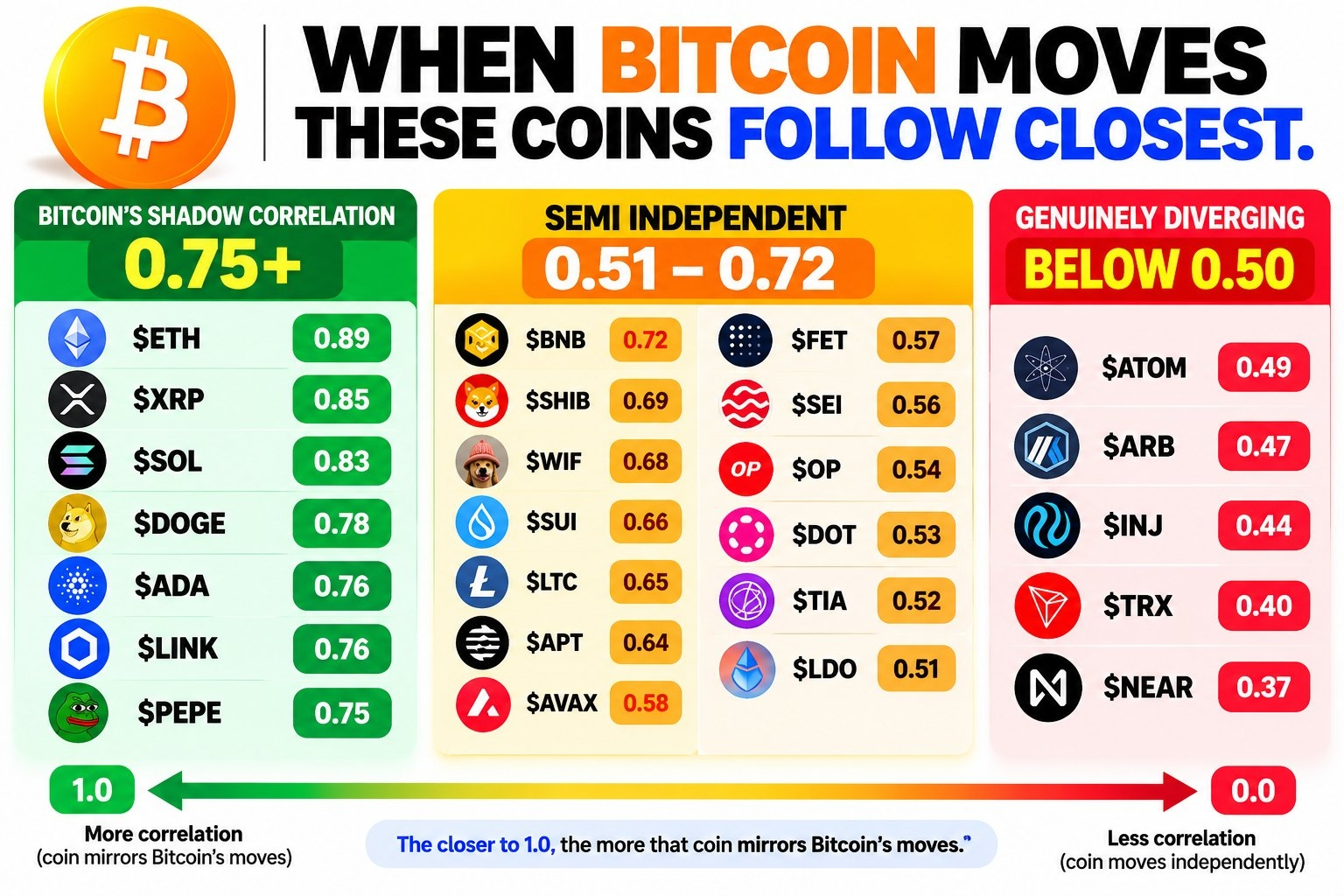
When Bitcoin moves these coins follow closest.
.
claim here 👈🧧🧧🧧🧧🧧
.
claim 2 👈🧧🧧🧧🧧🧧
.
.
claim here 👈🧧🧧🧧🧧🧧
.
claim 2 👈🧧🧧🧧🧧🧧
.

先生-Crypto
·
--
🎁🎁🎁🎁🎁
Follow Me
Share It
Comment on It
🎁🎁🎁🎁🎁
Follow Me
Share It
Comment on It
🎁🎁🎁🎁🎁

Syco 疯子
·
--
🌹Hope is a light that shines,
Kindness is a heart that beats,
Together, they illuminate the path,
And guide us towards a bright future.
Iwish you the best.🌹
Kindly✨
@Syco 疯子 🌹
$BNB
Kindness is a heart that beats,
Together, they illuminate the path,
And guide us towards a bright future.
Iwish you the best.🌹
Kindly✨
@Syco 疯子 🌹
$BNB


Ayush-NXT
·
--
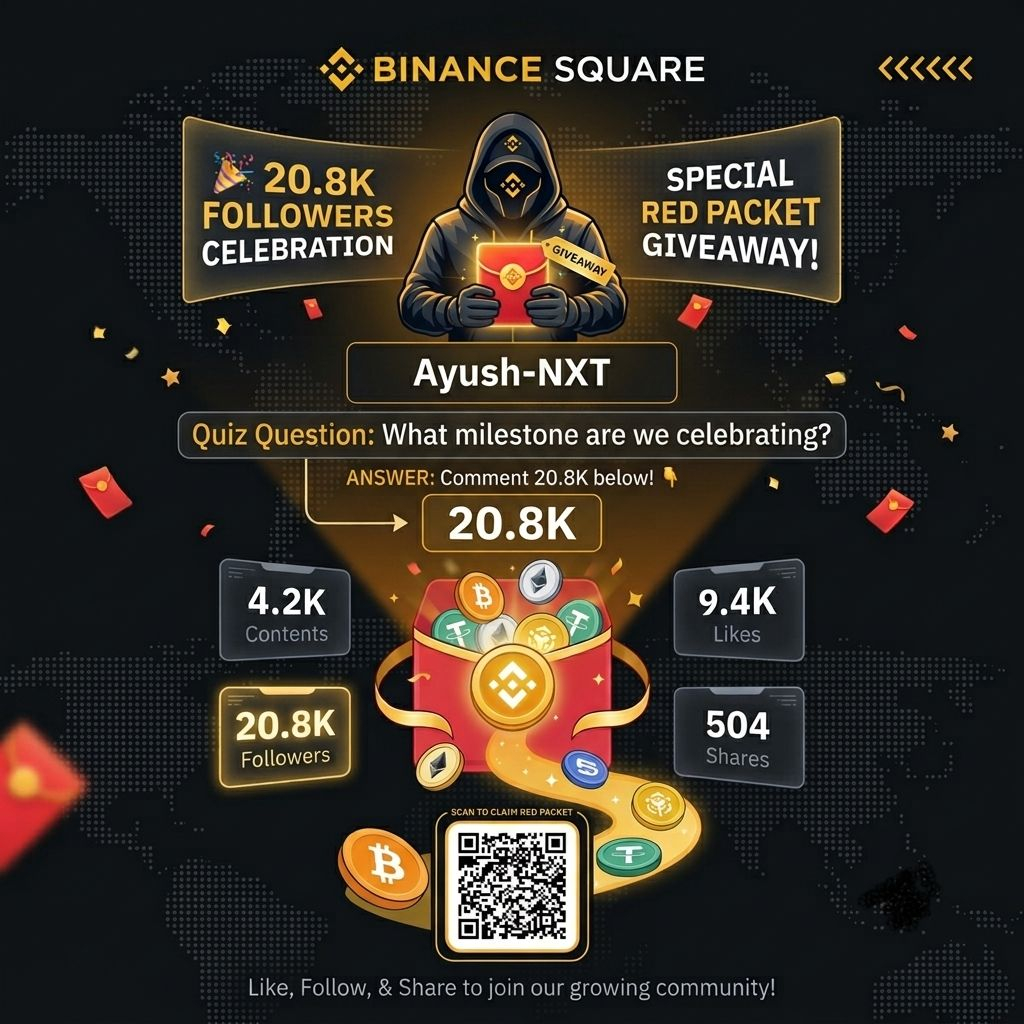
Bullish🚀 SPECIAL RED PACKET GIVEAWAY IS LIVE! 🎁✨
Big thanks to each and every one of you for being such an active and supportive part of this community! 💛 Our Binance Square family is growing rapidly, and all of this momentum is only possible because of your amazing support, engagement, and trust. 📈🔥
To show my genuine appreciation for this journey, I’ve set up a Brand New Red Packet Quiz right here on this post for you all! 🧧👇
🎁 How to Claim Your Reward:
1️⃣ Answer the Quiz Question: What milestone are we celebrating on the profile today?
2️⃣ Comment Below: Simply type 20.8K in the comment section!
3️⃣ Grab Your Red Packet: Claim your crypto reward directly from the post!
⚡ Make sure to claim quickly before the pool runs out! 🎯
$0G
#Ayush4155
#DevTeasers
Big thanks to each and every one of you for being such an active and supportive part of this community! 💛 Our Binance Square family is growing rapidly, and all of this momentum is only possible because of your amazing support, engagement, and trust. 📈🔥
To show my genuine appreciation for this journey, I’ve set up a Brand New Red Packet Quiz right here on this post for you all! 🧧👇
🎁 How to Claim Your Reward:
1️⃣ Answer the Quiz Question: What milestone are we celebrating on the profile today?
2️⃣ Comment Below: Simply type 20.8K in the comment section!
3️⃣ Grab Your Red Packet: Claim your crypto reward directly from the post!
⚡ Make sure to claim quickly before the pool runs out! 🎯
$0G
#Ayush4155
#DevTeasers

king Gulfam
·
--
Bullish#EarningsSeason
@ZEC @BNC @NEAR
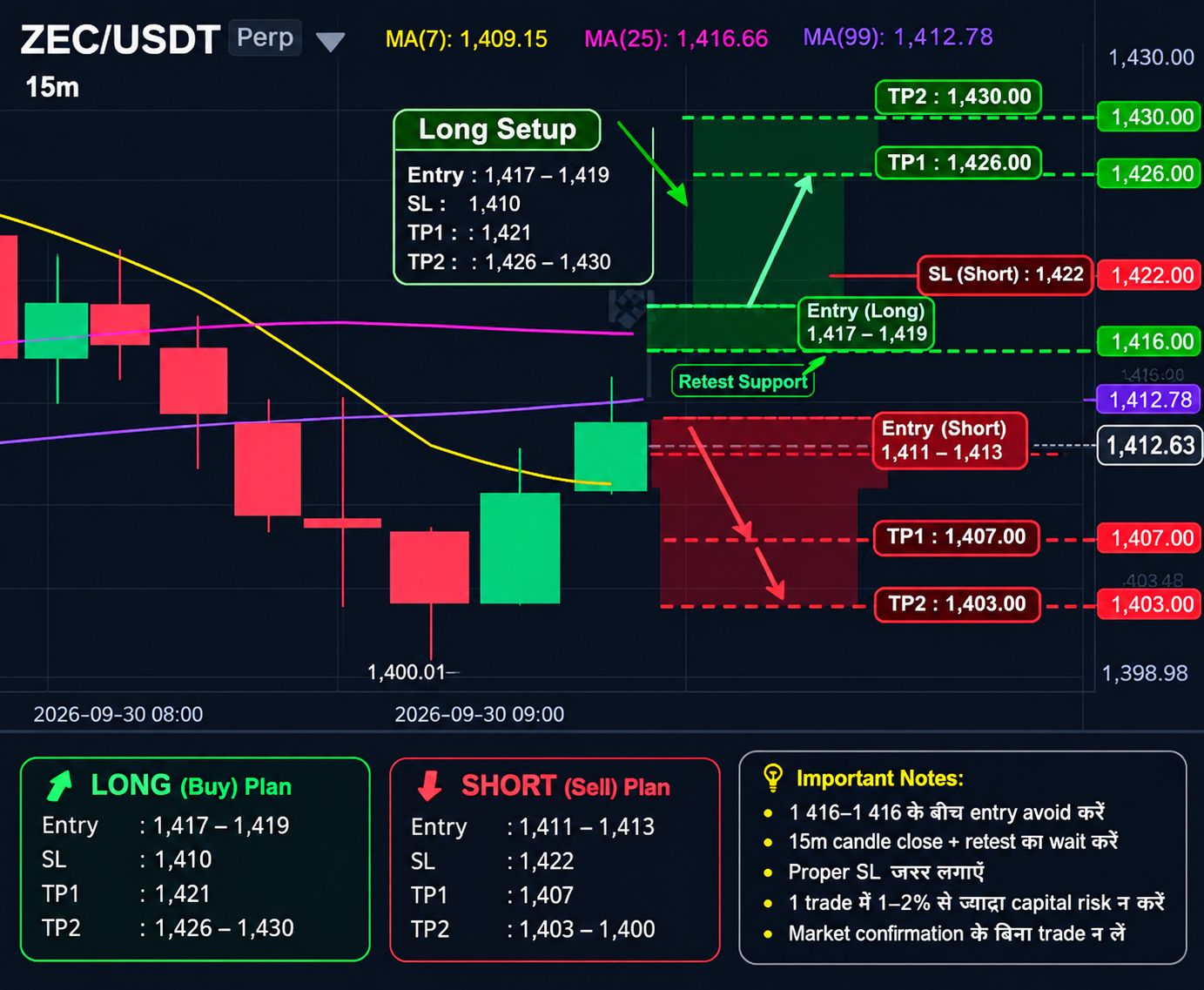
$ZEC
🟢 Long setup:
If we get a close above 1416.7 on the 15m candle and it holds on retest →
Entry: 1417–1419
SL: 1410
TP1: 1421
TP2: 1426–1430
🔴 Short setup:
If we see a strong rejection from the 1416–1421 zone and price closes below 1412 →
Entry: 1411–1413
SL: 1422
TP1: 1407
TP2: 1403–1400
Right now, it’s better to avoid entries between 1412–1416 because price is trapped between moving averages.
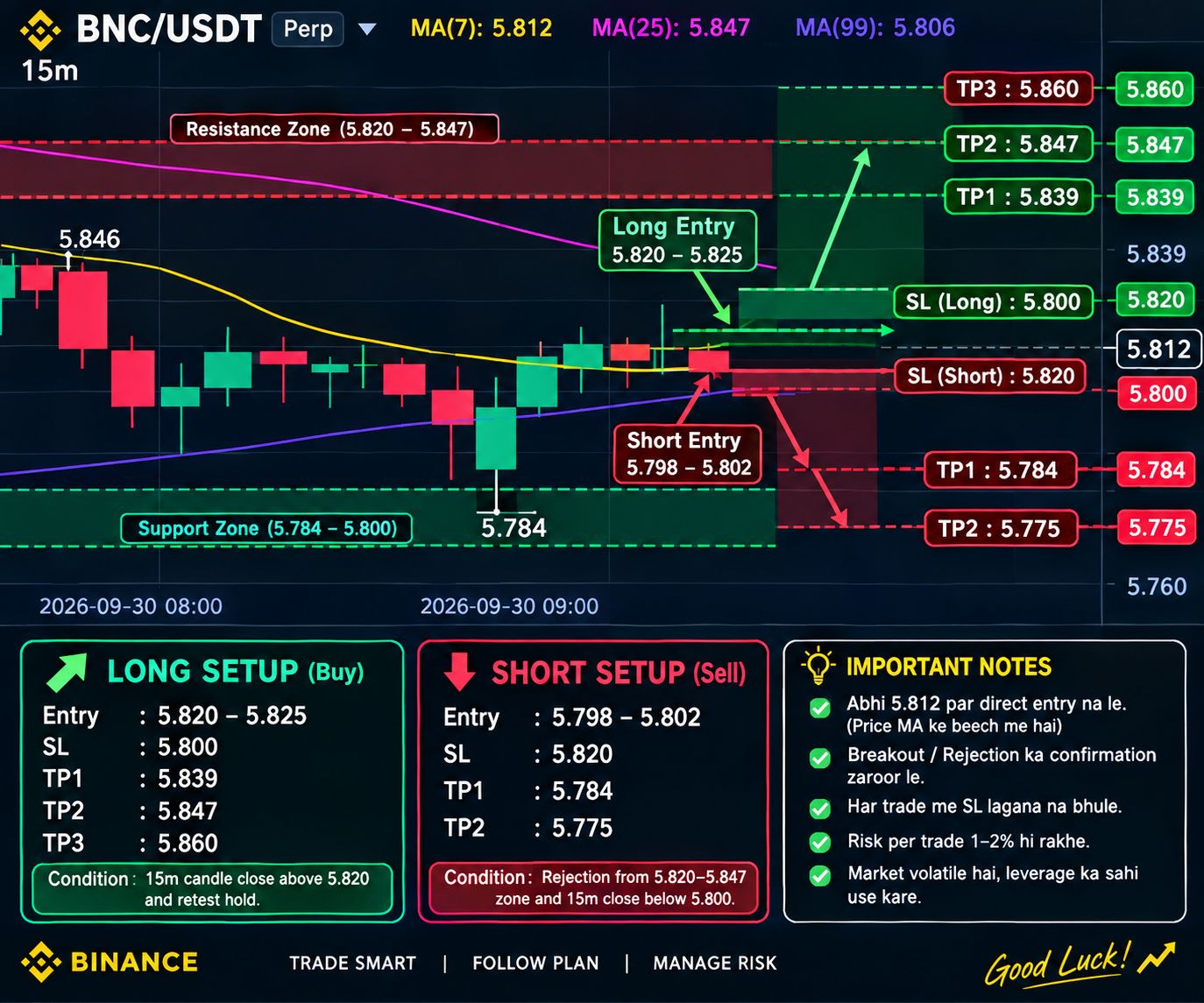
$BNC
🟢 LONG — after confirmation
If the 15m candle closes above 5.820 and holds on retest:
Entry: 5.820–5.825
SL: 5.800
TP1: 5.839
TP2: 5.847
TP3: 5.860
🔴 SHORT — after rejection
If we get rejection from the 5.820–5.847 zone and price closes 15m below 5.800:
Entry: 5.798–5.802
SL: 5.820
TP1: 5.784
TP2: 5.775
$NEAR
LONG setup:
15m candle closes above 5.00 + retest
SL: 4.94
TP1: 5.03
TP2: 5.08–5.12
SHORT setup:
If we get strong rejection from 4.98–5.00
Entry: 4.96–4.98
SL: 5.04
TP1: 4.93
TP2: 4.89
@ZEC @BNC @NEAR
$ZEC
🟢 Long setup:
If we get a close above 1416.7 on the 15m candle and it holds on retest →
Entry: 1417–1419
SL: 1410
TP1: 1421
TP2: 1426–1430
🔴 Short setup:
If we see a strong rejection from the 1416–1421 zone and price closes below 1412 →
Entry: 1411–1413
SL: 1422
TP1: 1407
TP2: 1403–1400
Right now, it’s better to avoid entries between 1412–1416 because price is trapped between moving averages.
$BNC
🟢 LONG — after confirmation
If the 15m candle closes above 5.820 and holds on retest:
Entry: 5.820–5.825
SL: 5.800
TP1: 5.839
TP2: 5.847
TP3: 5.860
🔴 SHORT — after rejection
If we get rejection from the 5.820–5.847 zone and price closes 15m below 5.800:
Entry: 5.798–5.802
SL: 5.820
TP1: 5.784
TP2: 5.775
$NEAR
LONG setup:
15m candle closes above 5.00 + retest
SL: 4.94
TP1: 5.03
TP2: 5.08–5.12
SHORT setup:
If we get strong rejection from 4.98–5.00
Entry: 4.96–4.98
SL: 5.04
TP1: 4.93
TP2: 4.89

Sheemm
·
--
🎁🎁🎁🎁 HELLO FAMILY 👋
LIKE REPOST COMMENT
AND CLAIM 🎁🎁🎁🎁 $BNB
$SAND
$ZRO
LIKE REPOST COMMENT
AND CLAIM 🎁🎁🎁🎁 $BNB
$SAND
$ZRO

Bilverse
·
--
🚨 BILVERSEARMY — THE RED PACKET HAS LANDED! 🔴🧧
⚡️ $ETH GIVEAWAY IS LIVE! ⚡️
The red packets are ready. The mission starts NOW. 👀🔥
Want to join the BilverseArmy? Here’s how:
1️⃣ Follow @Bilverse
2️⃣ Like this post ❤️
3️⃣ Comment “YES” below 👇
4️⃣ Share it with your crypto squad 🚀
💎 More ETH. More excitement. More good vibes.
🧧 RED PACKET: ACTIVATED
⚡ ETH: LOADING…
Tag your crew and let’s see how loud the #BilverseArmy can get! 🔥
#ETH #Bilverse #RedPacketMission
⚡️ $ETH GIVEAWAY IS LIVE! ⚡️
The red packets are ready. The mission starts NOW. 👀🔥
Want to join the BilverseArmy? Here’s how:
1️⃣ Follow @Bilverse
2️⃣ Like this post ❤️
3️⃣ Comment “YES” below 👇
4️⃣ Share it with your crypto squad 🚀
💎 More ETH. More excitement. More good vibes.
🧧 RED PACKET: ACTIVATED
⚡ ETH: LOADING…
Tag your crew and let’s see how loud the #BilverseArmy can get! 🔥
#ETH #Bilverse #RedPacketMission


燕寶Melissa
·
--
BullishA statement by Mist Founder Yu Xian (Cos) has revealed a major real-world challenge in anti-money laundering (AML) in the crypto industry.
After tracking Bitget hackers’ money-laundering activities for hours, Cos found that cross-chain bridges such as Chainflip are not necessarily taking no interception action—but rather their AML/KYT response speed may already be too slow to keep up with the pace of hackers’ automated laundering.
How complex are hackers’ laundering paths?
🔴 Step 1: Automated splitting of funds
Quickly break stolen assets into many smaller amounts, increasing the difficulty of tracing and identification.
🔴 Step 2: Multi-chain cross-bridge transfers
Use different cross-chain bridges to distribute and move funds across multiple blockchains. Once a route is blocked by risk controls or funds are reverted, they immediately switch to another route.
🔴 Step 3: Convert to Bitcoin
Continuously transfer assets via various on-chain channels, and ultimately convert the funds into BTC, further increasing the complexity of tracking.
🔴 Step 4: CoinJoin coin-mixing
Use the CoinJoin transaction mixing mechanism to obscure links between funds, making subsequent tracing and identification harder.
⚠️ What’s truly worth关注 is not just how hackers launder money, but the speed gap between attack and defense.
When hackers use automation programs to quickly split assets and switch cross-chain routes, risk identification, address tagging, and manual coordination-based risk control systems may fail to complete responses in time.
This also means that simply blocking funds via a single cross-chain bridge is no longer enough to deal with highly automated, cross-chain coordinated laundering.
Security competition in the crypto industry is shifting from purely technical defenses to a comprehensive contest involving on-chain intelligence, real-time monitoring, automated risk control, and cross-platform collaboration.
In the future, what deserves real attention is not only whether projects can recover funds after a hack, but also whether—during the critical window when funds are moving across chains—they can promptly identify risks and take action.
#以太坊三季度涨70.9%
$BTC
$ETH
$BNB
After tracking Bitget hackers’ money-laundering activities for hours, Cos found that cross-chain bridges such as Chainflip are not necessarily taking no interception action—but rather their AML/KYT response speed may already be too slow to keep up with the pace of hackers’ automated laundering.
How complex are hackers’ laundering paths?
🔴 Step 1: Automated splitting of funds
Quickly break stolen assets into many smaller amounts, increasing the difficulty of tracing and identification.
🔴 Step 2: Multi-chain cross-bridge transfers
Use different cross-chain bridges to distribute and move funds across multiple blockchains. Once a route is blocked by risk controls or funds are reverted, they immediately switch to another route.
🔴 Step 3: Convert to Bitcoin
Continuously transfer assets via various on-chain channels, and ultimately convert the funds into BTC, further increasing the complexity of tracking.
🔴 Step 4: CoinJoin coin-mixing
Use the CoinJoin transaction mixing mechanism to obscure links between funds, making subsequent tracing and identification harder.
⚠️ What’s truly worth关注 is not just how hackers launder money, but the speed gap between attack and defense.
When hackers use automation programs to quickly split assets and switch cross-chain routes, risk identification, address tagging, and manual coordination-based risk control systems may fail to complete responses in time.
This also means that simply blocking funds via a single cross-chain bridge is no longer enough to deal with highly automated, cross-chain coordinated laundering.
Security competition in the crypto industry is shifting from purely technical defenses to a comprehensive contest involving on-chain intelligence, real-time monitoring, automated risk control, and cross-platform collaboration.
In the future, what deserves real attention is not only whether projects can recover funds after a hack, but also whether—during the critical window when funds are moving across chains—they can promptly identify risks and take action.
#以太坊三季度涨70.9%
$BTC
$ETH
$BNB


MAYA_
·
--
🎁🎁 GIFT BOX 🎁🎁
🎁🎁🎁🎁🎁🎁
🎁🎁🎁🎁🎁
🎁🎁🎁🎁🎁🎁
🎁🎁🎁🎁🎁


Mahi_玛希BNB
·
--
🚀 **$ETH — More Than Just a Token!**
Ethereum continues to power a huge part of the **Web3 ecosystem**, from smart contracts to DeFi and beyond. 🔥
The market is always moving, and ETH** remains one of the tokens worth keeping on your radar. 👀
Are you watching the next ETH move? 📈
$BNB $BTC
#ETH #Ethereum #Crypto #Web3 #defi #BinanceSquare #ETHArmy #CryptoCommunity #blockchain
Ethereum continues to power a huge part of the **Web3 ecosystem**, from smart contracts to DeFi and beyond. 🔥
The market is always moving, and ETH** remains one of the tokens worth keeping on your radar. 👀
Are you watching the next ETH move? 📈
$BNB $BTC
#ETH #Ethereum #Crypto #Web3 #defi #BinanceSquare #ETHArmy #CryptoCommunity #blockchain

Jamal 656
·
--
Claim reward 🎁🎁 $BTTC $SHIB

燕寶Melissa
·
--
BullishA statement by Mist Founder Yu Xian (Cos) has revealed a major real-world challenge in anti-money laundering (AML) in the crypto industry.
After tracking Bitget hackers’ money-laundering activities for hours, Cos found that cross-chain bridges such as Chainflip are not necessarily taking no interception action—but rather their AML/KYT response speed may already be too slow to keep up with the pace of hackers’ automated laundering.
How complex are hackers’ laundering paths?
🔴 Step 1: Automated splitting of funds
Quickly break stolen assets into many smaller amounts, increasing the difficulty of tracing and identification.
🔴 Step 2: Multi-chain cross-bridge transfers
Use different cross-chain bridges to distribute and move funds across multiple blockchains. Once a route is blocked by risk controls or funds are reverted, they immediately switch to another route.
🔴 Step 3: Convert to Bitcoin
Continuously transfer assets via various on-chain channels, and ultimately convert the funds into BTC, further increasing the complexity of tracking.
🔴 Step 4: CoinJoin coin-mixing
Use the CoinJoin transaction mixing mechanism to obscure links between funds, making subsequent tracing and identification harder.
⚠️ What’s truly worth关注 is not just how hackers launder money, but the speed gap between attack and defense.
When hackers use automation programs to quickly split assets and switch cross-chain routes, risk identification, address tagging, and manual coordination-based risk control systems may fail to complete responses in time.
This also means that simply blocking funds via a single cross-chain bridge is no longer enough to deal with highly automated, cross-chain coordinated laundering.
Security competition in the crypto industry is shifting from purely technical defenses to a comprehensive contest involving on-chain intelligence, real-time monitoring, automated risk control, and cross-platform collaboration.
In the future, what deserves real attention is not only whether projects can recover funds after a hack, but also whether—during the critical window when funds are moving across chains—they can promptly identify risks and take action.
#以太坊三季度涨70.9%
$BTC
$ETH
$BNB
After tracking Bitget hackers’ money-laundering activities for hours, Cos found that cross-chain bridges such as Chainflip are not necessarily taking no interception action—but rather their AML/KYT response speed may already be too slow to keep up with the pace of hackers’ automated laundering.
How complex are hackers’ laundering paths?
🔴 Step 1: Automated splitting of funds
Quickly break stolen assets into many smaller amounts, increasing the difficulty of tracing and identification.
🔴 Step 2: Multi-chain cross-bridge transfers
Use different cross-chain bridges to distribute and move funds across multiple blockchains. Once a route is blocked by risk controls or funds are reverted, they immediately switch to another route.
🔴 Step 3: Convert to Bitcoin
Continuously transfer assets via various on-chain channels, and ultimately convert the funds into BTC, further increasing the complexity of tracking.
🔴 Step 4: CoinJoin coin-mixing
Use the CoinJoin transaction mixing mechanism to obscure links between funds, making subsequent tracing and identification harder.
⚠️ What’s truly worth关注 is not just how hackers launder money, but the speed gap between attack and defense.
When hackers use automation programs to quickly split assets and switch cross-chain routes, risk identification, address tagging, and manual coordination-based risk control systems may fail to complete responses in time.
This also means that simply blocking funds via a single cross-chain bridge is no longer enough to deal with highly automated, cross-chain coordinated laundering.
Security competition in the crypto industry is shifting from purely technical defenses to a comprehensive contest involving on-chain intelligence, real-time monitoring, automated risk control, and cross-platform collaboration.
In the future, what deserves real attention is not only whether projects can recover funds after a hack, but also whether—during the critical window when funds are moving across chains—they can promptly identify risks and take action.
#以太坊三季度涨70.9%
$BTC
$ETH
$BNB

BLOCK Rayne
·
--
A BIG gift 🎁 from me to our amazing community. ❤️
Claim your $DOGE reward and enjoy!
Hurry up, everyone! 🔥
Claim your $DOGE reward and enjoy!
Hurry up, everyone! 🔥

Log in to explore more content