

Tomorrow (September 28, Monday in US Eastern time), Starship will conduct its 14th test flight—its first attempt to reach orbit. All weekend, Wall Street has been talking about the same stock: SpaceX, ticker SPCX.
There are countless publicly listed companies on Earth—selling coffee, making phones, laying pipelines, writing code. But the only one that has truly made “space” its main business—and has already made money from it—is SPCX.
1. It’s not a “concept stock”—it’s the space industry itself.
To understand SPCX’s scarcity, you only need to look at its three layers of business:
First layer, launch, the moat. As of September 2026, Falcon 9 has completed about 645 orbital launches in total, with a mission success rate above 99%. One Falcon 9 can be reused 34 times. In 2025, SpaceX completed 170 launches, accounting for 52% of the global total; orbital payloads of 2,213 tons, accounting for 83% of the global total. When you add together the launch capabilities of all other countries and all other companies worldwide, the pace still doesn’t match it.
Second layer, Starlink, a cash-cow. In Q2 2026, Starlink revenue was $4.291 billion, up 66% year over year; operating profit was $1.656 billion, with an operating margin as high as 38.6%. User numbers doubled to 12 million, with a net addition of 1.7 million in the quarter. Enterprise and government business revenue jumped 108% year over year to $1.806 billion, already accounting for more than 40% of the total. Starshield won multi-year US government contracts worth over $6 billion. This is the first space business in human history that truly makes money.
Third layer, Starship, future options. Starship’s payload capacity is 100 tons to low Earth orbit; the goal is to lower the average insertion cost by more than 99% versus the historical average. The company has already poured in over $15 billion, and in just Q2, its Starship V3 R&D spending alone reached $1.076 billion, up 55% year over year. Once Starship clears the runway, it opens up markets for a lunar economy, orbital computing power, and planetary-scale transportation.
While others talk about space stories, SPCX is already collecting money from space and building the path to it.
Second, Tesla in 2010—also mocked like this
Many people don’t know how messy Tesla was in its early days—even though it has now risen by roughly 290x.
On June 29, 2010, Tesla listed on Nasdaq with an issue price of $17—after Ford in 1956, the first US automaker to go public. It jumped 41% on the first day, closing at $23.89—then on the 5th trading day it fell back below the issue price. On July 7 alone, it crashed 16%, closing at $16.11. At that time, its quarterly revenue was only $20.8 million, with a net loss of $29.4 million. Car experts openly asserted that electric vehicles had no future.
We all know what happened next: over ten years since listing, the stock rose 63x. After splitting-adjustments across the full cycle, the value of an early $2,600 investment exceeded $1 million.
Now let’s switch the script to SPCX:
• Listed on June 12, 2026. Issue price $135. Opened at $150 on the first day;
• Peak in 4 days: 225.64, then a sustained decline. The low on Aug 3 was $104.83—not only broke the issue price, but was 22% below it;
• Net loss of $541 million in Q2; 65x price-to-sales; the media narrative is “stuck in place with no progress for three months after listing.”
• But in the same earnings report: revenue of $7.814 billion, up 92% year over year; losses narrowed by 46% year over year; adjusted EBITDA was $3.538 billion, up 191% year over year.
Same formula: a disruptive company + a deep drop in the early days after listing + skepticism from everyone. Tesla back then lacked the Model S; SPCX now is waiting for Starship to reach orbit. The difference is that the person who bought Tesla when it was trading below the issue price in 2010 later proved right.
Third, wave theory: where are the buy points before the main rally of Wave 3?
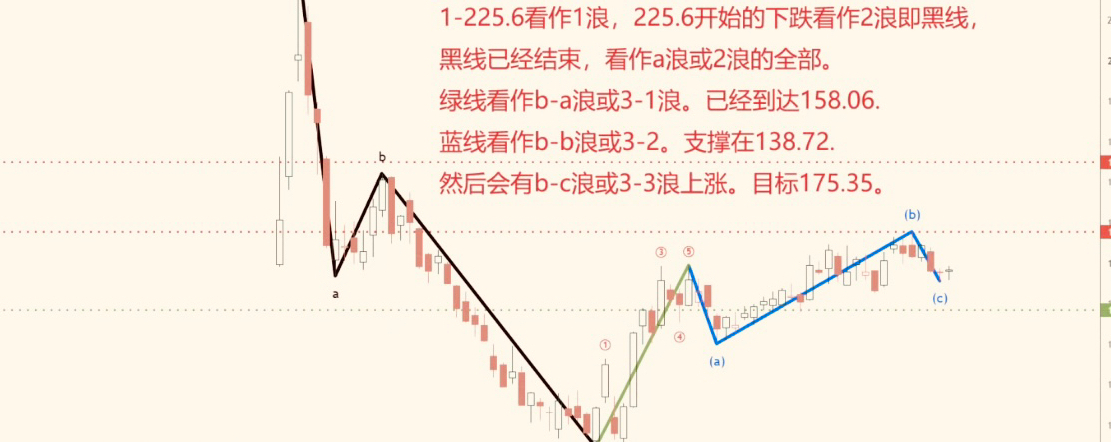
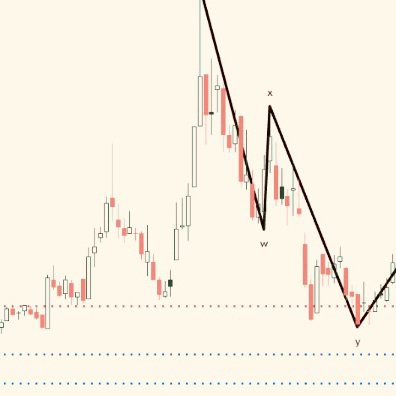
From a technical perspective, since SPCX listed, the price action has been a fairly standard wave structure (basically consistent with the wave counts in the “Wave Theory Learning” screenshot; I also cross-checked using exchange data):
• Wave 1: 150 → 225.64 (the peak of listing sentiment, 6/16);
• Wave 2: 225.64 → 104.83 (fierce washout; a drawdown of about 54%; falling below the issue price; leverage and floating shares fully purged, 8/3);
• Wave 3-1: 104.83 → 158.13 (rebound from early August to 9/21);
• Wave 3-2: since the pullback from 158.13, it’s still ongoing.
Data definition: Sina Finance US stock daily data (unadjusted for corporate actions). Closing prices from 2026-06-12 to 2026-09-25, units in USD.
In wave theory, the endpoint of Wave 2 is often the best buy point in the entire cycle—it retraces deeply, does a brutal washout, and the market sentiment is at its coldest. Yet it won’t break below the starting point of Wave 1. SPCX’s Wave 2 (104.83) is already in the past. What you can capture now is the buy point for the Wave 3-2 pullback inside Wave 3. It comes in two tiers:
• Left-side entry (aggressive): buy in batches in the $138–$142 zone. This is the 0.382 Fibonacci golden retracement level of the rebound from 104.83 to 158.13 (137.77). It precisely resonates with the 138.72 support level provided by the wave-post you screenshots, and it is also the dense trading platform in late August. Close on 9/25 at $148.68—if next week’s test-flight sentiment causes a pullback into this area, that would be a low-absorption entry at the end of Wave 3-2.
• Right-side entry (more conservative): regain $158.13 on increased volume. That would be a breakout above the high of Wave 3-1, and only after confirming that Wave 3-3’s primary rally has started should you follow in. The tradeoff is higher cost, but the risk of the wave count being invalidated is the smallest.
• Stop-loss discipline: a daily close that validly falls below $130 (below the 0.5 retracement level) indicates that the 3-2 has evolved into a complex correction. You should exit and watch from the sidelines; don’t fight the structure head-on.
• Target levels: First target 175.35 (the b-c target from the wave post, which cross-validates the 1-wave equal-length target of 180.47). If Wave 3-3 extends, then by the Wave Ruler 1.382 / 1.618 multiples, you’re looking at 209 / 227—meaning it would challenge the prior high of 225.64 again.
On timing: tomorrow’s Flight 14 is the latest catalyst. If it succeeds in reaching orbit, Wave 3-3 could unfold immediately. If it’s delayed or fails, the stock will very likely retrace back toward the $138 area—ironically giving you a left-side entry opportunity.
4. Risks that must be faced squarely
Recommendation is one thing, but four risks can’t be avoided:
1. Not cheap valuation: 65x price-to-sales, nearly a $2 trillion market cap. The market’s tolerance for it is extremely low—any execution flaws will be magnified;
2. Lock-up pressure: massive volumes of restricted shares will be released before year-end. As of Dec 8, the proportion of shares available for trading will rise to 40% of total shares outstanding, so the supply shock is real;
3. Starship execution risk: achieving orbit is the hardest step. It has already been postponed multiple times; failure would severely damage sentiment;
4. Money-burning speed: In Q2, capital expenditures were $18.37 billion, up a whopping 550% year over year. Of that, AI-related spending was $15.8 billion, accounting for 86% of total capex. Full-year capex could exceed $45 billion. Cash flow depends long-term on Starlink’s “capital injection” and financing.
Also, wave theory is a probability tool, not a prophecy. The same price action can be counted in multiple ways. Once 104.83 is broken to the downside, all the bullish structure above becomes invalid.
Conclusion
In 2010, the world treated Tesla like a “money-losing little car factory” and missed it. In 2026, the world treats SPCX like a “65x price-to-sales money-burning machine,” hesitating whether to trust Starship.
History won’t repeat itself simply, but it always rhymes. There are billions of kinds of businesses on Earth. But for the business of sending humans to the next civilization scale, there’s only this one. When Starship ignites tomorrow, it’s worth your serious look.
The above analysis is compiled based on publicly available information, for learning and reference only, and does not constitute any investment advice. The stock market carries risk. Enter the market cautiously. Please maintain independent judgment.