

橙子Joyce
419 Posts

橙子Joyce
 Square Verified+
十年以上美股市场投研策略|WEB3项目投研|十年以上投资BTC.ETH.BNB.SOL|贵金属投资策略黄金.白银.铜|中长期价值投资者|推特X:@Joyce88AI|✨星河社区联合创始人✨

BNB Holder
Frequent Trader
8.8 Years
842 Following
36.5K+ Followers
44.4K+ Liked
Posts
All
Quotes
Videos
Live

PINNED
METAUS-3.39%
GOOGUS+0.60%
SPCXUS+0.41%

只会呐喊的尖刀手
·
--
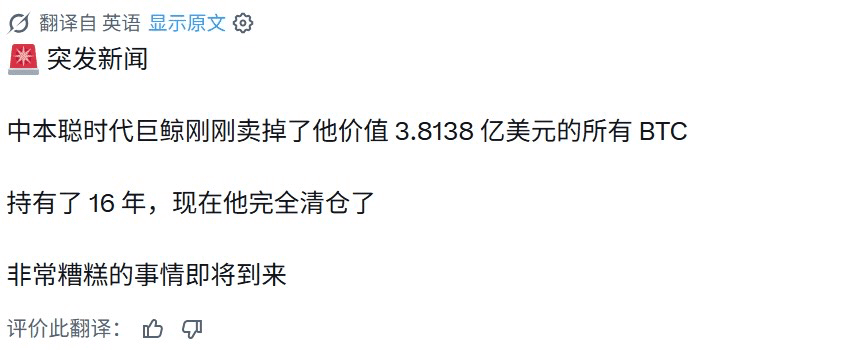
So unbelievable... Did the giant whale awaken?
4,500 large pizzas, $380 million
And it all gets turned over like that?
This feels very ominous! $BTC
4,500 large pizzas, $380 million
And it all gets turned over like that?
This feels very ominous! $BTC
楠楠nannan势不可挡
·
--
🧧 Market cycles have their warmth and chill; investing does too. Settle your mind, cultivate your understanding, and eventually your returns will sync with your knowledge.$BNB


路人1688luren
·
--
#SEC称回购与升级不必然使代币成证券 Many times many things are not that you make an effort and there will be results. When the gears of fate turn, it’s as if there are two invisible hands pushing you toward another direction... When one door closes, another opens... $USD1



心月势不可挡
·
--
Bullish🧧🧧🧧BNB will break 800 soon—hold BNB and slowly get richer 🧧🧧🧧
心月势不可挡
·
--
Bullish🧧🧧🧧BNB will break 800 soon—hold BNB and slowly get richer 🧧🧧🧧

艾琳irene
·
--
Come eat lunch together, family! Eat your fill so you can focus on the K-line charts and get back the effort you lost.😊$BTC #比特币 #SEC称代币回购与网络升级不自动构成证券



慢就是快Mike
·
--
$ZEC
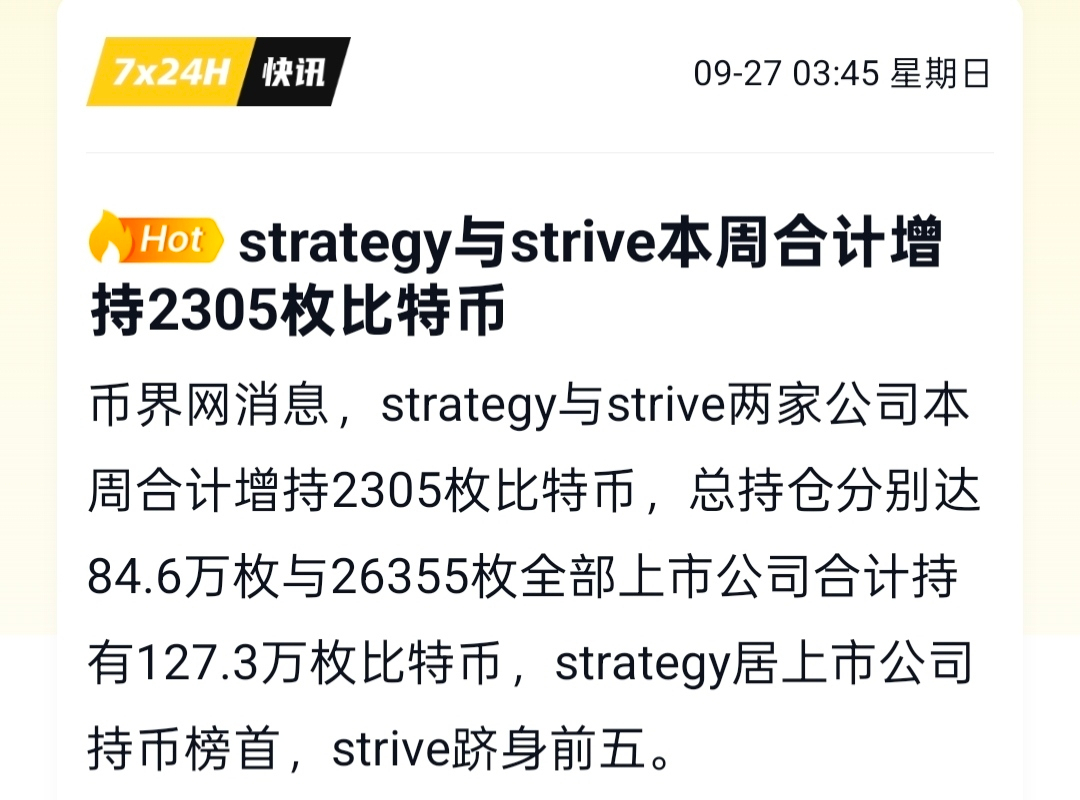
🚨 Big whales keep accumulating! A supply crisis is approaching—hold your chips tight!
Wake up and check today’s quick news! While retail investors are still hesitating through the chop and shakeout, institutions have already switched on their “savage buying” mode:
🔥 Strategy This week, they continued to increase holdings, with total holdings soaring to 846,000 BTC—sitting firmly in the top spot among listed companies!
🔥 Strive is not backing down either, with total holdings reaching 26,355 BTC, straight into the top five!
🔥 Currently, all listed companies combined hold 1.273 million BTC!
What does this mean? The liquid supply of chips on the market is being fully locked up by these giants! At this level, institutions are buying with real money—what reason do you have to be afraid?
The wheels of a bull market have already rolled over—don’t get easily thrown off the train. Hold spot, ride the momentum to go long; every pullback in front of you is an opportunity for the bulls to get on board!
#Bitcoin #BTC #Crypto #GoLong #机构入场
🚨 Big whales keep accumulating! A supply crisis is approaching—hold your chips tight!
Wake up and check today’s quick news! While retail investors are still hesitating through the chop and shakeout, institutions have already switched on their “savage buying” mode:
🔥 Strategy This week, they continued to increase holdings, with total holdings soaring to 846,000 BTC—sitting firmly in the top spot among listed companies!
🔥 Strive is not backing down either, with total holdings reaching 26,355 BTC, straight into the top five!
🔥 Currently, all listed companies combined hold 1.273 million BTC!
What does this mean? The liquid supply of chips on the market is being fully locked up by these giants! At this level, institutions are buying with real money—what reason do you have to be afraid?
The wheels of a bull market have already rolled over—don’t get easily thrown off the train. Hold spot, ride the momentum to go long; every pullback in front of you is an opportunity for the bulls to get on board!
#Bitcoin #BTC #Crypto #GoLong #机构入场


英鸿³³₇
·
--
[Replay] 🎙️ Let's chat for a bit today, DCA in BNB
01 h 57 m 49 s · 4.8k listens

乘风Sunshine
·
--
[Ended] 🎙️ Chat a bit, and you might get a chance to do some work
872 listens
乘风Sunshine
·
--
《China-U.S. Summit Meets and Reaches Eight Key Outcomes—What Could This Mean for the Crypto Market?》
1️⃣ “Building a constructive, stable China-U.S. strategic relationship based on respect, fairness, and equality”
The easing of geopolitical conflicts could give global risk appetite some breathing room. As a global liquidity asset, BTC is most sensitive to this kind of macro risk shift.
2️⃣ “Mutually support one another in doing a good job hosting APEC and the G20”
Major global economies will continue to maintain high-level communication, meaning there is still room to coordinate international financial rules. Future regulation of crypto assets also cannot develop outside the G20 framework.
3️⃣ “Iran should fulfill its commitment not to develop nuclear weapons; no country or entity may charge transit fees for international waterways”
Risks related to the Middle East and energy transportation directly affect inflation, the U.S. dollar, and U.S. Treasuries. If energy prices swing sharply, changes in Federal Reserve rate expectations could lead BTC to be repriced as well.
4️⃣ “Recalling that China and the United States are wartime allies in World War II, and fighting side by side to win the war”
This is a historical narrative, but for markets, the more important part is the signal of “avoiding escalation out of control.”
5️⃣ “Reaching a mutually equivalent ‘$30 billion’ arrangement to lower tariffs”
As trade friction cools, global trade and liquidity expectations may improve. In recent years, whenever tariffs were upgraded, it became a key variable for risk assets—so BTC naturally also can’t be completely insulated.
6️⃣ “Coooperation between China and the U.S. anti-drug enforcement agencies has achieved visible results”
This point is actually very practical for the crypto world: strengthened cross-border law enforcement cooperation may further reinforce compliance requirements for stablecoins, exchanges, and on-chain capital flows in the future.
7️⃣ “Establishing a China-U.S. dialogue on artificial intelligence”
AI and Crypto are forming a new overlap area: AI agents, on-chain payments, automated execution of smart contracts, DePIN, and more. For China and the U.S. to begin building AI risk communication mechanisms is, in itself, a signal worth long-term attention.
8️⃣ “The U.S. side welcomes China’s lending of a pair of giant pandas to the Atlanta Zoo”
Pandas may seem to have nothing to do with the crypto space, but what they represent is the restoration of people-to-people communication.
Summary:
What the crypto market should truly pay attention to from this summit is not any single item that directly benefits BTC, but three keywords:
Geopolitical risk ↓
Trade uncertainty ↓
AI and financial regulatory cooperation ↑
1️⃣ “Building a constructive, stable China-U.S. strategic relationship based on respect, fairness, and equality”
The easing of geopolitical conflicts could give global risk appetite some breathing room. As a global liquidity asset, BTC is most sensitive to this kind of macro risk shift.
2️⃣ “Mutually support one another in doing a good job hosting APEC and the G20”
Major global economies will continue to maintain high-level communication, meaning there is still room to coordinate international financial rules. Future regulation of crypto assets also cannot develop outside the G20 framework.
3️⃣ “Iran should fulfill its commitment not to develop nuclear weapons; no country or entity may charge transit fees for international waterways”
Risks related to the Middle East and energy transportation directly affect inflation, the U.S. dollar, and U.S. Treasuries. If energy prices swing sharply, changes in Federal Reserve rate expectations could lead BTC to be repriced as well.
4️⃣ “Recalling that China and the United States are wartime allies in World War II, and fighting side by side to win the war”
This is a historical narrative, but for markets, the more important part is the signal of “avoiding escalation out of control.”
5️⃣ “Reaching a mutually equivalent ‘$30 billion’ arrangement to lower tariffs”
As trade friction cools, global trade and liquidity expectations may improve. In recent years, whenever tariffs were upgraded, it became a key variable for risk assets—so BTC naturally also can’t be completely insulated.
6️⃣ “Coooperation between China and the U.S. anti-drug enforcement agencies has achieved visible results”
This point is actually very practical for the crypto world: strengthened cross-border law enforcement cooperation may further reinforce compliance requirements for stablecoins, exchanges, and on-chain capital flows in the future.
7️⃣ “Establishing a China-U.S. dialogue on artificial intelligence”
AI and Crypto are forming a new overlap area: AI agents, on-chain payments, automated execution of smart contracts, DePIN, and more. For China and the U.S. to begin building AI risk communication mechanisms is, in itself, a signal worth long-term attention.
8️⃣ “The U.S. side welcomes China’s lending of a pair of giant pandas to the Atlanta Zoo”
Pandas may seem to have nothing to do with the crypto space, but what they represent is the restoration of people-to-people communication.
Summary:
What the crypto market should truly pay attention to from this summit is not any single item that directly benefits BTC, but three keywords:
Geopolitical risk ↓
Trade uncertainty ↓
AI and financial regulatory cooperation ↑

·
--
🎙️ Butterfly🦋C Master, mechanism deflation, community co-building, the preferred choice for the 80M target🚀🚀🚀

End
02 h 51 m 09 s
1.4k
4


蒋雅琪1368
·
--
Up, up, up—up!
The leaders of China and the US will meet next week, which is a major positive.
Consider taking partial profits when it reaches the previous high area, or before the 24th’s meeting.
The leaders of China and the US will meet next week, which is a major positive.
Consider taking partial profits when it reaches the previous high area, or before the 24th’s meeting.
乘风Sunshine
·
--
《China-U.S. Summit Meets and Reaches Eight Key Outcomes—What Could This Mean for the Crypto Market?》
1️⃣ “Building a constructive, stable China-U.S. strategic relationship based on respect, fairness, and equality”
The easing of geopolitical conflicts could give global risk appetite some breathing room. As a global liquidity asset, BTC is most sensitive to this kind of macro risk shift.
2️⃣ “Mutually support one another in doing a good job hosting APEC and the G20”
Major global economies will continue to maintain high-level communication, meaning there is still room to coordinate international financial rules. Future regulation of crypto assets also cannot develop outside the G20 framework.
3️⃣ “Iran should fulfill its commitment not to develop nuclear weapons; no country or entity may charge transit fees for international waterways”
Risks related to the Middle East and energy transportation directly affect inflation, the U.S. dollar, and U.S. Treasuries. If energy prices swing sharply, changes in Federal Reserve rate expectations could lead BTC to be repriced as well.
4️⃣ “Recalling that China and the United States are wartime allies in World War II, and fighting side by side to win the war”
This is a historical narrative, but for markets, the more important part is the signal of “avoiding escalation out of control.”
5️⃣ “Reaching a mutually equivalent ‘$30 billion’ arrangement to lower tariffs”
As trade friction cools, global trade and liquidity expectations may improve. In recent years, whenever tariffs were upgraded, it became a key variable for risk assets—so BTC naturally also can’t be completely insulated.
6️⃣ “Coooperation between China and the U.S. anti-drug enforcement agencies has achieved visible results”
This point is actually very practical for the crypto world: strengthened cross-border law enforcement cooperation may further reinforce compliance requirements for stablecoins, exchanges, and on-chain capital flows in the future.
7️⃣ “Establishing a China-U.S. dialogue on artificial intelligence”
AI and Crypto are forming a new overlap area: AI agents, on-chain payments, automated execution of smart contracts, DePIN, and more. For China and the U.S. to begin building AI risk communication mechanisms is, in itself, a signal worth long-term attention.
8️⃣ “The U.S. side welcomes China’s lending of a pair of giant pandas to the Atlanta Zoo”
Pandas may seem to have nothing to do with the crypto space, but what they represent is the restoration of people-to-people communication.
Summary:
What the crypto market should truly pay attention to from this summit is not any single item that directly benefits BTC, but three keywords:
Geopolitical risk ↓
Trade uncertainty ↓
AI and financial regulatory cooperation ↑
1️⃣ “Building a constructive, stable China-U.S. strategic relationship based on respect, fairness, and equality”
The easing of geopolitical conflicts could give global risk appetite some breathing room. As a global liquidity asset, BTC is most sensitive to this kind of macro risk shift.
2️⃣ “Mutually support one another in doing a good job hosting APEC and the G20”
Major global economies will continue to maintain high-level communication, meaning there is still room to coordinate international financial rules. Future regulation of crypto assets also cannot develop outside the G20 framework.
3️⃣ “Iran should fulfill its commitment not to develop nuclear weapons; no country or entity may charge transit fees for international waterways”
Risks related to the Middle East and energy transportation directly affect inflation, the U.S. dollar, and U.S. Treasuries. If energy prices swing sharply, changes in Federal Reserve rate expectations could lead BTC to be repriced as well.
4️⃣ “Recalling that China and the United States are wartime allies in World War II, and fighting side by side to win the war”
This is a historical narrative, but for markets, the more important part is the signal of “avoiding escalation out of control.”
5️⃣ “Reaching a mutually equivalent ‘$30 billion’ arrangement to lower tariffs”
As trade friction cools, global trade and liquidity expectations may improve. In recent years, whenever tariffs were upgraded, it became a key variable for risk assets—so BTC naturally also can’t be completely insulated.
6️⃣ “Coooperation between China and the U.S. anti-drug enforcement agencies has achieved visible results”
This point is actually very practical for the crypto world: strengthened cross-border law enforcement cooperation may further reinforce compliance requirements for stablecoins, exchanges, and on-chain capital flows in the future.
7️⃣ “Establishing a China-U.S. dialogue on artificial intelligence”
AI and Crypto are forming a new overlap area: AI agents, on-chain payments, automated execution of smart contracts, DePIN, and more. For China and the U.S. to begin building AI risk communication mechanisms is, in itself, a signal worth long-term attention.
8️⃣ “The U.S. side welcomes China’s lending of a pair of giant pandas to the Atlanta Zoo”
Pandas may seem to have nothing to do with the crypto space, but what they represent is the restoration of people-to-people communication.
Summary:
What the crypto market should truly pay attention to from this summit is not any single item that directly benefits BTC, but three keywords:
Geopolitical risk ↓
Trade uncertainty ↓
AI and financial regulatory cooperation ↑
灼见Cryptosighted
·
--
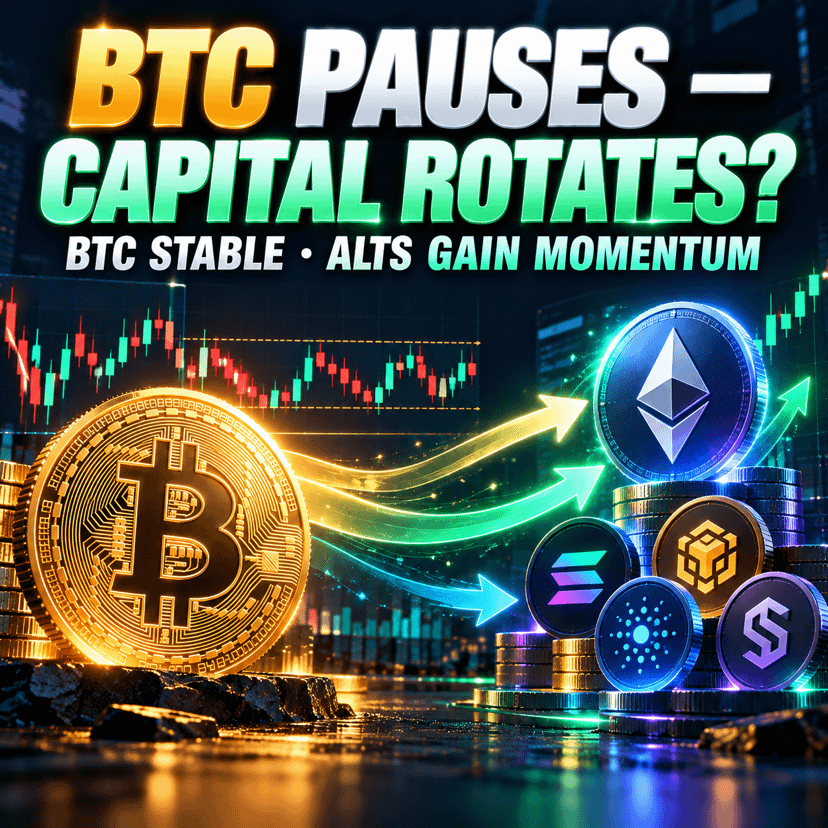
🚨 BTC is holding sideways, but the market hasn’t paused with it.
The most notable change over the weekend is that some altcoins have started clearly outperforming BTC.
This usually means capital is repositioning toward directions with higher upside volatility:
🟠 BTC is consolidating at highs, waiting for a direction
🟢 Some altcoins begin accelerating
🔥 Leverage heat has cooled a bit
💰 Money hasn’t clearly left—it’s rotating
Here’s the key question:
If BTC can keep holding steady, there may be room for capital to spread into ETH and altcoins.
But if BTC suddenly breaks down, the so-called “altcoin rotation” is likely to end quickly.
So what’s truly worth watching in this move isn’t “which coin is pumping the fastest,” but rather—
Whether BTC can keep ranging, so that capital feels confident moving outward.
Who do you think is next?
BTC 🟠 / ETH + altcoins 🟢
#BTC #ETH #BNB
The most notable change over the weekend is that some altcoins have started clearly outperforming BTC.
This usually means capital is repositioning toward directions with higher upside volatility:
🟠 BTC is consolidating at highs, waiting for a direction
🟢 Some altcoins begin accelerating
🔥 Leverage heat has cooled a bit
💰 Money hasn’t clearly left—it’s rotating
Here’s the key question:
If BTC can keep holding steady, there may be room for capital to spread into ETH and altcoins.
But if BTC suddenly breaks down, the so-called “altcoin rotation” is likely to end quickly.
So what’s truly worth watching in this move isn’t “which coin is pumping the fastest,” but rather—
Whether BTC can keep ranging, so that capital feels confident moving outward.
Who do you think is next?
BTC 🟠 / ETH + altcoins 🟢
#BTC #ETH #BNB

大丽7613
·
--
What’s going on with Sol—why hasn’t it dropped and has instead made new highs?
The project team suddenly announced good news: it launched the Alpenglow testnet, which will significantly improve the Sol network’s speed. The transaction finality time has been compressed from about 12.8 seconds to about 150 milliseconds!
The project team suddenly announced good news: it launched the Alpenglow testnet, which will significantly improve the Sol network’s speed. The transaction finality time has been compressed from about 12.8 seconds to about 150 milliseconds!
大丽7613
·
--
[Replay] 🎙️ What do you think about the market ahead?! BNB
02 h 17 m 20 s · 9.9k listens

METAUS-3.39%
GOOGLUS+0.43%
SPCXUS+0.41%
Log in to explore more content