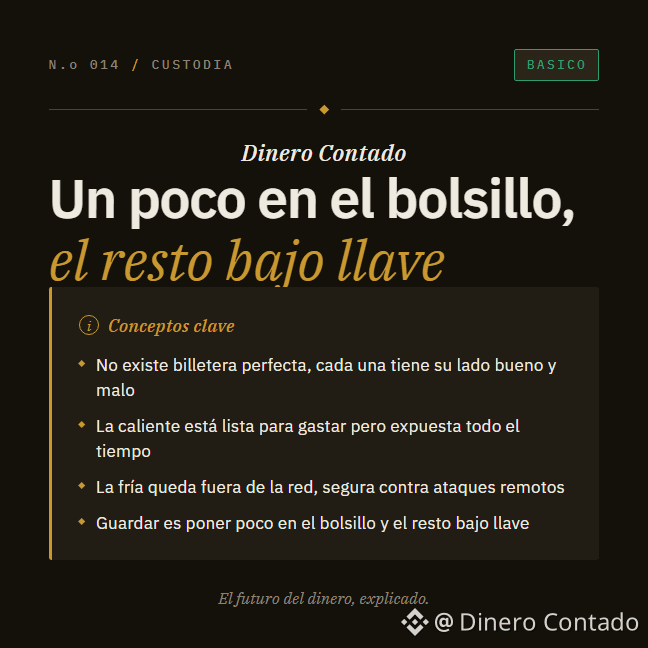
There is no perfect wallet. Each one covers a gap and opens another.
So which one do you use? It depends. Are you going to spend today or save for years.
Imagine you have 1 $BTC . You leave 0.05 in a wallet that lives connected to the internet, ready to spend quickly. The rest, 0.95, is kept somewhere that never touches the network unless you need it.
And that gap between what’s within reach and what’s stored away is, at the end of the day, the whole custody game.
KEY CONCEPTS
- Hot wallet: it stays connected, always ready for whatever you move. But being online all the time also means being exposed all the time.
- Cold wallet: it connects only at the moment of signing. The rest of the time it stays offline, which slows down remote theft. That said, it’s not automatic: you still need to back it up and take care of it.
- Hardware wallet: a physical device stores the keys away from any computer and connects by cable only to sign. It blocks attacks that come in over the internet, but it doesn’t prevent you from losing it or having it taken from you in person.
- Paper wallet: the keys are written or printed, with no cable and no chip involved. No hacker can touch it remotely, but fire, water, or a careless move can erase it forever.
Storing crypto is like storing cash. A little in your pocket for everyday life, the rest locked away where only you can reach.
Transparency: Binance may pay us a commission if you trade after clicking an asset symbol or a price link from this publication.
#Billeteras #Custodia #SeguridadDigital #Cryptocurrencies
So which one do you use? It depends. Are you going to spend today or save for years.
Imagine you have 1 $BTC . You leave 0.05 in a wallet that lives connected to the internet, ready to spend quickly. The rest, 0.95, is kept somewhere that never touches the network unless you need it.
And that gap between what’s within reach and what’s stored away is, at the end of the day, the whole custody game.
KEY CONCEPTS
- Hot wallet: it stays connected, always ready for whatever you move. But being online all the time also means being exposed all the time.
- Cold wallet: it connects only at the moment of signing. The rest of the time it stays offline, which slows down remote theft. That said, it’s not automatic: you still need to back it up and take care of it.
- Hardware wallet: a physical device stores the keys away from any computer and connects by cable only to sign. It blocks attacks that come in over the internet, but it doesn’t prevent you from losing it or having it taken from you in person.
- Paper wallet: the keys are written or printed, with no cable and no chip involved. No hacker can touch it remotely, but fire, water, or a careless move can erase it forever.
Storing crypto is like storing cash. A little in your pocket for everyday life, the rest locked away where only you can reach.
Transparency: Binance may pay us a commission if you trade after clicking an asset symbol or a price link from this publication.
#Billeteras #Custodia #SeguridadDigital #Cryptocurrencies