
$ACU
I’ve always found one thing important in crypto
You should be able to see what’s behind the token.
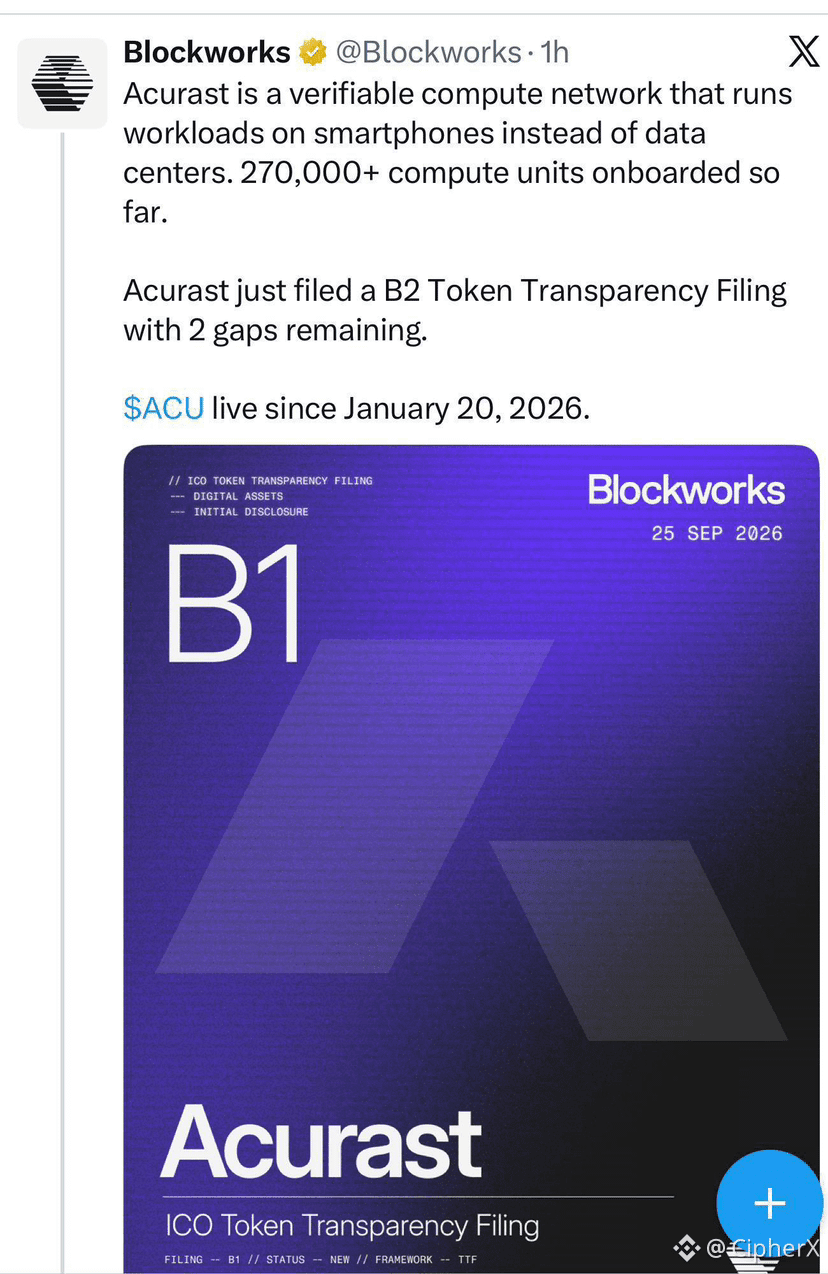
That’s why the new ACU Token Transparency Filing caught my attention.
Acurast has submitted ACU through the Blockworks Token Transparency Framework, bringing key details into one place:
• Token allocation
• Vesting & unlock schedules
• Governance
• Administrative controls
• Token utility
And there’s more to look at 👇
Governance
Acurast uses native OpenGov for protocol governance.
ACU holders can participate through conviction voting, where longer commitments can increase voting power.
The filing also addresses administrative permissions, including the stated absence of privileged multisigs or backdoors that could bypass on-chain governance.
According to the filing, no outside party has special keys to unilaterally:
→ Change runtime parameters
→ Alter token balances
→ Redirect network rewards
ACU utility
ACU is used for:
• Network fees
• Compute provider incentives
• Staking
• Governance
And this sits on top of Acurast’s physical compute network, which the project says has 313,000+ dedicated phones onboarded globally.
For me, the interesting part isn’t just the number.
It’s the bigger picture:
- Code matters
- Infrastructure matters
But token economics and control also matter
Putting those details into a standardized disclosure makes them easier to review.
Don’t just look at the token. Look at what’s behind it.
I’ve always found one thing important in crypto
You should be able to see what’s behind the token.
That’s why the new ACU Token Transparency Filing caught my attention.
Acurast has submitted ACU through the Blockworks Token Transparency Framework, bringing key details into one place:
• Token allocation
• Vesting & unlock schedules
• Governance
• Administrative controls
• Token utility
And there’s more to look at 👇
Governance
Acurast uses native OpenGov for protocol governance.
ACU holders can participate through conviction voting, where longer commitments can increase voting power.
The filing also addresses administrative permissions, including the stated absence of privileged multisigs or backdoors that could bypass on-chain governance.
According to the filing, no outside party has special keys to unilaterally:
→ Change runtime parameters
→ Alter token balances
→ Redirect network rewards
ACU utility
ACU is used for:
• Network fees
• Compute provider incentives
• Staking
• Governance
And this sits on top of Acurast’s physical compute network, which the project says has 313,000+ dedicated phones onboarded globally.
For me, the interesting part isn’t just the number.
It’s the bigger picture:
- Code matters
- Infrastructure matters
But token economics and control also matter
Putting those details into a standardized disclosure makes them easier to review.
Don’t just look at the token. Look at what’s behind it.