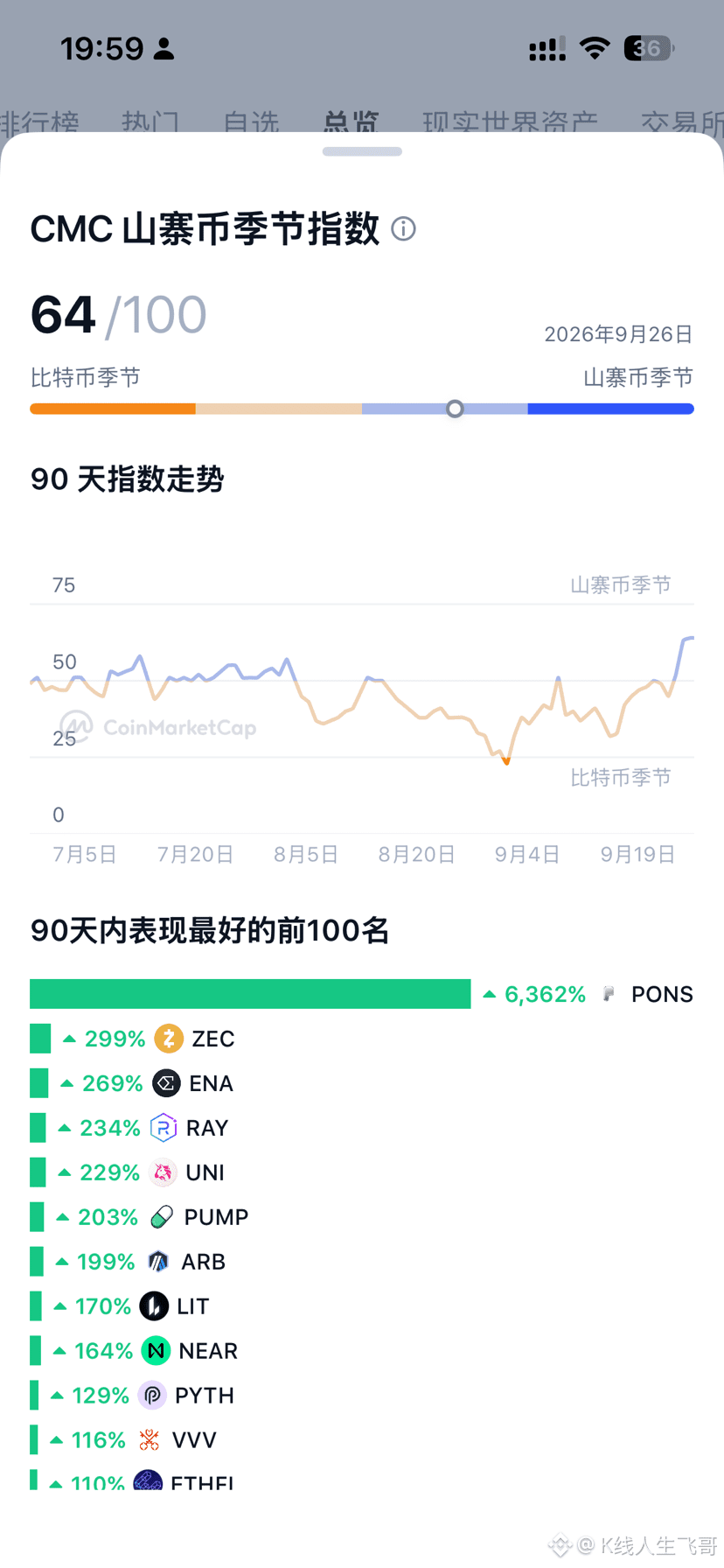
If $BTC gets a daily-chart-level pullback, what altcoin would I choose to bottom-pick???
Let me share my viewpoint and my bottom-picking list.
My logic is actually very simple: I don’t chase short-term narratives; I prioritize assets whose protocol revenue is growing and whose value-capture mechanisms are becoming clearer.
$AERO : The 30D holder income has long been in the top 10 protocols, but compared with other leading protocols, the valuation is clearly much lower. For me, the core is the mismatch between revenue and valuation.
$ETHFI : EtherFi’s Cash business has seen revenue growth continuously since May 2025, and the team has also increasingly focused on token buybacks. Cash and staking are now already major revenue sources. As the business continues to expand, Cash has the potential to become a bigger revenue pillar.
AAVE: Since the June low, the treasury size has increased by about $107 million, and the V4 ecosystem continues to expand, including integrations like EtherFi, Babylon, and Securitize. At the same time, Aave App and the stablecoin treasury are starting to move forward—protocol revenue sources are becoming more diversified.
SKY: At the moment, I’m more inclined to prioritize strengthening protocol reserves rather than expanding token allocations too early. In Q2, reserves increased by about $29.87 million, bringing them to roughly $88 million. Meanwhile, 27.5% of each month’s protocol net surplus is used for public-market buybacks of SKY.
HYPE: Currently, about 97% of protocol fees are used for public-market buybacks of HYPE. Hyperliquid’s own trading volume and revenue growth make the value-capture logic behind this ongoing buyback increasingly worth paying attention to.
LIT: I started building a position below $4. Although Lighter is free for retail traders, it charges market makers, API users, and institutional traders—and 100% of those fees are used to buy back LIT. The bought-back tokens then go directly to a burn address, permanently reducing circulating supply.
So I’d rather hold this batch of assets slowly.
Their common point isn’t that “the story sounds good,” but that protocol revenue, buybacks, burn or treasury value are gradually becoming more directly tied to the token itself.
That’s also the core logic behind how I’ve continued accumulating from the lows all the way until now.
Let me share my viewpoint and my bottom-picking list.
My logic is actually very simple: I don’t chase short-term narratives; I prioritize assets whose protocol revenue is growing and whose value-capture mechanisms are becoming clearer.
$AERO : The 30D holder income has long been in the top 10 protocols, but compared with other leading protocols, the valuation is clearly much lower. For me, the core is the mismatch between revenue and valuation.
$ETHFI : EtherFi’s Cash business has seen revenue growth continuously since May 2025, and the team has also increasingly focused on token buybacks. Cash and staking are now already major revenue sources. As the business continues to expand, Cash has the potential to become a bigger revenue pillar.
AAVE: Since the June low, the treasury size has increased by about $107 million, and the V4 ecosystem continues to expand, including integrations like EtherFi, Babylon, and Securitize. At the same time, Aave App and the stablecoin treasury are starting to move forward—protocol revenue sources are becoming more diversified.
SKY: At the moment, I’m more inclined to prioritize strengthening protocol reserves rather than expanding token allocations too early. In Q2, reserves increased by about $29.87 million, bringing them to roughly $88 million. Meanwhile, 27.5% of each month’s protocol net surplus is used for public-market buybacks of SKY.
HYPE: Currently, about 97% of protocol fees are used for public-market buybacks of HYPE. Hyperliquid’s own trading volume and revenue growth make the value-capture logic behind this ongoing buyback increasingly worth paying attention to.
LIT: I started building a position below $4. Although Lighter is free for retail traders, it charges market makers, API users, and institutional traders—and 100% of those fees are used to buy back LIT. The bought-back tokens then go directly to a burn address, permanently reducing circulating supply.
So I’d rather hold this batch of assets slowly.
Their common point isn’t that “the story sounds good,” but that protocol revenue, buybacks, burn or treasury value are gradually becoming more directly tied to the token itself.
That’s also the core logic behind how I’ve continued accumulating from the lows all the way until now.