

易琳Ten
116 Posts

易琳Ten
交易是修行,盈利是结果,纪律是信仰。🐺📈
68 Following
20.6K+ Followers
7.2K+ Liked
Posts
All
Quotes
Videos
PINNED
PINNED

易琳Ten
·
--
Once a centralized exchange suffers a massive crypto theft, it is not only the hackers who are truly being put on trial, but also the platform’s security systems and information transparency. Academic research indicates that CEXs naturally carry custody risks, information asymmetry, and principal–agent problems, and that relying on “proof of reserves” alone cannot cover internal governance and key security.
Of course, we should not conclude “self-sabotage” based solely on the fact that funds were stolen. In reality, the FBI and blockchain security organizations have indeed, on multiple occasions, attributed major crypto theft incidents to hackers linked to North Korea.
So what users should really ask is not “who’s to blame,” but: where is the evidence? Where are the security mechanisms? Where did the money go?
Of course, we should not conclude “self-sabotage” based solely on the fact that funds were stolen. In reality, the FBI and blockchain security organizations have indeed, on multiple occasions, attributed major crypto theft incidents to hackers linked to North Korea.
So what users should really ask is not “who’s to blame,” but: where is the evidence? Where are the security mechanisms? Where did the money go?

易琳Ten
·
--
When you have something, you should cherish it well.
Research by psychologists like Robert Emmons and others has found that actively focusing on things in life that you have to be grateful for helps boost positive emotions and well-being.
The biggest mistake people make in life is taking what they have for granted.
If your parents are still here, spend more time with them; if your loved one is still there, cherish them well; if your body is healthy, don’t recklessly overdraw it.
Because nothing you have is permanent, and every reunion has its time limit.
True appreciation isn’t something you regret only after losing it—it’s knowing, while you still have it, that it’s worth cherishing.
Cherish the person in front of you, cherish what’s happening right now, and cherish everything you have at this moment.
Research by psychologists like Robert Emmons and others has found that actively focusing on things in life that you have to be grateful for helps boost positive emotions and well-being.
The biggest mistake people make in life is taking what they have for granted.
If your parents are still here, spend more time with them; if your loved one is still there, cherish them well; if your body is healthy, don’t recklessly overdraw it.
Because nothing you have is permanent, and every reunion has its time limit.
True appreciation isn’t something you regret only after losing it—it’s knowing, while you still have it, that it’s worth cherishing.
Cherish the person in front of you, cherish what’s happening right now, and cherish everything you have at this moment.

易琳Ten
·
--
To grow the principal, you don’t rely on luck—you rely on discipline
If you don’t have much capital, really stop chasing charts blindly and making random trades.
The crypto market has never been a place where you can survive long-term by luck alone.
The smaller your principal, the less you can afford to be anxious.
The more you want to turn things around, the more you must restrain yourself.
Because the biggest advantage of small capital isn’t that you’re bold enough to gamble—it’s that you can control risk and still have a chance to start over.
Remember these 3 rules:
① Capital allocation—never go all-in
Divide your capital into three parts.
One part for short-term trades: when you have profit, take it off the table—don’t get greedy to the very end;
One part for waiting for trends: if the market hasn’t moved in your expected direction, be patient and wait;
The last part as a reserve: unless it’s truly necessary, never touch it lightly.
Always leave yourself a way to retreat.
② Only make money from what you can understand
If there’s no opportunity, stay in cash.
If there’s no signal, wait.
Not every candlestick is worth participating in,
And you don’t have to make money every day.
If you don’t understand the market, it’s better to miss it;
Only after you understand the opportunity should you act seriously.
Trading isn’t about who makes more moves—it’s about who makes fewer mistakes.
③ Take-profit and stop-loss must be executed
If you’re wrong, admit it.
If you’re in profit, reduce your position according to the plan.
If you’re at a loss, don’t mindlessly add just to average down.
The real danger has never been a single small loss.
It’s when you’re clearly wrong, but because you’re unwilling to accept it, you stubbornly turn a small loss into a big one.
No one can guarantee that every trade will be profitable.
But you can do this:
Keep small losses under control, hold onto profits, and never touch big losses.
Having a small principal isn’t scary.
What’s truly terrifying is trying to turn things around in a rush.
When you’re anxious, you chase the surge.
When you have a loss, you add.
When you get a win, you start getting greedy again.
In the end, your trading is completely taken over by emotions.
The real growth path for small capital has never been:
All-in → a sudden surge → a fortune overnight.
It should be:
First survive → control drawdowns → execute steadily → accumulate slowly → let compounding work.
So don’t always think about how much you’ll make on the next trade.
First ask yourself:
If this trade is wrong, what’s the maximum I can afford to lose?
In the end, trading isn’t about who’s most willing to gamble.
It’s about who can, through repeated fluctuations, keep their principal, keep their discipline, and keep their own rhythm.
Don’t be greedy. Don’t panic. Don’t gamble.
The first step in turning around with a small principal has never been making money—it’s learning how not to lose your chance first.
If you don’t have much capital, really stop chasing charts blindly and making random trades.
The crypto market has never been a place where you can survive long-term by luck alone.
The smaller your principal, the less you can afford to be anxious.
The more you want to turn things around, the more you must restrain yourself.
Because the biggest advantage of small capital isn’t that you’re bold enough to gamble—it’s that you can control risk and still have a chance to start over.
Remember these 3 rules:
① Capital allocation—never go all-in
Divide your capital into three parts.
One part for short-term trades: when you have profit, take it off the table—don’t get greedy to the very end;
One part for waiting for trends: if the market hasn’t moved in your expected direction, be patient and wait;
The last part as a reserve: unless it’s truly necessary, never touch it lightly.
Always leave yourself a way to retreat.
② Only make money from what you can understand
If there’s no opportunity, stay in cash.
If there’s no signal, wait.
Not every candlestick is worth participating in,
And you don’t have to make money every day.
If you don’t understand the market, it’s better to miss it;
Only after you understand the opportunity should you act seriously.
Trading isn’t about who makes more moves—it’s about who makes fewer mistakes.
③ Take-profit and stop-loss must be executed
If you’re wrong, admit it.
If you’re in profit, reduce your position according to the plan.
If you’re at a loss, don’t mindlessly add just to average down.
The real danger has never been a single small loss.
It’s when you’re clearly wrong, but because you’re unwilling to accept it, you stubbornly turn a small loss into a big one.
No one can guarantee that every trade will be profitable.
But you can do this:
Keep small losses under control, hold onto profits, and never touch big losses.
Having a small principal isn’t scary.
What’s truly terrifying is trying to turn things around in a rush.
When you’re anxious, you chase the surge.
When you have a loss, you add.
When you get a win, you start getting greedy again.
In the end, your trading is completely taken over by emotions.
The real growth path for small capital has never been:
All-in → a sudden surge → a fortune overnight.
It should be:
First survive → control drawdowns → execute steadily → accumulate slowly → let compounding work.
So don’t always think about how much you’ll make on the next trade.
First ask yourself:
If this trade is wrong, what’s the maximum I can afford to lose?
In the end, trading isn’t about who’s most willing to gamble.
It’s about who can, through repeated fluctuations, keep their principal, keep their discipline, and keep their own rhythm.
Don’t be greedy. Don’t panic. Don’t gamble.
The first step in turning around with a small principal has never been making money—it’s learning how not to lose your chance first.

易琳Ten
·
--
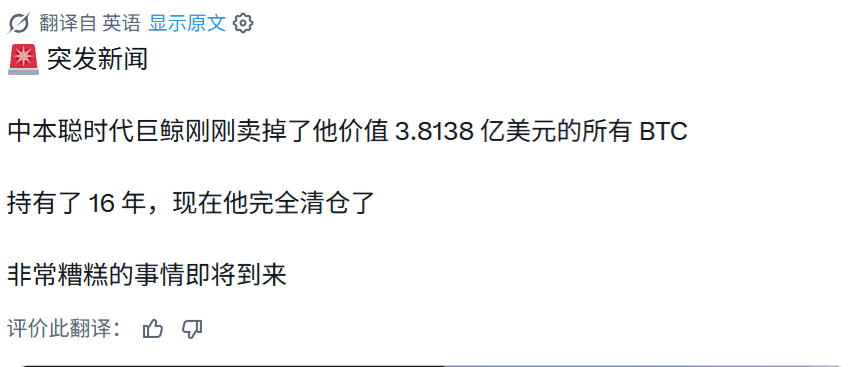
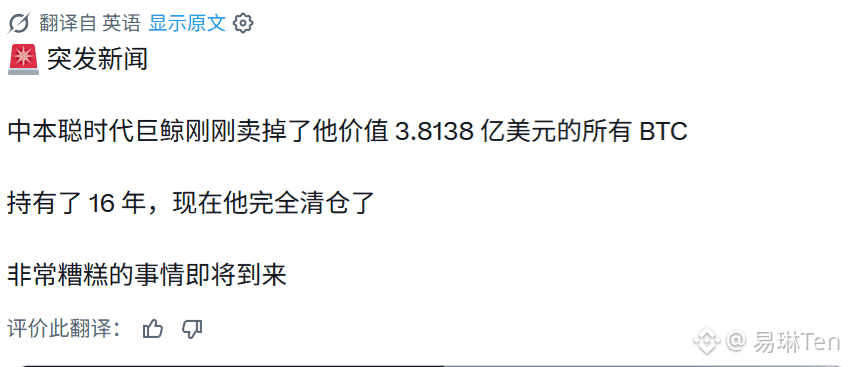
🐋 A giant whale that has been asleep for 4 years suddenly woke up!
4500 BTC, worth about $380 million,
slumbered for a full 4 years, completely motionless.
Then today it suddenly began transferring—just like that, it moves! 🐳
It was motionless for 4 years, then suddenly showed a large shift.
Is it preparing to move to an exchange, change wallets, or is there something else planned?
Once the whale moves, the market starts to get tense.
What will happen next? 👀
4500 BTC, worth about $380 million,
slumbered for a full 4 years, completely motionless.
Then today it suddenly began transferring—just like that, it moves! 🐳
It was motionless for 4 years, then suddenly showed a large shift.
Is it preparing to move to an exchange, change wallets, or is there something else planned?
Once the whale moves, the market starts to get tense.
What will happen next? 👀

易琳Ten
·
--
To grow the principal, you don’t rely on luck—you rely on discipline
If you don’t have much capital, really stop chasing charts blindly and making random trades.
The crypto market has never been a place where you can survive long-term by luck alone.
The smaller your principal, the less you can afford to be anxious.
The more you want to turn things around, the more you must restrain yourself.
Because the biggest advantage of small capital isn’t that you’re bold enough to gamble—it’s that you can control risk and still have a chance to start over.
Remember these 3 rules:
① Capital allocation—never go all-in
Divide your capital into three parts.
One part for short-term trades: when you have profit, take it off the table—don’t get greedy to the very end;
One part for waiting for trends: if the market hasn’t moved in your expected direction, be patient and wait;
The last part as a reserve: unless it’s truly necessary, never touch it lightly.
Always leave yourself a way to retreat.
② Only make money from what you can understand
If there’s no opportunity, stay in cash.
If there’s no signal, wait.
Not every candlestick is worth participating in,
And you don’t have to make money every day.
If you don’t understand the market, it’s better to miss it;
Only after you understand the opportunity should you act seriously.
Trading isn’t about who makes more moves—it’s about who makes fewer mistakes.
③ Take-profit and stop-loss must be executed
If you’re wrong, admit it.
If you’re in profit, reduce your position according to the plan.
If you’re at a loss, don’t mindlessly add just to average down.
The real danger has never been a single small loss.
It’s when you’re clearly wrong, but because you’re unwilling to accept it, you stubbornly turn a small loss into a big one.
No one can guarantee that every trade will be profitable.
But you can do this:
Keep small losses under control, hold onto profits, and never touch big losses.
Having a small principal isn’t scary.
What’s truly terrifying is trying to turn things around in a rush.
When you’re anxious, you chase the surge.
When you have a loss, you add.
When you get a win, you start getting greedy again.
In the end, your trading is completely taken over by emotions.
The real growth path for small capital has never been:
All-in → a sudden surge → a fortune overnight.
It should be:
First survive → control drawdowns → execute steadily → accumulate slowly → let compounding work.
So don’t always think about how much you’ll make on the next trade.
First ask yourself:
If this trade is wrong, what’s the maximum I can afford to lose?
In the end, trading isn’t about who’s most willing to gamble.
It’s about who can, through repeated fluctuations, keep their principal, keep their discipline, and keep their own rhythm.
Don’t be greedy. Don’t panic. Don’t gamble.
The first step in turning around with a small principal has never been making money—it’s learning how not to lose your chance first.
If you don’t have much capital, really stop chasing charts blindly and making random trades.
The crypto market has never been a place where you can survive long-term by luck alone.
The smaller your principal, the less you can afford to be anxious.
The more you want to turn things around, the more you must restrain yourself.
Because the biggest advantage of small capital isn’t that you’re bold enough to gamble—it’s that you can control risk and still have a chance to start over.
Remember these 3 rules:
① Capital allocation—never go all-in
Divide your capital into three parts.
One part for short-term trades: when you have profit, take it off the table—don’t get greedy to the very end;
One part for waiting for trends: if the market hasn’t moved in your expected direction, be patient and wait;
The last part as a reserve: unless it’s truly necessary, never touch it lightly.
Always leave yourself a way to retreat.
② Only make money from what you can understand
If there’s no opportunity, stay in cash.
If there’s no signal, wait.
Not every candlestick is worth participating in,
And you don’t have to make money every day.
If you don’t understand the market, it’s better to miss it;
Only after you understand the opportunity should you act seriously.
Trading isn’t about who makes more moves—it’s about who makes fewer mistakes.
③ Take-profit and stop-loss must be executed
If you’re wrong, admit it.
If you’re in profit, reduce your position according to the plan.
If you’re at a loss, don’t mindlessly add just to average down.
The real danger has never been a single small loss.
It’s when you’re clearly wrong, but because you’re unwilling to accept it, you stubbornly turn a small loss into a big one.
No one can guarantee that every trade will be profitable.
But you can do this:
Keep small losses under control, hold onto profits, and never touch big losses.
Having a small principal isn’t scary.
What’s truly terrifying is trying to turn things around in a rush.
When you’re anxious, you chase the surge.
When you have a loss, you add.
When you get a win, you start getting greedy again.
In the end, your trading is completely taken over by emotions.
The real growth path for small capital has never been:
All-in → a sudden surge → a fortune overnight.
It should be:
First survive → control drawdowns → execute steadily → accumulate slowly → let compounding work.
So don’t always think about how much you’ll make on the next trade.
First ask yourself:
If this trade is wrong, what’s the maximum I can afford to lose?
In the end, trading isn’t about who’s most willing to gamble.
It’s about who can, through repeated fluctuations, keep their principal, keep their discipline, and keep their own rhythm.
Don’t be greedy. Don’t panic. Don’t gamble.
The first step in turning around with a small principal has never been making money—it’s learning how not to lose your chance first.
长得帅不如跑的快1688
·
--
🚨 Bitcoin is consolidating, but the rest of crypto isn’t standing still.
Several major altcoins are starting to outperform BTC.
That suggests capital may be rotating rather than leaving.
🟠 BTC consolidates
🟢 Alts gain momentum
🔥 Leverage cools
💰 Capital searches for higher beta
The key is simple:
If BTC stays stable, ETH and alts may have room to run.
If BTC breaks down, the rotation could disappear quickly.
So what gets the next move?
BTC 🟠 / ETH + ALTS 🟢
#BTC #ETH #BNB
Several major altcoins are starting to outperform BTC.
That suggests capital may be rotating rather than leaving.
🟠 BTC consolidates
🟢 Alts gain momentum
🔥 Leverage cools
💰 Capital searches for higher beta
The key is simple:
If BTC stays stable, ETH and alts may have room to run.
If BTC breaks down, the rotation could disappear quickly.
So what gets the next move?
BTC 🟠 / ETH + ALTS 🟢
#BTC #ETH #BNB

蒋雅琪1368
·
--
Up, up, up—up!
The leaders of China and the US will meet next week, which is a major positive.
Consider taking partial profits when it reaches the previous high area, or before the 24th’s meeting.
The leaders of China and the US will meet next week, which is a major positive.
Consider taking partial profits when it reaches the previous high area, or before the 24th’s meeting.


慢就是快Mike
·
--
$ZEC
🚨 Big whales keep accumulating! A supply crisis is approaching—hold your chips tight!
Wake up and check today’s quick news! While retail investors are still hesitating through the chop and shakeout, institutions have already switched on their “savage buying” mode:
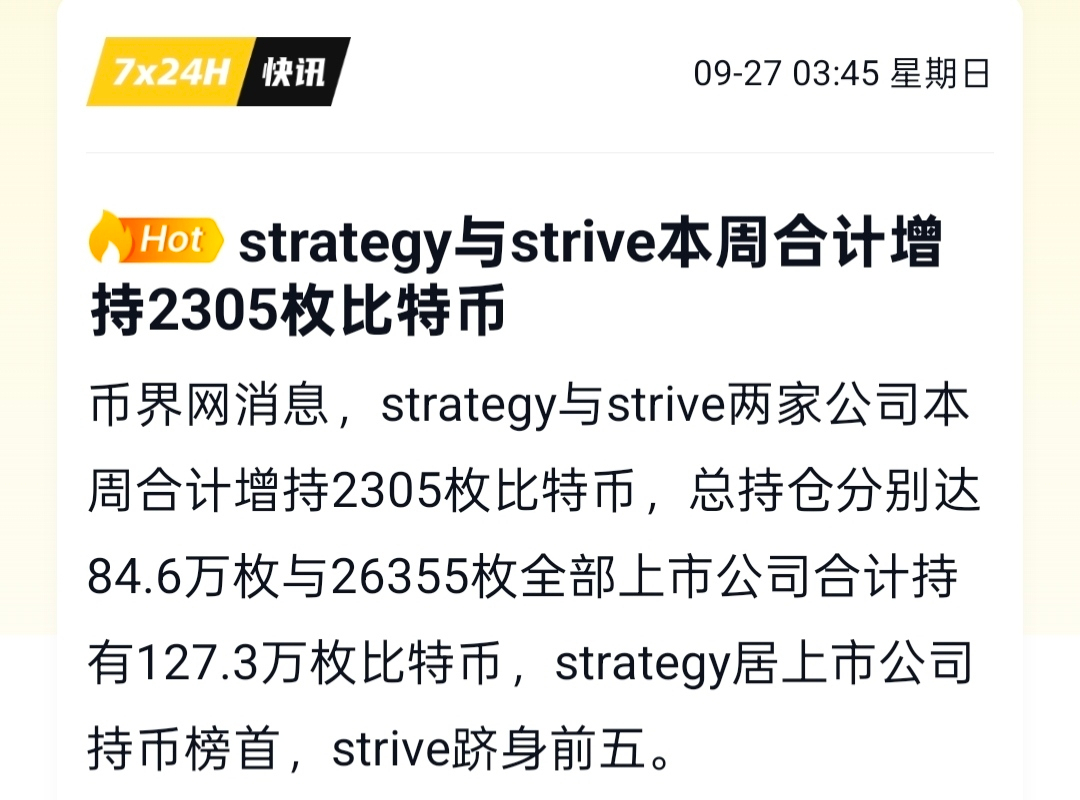
🔥 Strategy This week, they continued to increase holdings, with total holdings soaring to 846,000 BTC—sitting firmly in the top spot among listed companies!
🔥 Strive is not backing down either, with total holdings reaching 26,355 BTC, straight into the top five!
🔥 Currently, all listed companies combined hold 1.273 million BTC!
What does this mean? The liquid supply of chips on the market is being fully locked up by these giants! At this level, institutions are buying with real money—what reason do you have to be afraid?
The wheels of a bull market have already rolled over—don’t get easily thrown off the train. Hold spot, ride the momentum to go long; every pullback in front of you is an opportunity for the bulls to get on board!
#Bitcoin #BTC #Crypto #GoLong #机构入场
🚨 Big whales keep accumulating! A supply crisis is approaching—hold your chips tight!
Wake up and check today’s quick news! While retail investors are still hesitating through the chop and shakeout, institutions have already switched on their “savage buying” mode:
🔥 Strategy This week, they continued to increase holdings, with total holdings soaring to 846,000 BTC—sitting firmly in the top spot among listed companies!
🔥 Strive is not backing down either, with total holdings reaching 26,355 BTC, straight into the top five!
🔥 Currently, all listed companies combined hold 1.273 million BTC!
What does this mean? The liquid supply of chips on the market is being fully locked up by these giants! At this level, institutions are buying with real money—what reason do you have to be afraid?
The wheels of a bull market have already rolled over—don’t get easily thrown off the train. Hold spot, ride the momentum to go long; every pullback in front of you is an opportunity for the bulls to get on board!
#Bitcoin #BTC #Crypto #GoLong #机构入场


楠楠nannan势不可挡
·
--
🧧 Market cycles have their warmth and chill; investing does too. Settle your mind, cultivate your understanding, and eventually your returns will sync with your knowledge.$BNB


心月势不可挡
·
--
Bullish🧧🧧🧧BNB will break 800 soon—hold BNB and slowly get richer 🧧🧧🧧
路人1688luren
·
--
#SEC称回购与升级不必然使代币成证券 Many times many things are not that you make an effort and there will be results. When the gears of fate turn, it’s as if there are two invisible hands pushing you toward another direction... When one door closes, another opens... $USD1









Log in to explore more content