

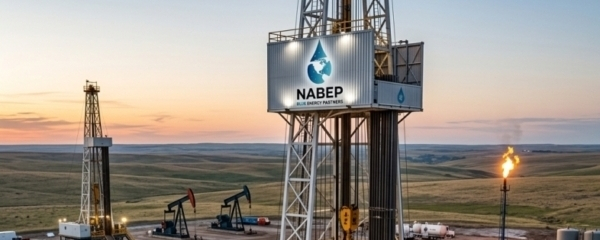

Oil experts predict that NABEP could increase its production by approximately 180,000 barrels per day over the next year. Chevron is not expected to increase its production at the same pace.
North American Blue Energy Partners (NABEP) reported that it has secured 60 drilling platforms, 30 steam boilers that generate hot steam to mobilize heavy oil, and 70 heavy machinery equipment units. Two drilling platforms will depart from Houston on Monday on a six-day trip to Venezuela aboard a cargo ship called BBC Washington.
NABEP is seizing the opportunity to develop 17 oil fields which, according to the company, contain 65 billion barrels of oil—equivalent to one-fifth of the country’s enormous reserves. The company obtained the rights to these fields last month through an agreement with the United States.
The energy company is expected to achieve significant production increases in its most developed fields over a relatively short period. The Pentagon will have a passive 35% stake in the company and preferential rights to buy 20% of its production at cost.
“NABEP is increasing oil production for the Western Hemisphere, as promised,” a company spokesperson said, who is led by Venezuelan businessman Alejandro Betancourt. “We’re only competing against ourselves.”
Meanwhile, since the deal was announced last month, Chevron, ExxonMobil and ConocoPhillips executives have privately expressed frustration to other industry members about the possibility of competing against a rival with ties to the U.S. government.
The situation, which took the industry by surprise, could affect the sector’s historically competitive nature, according to people close to the companies.
Exxon and Conoco have no active operations in Venezuela, but have been assessing opportunities in the country.
With production of roughly 220,000 barrels per day, NABEP is currently Venezuela’s second-largest private oil producer, behind Chevron.
People familiar with its operations said NABEP is expected to surpass Chevron’s output of 280,000 barrels per day by the end of this year or the beginning of next year. Over the long term, the company says it has the ambitious goal of raising production to 500,000 barrels per day by the end of 2028.
The energy company represents the first real challenge for Chevron in years in Venezuela, a country that has some of the world’s largest proven oil reserves. The U.S. company maintains three joint ventures with Petróleos de Venezuela (PDVSA), the country’s main oil producer.
Chevron endured decades of political uncertainty to maintain its position as the largest foreign investor in Venezuela, and decided to stay in the country after Hugo Chávez took control of the oil industry in 2007, when its rivals Exxon and Conoco exited the market.
Chevron’s privileged position allowed it to gain some political recognition in Washington and in Caracas. Both the Donald Trump and Joe Biden administrations regularly spoke with Chevron chief executive Mike Wirth about Venezuela’s political and economic situation.
Wirth and other Chevron executives repeatedly told U.S. officials that the United States and Venezuela would benefit from allowing a U.S. company to continue producing oil in the country.
Privately, Chevron executives have expressed doubts about NABEP’s ability to achieve its production targets as quickly as outlined. As a result, some people close to Chevron do not consider Betancourt’s company an immediate threat to its position in Venezuela.
Even so, executives at U.S. oil companies have privately pointed out that the presence of a U.S.-backed company in Venezuela could create uneven competitive conditions and discourage investment, according to people close to the industry.
“For all the international oil companies entering Venezuela, it is worrying that this deal could create additional political risk instead of reducing it, which is supposed to be the intended objective,” said Francisco Monaldi, director of the energy program for Latin America at the Baker Institute of Rice University.
Analysts said NABEP is expected to face numerous challenges in developing Venezuela’s deteriorated oil fields after decades of poor management and corruption.
However, for a private company operating in such a complex environment, the company is already moving at an extraordinary speed, according to people familiar with its operations.
Under Betancourt’s leadership, the energy company became, in about two years, the country’s second-largest private oil producer, after multiplying its output by eleven.
Oil experts project that NABEP could increase its production by approximately 180,000 barrels per day over the next year. Chevron is not expected to increase its production at the same pace.
The day after the White House officially announced the Pentagon’s stake in NABEP, Wirth signed a separate agreement in Caracas to invest $7 billion in Venezuelan oil fields over five years through the joint ventures.
Chevron will add two new oil fields and eventually expects to more than double its production in Venezuela to reach 600,000 barrels per day. The company also plans to more than double the number of drilling rigs it operates in the country.
At an energy conference held earlier this month in Austin, Texas, Wirth explained that the money its joint ventures will invest in the oil fields will come from the revenues generated by those same fields and from crude sales, rather than from capital coming from abroad.
When asked what would have to happen for Chevron to invest additional capital, Wirth said the industry was looking for evidence that Venezuela had become “a better environment for investment”.
“I think part of that will probably end up being elections whose results are backed by the world,” Wirth said. “I think people will look for tangible signals and watch companies like ours—which may be taking on more risk—to see how it works,” The Wall Street Journal reports.
#Nabep #Chevron #Exxon #venezuela #petróleo $CL $BZ $CVXon


