

In previous posts, I helped traders identify Bullish/Bearish candles and 5 candle patterns that are easy to confuse.
More important step: Once you know the candle, when is it allowed to place an order?
"Beautiful candle" is not "a beautiful order".
A good order is a candle in the right place, with the right confirmation, with the right stop, and the right risk-to-reward ratio.
Traders should use the 6 questions below as a checklist. Missing 1 question = you’re not allowed to place the trade.
6-step checklist
✅ Checklist before placing an order
Is the market trending up, down, or sideways? 🔁 If not clear: Stay out
Is the candle at support, resistance, or mid-swing? 🔁 If not clear: Stay out
Is the confirmation candle good enough? 🔁 If not: Observe more
Has the confirmation candle closed? 🔁 If not: Don’t click
Can you set a stoploss? How much is the loss? 🔁 If you can’t control it: Don’t enter
Has the minimum R:R of 1:2 been achieved? 🔁 If not: Skip the setup
Print this checklist next to your screen. Tick each box before every XAU, BTC, DXY trade.
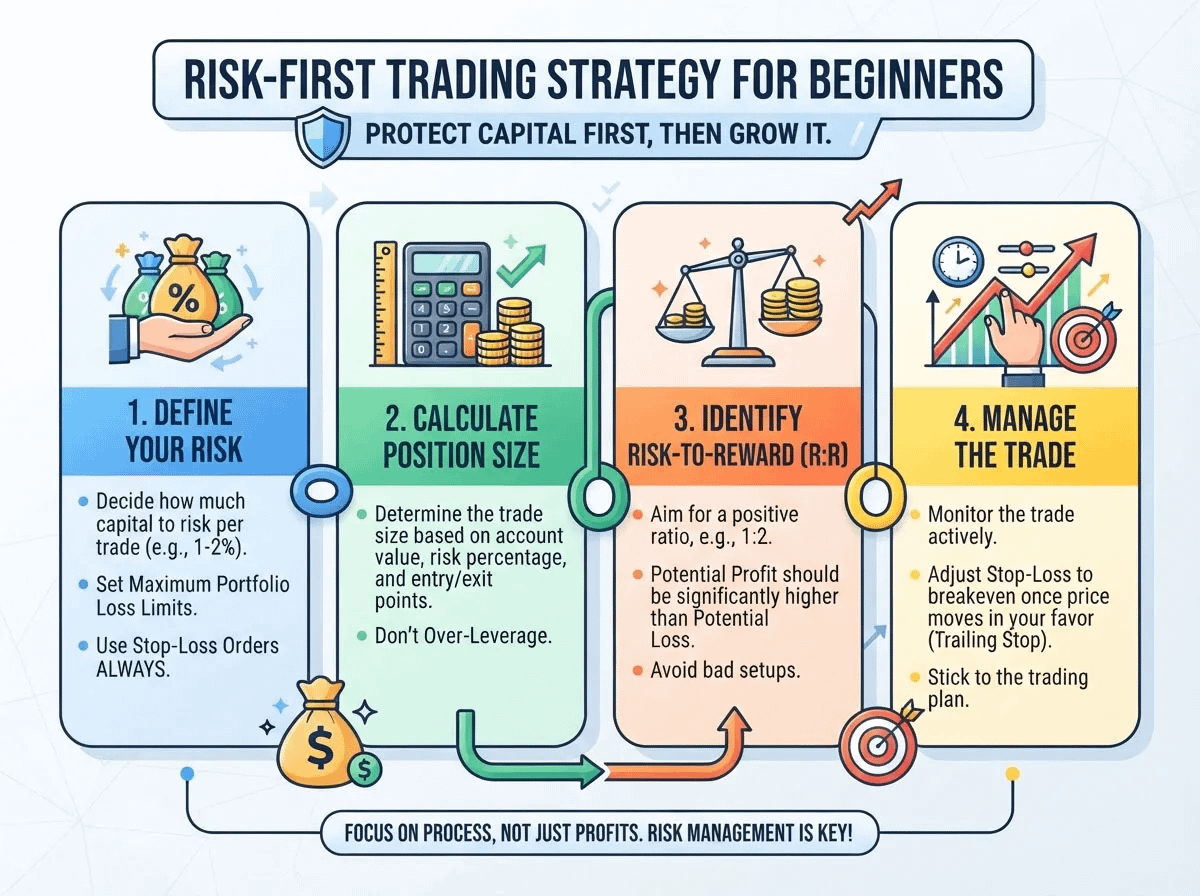
Note: The checklist isn’t for decoration. It blocks impulsive trades.
Step 1. What kind of swing are we in?
Before naming the candle pattern, look at the nearest 20–30 candles on the current trading timeframe (prioritize 4H).
A chain of higher lows after higher lows → uptrend
A chain of lower highs after higher highs → downtrend
Overlapping highs and lows; candles going sideways → sideways market
Rules
A reversal candle should only be read when the trend is clearly established.
In sideways conditions, many hammers, dojis, and engulfing patterns are just noise.
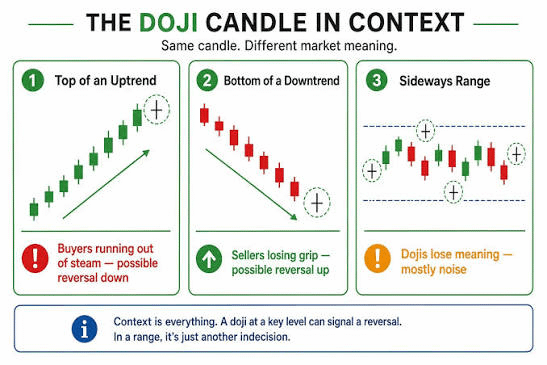
Note: Same Doji candle. At the top it’s a warning. At the bottom it’s an opportunity. In the range it’s noise.
Step 2. Where is the candle located?
This is the life-or-death step. The previous three emphasized: candle shape matters less than location.
Bullish candles should only be considered when:
Touch support
Touch the old bottom
Touch the price zone that reacted before
Bearish candles should only be considered when:
Touch resistance
Touch the old high
Touch the supply zone that was sold before
A good-looking candle in the middle of the swing = not enough conditions to enter.
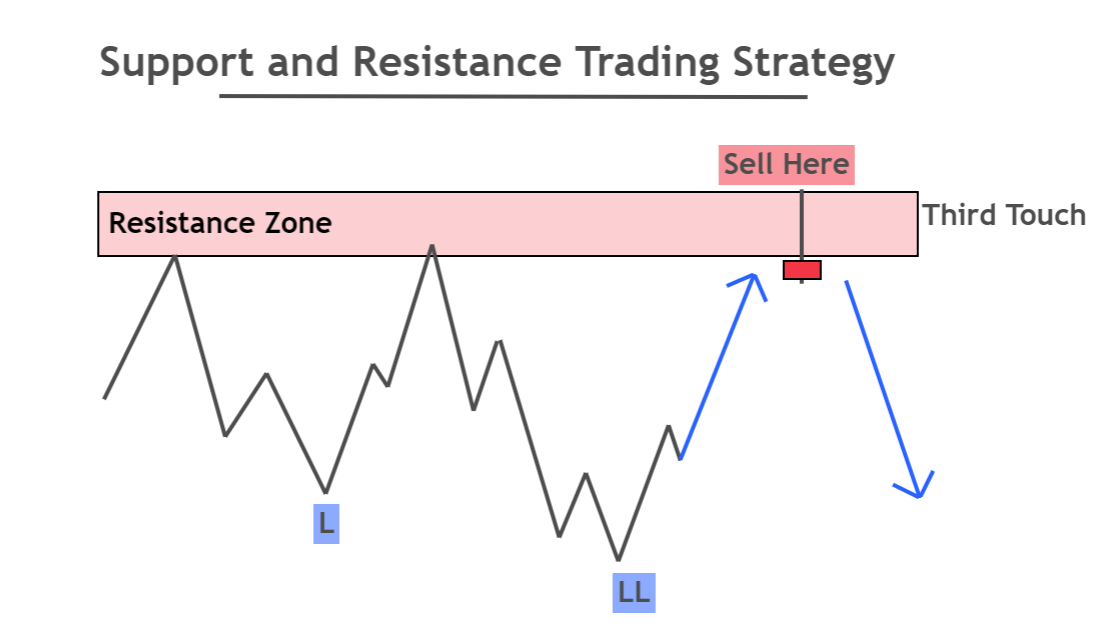
Note: Trade the candle at the price zone—don’t trade the candle in empty space.
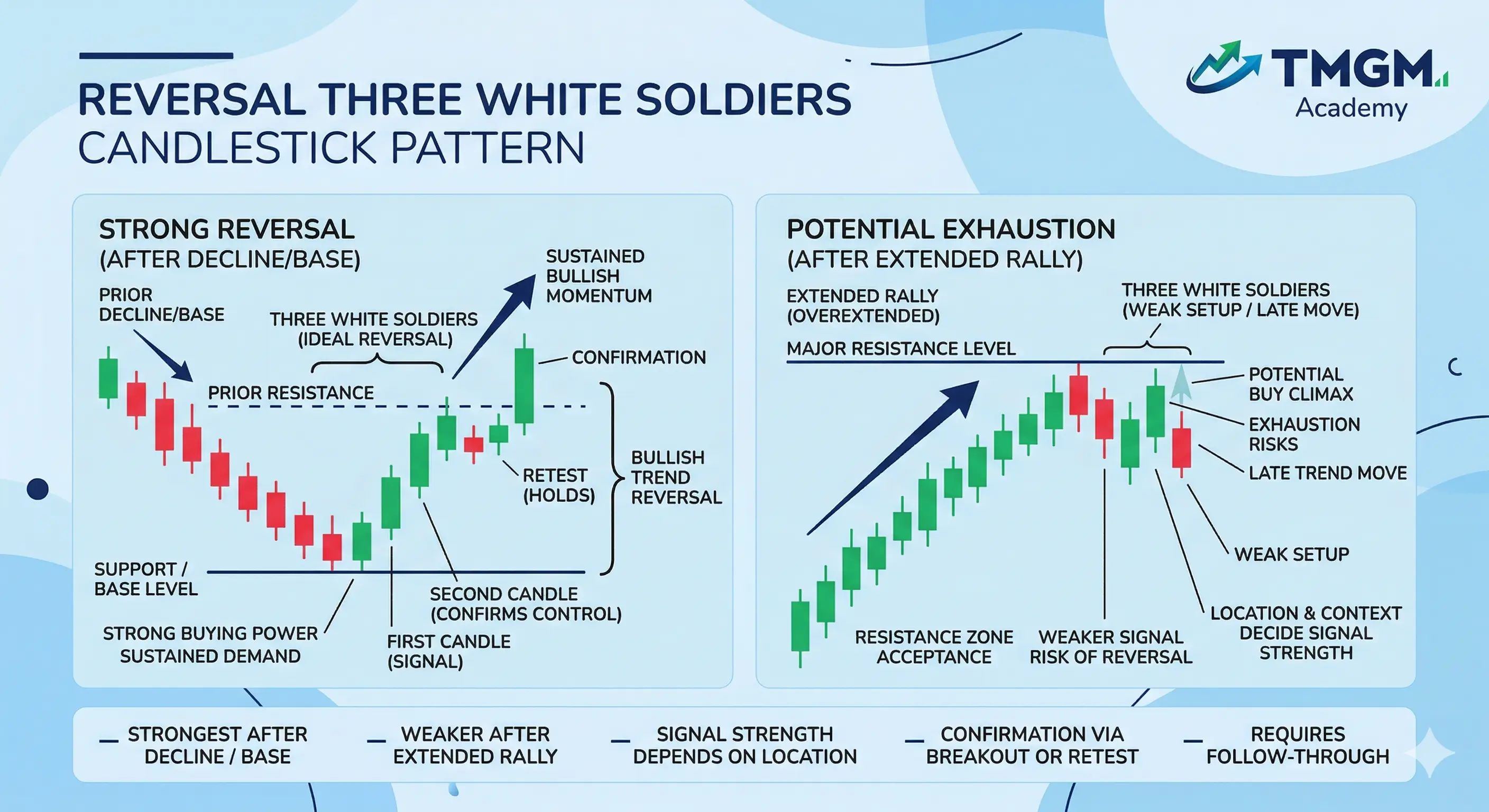
Note: Same candle pattern—if it’s at the correct zone it’s strong; at the wrong zone it’s weak.
Step 3. Is the candle pattern good enough yet?
Don’t name the pattern if you don’t have enough criteria.
Quick check:
Hammer / Hanging Man: lower wick ≥ 2 times the body; upper wick is very short
Shooting Star / Inverted Hammer: upper wick ≥ 2 times the body
Engulfing: the next candle fully engulfs the previous candle’s body— not just slightly longer
Piercing / Dark Cloud: close beyond 50% of the previous candle’s body
Morning / Evening Star: candle 3 goes deep into candle 1’s body
If the criteria aren’t met, only write “rebound candle”; don’t write “reversal signal”.
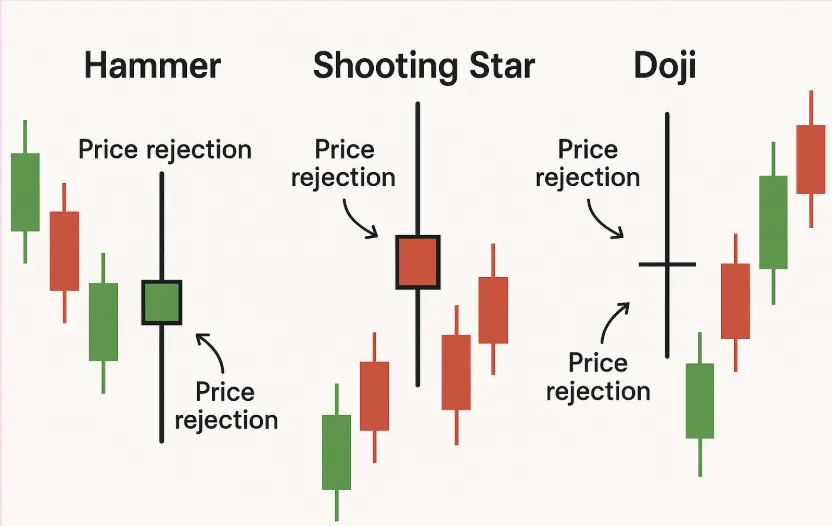
Note: Candle wicks show evidence of price rejection. Only small body + long wick is worth reading.
Step 4. Has a confirmation candle appeared yet?
A signal candle is only an invitation.
A new confirmation candle is your license to enter.
For bullish signals: the next candle closes higher than the signal candle’s high, or it closes above 50% of the signal candle’s body.
For bearish signals: the next candle closes lower than the signal candle’s low.
If the confirmation candle hasn’t closed, you haven’t clicked yet.
Especially on 4H: wait for the 4H candle to close—don’t enter mid-candle.
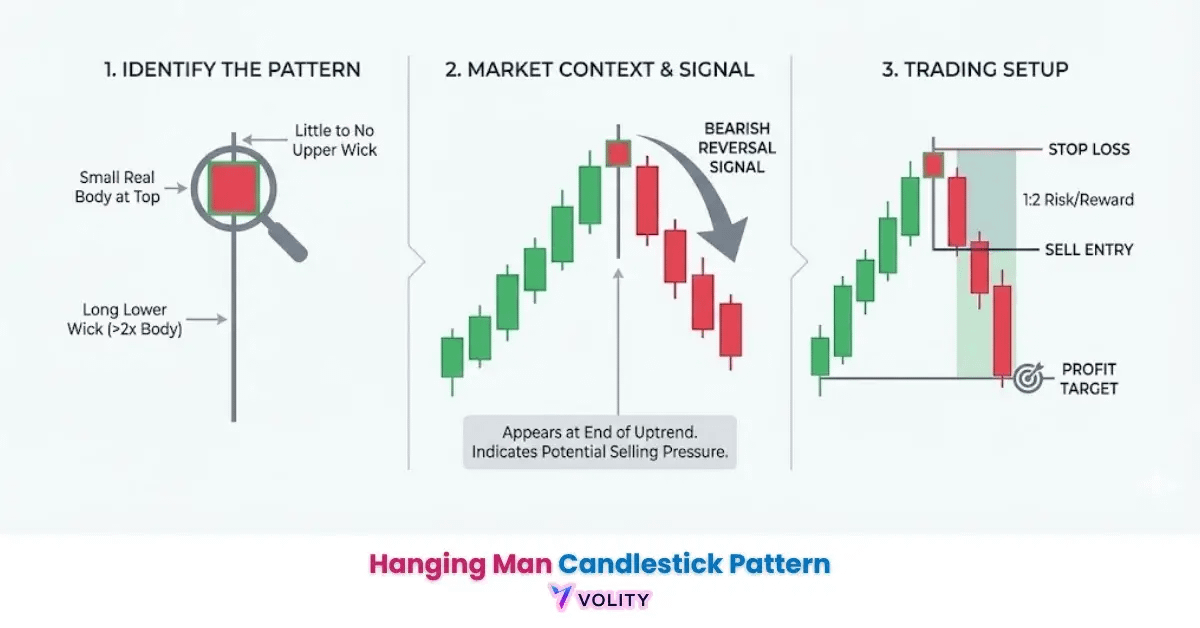
Note: Identify the pattern → read the context → only then set up. Don’t jump steps.
Step 5. Can you set a stoploss?
If you don’t know where to place the stop, that’s not a setup. That’s gambling.
How to place the stop by the candle:
Buy after a Bullish candle: stop below the signal candle’s wick low, leaving a small buffer
Sell after a Bearish candle: stop above the signal candle’s wick top
Hai common mistakes:
Stop is too tight → gets swept, then price moves the correct way
Stop is too far → one losing trade wipes out many winning ones
Want more: if the stop gets hit, how much % does the account lose?
With a small account, keep risk at 0.5%–1% per trade.
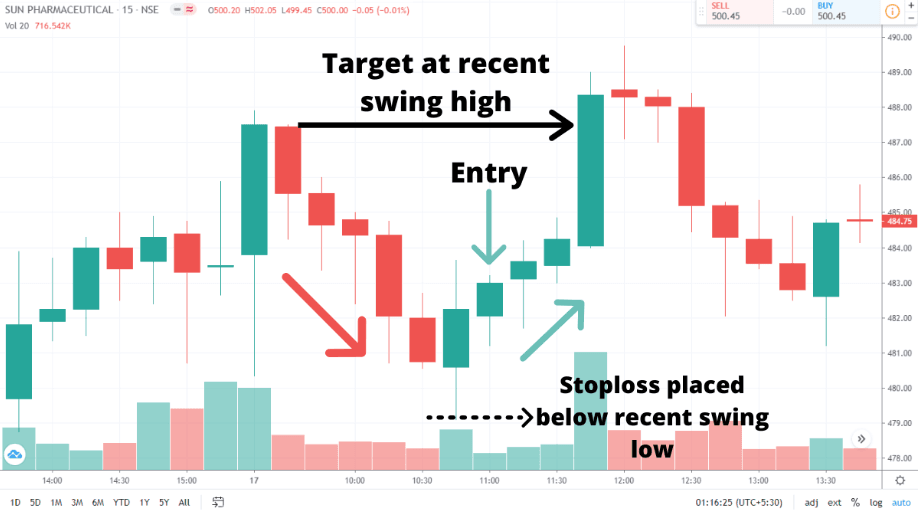
Note: Entry–Stop–Target must be visible on the chart before you place the trade.
Step 6. Is the R:R enough yet?
Simple formula:
Risk = |entry price − stop price|
Reward expectation = |target price − entry price|
R:R = reward / risk
Minimum target: 1:2.
Meaning: you accept risking 1 to look for payoff 2.
Example: if the stop is 10 USD away, the minimum target is 20 USD.
If resistance is too close, the target won’t reach 2x the stop → skip the trade, even if the candle looks very good.
A 40% win rate is still survivable if R:R is 1:2.
A 60% win rate is still doomed if R:R is 1:0.5 and you fold big when you lose.
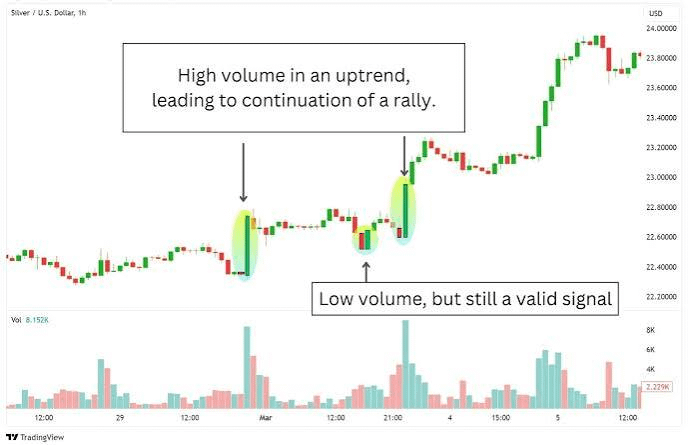
Note: Increased volume together with the signal candle makes the R:R more trustworthy. Weak volume means lower expectations.
When are you allowed to place a trade?
Only place the trade when all 6/6 checklist questions have clear answers.
Example of a setup that meets the criteria:
XAUUSD on the 4H timeframe is falling and has touched an old support
A valid Bullish Engulfing appears
Volume is increasing
The next 4H candle closes above the engulfing candle’s high
Stop below the candle low; risk is 0.7% of the account
Nearest high target for R:R 1:2.3
Missing volume, missing confirmation, or R:R 1:1.1 → write in the journal, don’t enter.
5 cases where, after checking the checklist, you still must stay out
A nice candle in the middle of the swing—no clear price zone
Right before major news (CPI, FOMC, NFP, US data)
4H overlapping; small candle bodies in a row
You’ve lost 2–3 trades in the session—hot emotions
Can’t calculate lot size based on the stop distance
Staying out is also a trading decision.
Often, that’s the decision that saves the account.
PRACTICE: Do this before going live
Open TradingView, 4H timeframe, select XAUUSD or BTC.
Make 5 paper charts:
Circle the 1 candle you want to enter
Answer all 6 checklist questions
Draw the stop and target
Write down R:R
Conclusion: ENTER or SKIP
You must not conclude “enter” if there is still 1 unanswered question.
Make 10 paper setups this week. Next week, only then consider increasing volume.
CONCLUSION
Reading candles is a skill.
A checklist is discipline.
Traders usually lose money by placing trades right after Step 3: “the candle looks good”.
Traders who preserve capital usually wait until step 6 is complete.
📒Knowledge from the previous three lessons: Read signals.
📗Knowledge from this lesson: The right to enter a trade.
In the checklist. Keep it next to the chart.
If you don’t tick enough, you won’t click.
Which step are you missing most right now: location, confirmation, or R:R? Comment 1 chart 4H—I'll read it with the checklist.
BRIAN TRUONG