Mid-term elections run from September to November. Crude oil will definitely stay below 120 and above 60. When it reaches these two price zones, you can go long or short. The biggest impact comes from the call of $TRUMP .
$CL WTI crude oil
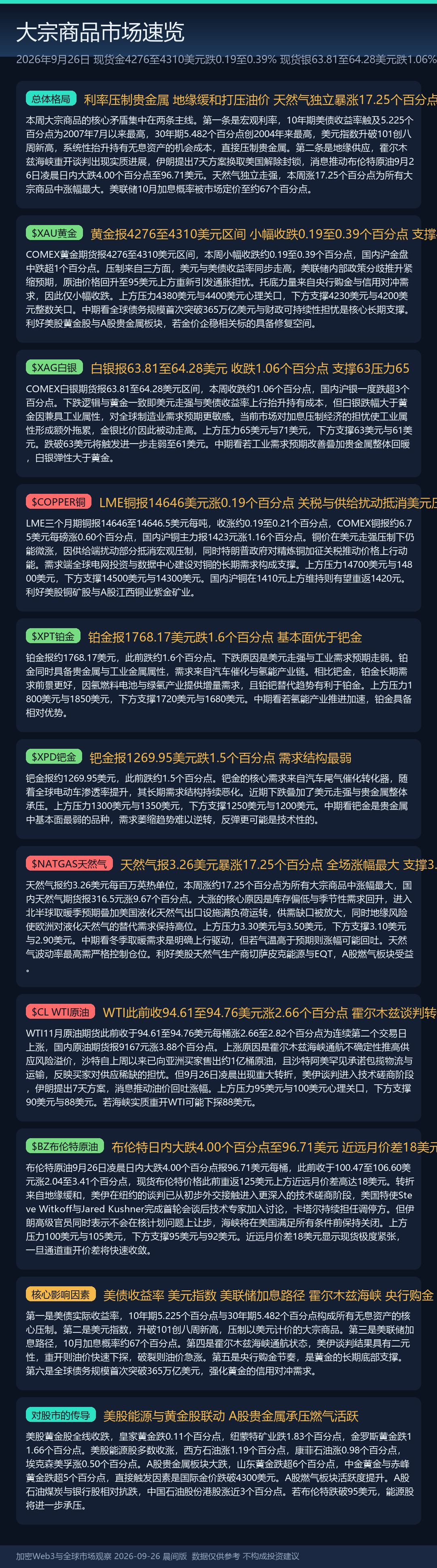
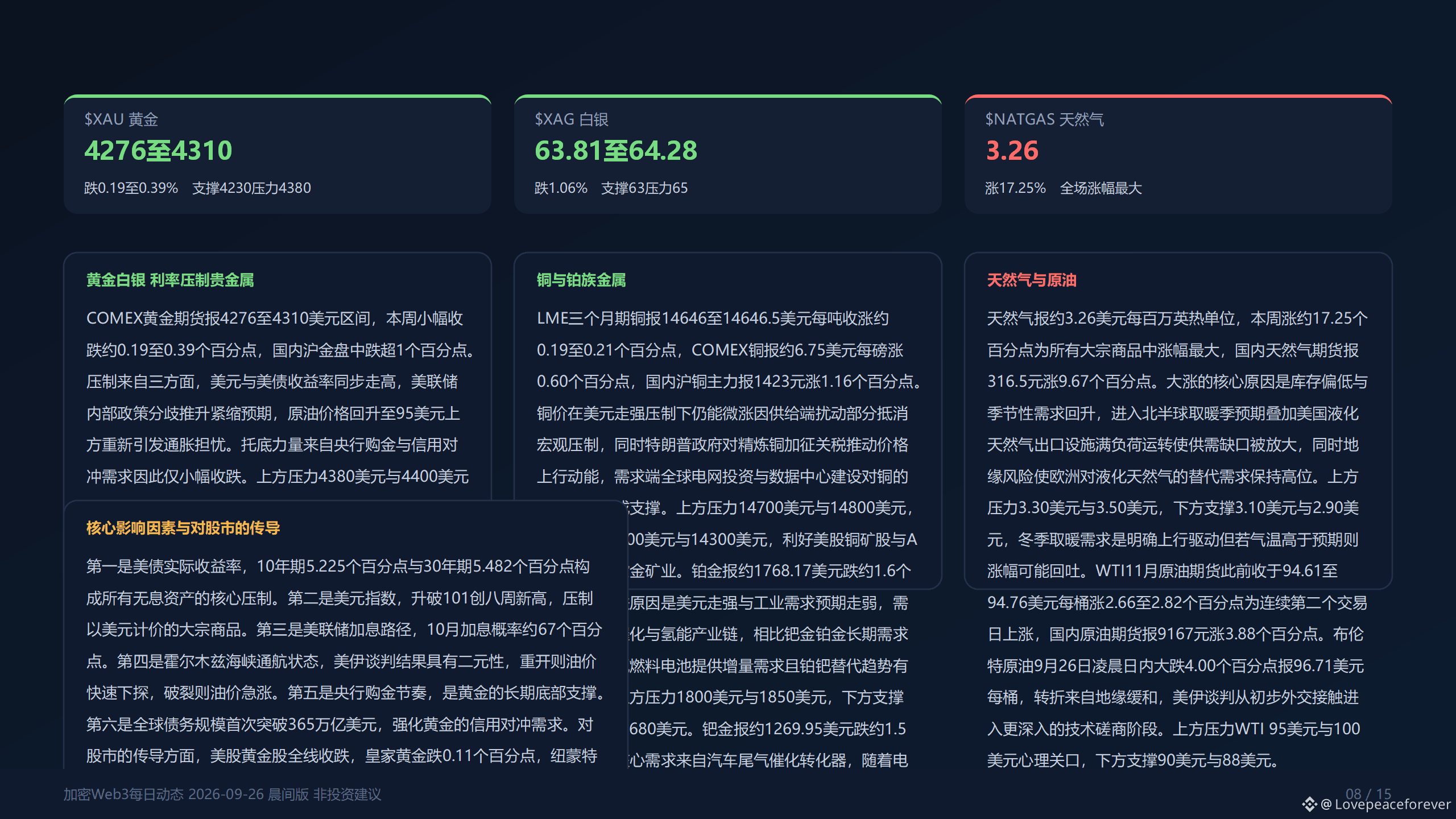
Latest price and change: WTI November crude oil futures previously closed at $94.61 to $94.76 per barrel, up 2.66 to 2.82 percentage points, marking a second consecutive day of gains. In China, crude oil futures reported 9,167 yuan, up 3.88 percentage points; resistance is 9,800 yuan and support is 9,050 yuan.
Reason analysis: The rise was driven by #霍尔木兹海峡 ’s uncertainty about navigation, which boosted the supply-risk premium. Since last week, Saudi Arabia has sold about 100 million barrels of crude oil to Asian buyers, with delivery covering October and November. Saudi Aramco also made a rare commitment to cover logistics and transportation, reflecting overseas buyers’ concerns about supply scarcity. The spot market supply is extremely tight. However, a major turn occurred in the early hours of September 26: #美伊谈判 entered the technical consultation stage. Iran proposed a 7-day plan; the news pushed oil prices to give back some of their gains.
$BZ Brent crude oil
Latest price and change: In the early hours of September 26, Brent crude oil saw an intraday plunge of 4.00 percentage points, to $96.71 per barrel. Previously, Brent November futures closed at $100.47 to $106.60, up 2.04 to 3.41 percentage points. Spot Brent had earlier returned above $125, with the near-to-far month spread as wide as $18.
Reason analysis: The turn came from easing geopolitical tensions. Negotiations between the US and Iran in New York have moved from initial diplomatic engagement into deeper technical consultations. After US envoy Steve Witkoff and Jared Kushner completed the first round of talks, technical experts joined the discussions, while Qatar continued to act as the mediator. Iran pushed a 7-day plan: if the US lifts sanctions on Iran, unfreezes assets, and cancels oil sanctions, Iran will reopen the Strait of Hormuz. However, senior Iranian officials also said they would not make concessions on the nuclear program issue. The strait will remain closed until the US meets all conditions, so disagreements still exist in negotiations.
Key factors: the Strait of Hormuz, US-Iran negotiations, Iran’s nuclear issue, OPEC production policy, global inventories, and freight costs.
Corresponding impact on US and A-share stocks: The US energy sector is highly correlated with oil prices. The three major oil producers on China’s A-share market had previously fallen: CNOOC was down 1.85 percentage points, PetroChina fell 2.13 percentage points, and Sinopec dropped 1.34 percentage points, reflecting expectations that oil prices are relatively soft. If Brent breaks below $95, energy stocks will face further pressure.
$CL WTI crude oil
Latest price and change: WTI November crude oil futures previously closed at $94.61 to $94.76 per barrel, up 2.66 to 2.82 percentage points, marking a second consecutive day of gains. In China, crude oil futures reported 9,167 yuan, up 3.88 percentage points; resistance is 9,800 yuan and support is 9,050 yuan.
Reason analysis: The rise was driven by #霍尔木兹海峡 ’s uncertainty about navigation, which boosted the supply-risk premium. Since last week, Saudi Arabia has sold about 100 million barrels of crude oil to Asian buyers, with delivery covering October and November. Saudi Aramco also made a rare commitment to cover logistics and transportation, reflecting overseas buyers’ concerns about supply scarcity. The spot market supply is extremely tight. However, a major turn occurred in the early hours of September 26: #美伊谈判 entered the technical consultation stage. Iran proposed a 7-day plan; the news pushed oil prices to give back some of their gains.
$BZ Brent crude oil
Latest price and change: In the early hours of September 26, Brent crude oil saw an intraday plunge of 4.00 percentage points, to $96.71 per barrel. Previously, Brent November futures closed at $100.47 to $106.60, up 2.04 to 3.41 percentage points. Spot Brent had earlier returned above $125, with the near-to-far month spread as wide as $18.
Reason analysis: The turn came from easing geopolitical tensions. Negotiations between the US and Iran in New York have moved from initial diplomatic engagement into deeper technical consultations. After US envoy Steve Witkoff and Jared Kushner completed the first round of talks, technical experts joined the discussions, while Qatar continued to act as the mediator. Iran pushed a 7-day plan: if the US lifts sanctions on Iran, unfreezes assets, and cancels oil sanctions, Iran will reopen the Strait of Hormuz. However, senior Iranian officials also said they would not make concessions on the nuclear program issue. The strait will remain closed until the US meets all conditions, so disagreements still exist in negotiations.
Key factors: the Strait of Hormuz, US-Iran negotiations, Iran’s nuclear issue, OPEC production policy, global inventories, and freight costs.
Corresponding impact on US and A-share stocks: The US energy sector is highly correlated with oil prices. The three major oil producers on China’s A-share market had previously fallen: CNOOC was down 1.85 percentage points, PetroChina fell 2.13 percentage points, and Sinopec dropped 1.34 percentage points, reflecting expectations that oil prices are relatively soft. If Brent breaks below $95, energy stocks will face further pressure.