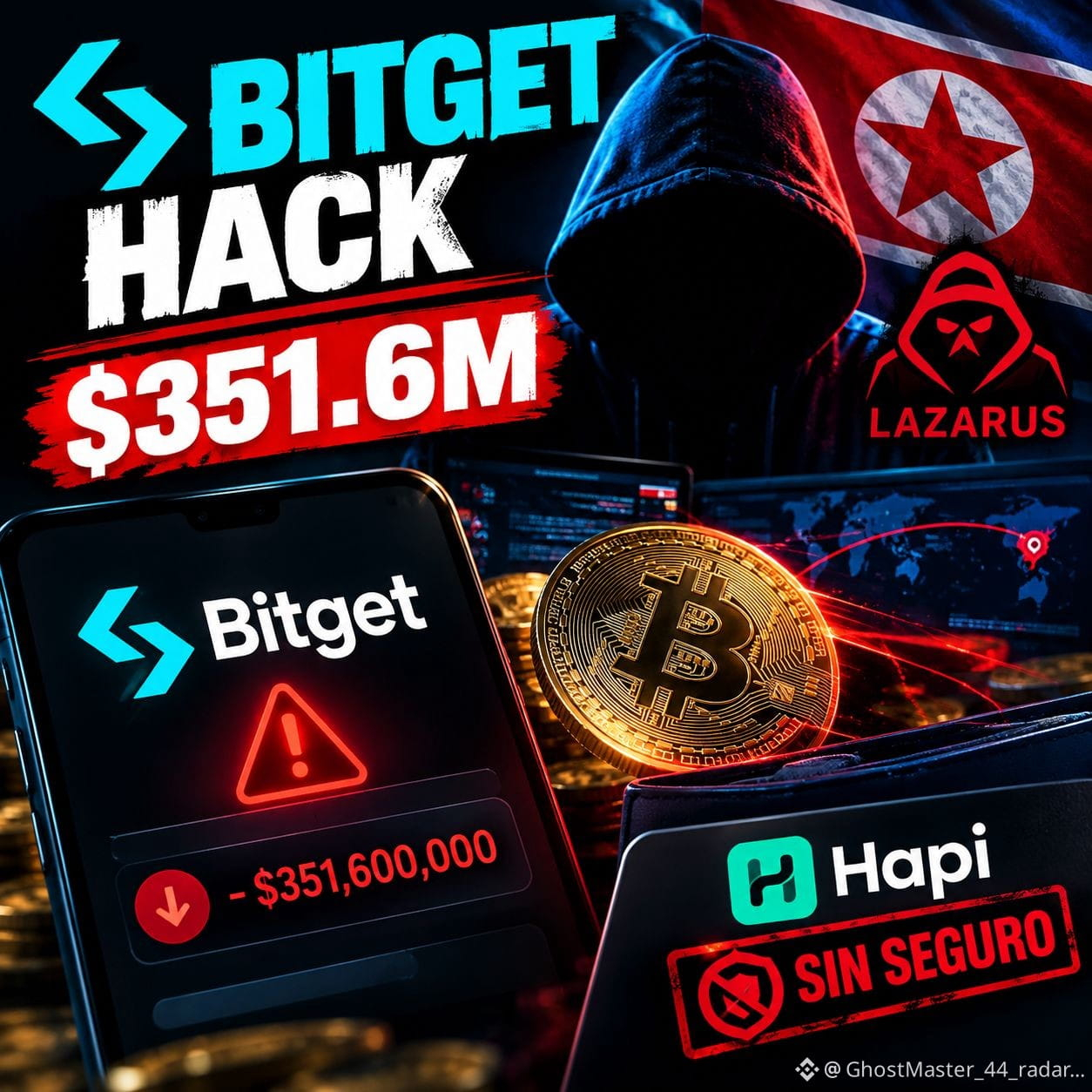
🚨 BITGET SUFFERS A $351.6 MILLION HACK: IS LAZARUS BEHIND IT? 🇰🇵💰
One of the biggest security breaches in the crypto sector in 2026. The platform confirmed that approximately $351.6 million in assets were affected after unauthorized transfers from part of its hot wallets and intermediate wallets.
👀 Who would be behind it?
Bitget CEO Gracy Chen said that early analysis shows patterns consistent with attacks linked to North Korean hacker groups.
Among the hypotheses is Lazarus, known for being related to major cryptocurrency thefts, although attribution is still under investigation.
🔓 And there’s an even more striking detail: according to Chen, the private keys were not compromised. The attackers would have gained access to a backend system related to the wallet infrastructure, altered transaction information, and managed to get the authorization process itself to execute the transfers.
🛑 Bitget temporarily suspended withdrawals while investigating the attack, although deposits and operations continued to work. The company also claims that its cold wallets remained secure and that its User Protection Fund exceeds $464 million, an amount higher than the affected sum.
⚠️ And here comes another debate: Hapi.
Hapi’s current documents specify that cryptocurrencies handled through its services are not insured by the FDIC and are not protected by SIPC.
SIPC protection of up to $500,000 is related to certain assets and cash held in the brokerage account, not to cryptocurrencies.
This leaves a question on the table for anyone who keeps Bitcoin on a centralized platform:
What really happens to your $BTC if the platform gets hacked and your crypto funds are stolen? 🔐₿
EASY ➡️ REMEMBER TO KEEP YOUR COLD WALLET :)
#Bitget #Lazarus #crypto #HackerAlert #CyberSecurity
One of the biggest security breaches in the crypto sector in 2026. The platform confirmed that approximately $351.6 million in assets were affected after unauthorized transfers from part of its hot wallets and intermediate wallets.
👀 Who would be behind it?
Bitget CEO Gracy Chen said that early analysis shows patterns consistent with attacks linked to North Korean hacker groups.
Among the hypotheses is Lazarus, known for being related to major cryptocurrency thefts, although attribution is still under investigation.
🔓 And there’s an even more striking detail: according to Chen, the private keys were not compromised. The attackers would have gained access to a backend system related to the wallet infrastructure, altered transaction information, and managed to get the authorization process itself to execute the transfers.
🛑 Bitget temporarily suspended withdrawals while investigating the attack, although deposits and operations continued to work. The company also claims that its cold wallets remained secure and that its User Protection Fund exceeds $464 million, an amount higher than the affected sum.
⚠️ And here comes another debate: Hapi.
Hapi’s current documents specify that cryptocurrencies handled through its services are not insured by the FDIC and are not protected by SIPC.
SIPC protection of up to $500,000 is related to certain assets and cash held in the brokerage account, not to cryptocurrencies.
This leaves a question on the table for anyone who keeps Bitcoin on a centralized platform:
What really happens to your $BTC if the platform gets hacked and your crypto funds are stolen? 🔐₿
EASY ➡️ REMEMBER TO KEEP YOUR COLD WALLET :)
#Bitget #Lazarus #crypto #HackerAlert #CyberSecurity