#纽约与polymarket互诉预测市场合法性 The real issue behind the lawsuit isn't gambling—it's who gets to call the shots
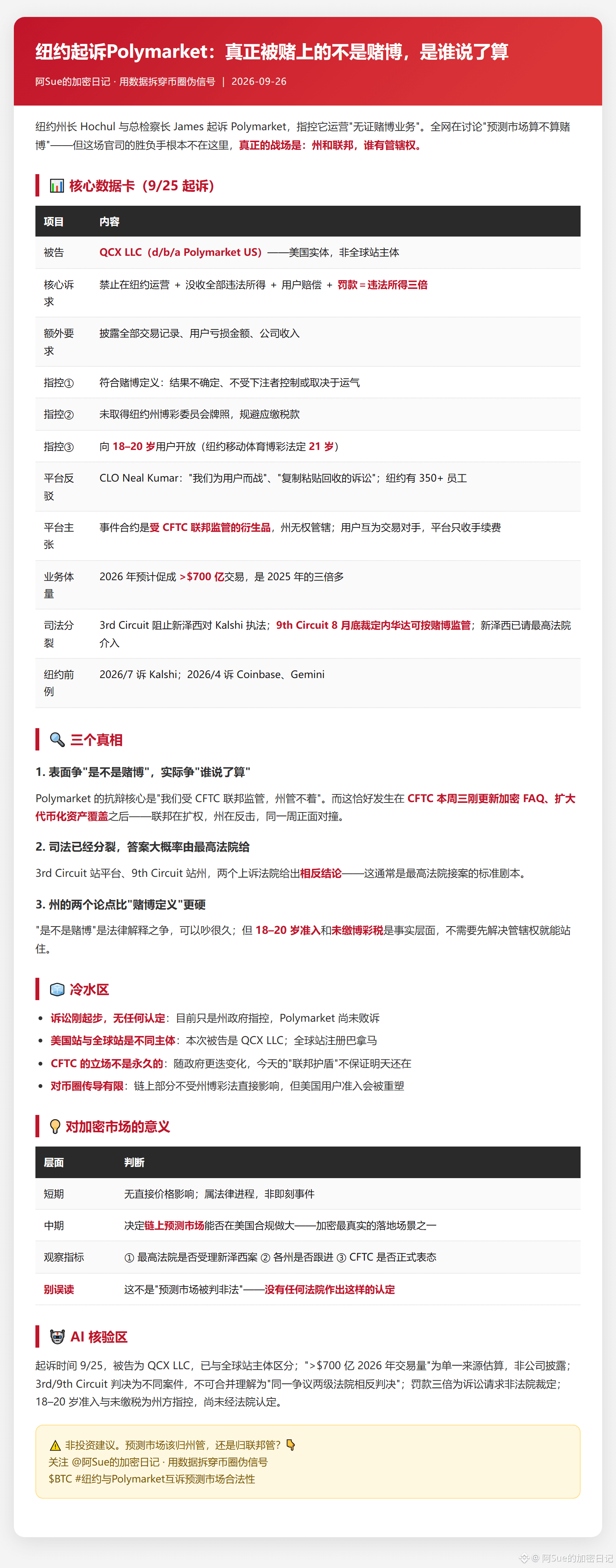
New York Governor Hochul and Attorney General James have sued Polymarket starting 9/25, alleging it operates “unlicensed gambling.” Everyone online is debating whether “prediction markets count as gambling,” but the deciding factor in this case has nothing to do with that. The real battleground is: state versus federal—who has jurisdiction.
📊 Data
Defendant: QCX LLC (d/b/a Polymarket US), a U.S. entity, not the global-site operator
Claims: ban operations in New York + forfeit all illegal proceeds + compensate users + fines equal to triple the illegal proceeds; and require disclosure of all transaction records, user losses, and company revenue
Allegations: ① meets the definition of gambling (outcomes are uncertain, and bettors can’t control the result) ② lacks a New York gambling/lottery license, and evaded taxes ③ offers access to people aged 18–20 (New York’s mobile sports gambling legal age is 21)
Platform’s rebuttal: CLO Neal Kumar “We fight for users,” and “AG copies and pastes recycled lawsuits”; argues that the event contracts are derivatives regulated by the CFTC at the federal level, so the state lacks authority; and notes New York has 350+ employees
Scale: in 2026, it’s expected to facilitate > $70 billion in transactions—more than three times 2025
🔑 Three truths
On the surface, it’s a dispute over “is it gambling?” In reality, it’s about “who has jurisdiction”—and this is happening just after the CFTC updated its crypto FAQ this Wednesday, expanding the scope of tokenized assets covered. The federal government is expanding its reach, while states are pushing back. Within the same week, courts directly collided and split: the 3rd Circuit blocked New Jersey from enforcing against Kalshi; the 9th Circuit ruled at the end of August that Nevada can regulate gambling; and New Jersey has asked the Supreme Court to get involved. Two appellate courts reached opposite conclusions—this is often the Supreme Court’s standard playbook for taking a case.
The two state arguments are tougher than the “definition of gambling”: the 18–20 access issue and unpaid gambling/lottery taxes are factual matters, and the case doesn’t even need to settle jurisdiction first to stand.
🧊 Cold water: the lawsuit has just started—no court has ruled on anything yet; the U.S. site and the global site are different entities (the global site is registered in Panama). The CFTC’s stance changes with government leadership, and it’s not a permanent shield.
💡 Significance: short-term, no direct price impact; medium-term, whether on-chain prediction markets can grow big under U.S. compliance rules will hinge on the outcome. Watch three things: whether the Supreme Court accepts New Jersey’s case, whether other states follow suit, and whether the CFTC officially states its position. Don’t misread it as “prediction markets being ruled illegal.”
New York Governor Hochul and Attorney General James have sued Polymarket starting 9/25, alleging it operates “unlicensed gambling.” Everyone online is debating whether “prediction markets count as gambling,” but the deciding factor in this case has nothing to do with that. The real battleground is: state versus federal—who has jurisdiction.
📊 Data
Defendant: QCX LLC (d/b/a Polymarket US), a U.S. entity, not the global-site operator
Claims: ban operations in New York + forfeit all illegal proceeds + compensate users + fines equal to triple the illegal proceeds; and require disclosure of all transaction records, user losses, and company revenue
Allegations: ① meets the definition of gambling (outcomes are uncertain, and bettors can’t control the result) ② lacks a New York gambling/lottery license, and evaded taxes ③ offers access to people aged 18–20 (New York’s mobile sports gambling legal age is 21)
Platform’s rebuttal: CLO Neal Kumar “We fight for users,” and “AG copies and pastes recycled lawsuits”; argues that the event contracts are derivatives regulated by the CFTC at the federal level, so the state lacks authority; and notes New York has 350+ employees
Scale: in 2026, it’s expected to facilitate > $70 billion in transactions—more than three times 2025
🔑 Three truths
On the surface, it’s a dispute over “is it gambling?” In reality, it’s about “who has jurisdiction”—and this is happening just after the CFTC updated its crypto FAQ this Wednesday, expanding the scope of tokenized assets covered. The federal government is expanding its reach, while states are pushing back. Within the same week, courts directly collided and split: the 3rd Circuit blocked New Jersey from enforcing against Kalshi; the 9th Circuit ruled at the end of August that Nevada can regulate gambling; and New Jersey has asked the Supreme Court to get involved. Two appellate courts reached opposite conclusions—this is often the Supreme Court’s standard playbook for taking a case.
The two state arguments are tougher than the “definition of gambling”: the 18–20 access issue and unpaid gambling/lottery taxes are factual matters, and the case doesn’t even need to settle jurisdiction first to stand.
🧊 Cold water: the lawsuit has just started—no court has ruled on anything yet; the U.S. site and the global site are different entities (the global site is registered in Panama). The CFTC’s stance changes with government leadership, and it’s not a permanent shield.
💡 Significance: short-term, no direct price impact; medium-term, whether on-chain prediction markets can grow big under U.S. compliance rules will hinge on the outcome. Watch three things: whether the Supreme Court accepts New Jersey’s case, whether other states follow suit, and whether the CFTC officially states its position. Don’t misread it as “prediction markets being ruled illegal.”