

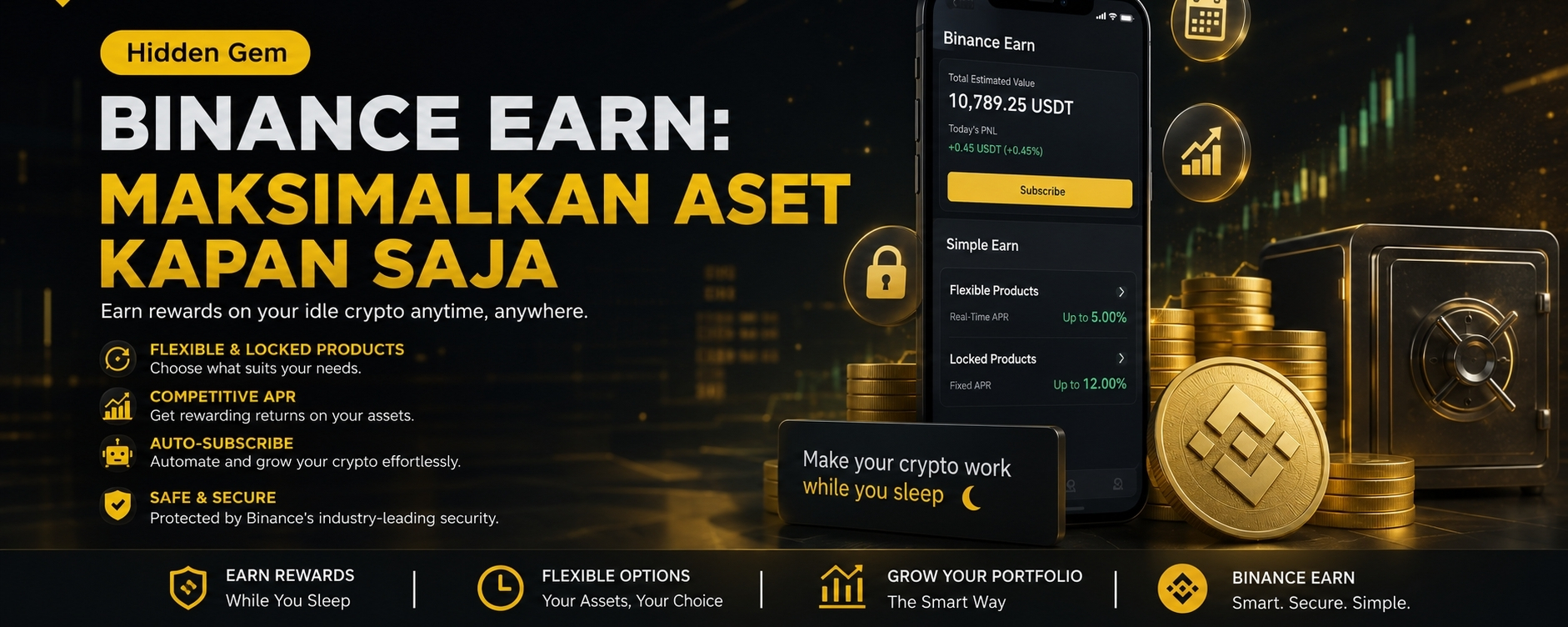


Many crypto users focus on finding trading opportunities, even though there’s a part of the Binance ecosystem that’s often overlooked: Binance Earn. To me, the concept is simple—crypto assets that aren’t being used can be considered for placement into the appropriate Earn product, so the assets may have the potential to generate rewards without having to keep trading continuously.
Binance Earn is not just one product. Inside it, there are several options, including Simple Earn with Flexible Products and Locked Products, as well as other Earn products that are available depending on the region and user eligibility. Since each product has different mechanisms, APR, periods, and risks, understanding how it works is far more important than merely looking at the highest APR number.
What is Simple Earn?
Simple Earn is designed to simplify how users earn rewards from digital assets. With Flexible Products, users can subscribe and redeem assets according to the product terms, while the Real-Time APR reward can change over time.
In Locked Products, assets are placed for a specific period and the reward is determined according to the chosen product. For early redemption on locked products, the reward you’ve already earned may not be granted or may be subject to reduction terms—so the lock period must be considered from the start.
That’s what makes Simple Earn appealing to users with different needs. Someone who may need their funds at any time can consider flexible products. On the other hand, users who already have a plan to hold assets for a certain period can consider the locked option after reading all the terms.
How to use Binance Earn: simple steps for beginners
For beginners, the Binance Earn tutorial isn’t as complicated as you might think.
First, log in to your Binance account and go to Earn, then select Simple Earn. Next, find the asset you want to use and check the available Flexible or Locked products.
Don’t choose based on APR alone. Also check the duration, minimum limits, redemption rules, reward calculation method, and product information before confirming.
After choosing a product, enter the amount of assets you want to subscribe to, review the transaction summary, and then confirm. For certain products, users can also find the Auto-Subscribe feature. This feature can help automate subscriptions based on the product terms, but users still need to understand how the extension/renewal works so they don’t accidentally lock up assets.
How to choose a Binance Earn product based on your needs?
In my opinion, the first question isn’t “Which APR is the highest?”, but rather:
“When will I need this asset back?”
For funds that might be needed in the near future, flexibility can be a key consideration. For assets that you plan to hold for a specific period, Locked Products could be one option worth learning about.
Therefore, a higher APR doesn’t necessarily mean a higher profit in fiat value, because crypto prices can still change.
Also note that the APR for certain products may change. As a result, the reward figure you see right now should not be considered a guarantee of future results.
Before subscribing, always check the Product Rules, Terms & Conditions, and Risk Warning so your decision is based on complete information.
Simple strategy: separate assets based on their function
An easy way to think about it is to divide assets based on what you need them for.
Assets intended for trading are kept ready for trading. Assets you want to hold but still need liquidity can be considered for flexible products. Meanwhile, assets you won’t use during a certain period can be studied for locked products, as long as the user understands the consequences.
With this approach, Binance Earn can become part of asset management—not just chasing the biggest rewards.
The focus is to match the right product to each asset’s goals and liquidity needs.
Don’t forget the risks
Crypto is still a volatile asset. Rewards paid in token units don’t automatically mean the value of the asset in fiat currency will increase.
In addition, product availability, APR, subscription limits, redemption rules, and certain features may change. Available products may also differ by region or account eligibility.
So don’t treat Binance Earn as a substitute for a savings account or as a guarantee of profit. Do your own research and make sure you understand the product before participating.
Conclusion
For Binance users, Binance Earn can be a “hidden gem” worth understanding—especially when you have assets that aren’t being used right now.
Simple Earn offers both flexible and locked options, while features like Auto-Subscribe can help manage subscriptions according to your needs.
The key point isn’t just finding the biggest Binance Earn rewards.
Users who understand the purpose of the asset, liquidity needs, APR, lock period, and redemption terms can make more informed decisions.
If you’ve only ever viewed crypto as an asset for trading, maybe it’s time to look at Binance Earn from a different angle: as one tool to manage assets in a more structured way.


