

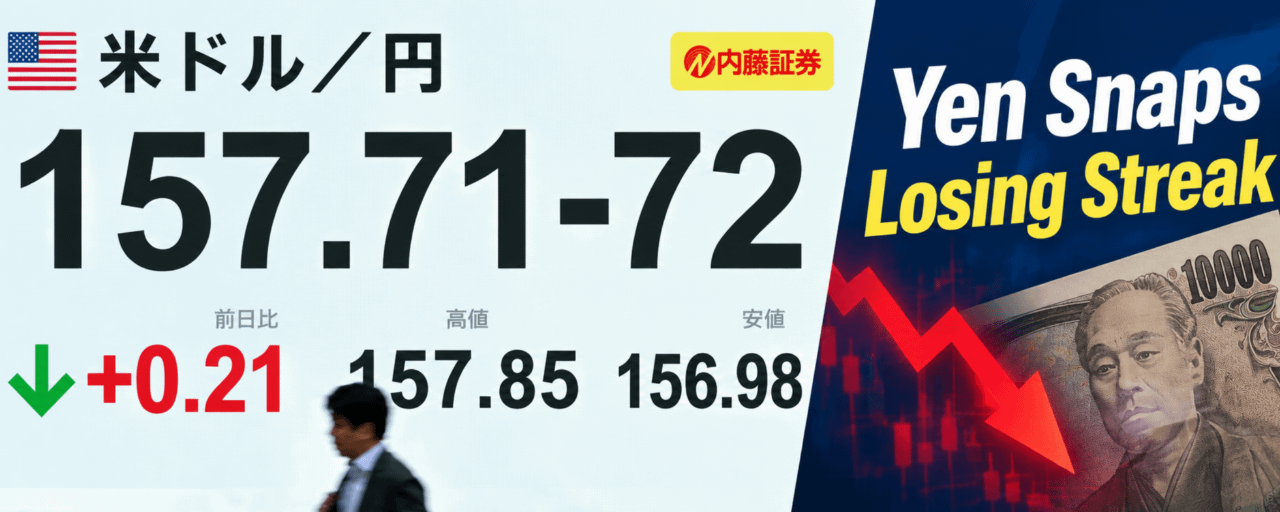

Sanae Takaichi told Donald Trump something Tokyo doesn't usually say out loud: the yen is too cheap, and everyone in the room already knew it.
The exchange happened at their summit in New York, on the sidelines of the UN General Assembly. Finance Minister Satsuki Katayama disclosed the details Friday at a regular briefing in Tokyo, an unusually candid move for a government that typically keeps these conversations behind closed doors.
Trump, in the account Katayama gave reporters, raised his own concerns about the currency's weakness and framed it as a drag on U.S. trade competitiveness. Takaichi's response, relayed secondhand: an undervalued yen is "problematic."
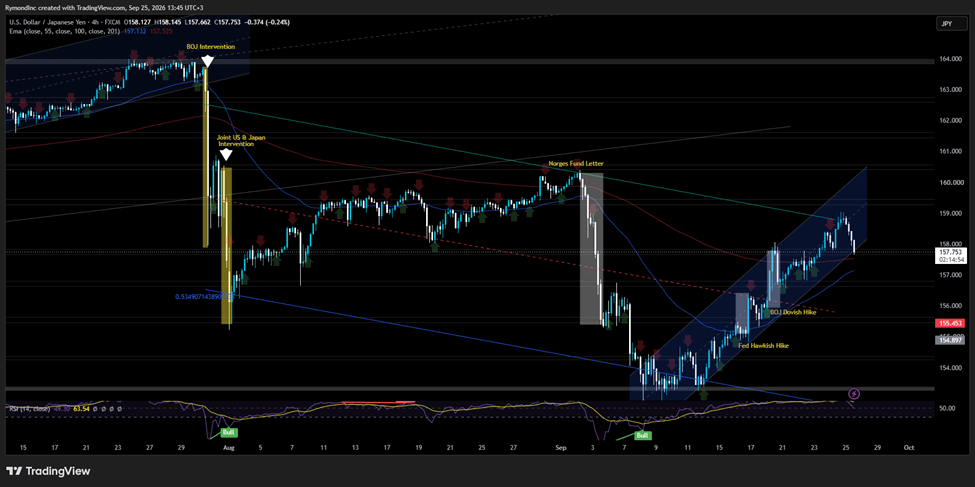
Whatever the diplomatic optics, the market reaction was immediate. The yen strengthened to around 157.8 per dollar Friday, recovering from two-week lows and climbing as much as 0.7% intraday, its best day in more than two weeks. It outran every other Group-of-10 currency and snapped a five-session slide that had pushed the pair toward the psychologically loaded 160 level.
Katayama filled in more of the picture at the briefing. Japan intends to keep coordinating with Washington on currency matters, she said, and expects the Bank of Japan to run suitable policy while working alongside the government. She wouldn't be drawn on specific levels or whether intervention is imminent. That reticence has become its own kind of signal.
She was more forthcoming on everything else. Takaichi, in Katayama's telling, respects the Bank of Japan's independence, and Japan's defense policy isn't being dictated by pressure from Washington, whatever critics assume. Raising defense spending to 2% of GDP, she added, still is not enough. On the currency, though, the message sharpened: Japan "won't hesitate to take bold action" if conditions warrant it. Rising bond yields around the world, in her framing, reflect a global and temporary trend rather than a problem unique to Japan.
Markets aren't fully buying the temporary part. Traders have spent the past several sessions bracing for another round of official intervention as the yen crept back toward 160, the level that triggered Tokyo and Washington's joint yen-buying operation on July 31. Katayama said she will keep coordinating with her U.S. counterpart, Treasury Secretary Scott Bessent, following that operation, the first coordinated U.S.-Japan currency intervention since 1998.
Oil Gives the Yen an Assist
Currencies rarely move in a vacuum, and Friday's rally had help. Oil slid as U.S. and Iranian negotiators explored a phased arrangement that would reopen the Strait of Hormuz, according to a person familiar with the talks, easing the safe-haven bid that had been propping up the dollar. Brent crude dropped back below $106 a barrel after surging more than 7% over the prior two sessions. West Texas Intermediate hovered near $93. The two sides were talking on the sidelines of the same UN gathering that hosted the Takaichi-Trump meeting, and they have missed similar deadlines before.
A Dollar Run That's Losing Steam
Zoom out, and Friday looks less like a turning point than a pause. The dollar had been on a tear against the yen, on track for a sixth straight daily gain before the reversal, with USD/JPY touching 159.05 on Thursday before sliding back to 157.88. From the September 17 close of 155.98, that's a climb of 1.97%, unwinding a good chunk of what Japan's summer intervention had bought back.
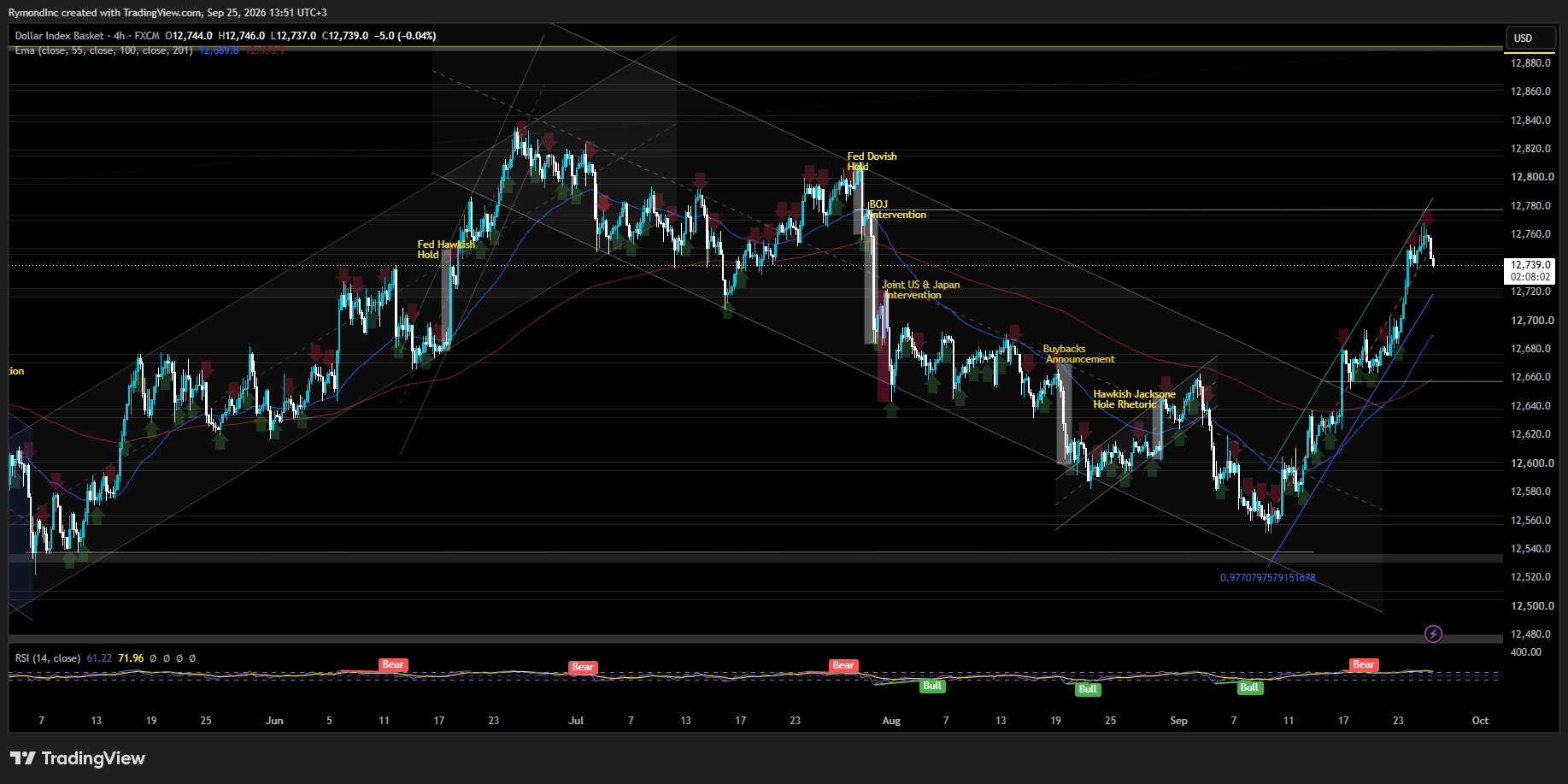
Which raises the obvious question: have Japan's interventions actually worked?
The Fed's October Problem
The yen's slide has an American accomplice. Traders are pricing in roughly a 70% probability that the Federal Reserve hikes rates on October 28, a week before the midterms, as the widening gap between U.S. and Japanese rates keeps pulling capital toward the dollar. Strong PMI readings and the renewed climb in oil have both fed the bet.
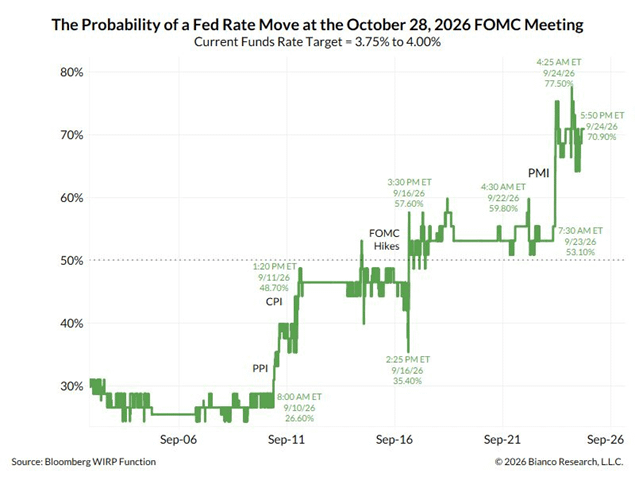
Jim Bianco of Bianco Research thinks this is shaping up to be the biggest story the second half of October has to offer. If the odds hold, he argues, markets are effectively demanding a hike that lands a week before an election, putting Fed Chair Kevin Warsh in a bind: deliver it and infuriate the White House that installed him, or hold off and confirm that the bond market, not the Fed, is setting the pace. Long-term yields rising through most of the Fed's 2024-to-2026 easing cycle, something that hadn't happened in more than 50 years, is Bianco's evidence that patience with dovish policy already ran out a while ago.
The bond market backed him up this week. The 30-year Treasury yield touched 5.501% Thursday, a level unseen since June 2004, before easing back toward 5.47% Friday as oil cooled off. The 10-year slipped to 5.17% after a three-session selloff had driven it to around 5.20% the day before. The culprits haven't changed: inflation that won't cooperate, oil creeping higher again, and a widening sense that Washington's borrowing has outrun what the market wants to lend at these rates.
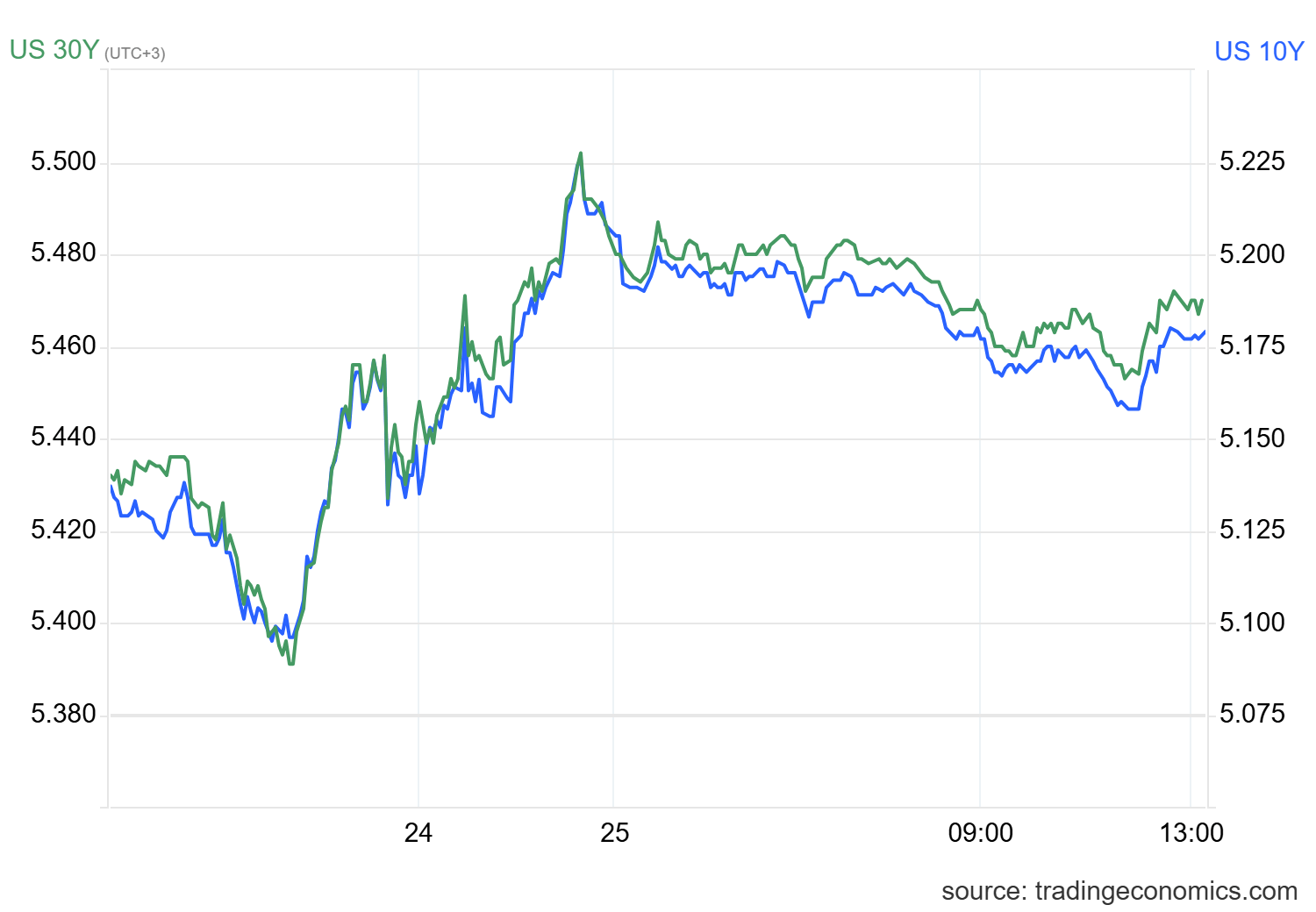
Bianco's caveat is real. A soft payrolls report, a cooler CPI print, weak retail sales, or disappointing third-quarter earnings could all knock that probability back under 50% before October 28 arrives. But if none of that happens, he says, Warsh is boxed in. Uncertainty over how much further the Bank of Japan can tighten without breaking something has only added pressure on the yen from the other direction.
The Rest of the Committee Isn't Whispering Either
Warsh isn't operating in isolation, and the rest of the committee has been anything but quiet this week. Anna Paulson, who leads the Philadelphia Fed and backed last week's quarter-point move, described growth as solid and possibly strengthening, with a labor market that remains stable. Getting inflation back to the Fed's 2% goal, she said, is "non-negotiable," and she has left the door open to some modest further tightening if the data cooperates.
Cleveland's Beth Hammack made a similar case Thursday, framing price stability as the responsibility of central banks and warning that inflation remains elevated even as output and demand stay solid. The risks, in her view, are tilted to the upside, and supply shocks have made the job harder than usual. The longer inflation stays elevated, she added, the tougher it gets to wrestle back down.
New York's John Williams struck the same note from a conference in London, calling another hike before year-end a reasonable bet given how robust demand has looked across sectors, even as he stopped short of committing to a specific meeting.
Fed Governor Michael Barr went further still, arguing the committee had been "out of position" before last week's move and that risks to the inflation target have grown even as labor-market risks have eased.
Four different voices, one overlapping message: the September hike wasn't a one-off, and the committee isn't especially bothered by the calendar sitting a week before an election.
So, Has Intervention Actually Worked?
Robin Brooks, a senior fellow at the Brookings Institution, has been picking apart that question all week, and his answer leans skeptical.
Brooks frames the debate as a fight between two camps. One side looks at Japan, a massive net creditor to the rest of the world, and concludes the yen's weakness can't possibly be a debt story: markets are simply behaving irrationally, and Tokyo's foreign reserves are large enough to snap them back to reality. The other camp, Brooks' own, points to the Bank of Japan's grip on government bond yields. Keep those yields artificially suppressed, he argues, and the debt crisis that would otherwise show up in the bond market shows up in the currency instead. Under that view, the yen keeps falling until the BOJ lets yields rise.
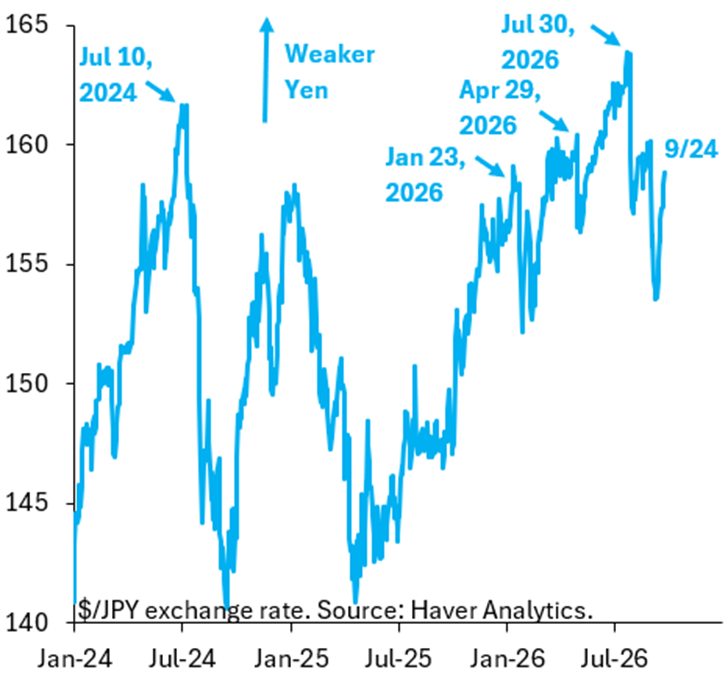
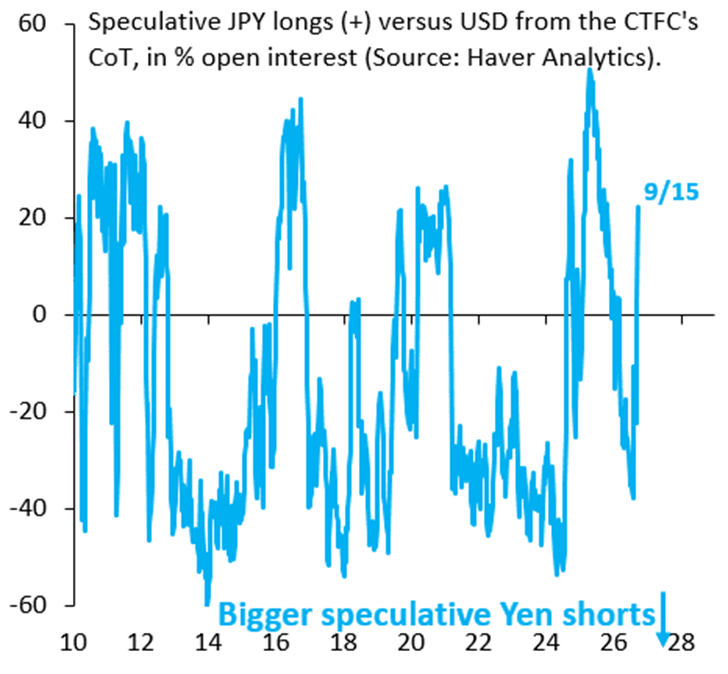
The chart evidence, in his telling, cuts both ways. This year's interventions have kept dollar-yen from breaking meaningfully above 160, and speculative positioning has flipped to net long the yen for the first time in a while, as the chart below shows. But the pair keeps drifting back toward that same 160 line the moment the authorities step back, hardly a sign that markets have learned their lesson.
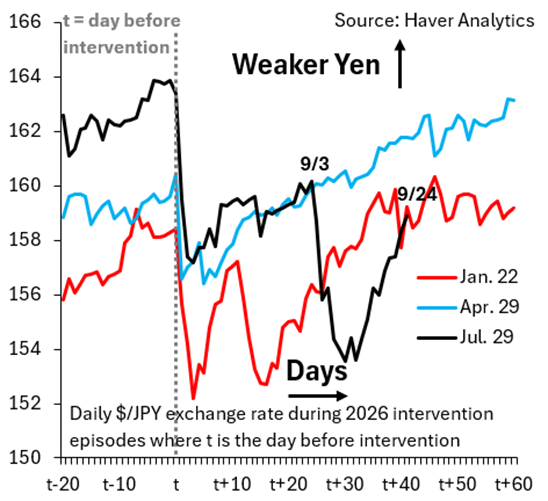
Brooks lined up three intervention episodes in event time: the New York Fed's rate check on January 23, Japan's unilateral move on April 30, and the current stretch that began July 30 and included a "stealth" operation run through government proxies on September 3. The pattern repeats each time. Intervention strengthens the yen for a while, the effect fades, and the pair drifts back close to where it started. The two-year rate differential between the U.S. and Japan has moved hard against the yen since that September stealth operation, which explains most of the drift back toward 160 on its own.
His conclusion hasn't changed from earlier posts on the subject. Only the Bank of Japan can rescue the yen, and only by letting yields climb to levels the government can't really afford. Higher borrowing costs mean a bigger interest bill for Tokyo, so they won't be allowed to rise freely. That tension, more than any single intervention headline, is why Brooks remains bearish on the currency. The alternatives, in his view, are worse for Japan's political establishment than a weaker yen will ever be.