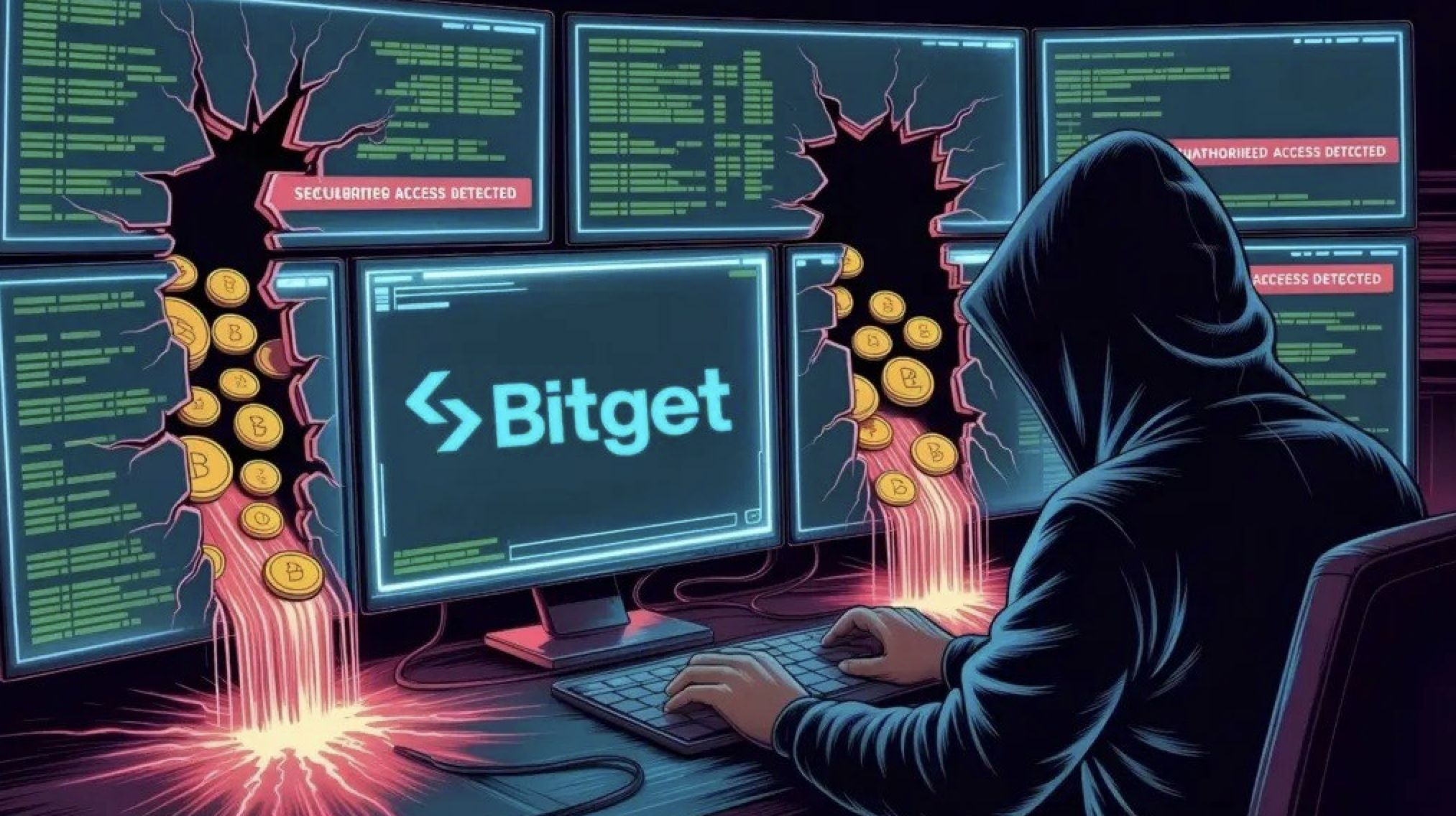
☄️ Bitget has a security incident involving about $351.6M. The exchange says user assets are safe, but it has temporarily suspended withdrawals. It sounds a bit contradictory—so what does it actually mean?
The hacker took money from part of Bitget’s hot wallets, but Bitget says this amount of loss is not deducted from customers’ balances. The exchange currently has a User Protection Fund of more than $464M, which is larger than the $351.6M that was affected. Therefore, they claim the loss is still within their control.
Locking withdrawals is like a bank discovering a problem with a door. The first thing to do is lock the door to inspect it, rather than keep letting money run out before they know where the vulnerability is. At the moment, Bitget still allows deposits and trading; it only temporarily pauses the withdrawal function while it reviews the system.
So the phrase “assets are safe” here means the exchange claims it can absorb the loss and that customer balances are still accounted for in full—not that everything has returned to normal.
But if you’ve been in crypto long enough, you know to keep one’s head: don’t rush to be bullish just because you read “user funds are safe.” Having coverage on paper is one thing; whether the system is fully handled and users can withdraw USDT/BTC normally is another.
If Bitget reopens withdrawals normally and covers the entire $351.6M, then this is simply a major hack that the exchange was able to absorb. Until then, I still stick to the old rule: => Money on a CEX is money I can see. Only when I withdraw to my own wallet does it become money I truly control.
The hacker took money from part of Bitget’s hot wallets, but Bitget says this amount of loss is not deducted from customers’ balances. The exchange currently has a User Protection Fund of more than $464M, which is larger than the $351.6M that was affected. Therefore, they claim the loss is still within their control.
Locking withdrawals is like a bank discovering a problem with a door. The first thing to do is lock the door to inspect it, rather than keep letting money run out before they know where the vulnerability is. At the moment, Bitget still allows deposits and trading; it only temporarily pauses the withdrawal function while it reviews the system.
So the phrase “assets are safe” here means the exchange claims it can absorb the loss and that customer balances are still accounted for in full—not that everything has returned to normal.
But if you’ve been in crypto long enough, you know to keep one’s head: don’t rush to be bullish just because you read “user funds are safe.” Having coverage on paper is one thing; whether the system is fully handled and users can withdraw USDT/BTC normally is another.
If Bitget reopens withdrawals normally and covers the entire $351.6M, then this is simply a major hack that the exchange was able to absorb. Until then, I still stick to the old rule: => Money on a CEX is money I can see. Only when I withdraw to my own wallet does it become money I truly control.