

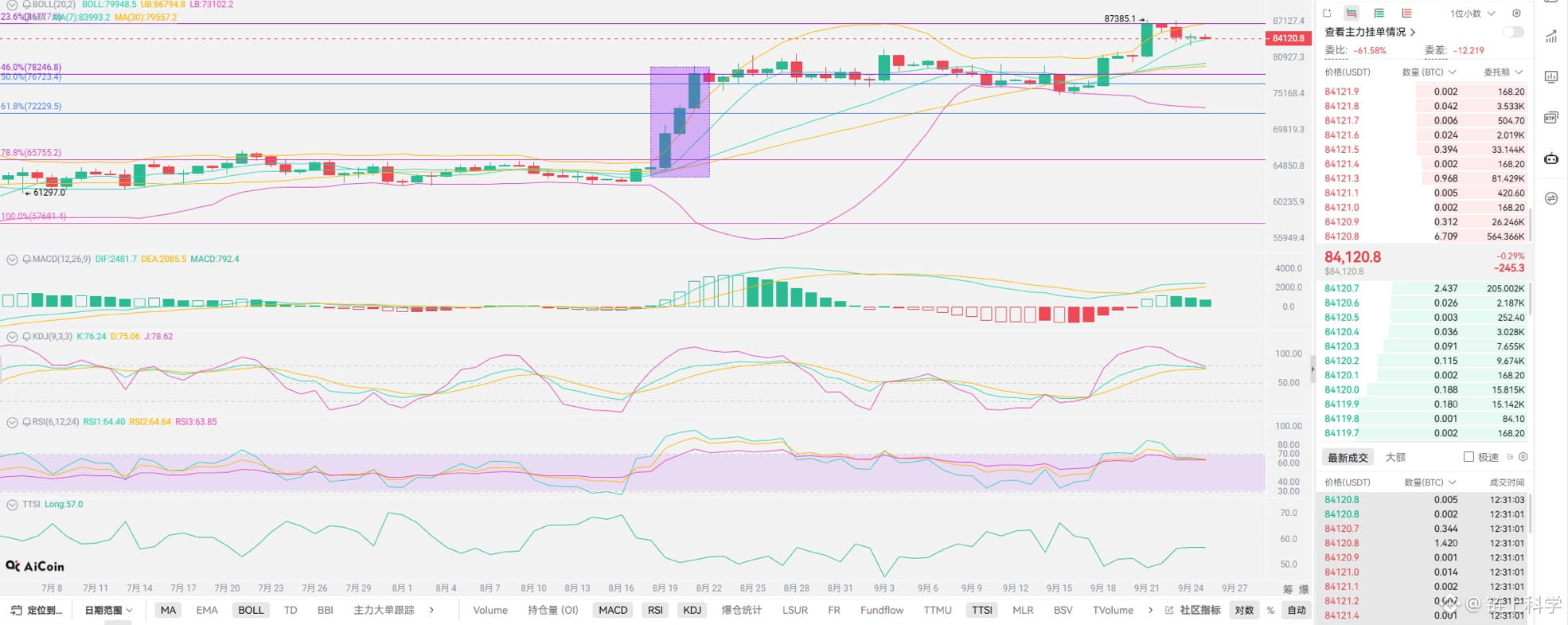

Mid-Autumn Reunion—everyone, our current round of exchanges has also come to an end. The market has finally returned to a range that can be predicted; across the entire financial market, the feedback is not very obvious. Often, when a big move happens, it is just like this. The group has already posted the full core content of this meeting—of course, it consists of the parts that are already public. As for what isn’t public, Lao Cui doesn’t know either. A positive point is that the scheduled China-U.S. trade truce, originally set to expire on November 10, 2026, has been extended by two months to January 10, 2027. Extended again by another two months, it effectively gives four months of negotiation time. As we predicted earlier, this is mostly centered around the level of exchanges; there has not been an agreement of the kind that most capital market participants expected. Objectively speaking, on the medium-term horizon, the outlook is again leaning toward the bearish side. As the process continues to wrap up, more information will gradually come to light. Along with domestic holidays, after the break, the market will directly face the threat of further rate hikes. For the rate-hike cycle as a whole, we can already draw a conclusion: this year, there will be one more rate hike.
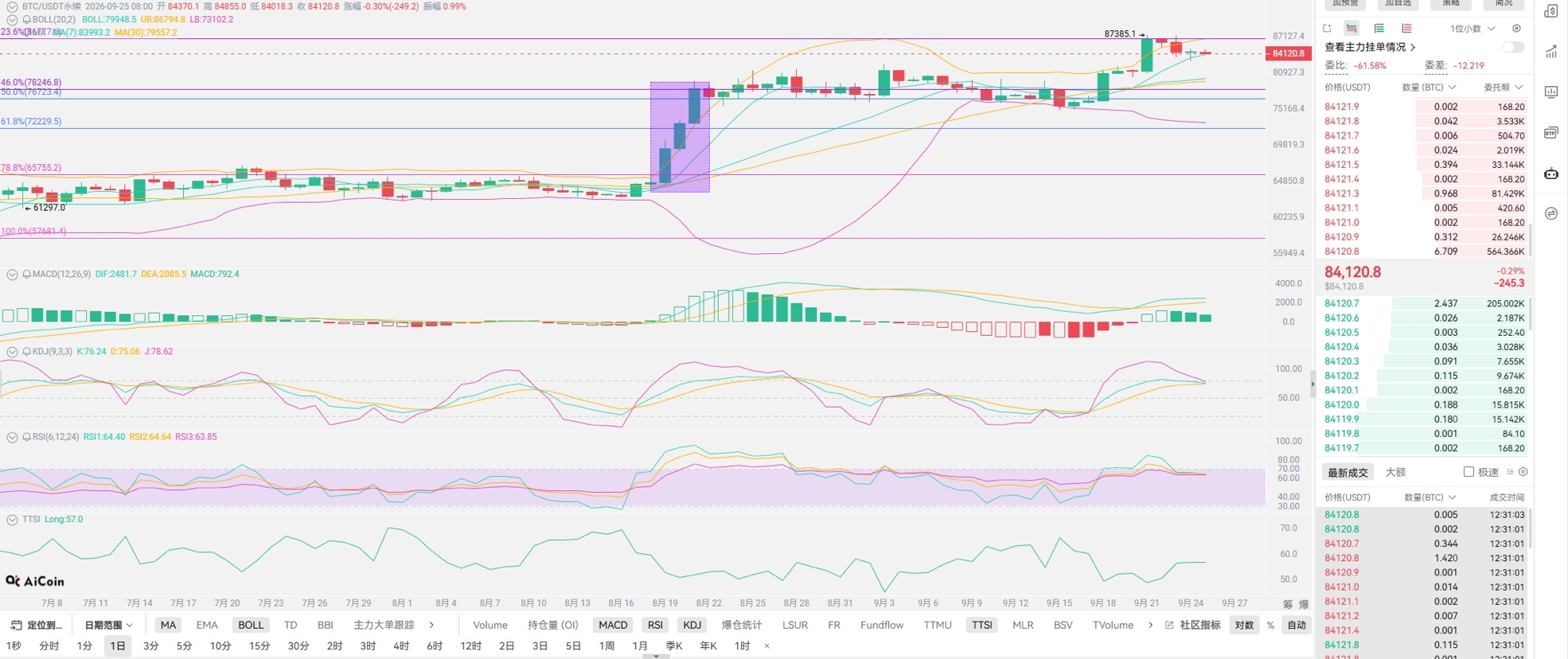
In all likelihood, the market will once again be flooded with bearish, headlined narratives. Lao Cui agrees with this point—after all, he himself is also on the short side. It’s also important to remind everyone that late September to early October is a critical window. The idea of “Golden September and Silver October” also applies to the crypto market. When domestic China is about to have longer holidays, external capital will eye this slice of the “cake.” It’s a bit like the overseas Christmas season battle. During major holidays, capital pours in some “chips” to attract attention—almost like animals driven by instinct to find a mate. Looking at this year versus last year’s data: during Labor Day and National Day, both set new short-term highs, even highs within the year. This isn’t some kind of superstition. Everyone just needs to avoid suffering losses at this key timing and the year-end settlement cycle. The rest of the time, you can keep shorting. As for the current situation, it’s simple: just short when prices are high, and once you’ve seen enough, don’t chase—because that’s the same line Lao Cui is on. For the AI and technology sectors, with only the next half year left, there won’t be major breakthroughs. In 2027, the entire industry will enter the archives of financial history.
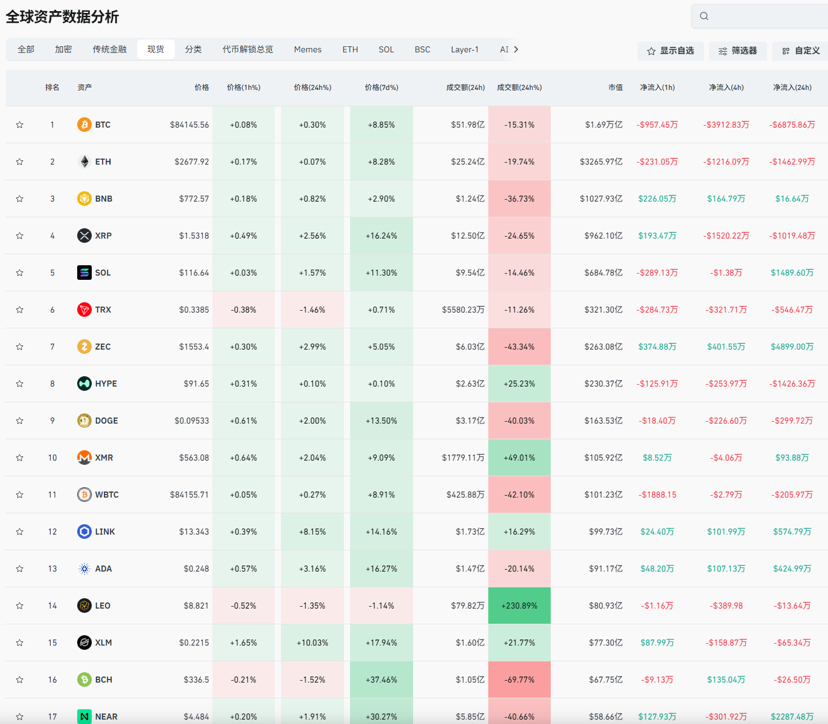
Lao Cui sums up: excluding emotional influences, this time’s peak is very likely the high point for the year. If this round of market action can’t break through the strong pressure at 92,000, then the 87,000 level will be the year’s highest point. We’re already in October, with only three months left until the end of the year—so this can only be considered a medium-term downward setup. Everyone can start imagining next year’s peak. The real bullish catalysts in the crypto space are almost all concentrated in 2027. The only thing to watch out for is the financial crisis that many people are calculating. The collapse of AI could potentially affect the entire financial system’s operation. For crypto, as long as there isn’t a major collapse, things won’t be a problem. The Clear Rules bill will definitely pass in 2027; after that, you don’t need to question the outlook—market conditions will definitely play out in a bearish/short-selling way. Trump’s midterm elections are still an extremely negative piece of news. If he fails, strategies for the crypto market may need to be revised again. Don’t look for upside anymore. For more aggressive users, you can wait for people to come back and then enter to short.