What do TP/SL mean, and how did they save me from losses?
Many of us, as beginners, enter a trade and then keep sitting in front of the chart for 24 hours, afraid that the price will reverse against us.
I was like that until today in an SPX trade.
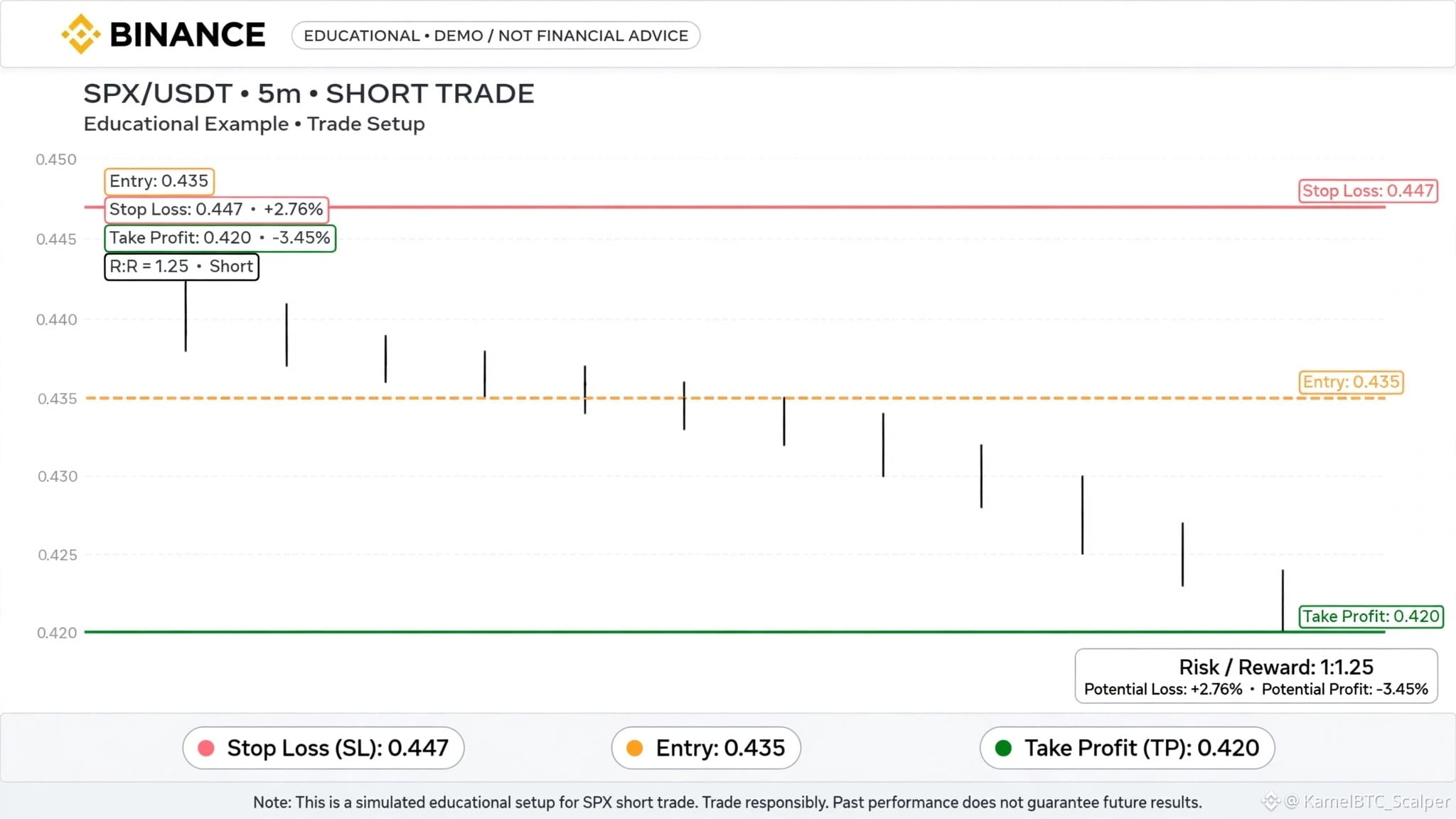
I was in a Short at 0.4399 and the price was moving up and down against me, until I learned an important movement:
1- TP (Take Profit) = the profit-taking level
I told the platform that the moment the price drops to 0.42, close the trade on its own and take the profit. That way I secured my win and didn’t get greedy.
2- SL (Stop Loss) = the stop-loss level
I told the platform that if the price reverses and rises to 0.447, close the trade with a small loss. That way I protected my capital from liquidation.
So what was the result?
Without having to keep staring at the chart, the trade is now +9%, so let it close on its own.
A beginner-to-beginner tip: Don’t enter any trade without setting TP/SL. That’s the difference between a gambler and a trader.
$SPX
Many of us, as beginners, enter a trade and then keep sitting in front of the chart for 24 hours, afraid that the price will reverse against us.
I was like that until today in an SPX trade.
I was in a Short at 0.4399 and the price was moving up and down against me, until I learned an important movement:
1- TP (Take Profit) = the profit-taking level
I told the platform that the moment the price drops to 0.42, close the trade on its own and take the profit. That way I secured my win and didn’t get greedy.
2- SL (Stop Loss) = the stop-loss level
I told the platform that if the price reverses and rises to 0.447, close the trade with a small loss. That way I protected my capital from liquidation.
So what was the result?
Without having to keep staring at the chart, the trade is now +9%, so let it close on its own.
A beginner-to-beginner tip: Don’t enter any trade without setting TP/SL. That’s the difference between a gambler and a trader.
$SPX