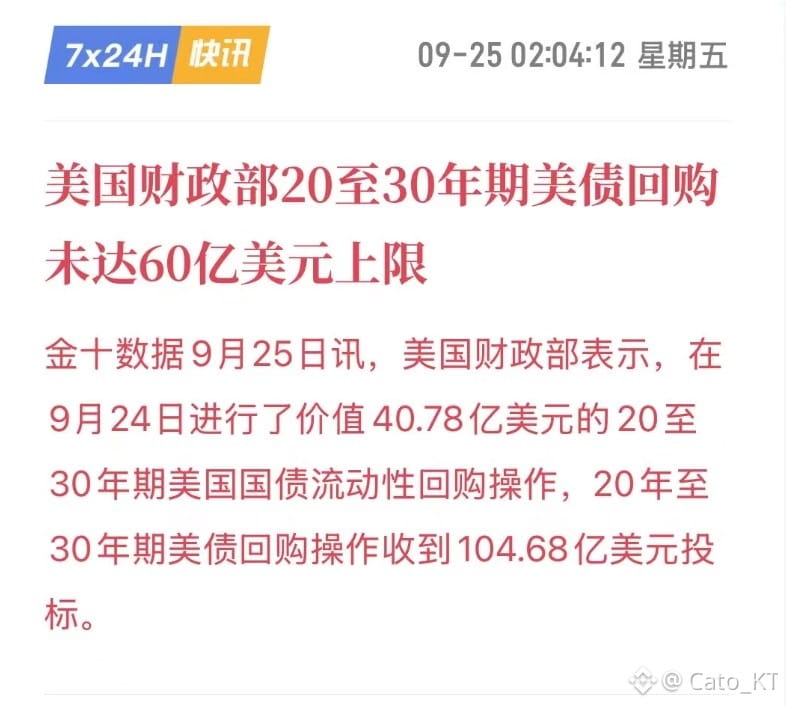
The U.S. Treasury’s buyback amount for this time is only 4.078 billion, but what it received is an allocation of 10.468 billion, which means it’s not that the market is unwilling to sell long-dated bonds. Rather, the current interest rates do not meet the requirements of the bond market’s sellers.
The amount sold out this time is 2.57 times the Treasury’s buyback quota. Clearly, supply exceeds demand, but the interest-rate requirements are even more stringent. This suggests that long-end yields remain very stubborn. Obviously, Besant’s buyback plan is not going very well—it hasn’t changed liquidity in long-dated bonds very much, and it has created new yield-rate pressure.
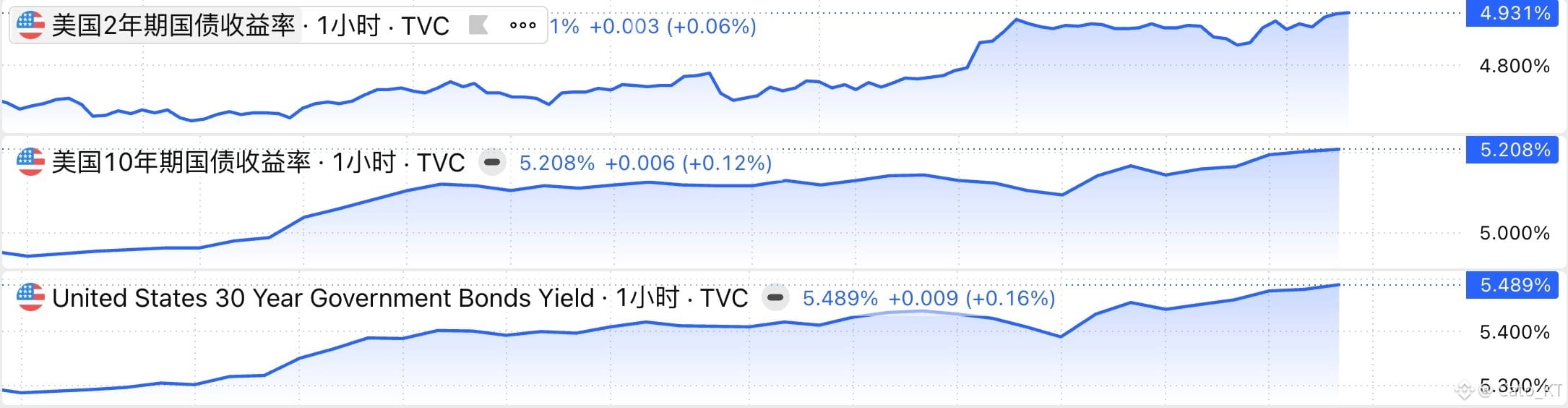
It’s worth noting that the 2-year U.S. Treasury yield has surged to 4.931%. As short-end rates accelerate higher, they may become the key factor in alleviating the current predicament in long-dated bonds. When short-end yields catch up to long-end yields, market demand for long-end yields will weaken. Then, each time the Treasury conducts a buyback, it can obtain a higher allocation—possibly reaching 6 billion or even more.
But there is also a potential risk here. If short-end yields rise too quickly, and even the yield curve inversion becomes severe, it could lead to a “sell long and buy short” situation. If the 2-year U.S. Treasury yield and the 10-year/30-year yields rise in tandem and continue to spiral out of control, then this would mark a high-risk phase for U.S. Treasuries!#美联储10月加息概率升至69.7%
The amount sold out this time is 2.57 times the Treasury’s buyback quota. Clearly, supply exceeds demand, but the interest-rate requirements are even more stringent. This suggests that long-end yields remain very stubborn. Obviously, Besant’s buyback plan is not going very well—it hasn’t changed liquidity in long-dated bonds very much, and it has created new yield-rate pressure.
It’s worth noting that the 2-year U.S. Treasury yield has surged to 4.931%. As short-end rates accelerate higher, they may become the key factor in alleviating the current predicament in long-dated bonds. When short-end yields catch up to long-end yields, market demand for long-end yields will weaken. Then, each time the Treasury conducts a buyback, it can obtain a higher allocation—possibly reaching 6 billion or even more.
But there is also a potential risk here. If short-end yields rise too quickly, and even the yield curve inversion becomes severe, it could lead to a “sell long and buy short” situation. If the 2-year U.S. Treasury yield and the 10-year/30-year yields rise in tandem and continue to spiral out of control, then this would mark a high-risk phase for U.S. Treasuries!#美联储10月加息概率升至69.7%