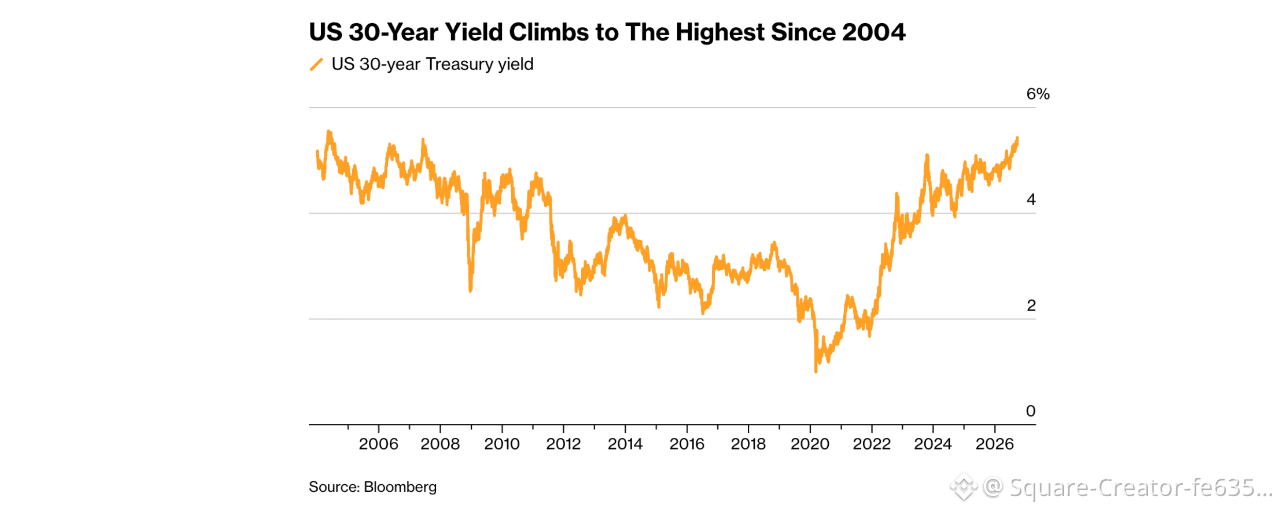
Yields on longer-dated U.S. government bonds have risen to their highest levels in more than two decades, setting the latest stop in a prolonged sell-off driven by anxiety about inflation and public finances, according to Bloomberg. U.S. Treasury yields on the 30-year maturity rose by as much as four basis points on Thursday to 5.44%, the highest level since 2004, after Brent crude oil prices jumped. This comes after a rally this week pushed yields across various maturities to their highest levels since 2007.
“People don’t seem to have a word left for the 30-year bond yield;” said Ed Huseini, a portfolio manager at Columbia Threadneedle, adding that investors are signaling they need a far higher return to lock up their money for 30 years. Pressure on long-term bonds has intensified amid economic growth, higher energy prices, inflation, and, compounded by increased government borrowing, prompting investors to demand more for tying up funds for long periods.
The sustained rise in the 30-year bond yield undermines the Treasury Department’s efforts to lower long-term borrowing costs. As selling has accelerated, Treasury Secretary Scott Bessent in mid-August expanded the government bond buyback program to ease pressures, though it has had little lasting effect on the market.
“People don’t seem to have a word left for the 30-year bond yield;” said Ed Huseini, a portfolio manager at Columbia Threadneedle, adding that investors are signaling they need a far higher return to lock up their money for 30 years. Pressure on long-term bonds has intensified amid economic growth, higher energy prices, inflation, and, compounded by increased government borrowing, prompting investors to demand more for tying up funds for long periods.
The sustained rise in the 30-year bond yield undermines the Treasury Department’s efforts to lower long-term borrowing costs. As selling has accelerated, Treasury Secretary Scott Bessent in mid-August expanded the government bond buyback program to ease pressures, though it has had little lasting effect on the market.