

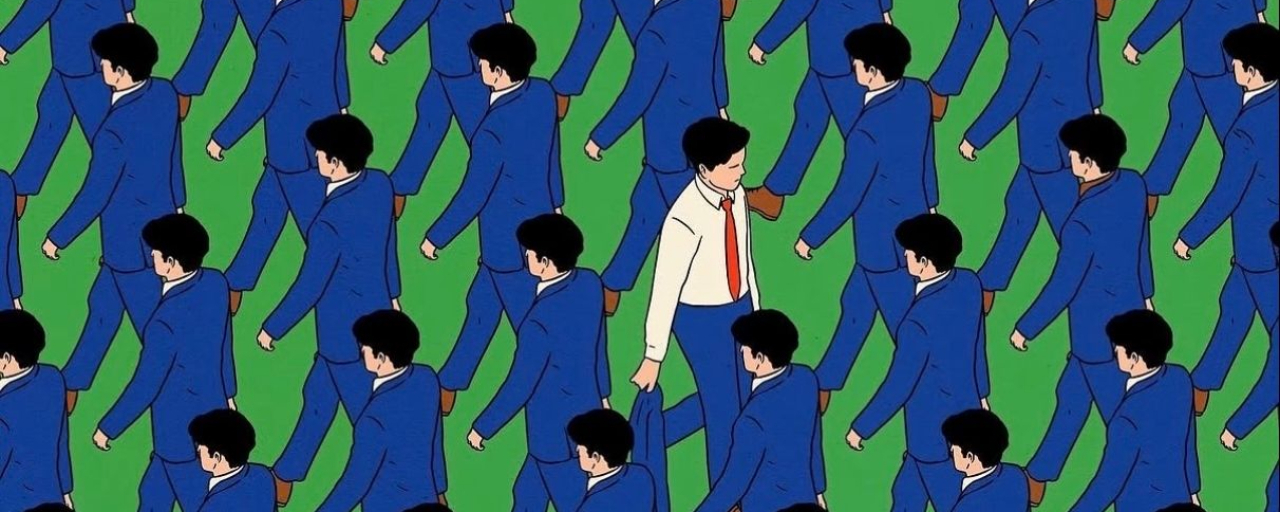

Stop asking, “Teacher, at what time should I buy and at what time should I sell?” Playing crypto isn’t like shaking dice and bragging—building knowledge is the real way to get started.
Everyone, as a long-standing community with seven years of operations, we fully understand the mindset of many friends who want the teacher to tell them exactly what price points to buy and sell at. Wanting clear, precise trades that don’t require a second round of decision-making is completely normal—because it’s not just you who wants it. The teachers want it too, and besides the market maker, who in the crypto world doesn’t want it?
Between countless hours of drawing lines, analysis, finding entry points, and fleeting breaths taken while battling your own mental tug-of-war, sometimes we fantasize about being able to empty our minds and soothe our hearts—having an all-knowing presence tell us what the correct number for that future is. How good would that be?
But what we want to tell everyone is that to learn how to trade, you have to overcome such psychological tendencies little by little. This is a piece written for new friends who have just entered the circle.
In my view, the biggest difference between gambling and speculation is this: gamblers, before opening the cup, think about gods and the buddhas above—so they close their eyes. Speculators, before opening the cup, think about whether they can recognize clues that can predict the future—so they stare straight ahead. The first psychological step in speculation is to give up fantasies. Fantasy is not courage; it is precisely an escape. When you step into one live room after another and ask one stranger after another about entry and exit points, are you not escaping the obscure analysis of the chart, escaping the psychological pressure of the game, escaping the unwillingness to miss opportunities, and escaping the self-blame after a loss? You think you’re giving trust, but in reality you’re giving fantasy. You think you’re seeking help, but in reality you’re seeking to avoid responsibility. In trading without a system of cognition, failure will destroy your mindset, make you ignore your own problems, and blame external factors; success will only deepen your blindness and make you believe everything is within easy reach, and that speculation is as simple as it gets. Please don’t feel like this is a stab in the heart, because what I said above is also the experience we ourselves gradually overcame—learning to face reality and walk out of those fantasies.
Trading, building a community—like everything else in the world—the mark of maturity is taking responsibility. A truly responsible person will absolutely not easily hand over the anchor points of their decision-making and judgment to others. A teacher who is truly responsible for you will not, either, exploit your tendency to escape. They won’t simply give you conclusions beyond your own understanding, so you can put real money in. You can’t earn money outside your own level of understanding. If you get lucky once and don’t learn and improve, you’ll eventually have to give it back—and more. Dr. Trudeau once said that the medical profession is “to heal occasionally, to help often, and to comfort always.” Similarly, a community teacher’s self-summing up would be: “to occasionally lead trades, to analyze often, and to always accompany.” A community isn’t a shrine or a church. It’s a group of people who were strangers to each other, sailing together in the crypto world and helping each other find their way. We build our own system of cognition, refine it in practice, and make it repeatable—then help the friends in the Kunpeng Community establish their own systems, and do so with long-term perseverance.
So, dear new friends, please start improving your cognition. Don’t just ask your teacher how high this coin can go. The most terrifying thing in trading isn’t the unknown that’s impossible to predict—it’s the fact that from the beginning you never planned to take responsibility for your own stakes.