【Treasury yields hit new highs, but is BTC really that worried?🔥】
#美债10年期收益率创19年新高 #美元指数时隔两月重上101
💬 最新美元美债变化进群聊
Lately, the market has started worrying about another issue again:
With U.S. Treasury yields continuing to rise, will BTC be under pressure?
But the data may be quite different from what many people intuit.
According to CoinDesk data, the correlation between BTC and the U.S. 10-year Treasury yield is actually very low: the 90-day correlation is about -0.18, 180-day is about -0.06, and over one year it’s only about -0.03.
In simple terms—over the long run, BTC’s rises and falls don’t have a stable direct relationship with Treasury yields.📊
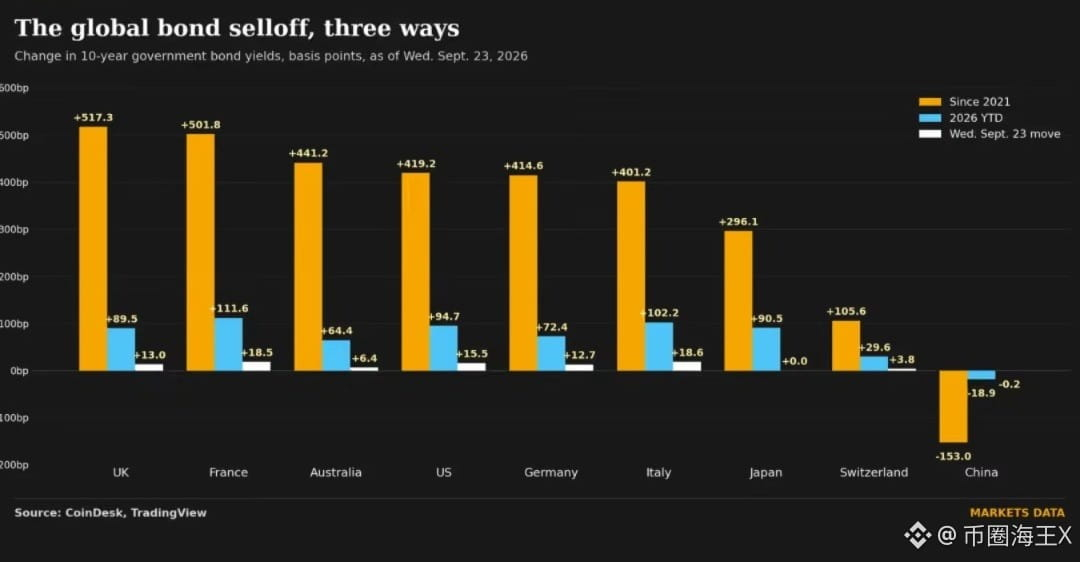
In fact, since 2021, while the U.S. 10-year Treasury yield has clearly been trending higher, BTC over the same period has still surged significantly, and last year it set an all-time high of about $126,000.
However, there’s one important difference here:
BTC may not be too afraid of “high yields,” but it may be more concerned about “sudden, sharp volatility in the bond market.”
For example, yesterday the MOVE index—an indicator of U.S. Treasury volatility—jumped 21% in a single day, and BTC also pulled back from around $87.2k to roughly $83.5k.
Why?
Because sharp bond-market volatility can suddenly tighten global financial conditions, which naturally makes risk assets more vulnerable.
📌 So what’s really worth watching isn’t simply “Treasury yields are up, so BTC must fall,” but two variables:
One is the direction of Treasury yields, and the other is bond-market volatility.
Over the long term, BTC and interest rates don’t have a simple negative correlation; but in the short term, if the Treasury market continues to experience extreme volatility, BTC could still come under pressure.
#美债10年期收益率创19年新高 #美元指数时隔两月重上101
💬 最新美元美债变化进群聊
Lately, the market has started worrying about another issue again:
With U.S. Treasury yields continuing to rise, will BTC be under pressure?
But the data may be quite different from what many people intuit.
According to CoinDesk data, the correlation between BTC and the U.S. 10-year Treasury yield is actually very low: the 90-day correlation is about -0.18, 180-day is about -0.06, and over one year it’s only about -0.03.
In simple terms—over the long run, BTC’s rises and falls don’t have a stable direct relationship with Treasury yields.📊
In fact, since 2021, while the U.S. 10-year Treasury yield has clearly been trending higher, BTC over the same period has still surged significantly, and last year it set an all-time high of about $126,000.
However, there’s one important difference here:
BTC may not be too afraid of “high yields,” but it may be more concerned about “sudden, sharp volatility in the bond market.”
For example, yesterday the MOVE index—an indicator of U.S. Treasury volatility—jumped 21% in a single day, and BTC also pulled back from around $87.2k to roughly $83.5k.
Why?
Because sharp bond-market volatility can suddenly tighten global financial conditions, which naturally makes risk assets more vulnerable.
📌 So what’s really worth watching isn’t simply “Treasury yields are up, so BTC must fall,” but two variables:
One is the direction of Treasury yields, and the other is bond-market volatility.
Over the long term, BTC and interest rates don’t have a simple negative correlation; but in the short term, if the Treasury market continues to experience extreme volatility, BTC could still come under pressure.