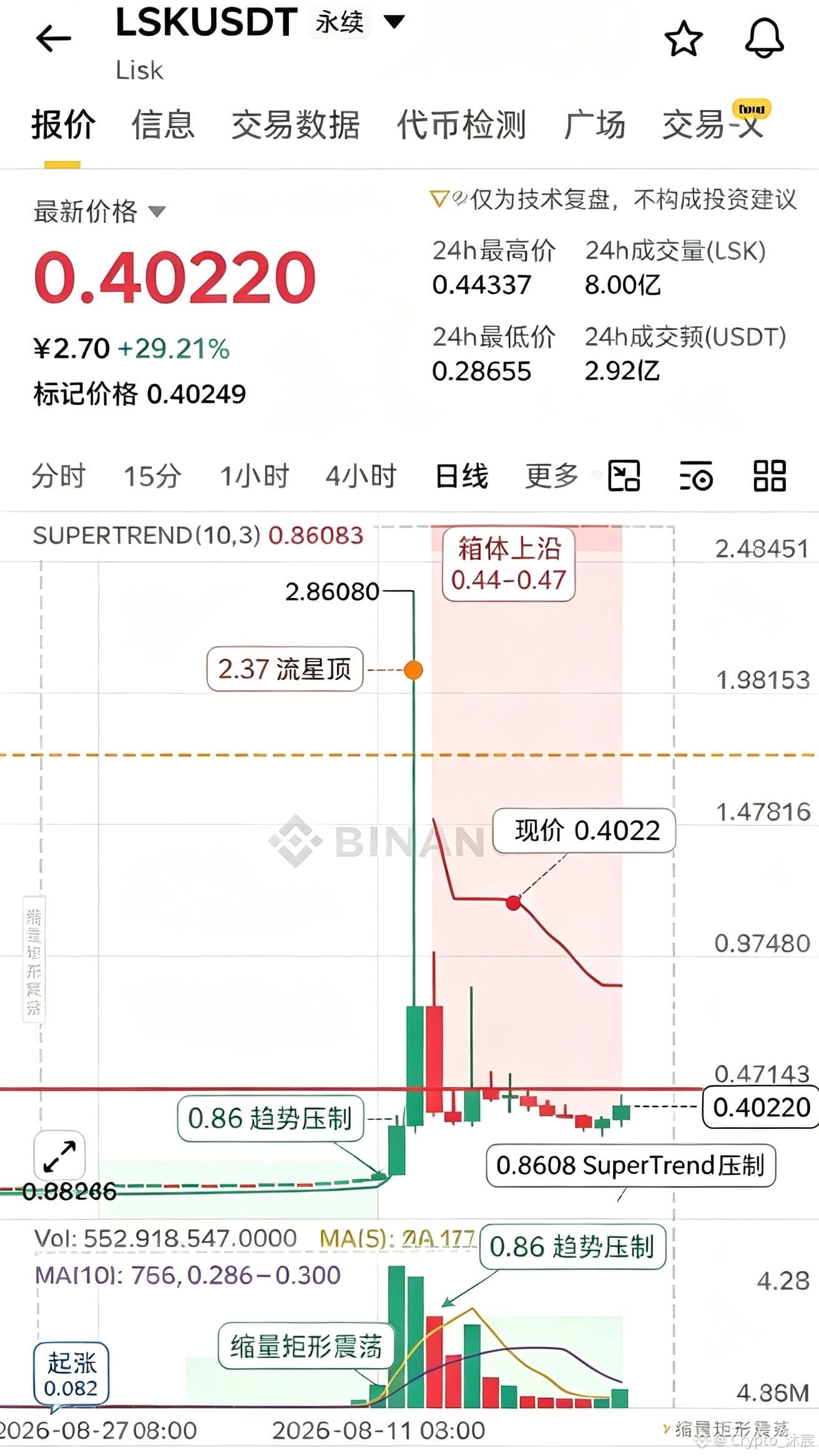
The price of $LSK was startled by the sharp drop from 2.37, but the resulting trough may not be a trap.
LSK just completed its largest burn in history, wiping out 100 million LSK from the total supply, instantly reducing the circulating supply by a quarter. This isn't a gimmick; it's genuine deflation. After the burn, the total supply is only 300 million, with 77% locked in cross-chain bridge contracts, leaving a pitifully small amount available for trading. The fewer tokens available, the greater the price elasticity; even a small amount of buying can push the price up.
The 3.3 million LSK transfer from the CEO's associated address was interpreted by many as a sell signal, but a closer look at the on-chain path reveals that the tokens were transferred to an exchange for migration preparation, not dumped into the market. Lisk Chain will shut down on October 31st. Stakers on the old chain must unstake their tokens and migrate them to Ethereum. There's a three-day unstaking period followed by a seven-to-eight-day cross-chain window, meaning a large amount of tokens will be locked during the migration, further tightening the circulating supply.
On the daily chart, the 0.28 to 0.30 area represents a densely traded zone after the initial panic selling. Recent candlesticks show narrowing bodies and low-volume consolidation. A breakout with volume above the upper edge of the 0.44 to 0.47 range would create a vacuum zone between 0.86 and 0.38, representing the area where the SuperTrend indicator is suppressing the price and where the token supply is thinnest.
Enter a long position directly at 0.38 to 0.42, with a stop-loss below 0.27. The first target is 0.86, and if it holds above this level with volume, watch for 1.20. Before the migration deadline, the circulating supply will only become tighter.
LSK just completed its largest burn in history, wiping out 100 million LSK from the total supply, instantly reducing the circulating supply by a quarter. This isn't a gimmick; it's genuine deflation. After the burn, the total supply is only 300 million, with 77% locked in cross-chain bridge contracts, leaving a pitifully small amount available for trading. The fewer tokens available, the greater the price elasticity; even a small amount of buying can push the price up.
The 3.3 million LSK transfer from the CEO's associated address was interpreted by many as a sell signal, but a closer look at the on-chain path reveals that the tokens were transferred to an exchange for migration preparation, not dumped into the market. Lisk Chain will shut down on October 31st. Stakers on the old chain must unstake their tokens and migrate them to Ethereum. There's a three-day unstaking period followed by a seven-to-eight-day cross-chain window, meaning a large amount of tokens will be locked during the migration, further tightening the circulating supply.
On the daily chart, the 0.28 to 0.30 area represents a densely traded zone after the initial panic selling. Recent candlesticks show narrowing bodies and low-volume consolidation. A breakout with volume above the upper edge of the 0.44 to 0.47 range would create a vacuum zone between 0.86 and 0.38, representing the area where the SuperTrend indicator is suppressing the price and where the token supply is thinnest.
Enter a long position directly at 0.38 to 0.42, with a stop-loss below 0.27. The first target is 0.86, and if it holds above this level with volume, watch for 1.20. Before the migration deadline, the circulating supply will only become tighter.