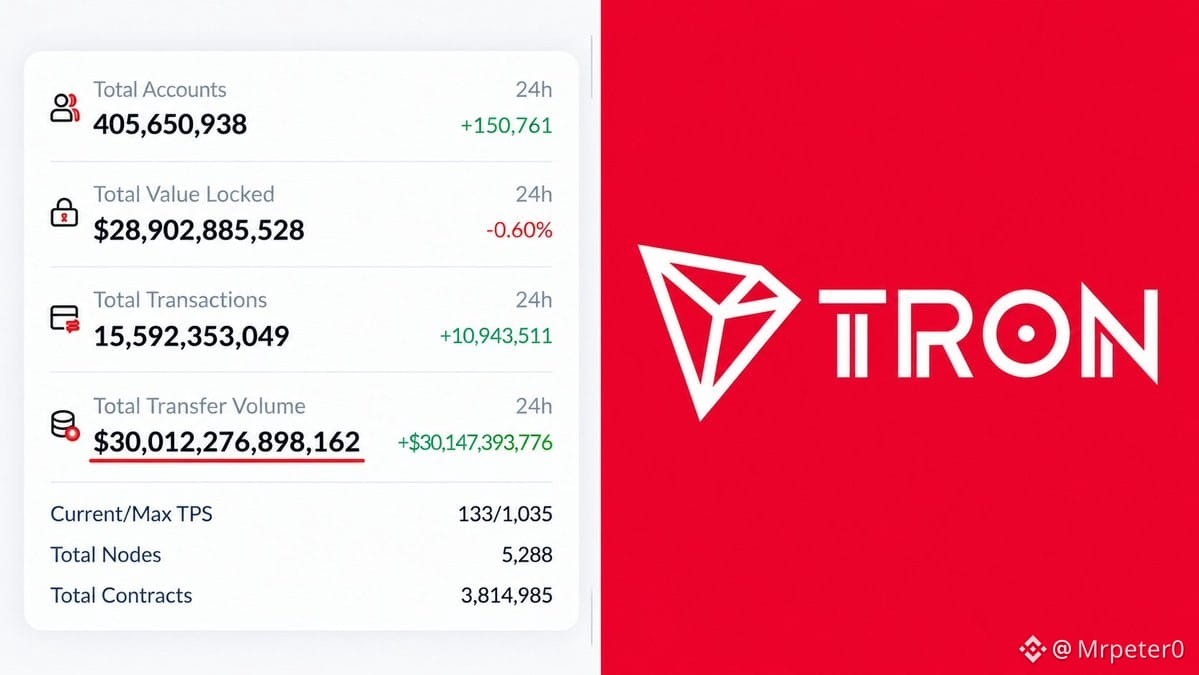
𝐓𝐑𝐎𝐍 𝐈𝐒 𝐌𝐎𝐕𝐈𝐍𝐆 𝐅𝐑𝐎𝐌 𝐁𝐋𝐎𝐂𝐊𝐂𝐇𝐀𝐈𝐍 𝐀𝐂𝐓𝐈𝐕𝐈𝐓𝐘 𝐓𝐎 𝐑𝐄𝐀𝐋 𝐏𝐀𝐘𝐌𝐄𝐍𝐓 𝐈𝐍𝐅𝐑𝐀𝐒𝐓𝐑𝐔𝐂𝐓𝐔𝐑𝐄
TRON has now surpassed $30 trillion in cumulative transfer volume, showing the enormous amount of value that has moved through the network. It also holds more than $94 billion in circulating USDT, according to recent network data.
But the more interesting part is what comes next.
Privy, a Stripe company, has expanded its TRON integration, giving developers tools for transaction building, wallet activity monitoring, transfer APIs and policy controls. These tools can make it easier to build stablecoin payments, treasury systems and financial applications on TRON.
That creates an important bridge between on-chain liquidity and everyday financial use.
The question is no longer only about how much money can move on TRON.
It is about how much of that liquidity can eventually support real payments, business operations and cross-border transfers.
And that may be where the next stage of TRON adoption becomes most interesting.
@Justin Sun孙宇晨 @TRON DAO #TRONEcoStar
TRON has now surpassed $30 trillion in cumulative transfer volume, showing the enormous amount of value that has moved through the network. It also holds more than $94 billion in circulating USDT, according to recent network data.
But the more interesting part is what comes next.
Privy, a Stripe company, has expanded its TRON integration, giving developers tools for transaction building, wallet activity monitoring, transfer APIs and policy controls. These tools can make it easier to build stablecoin payments, treasury systems and financial applications on TRON.
That creates an important bridge between on-chain liquidity and everyday financial use.
The question is no longer only about how much money can move on TRON.
It is about how much of that liquidity can eventually support real payments, business operations and cross-border transfers.
And that may be where the next stage of TRON adoption becomes most interesting.
@Justin Sun孙宇晨 @TRON DAO #TRONEcoStar