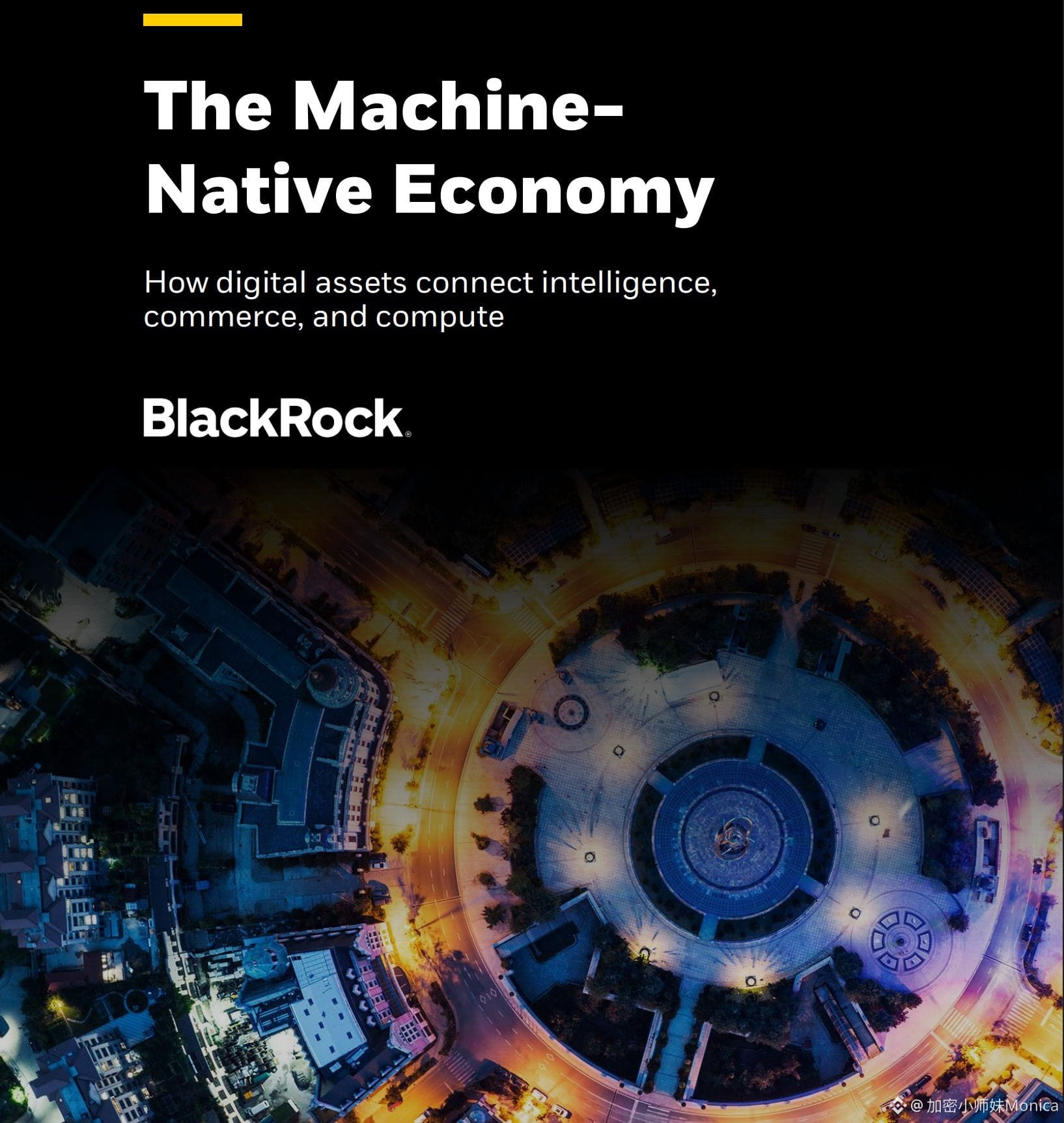
In BlackRock’s “The Machine-Native Economy,” it officially discusses the role stablecoins may play when AI agents purchase data, call APIs, and pay for compute costs.
My first reaction was: if AI can use USDC to buy services, then how much of all those AI tokens I saw earlier does it actually need?
During the last AI boom, from AI memes like $GOAT to agents that could chat and post on X, most people traded attention and future imagination. But now, if AI truly starts spending money on people’s behalf, the questions become concrete: what does it buy, from whom, and why would it come back to that vendor next time?
For example, you give a research assistant a $5 budget and ask it to analyze a project. What it needs are accurate data, the right model, and affordable reliable services. Whether the provider issues tokens may not matter much for producing the report.
The x402 mentioned by BlackRock offers a pay-per-use approach: an agent requests a service, receives a payment request, completes the payment, and then gets the result. Developers can simply sell a useful API—no need to issue a token just to collect payment.
For developers, that lowers a hurdle; for token holders, though, they need to think carefully: can this business still function normally if it bypasses my token?
Of course, existing AI projects won’t all be wiped out because of this. If a project can provide data, compute, or help complete tasks, it still has a chance to win orders. Tokens may also serve purposes such as staking. But whether a token benefits from these services still has to be viewed separately.
And it looks like AI is choosing services, while the choice is still largely in the hands of the platform and developers.
Which tools are connected by default, which wallets are allowed, and which vendor is recommended first are often set in advance. When AI makes choices within these rules and users’ budgets, platforms that control the entry points can influence where orders flow.
Of course, BlackRock’s report includes forward-looking judgment and reflects its own business interests—but the question itself is worth retail investors taking a hard look at: after AI drives economic growth, who is actually paying? If order volume increases, why should tokens benefit along with it?
My first reaction was: if AI can use USDC to buy services, then how much of all those AI tokens I saw earlier does it actually need?
During the last AI boom, from AI memes like $GOAT to agents that could chat and post on X, most people traded attention and future imagination. But now, if AI truly starts spending money on people’s behalf, the questions become concrete: what does it buy, from whom, and why would it come back to that vendor next time?
For example, you give a research assistant a $5 budget and ask it to analyze a project. What it needs are accurate data, the right model, and affordable reliable services. Whether the provider issues tokens may not matter much for producing the report.
The x402 mentioned by BlackRock offers a pay-per-use approach: an agent requests a service, receives a payment request, completes the payment, and then gets the result. Developers can simply sell a useful API—no need to issue a token just to collect payment.
For developers, that lowers a hurdle; for token holders, though, they need to think carefully: can this business still function normally if it bypasses my token?
Of course, existing AI projects won’t all be wiped out because of this. If a project can provide data, compute, or help complete tasks, it still has a chance to win orders. Tokens may also serve purposes such as staking. But whether a token benefits from these services still has to be viewed separately.
And it looks like AI is choosing services, while the choice is still largely in the hands of the platform and developers.
Which tools are connected by default, which wallets are allowed, and which vendor is recommended first are often set in advance. When AI makes choices within these rules and users’ budgets, platforms that control the entry points can influence where orders flow.
Of course, BlackRock’s report includes forward-looking judgment and reflects its own business interests—but the question itself is worth retail investors taking a hard look at: after AI drives economic growth, who is actually paying? If order volume increases, why should tokens benefit along with it?