Talks between the U.S. and Iran—don't be too optimistic.
Although there will be another round of meetings in the future, before the next meeting is confirmed, both sides are raising their demands.
Trump wants to delay until after the midterm elections, to posture, and in the process has also raised the bar for negotiations.
Inside Iran, there are doubts about the foreign minister’s authority, with power being divided.
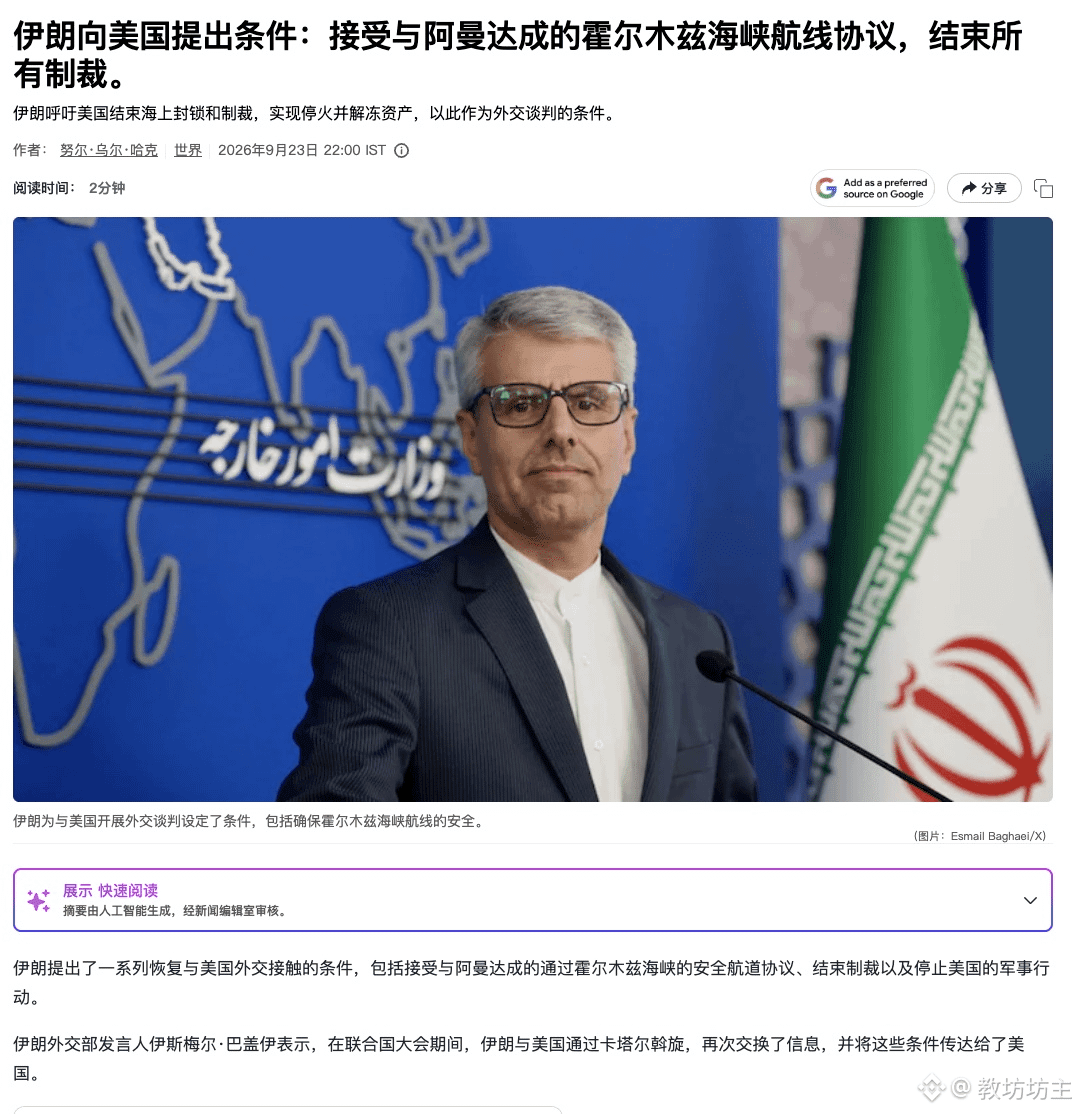
Iran also sets a new plan for the Strait with Oman as a condition for negotiations with the United States; if the U.S. accepts it, that would mean giving up control of the strait and influence in the Middle East.
Originally, people hoped Pakistan could play a smoothing role, but now both sides’ demands are higher, so we can’t be optimistic in the short term.
In the big picture, the U.S.–Iran issue ultimately has to be resolved, but it needs an opportunity to de-escalate.
Both the U.S. and Iran must de-escalate first to return to the main negotiating track. That depends on China’s mediation—ordinary people can’t make it happen.
Although there will be another round of meetings in the future, before the next meeting is confirmed, both sides are raising their demands.
Trump wants to delay until after the midterm elections, to posture, and in the process has also raised the bar for negotiations.
Inside Iran, there are doubts about the foreign minister’s authority, with power being divided.
Iran also sets a new plan for the Strait with Oman as a condition for negotiations with the United States; if the U.S. accepts it, that would mean giving up control of the strait and influence in the Middle East.
Originally, people hoped Pakistan could play a smoothing role, but now both sides’ demands are higher, so we can’t be optimistic in the short term.
In the big picture, the U.S.–Iran issue ultimately has to be resolved, but it needs an opportunity to de-escalate.
Both the U.S. and Iran must de-escalate first to return to the main negotiating track. That depends on China’s mediation—ordinary people can’t make it happen.